Return to Kashmir EcoWatch

EST. 2026  ·  KEW WESTERN HIMALAYAS

HIMALAYANDISPATCH

LANDSCAPE.  PEOPLE.  SCIENCE.  TRUTH.

BUREAU III·Established Reporting Desk

Ladakh Bureau

Trans-Himalayan Cold Desert · Indus, Shyok, Zanskar & Changthang

Chronicles high-altitude cryospheric recession, artificial ice-reservoir stewardship, Changthang pastoral rangelands, Pangong–Tso Moriri endorheic basins, and fragile solar-infrastructure siting.

GEOGRAPHICAL COVERAGE (6 DISTRICTS / VALLEYS)

Leh · Kargil · Zanskar · Nubra · Changthang · Drass

DEDICATED THEMATIC SCIENTIFIC ISSUE  ·  SPECIAL REGIONAL SCIENTIFIC ISSUE · LADAKH3 INVESTIGATIONS · 45 RESEARCH CHAPTERS · 21 PROPOSED EXPERIMENTS · COLD-DESERT ECOLOGY

Ladakh's Ecological Frontiers

The Fragile Balance Between Climate, Water, Development and High-Altitude Survival

Why Ladakh’s cold-desert rain-shadow ecology, cryospheric water dependence, extreme seasonal visitor pressure, permafrost microbiomes, and high-altitude Ramsar wetlands demand a fundamentally different scientific and governance framework.

INVESTIGATION 01 · 15 CHAPTERS · 7 EXPERIMENTS

When the Glaciers Stop Giving

Changes in the timing and volume of snow and glacier melt may undermine Ladakh's traditional water management systems, even before its glaciers disappear.

Read Investigation 01
INVESTIGATION 02 · 15 CHAPTERS · 7 EXPERIMENTS

How Many People Can a Cold Desert Sustain?

Conventional infrastructure and tourism planning may overestimate Ladakh's development capacity by failing to account for seasonal freshwater availability, waste assimilation limits and ecosystem recovery rates.

Read Investigation 02
INVESTIGATION 03 · 15 CHAPTERS · 7 EXPERIMENTS

The Desert Is Not Empty

Landscapes conventionally classified as barren or unproductive may perform critical ecological functions that remain inadequately represented in infrastructure planning and environmental assessments.

Read Investigation 03

Evidentiary Standard: All 21 proposed scientific experiments and 45 chapter protocols are structured research specifications grounded in cited 2025–2026 syntheses (~0.02°C/yr regional warming, 0.21–0.37 m w.e./yr glacier mass loss, 65 high-concern bird species, and Changthang permafrost soil microbial diversity); no unexecuted field instrumentation is represented as completed.

Regional Daily Dispatches

Daily Dispatch Wire →

Monthly Magazine Features

Current Edition →
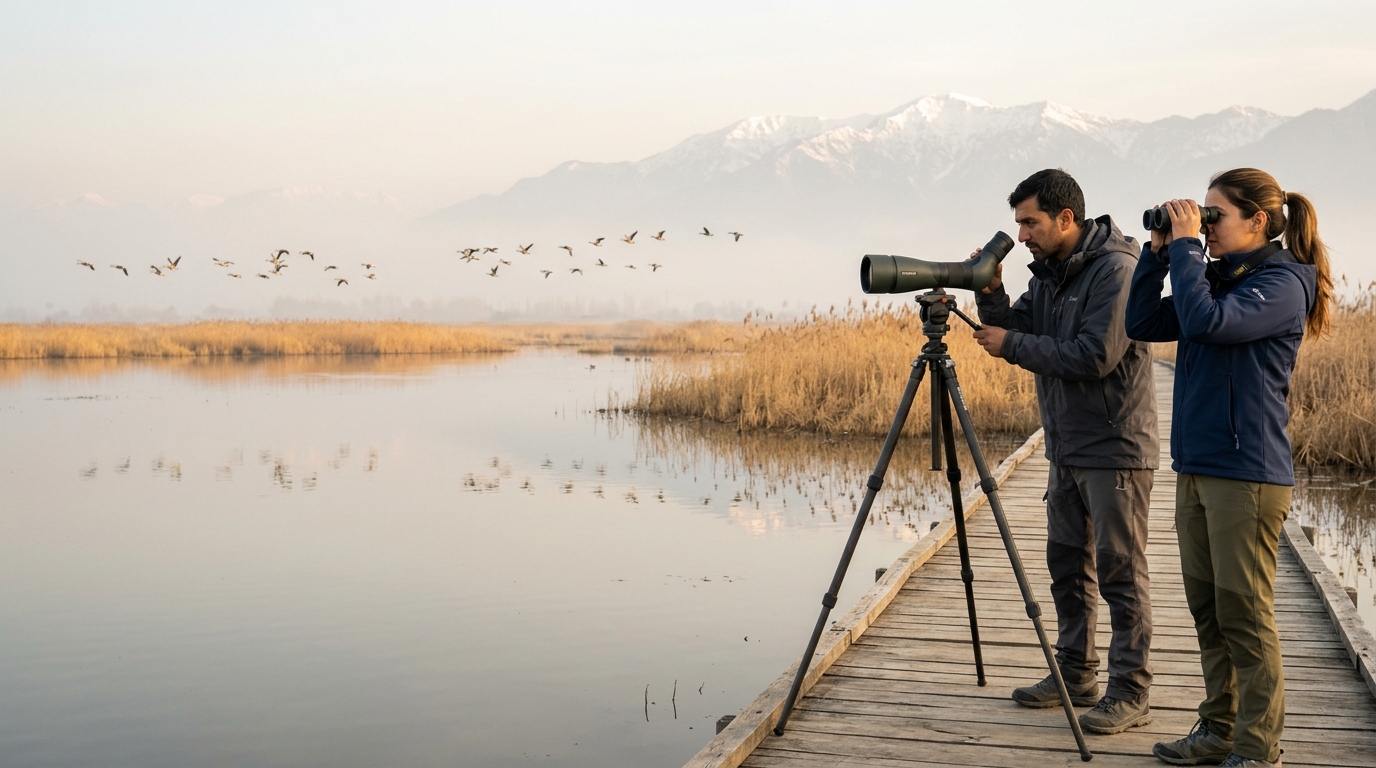
Migratory waterbirds over emergent reedbeds and open winter marsh channels across the Kashmir Valley—where Central Asian Flyway stopover energetics, benthic invertebrate availability, and floodplain hydroperiods converge beneath Western Himalayan ridges (Illustrative archival plate — thematic habitat reference without species-census evidentiary claim).
SPECIAL SCIENTIFIC INVESTIGATION · ORNITHOLOGY · MIGRATORY ECOLOGY · BIODIVERSITY ACCOUNTABILITY

The Sky Has No Borders

A migratory bird crossing the Karakoram or Pir Panjal recognizes neither the Line of Control nor the Line of Actual Control—only open water, benthic invertebrates, forest canopy architecture, thermal gradients, and tailwinds. Expanding our inquiry from floodplain wetlands to the entire Western Himalayan sky across Kashmir, Jammu, Ladakh, Azad Jammu & Kashmir, and Gilgit-Baltistan, Dispatch 06 audits regional checklists, scrutinizes KEW’s own 601-taxa registry, tests whether 1.34 million counted waterbirds signify recovery or refugia compression inside four surviving wetlands, and establishes the eighteen-volume Monograph 04 research framework.

BY Dr. Fayaz Ahmad Khan & Himalayan Dispatch Ornithology, Biodiversity and Geospatial Intelligence Desk · VOL. 01 / NO. 01 · THE INAUGURAL ISSUE
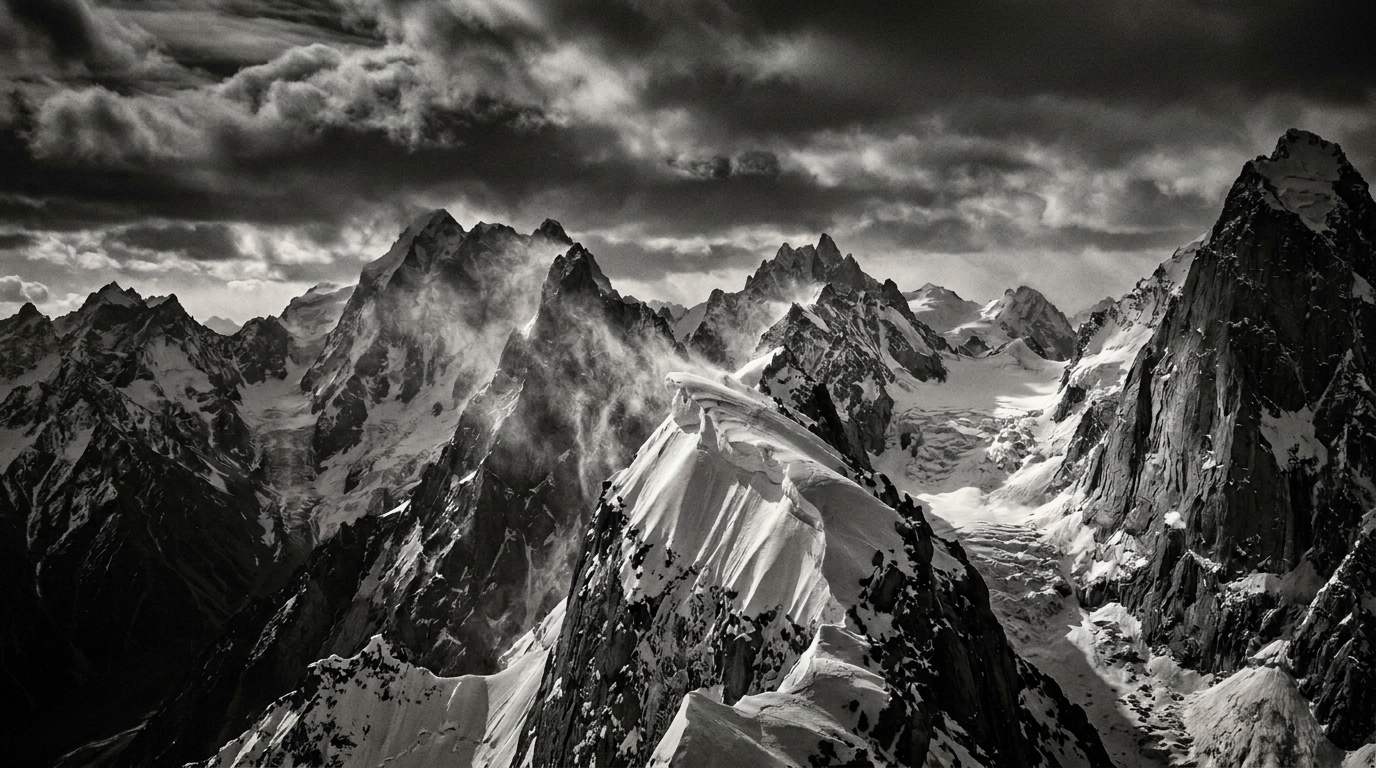
Lead Tonal Study — Winter radiation mist, bare deciduous silhouettes, and shallow valley-floor frost during a snow-deficient Chillai Kalan regime (Illustrative archival monochrome study).
03 / THE VISUAL JOURNAL

An Elegy for Winter

Across the forty solstice days of Chillai Kalan, Kashmir’s winter once arrived as an unbroken architecture of deep snowpack and crystalline stillness. Paired with ten curated monochrome tonal studies from 1,578 to 4,450 meters, this visual essay traces a season fracturing into bare January ridges, stagnant valley inversions, and premature February bloom.

BY Himalayan Dispatch · Visual Editions Desk · VOL. 01 / NO. 01 · THE INAUGURAL ISSUE
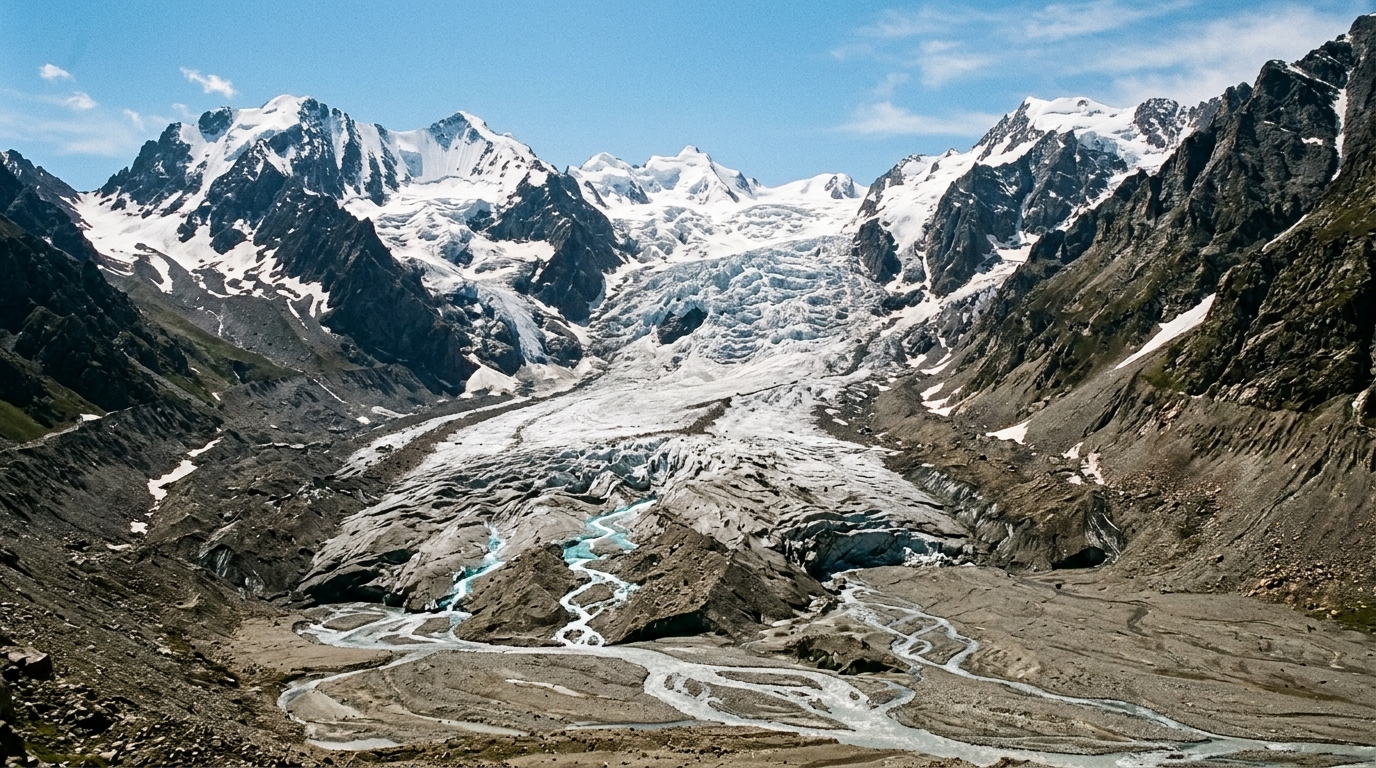
High-elevation glacier ablation terrain, dark supraglacial debris mantle, and proglacial meltwater drainage representative of the Upper Lidder–Sindh headwaters (Illustrative archival plate; quantitative findings carried by the multi-sensor dataset and cited peer-reviewed studies).
CARTOGRAPHY & NUMBERS

Thirty-Eight Winters of Snowline Retreat

Mid-winter satellite maps flatter the Western Himalayas; late September tells the truth. Pairing a 352-scene Landsat and Sentinel-2 hypsometric synthesis (1988–2026) with peer-reviewed mass-balance and debris-thickness studies across Kolahoi, Hoksar, and Lidder headwaters, this data essay traces how rising autumn snowlines narrow the reflective accumulation zone.

BY Himalayan Dispatch · Data & Cartography Desk · VOL. 01 / NO. 01 · THE INAUGURAL ISSUE
High-relief Himalayan ablation zone, supraglacial debris mantle, and proglacial meltwater channel representative of Western Himalayan headwaters (Illustrative archival plate — this feature is a constructed literature synthesis, not a portrait interview).
CONSTRUCTED EDITORIAL DIALOGUE

“A Glacier Does Not Negotiate With Five-Year Plans”

Rather than attributing composite answers to a fictional persona, the editors of Himalayan Dispatch synthesized forty years of published Upper Indus, Jhelum, Chenab, Zanskar, and Karakoram glaciological research into twelve pointed questions on mass balance, peak water, debris-cover thermodynamics, GLOF cascades, and hydrological non-stationarity.

BY Dr. Fayaz Ahmad Khan & Himalayan Dispatch Cryosphere Desk · VOL. 01 / NO. 01 · THE INAUGURAL ISSUE
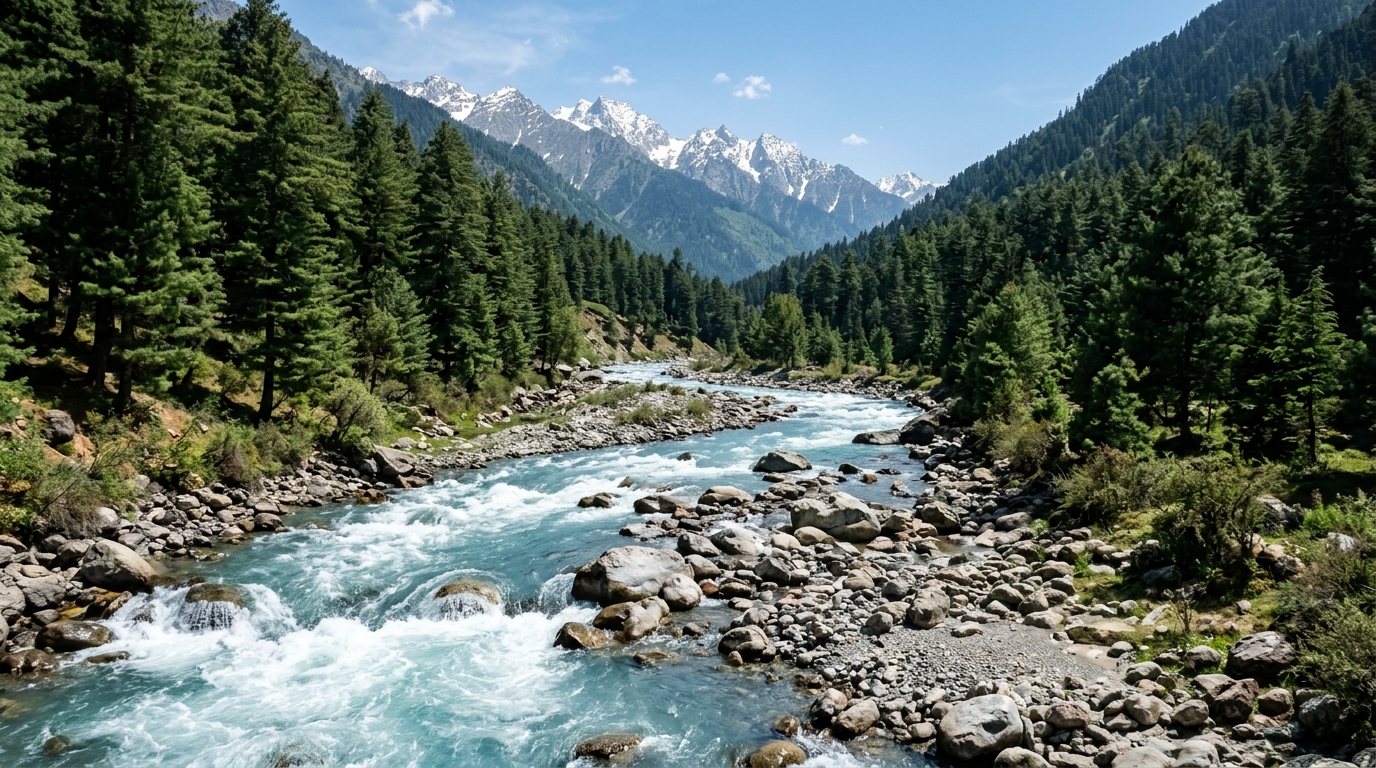
Snowmelt discharge threading over granodiorite and limestone boulders in the Lidder catchment—where geological time outlasts the forty-eight-hour news cycle (Illustrative archival plate).
FROM THE MASTHEAD · FOUNDING MANIFESTO

Why the Western Himalayas Demand Slow, Fearless Journalism

Born after two years of unanswered correspondence, Himalayan Dispatch exists for the decades between forty-eight-hour flood headlines: uniting transboundary watershed reporting, explicit error bars, source protection, visual honesty, and self-accountable publication gates.

BY The Editorial Board · Signed by Dr. Fayaz Ahmad Khan · VOL. 01 / NO. 01 · THE INAUGURAL ISSUE
Printed broadsheets, string-tied archival gazette dockets, a reporter’s notebook, and a brass loupe beside dual monitors displaying Himalayan glacier and watershed Earth-observation telemetry—evoking the crossroads between conventional press-release reporting and independent, documentary, scientifically literate mountain journalism (Illustrative editorial study — Himalayan Dispatch Visual Editions Desk; carries no depiction of or allegation against any specific publication or individual).
SPECIAL EDITORIAL INVESTIGATION · POLITICAL ECONOMY OF MEDIA · JOURNALISTIC INDEPENDENCE · SCIENTIFIC LITERACY · MEDIA OWNERSHIP · INVESTIGATIVE ACCOUNTABILITY · PUBLIC INTEREST

Journalism at a Crossroads

Beyond breaking news, political statements, press conferences and institutional publicity lies an extraordinary landscape of unexplored scientific questions, forgotten environmental histories, unexamined public expenditure and emerging threats to human civilization. Positioned immediately after the Founding Manifesto as Dispatch 17, this investigation examines the political establishment–media house nexus, government advertising dependency, professional vulnerability, scientific specialization, and the institutional architecture required for independent public-interest journalism across Kashmir, Jammu, Ladakh, Azad Jammu & Kashmir, and Gilgit-Baltistan.

BY Dr. Fayaz Ahmad Khan & Himalayan Dispatch Editorial Independence, Media Political Economy, Scientific Communication and Investigative Journalism Desk · VOL. 01 / NO. 01 · THE INAUGURAL ISSUE
High-altitude scientific measurement and mountain watershed research context in the Western Himalayas—where decades of field scholarship earn global journal recognition while raising the foundational question of how scientific knowledge returns to local communities and ecosystems (Illustrative archival plate — Kashmir EcoWatch Visual Archive).
SPECIAL SCIENTIFIC INVESTIGATION · ACADEMIC RESEARCH · KNOWLEDGE DISSEMINATION · SCIENTIFIC IMPACT ACCOUNTABILITY

Who Are We Researching For? The World Knows Our Mountains. Do We?

Across Kashmir, Jammu, Ladakh, Azad Jammu & Kashmir, and Gilgit-Baltistan, a preliminary working inventory identifies 80 environment-related academic departments, laboratories, research centres, and field facilities—and a single University of Kashmir departmental register records 145 publications in five years alone. Positioned immediately before our Beyond the Conference series, Dispatch 12 inaugurates a strict, non-fabricated 2001–2026 bibliometric census and the Western Himalayan Research-to-Society and Impact Protocol to ask: how much of twenty-five years of mountain science has actually returned to the people and landscapes that made it possible?

BY Dr. Fayaz Ahmad Khan & Himalayan Dispatch Scientific Research, Academic Affairs and Knowledge Accountability Desk · VOL. 01 / NO. 01 · THE INAUGURAL ISSUE
Glaciated headwaters and high mountain ridges of the Western Himalayas—landscapes studied across the world and sustained at home by scientists, advocates, journalists, conservationists, and students navigating formidable institutional odds (Illustrative archival plate — Kashmir EcoWatch Visual Archive).
SPECIAL INTERNATIONAL FEATURE · ENVIRONMENTAL LEADERSHIP · PROFESSIONAL INTROSPECTION · INTELLECTUAL LEGACY

South Asia’s Environmental Vanguard

Their journeys were not easy. Neither will ours be. Examining thirty-two distinguished environmental advocates, institution-building NGO leaders, investigative journalists, and pioneering scientists across India and Pakistan—not as distant celebrities, but as four professional mirrors through which the Western Himalayas can confront its own aspirations, institutional constraints, and possibilities.

BY Dr. Fayaz Ahmad Khan & Himalayan Dispatch Environmental Leadership and Intellectual Legacy Desk · VOL. 01 / NO. 01 · THE INAUGURAL ISSUE
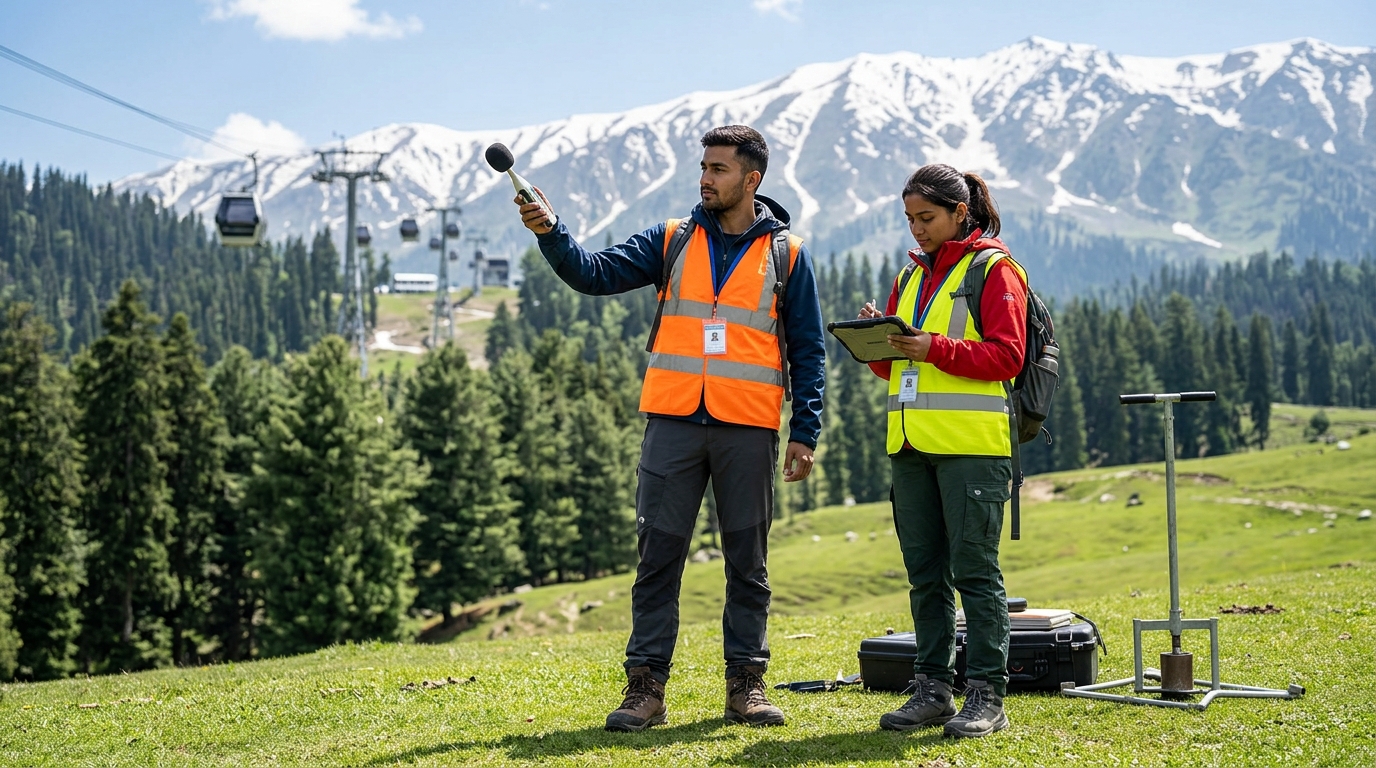
Subalpine valley infrastructure, seasonal road corridors, and montane forest slopes across the Kashmir Himalaya—where physical carrying capacity is governed by dry-season baseflow, slope shear strength, and corridor integrity rather than seasonal visitor targets.
BEYOND THE CONFERENCE · III · ECOLOGICAL LIMITS

Who Gave Development the Right to Exceed the Mountain?

In October 2026, the 13th Sustainable Mountain Development Summit at Shalimar placed a draft Jammu & Kashmir Mountain Policy into national deliberation. Yet until ecological thresholds possess statutory power to refuse concrete, tunnels, and unconstrained tourist surges, sustainable mountain development risks becoming polite vocabulary draped over an engineering monologue.

BY Dr. Fayaz Ahmad Khan & The Editorial Board · VOL. 01 / NO. 01 · THE INAUGURAL ISSUE
Steep Western Himalayan river-gorge and mountain infrastructure corridor—where snowmelt gradients generate thousands of megawatts while generating districts confront forest submergence, tunnel hydrogeological shifts, slope instability, and winter power curtailment (Illustrative archival plate — Kashmir EcoWatch Visual Archive).
SPECIAL SCIENTIFIC INVESTIGATION · HYDROPOWER · FOREST SUBMERGENCE · WILDLIFE DISPLACEMENT · TECTONIC HAZARDS · ENERGY JUSTICE

The Price of Power

Rivers are diverted, forests are submerged, mountains are tunnelled, wildlife corridors are severed, and communities surrender ancestral valleys to generate low-carbon electricity—yet on November 27, 2026 Jammu & Kashmir warned of a ~1,300 MW winter power gap, flood-damaged stations in Gilgit-Baltistan dropped to 157 MW against 285 MW summer demand, Ladakh ran Nimoo Bazgo and Chutak in emergency isolated mode, and AJ&K residents endured winter outages beside major dams. Completing our three-part mountain engineering sequence, this investigation asks: who receives the electricity, who receives the revenue, and who inherits the ecological and geological risks?

BY Dr. Fayaz Ahmad Khan & Himalayan Dispatch Hydropower Engineering, Environmental Geology, Geospatial Intelligence and Energy Justice Desk · VOL. 01 / NO. 01 · THE INAUGURAL ISSUE
High-relief Western Himalayan mountain, glacier, and valley-corridor terrain—where locked thrust structures, cryospheric retreat, steep fractured slopes, contracted floodplains, and critical human lifelines converge (Illustrative archival plate — Kashmir EcoWatch Visual Archive).
SPECIAL SCIENTIFIC INVESTIGATION · TECTONIC INSTABILITY · MULTI-HAZARD INTELLIGENCE · CASCADING DISASTERS · CRITICAL INFRASTRUCTURE · DISASTER GOVERNANCE

The Western Himalayas Are Sitting on a Time Bomb

Beneath the extraordinary beauty of the Western Himalayas lies an interconnected landscape of active geological faults, retreating glaciers, unstable mountain slopes, expanding glacial lakes, vulnerable settlements, aging infrastructure and intensifying climatic extremes. What happens when these hazards begin interacting with one another? The greatest danger may not be the next earthquake, flood or landslide, but the convergence of multiple hazards within an increasingly vulnerable mountain civilization.

BY Dr. Fayaz Ahmad Khan & Himalayan Dispatch Tectonic Sciences, Multi-Hazard Intelligence, Critical Infrastructure Resilience and Disaster Risk Governance Desk · VOL. 01 / NO. 01 · THE INAUGURAL ISSUE
Fragile Western and Trans-Himalayan wetland, pasture, and mountain watershed terrain—landscapes governed across five regions by four distinct legal frameworks yet repeatedly left defenceless between administrative clearance, missing infrastructure, and ex-post judicial review (Illustrative archival plate — Kashmir EcoWatch Visual Archive).
SPECIAL LEGAL & SCIENTIFIC INVESTIGATION · ENVIRONMENTAL JURISPRUDENCE · LEGISLATIVE REFORM · REGULATORY ACCOUNTABILITY

When Environmental Laws Exist but the Environment Has No Defence

The Western Himalayas do not exist in a legislative vacuum: across Kashmir, Jammu, Ladakh, Azad Jammu & Kashmir, and Gilgit-Baltistan, four distinct legal systems deploy dozens of statutes, constitutional guarantees, and subordinate rules—yet 518 of 697 historically inventoried lakes in J&K have disappeared or shrunk after a 22-year lake-bill delay, Ladakh reported a 12.33 MLD sewage treatment gap before the NGT, Neelum–Jhelum diversions triggered downstream water scarcity around Muzaffarabad, and placer gold mining along Gilgit-Baltistan rivers exposed enforcement gaps. Answering five foundational questions, this Special Legal & Scientific Investigation separates pure enforcement failure from statutory obsolescence and sets out 15 model legislative reform packages.

BY Dr. Fayaz Ahmad Khan & Himalayan Dispatch Environmental Jurisprudence, Scientific Governance and Legislative Accountability Desk · VOL. 01 / NO. 01 · THE INAUGURAL ISSUE
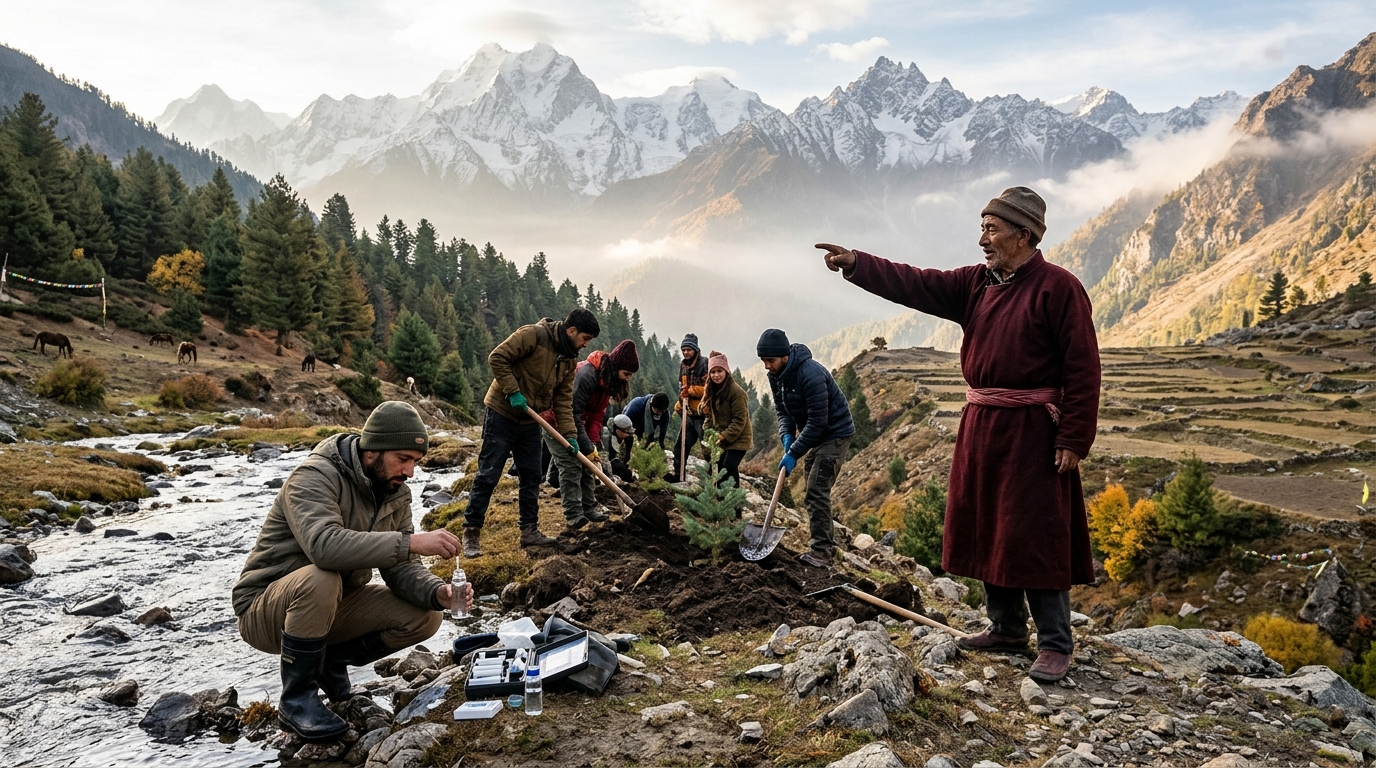
Community stewardship and field mobilization across a Western Himalayan landscape—where the enduring test of environmental action is not the banner unfurled on day one, but the living tree, flowing spring, and enforced legal buffer still standing five winters later.
CIVIL SOCIETY & ACCOUNTABILITY · IV · ACTIVISM & OUTCOMES

Who Measures the Success of Environmental Activism?

Across Jammu, Kashmir, and Ladakh, environmental trusts, litigation collectives, youth clubs, and digital observatories rightly demand rigorous transparency from the state. Yet when Kashmir EcoWatch audited its own NGO registry in November 2026 and found placeholder claims of "Positive impact projected" alongside unverified sapling and cleanup tallies across the wider movement, an inescapable question emerged: will environmentalism hold itself to the same evidentiary law it demands of government?

BY The Editorial Board · Signed by Dr. Fayaz Ahmad Khan · VOL. 01 / NO. 01 · THE INAUGURAL ISSUE
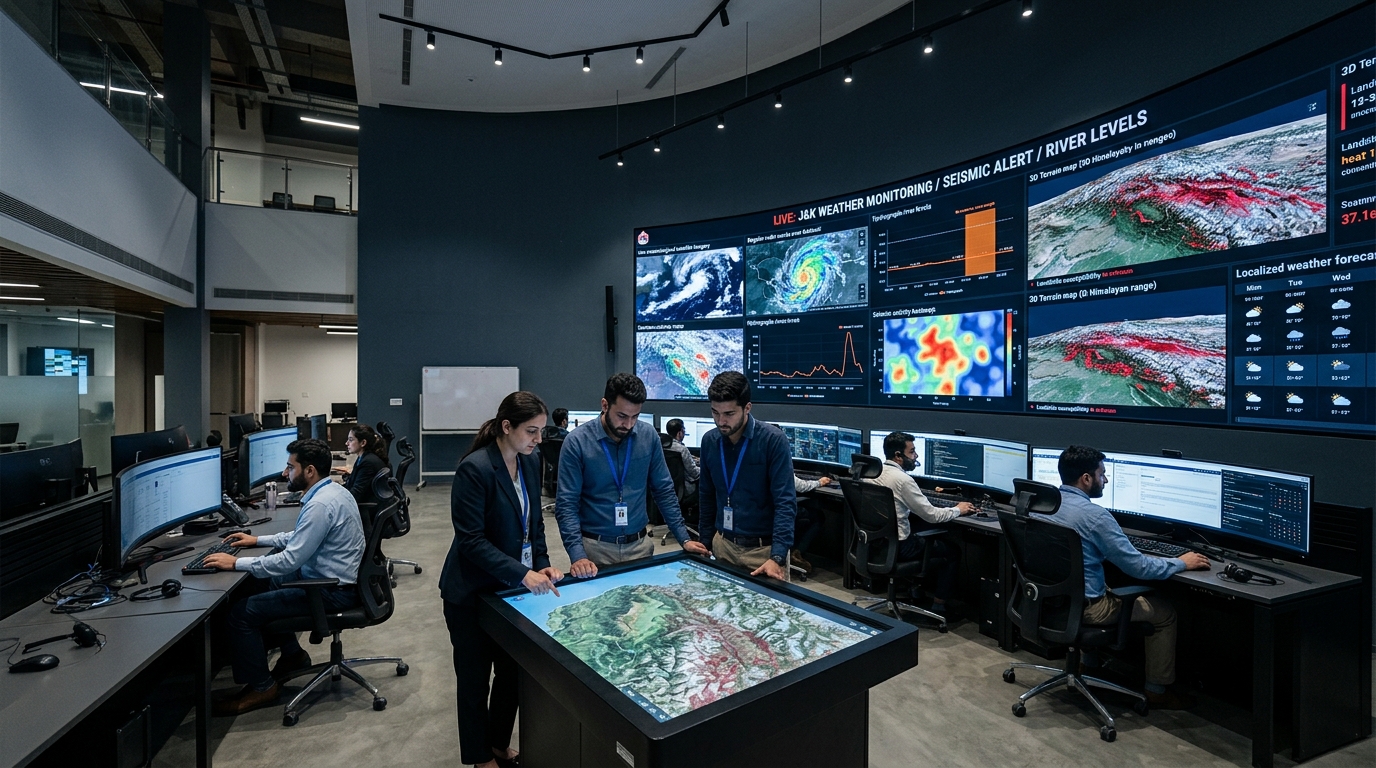
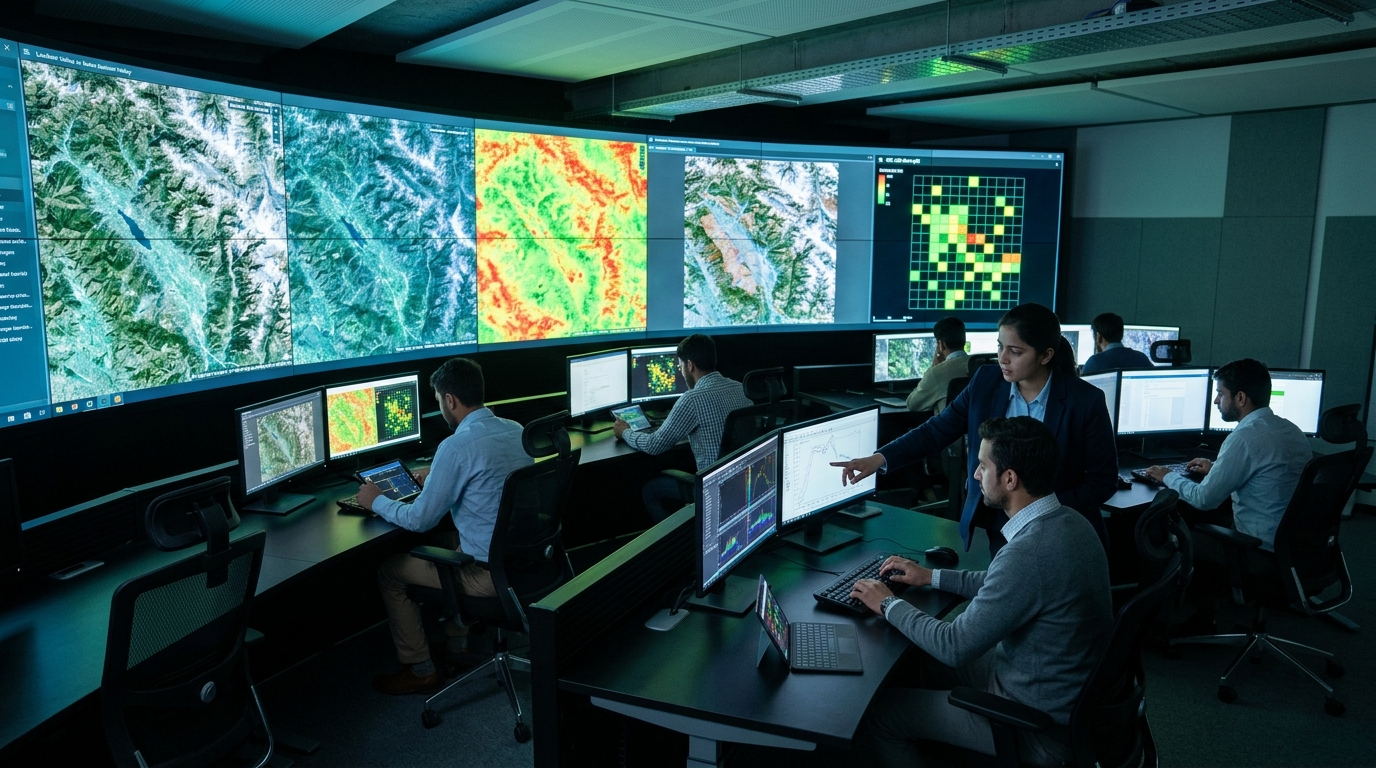
Satellite Earth-observation and watershed synthesis architecture across the Western Himalayas—illustrating the evidentiary shift required when non-binding conference declarations are replaced by continuous, open-access biophysical and fiscal commitment tracking.
CIVIL SOCIETY & ACCOUNTABILITY · V · DECLARATIONS & OBSERVATORY

The Mountains Have Heard Enough Declarations

Across a decade of Srinagar, Jammu, Leh, and pan-Himalayan conclaves, earnest environmental charters have proclaimed "Ecology Before Engineering" and "Water Before Infrastructure." Yet ninety days after the ballroom lights dim, almost no clause carries a statutory custodian, a costed budget head, a falsifiable physical unit, or a public audit clock.

BY The Editorial Board & Himalayan Dispatch Policy Observatory Desk · VOL. 01 / NO. 01 · THE INAUGURAL ISSUE
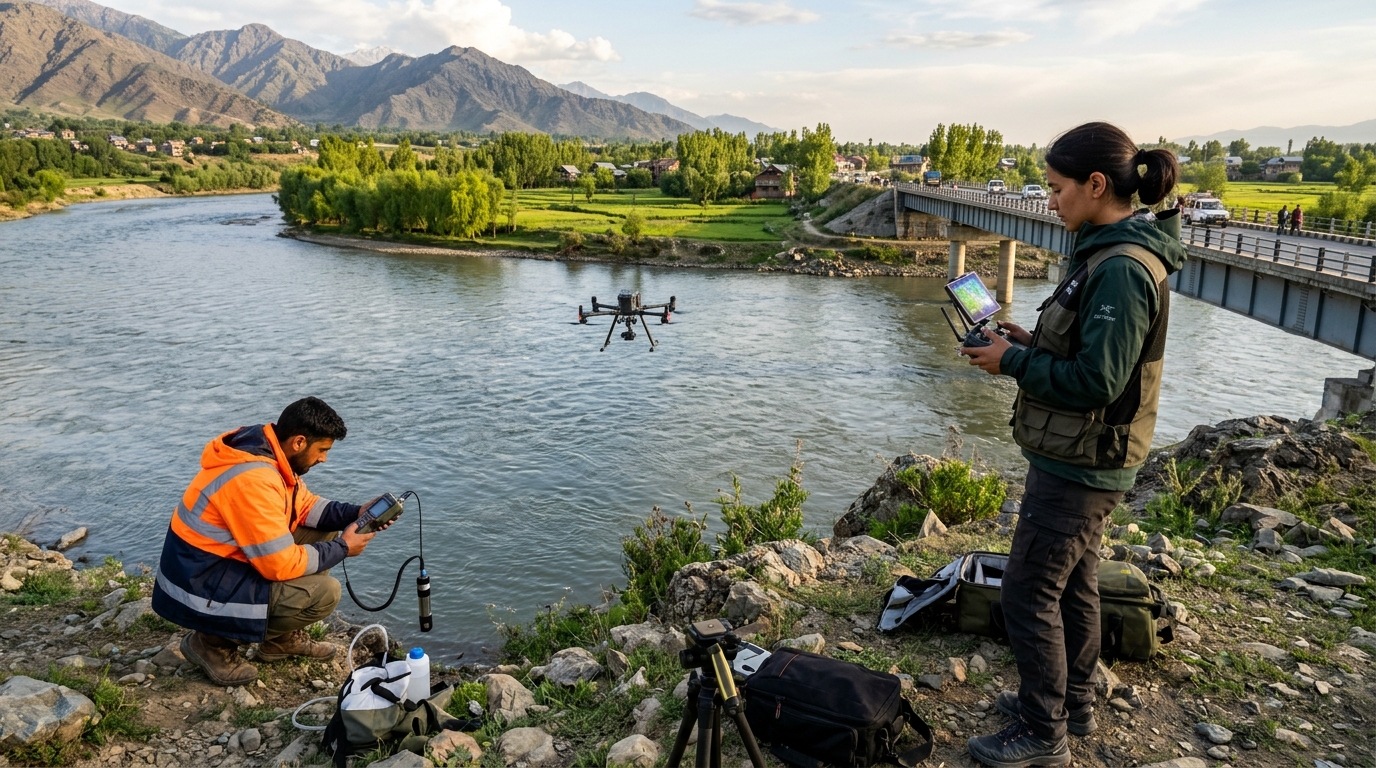
Floodplain wetlands, river channels, and mountain catchments in the Western Himalayas—where five-year electoral pledges on tourism, highways, hydropower, mining, and lake rejuvenation meet generational hydrological and ecological law (Illustrative archival plate — Kashmir EcoWatch Visual Archive).
SPECIAL INVESTIGATION · ELECTORAL ACCOUNTABILITY · ENVIRONMENTAL MANIFESTOS · GOVERNANCE

When Politics Promises Green

Across Kashmir, Jammu, Ladakh, Azad Jammu & Kashmir, and Gilgit-Baltistan, every election brings pledges of tourism, highways, hydropower, employment, and green conservation. Examining twenty-six years of electoral politics (2000–2026) under one non-partisan evidentiary ruler, Himalayan Dispatch investigates what parties actually promised, where development pledges contradict ecological limits, who held constitutional power to act, what public budgets delivered on the ground, and how our ten-part Western Himalayan Environmental Manifesto Protocol (WHEMP) turns slogans into auditable century-scale stewardship.

BY Dr. Fayaz Ahmad Khan & Himalayan Dispatch Environmental Governance, Legislative Affairs and Public Accountability Desk · VOL. 01 / NO. 01 · THE INAUGURAL ISSUE
Oligotrophic high-altitude glacial waters and moraine headwalls at Sheshnag (3,590 m) in the Upper Lidder catchment—where periglacial slope mechanics, cold-water nutrient thresholds, and downstream watershed survival obey identical physical laws regardless of political, commercial, religious, or community identity (Illustrative archival plate — Kashmir EcoWatch Visual Archive).
SPECIAL INVESTIGATION · POLITICAL ECOLOGY · ENVIRONMENTAL ETHICS · UNIVERSAL ACCOUNTABILITY

Selective Environmental Consciousness

A comprehensive historical, scientific, sociological and institutional investigation into environmental activism, collective behaviour, ecological destruction and universal environmental responsibility—from the 2008 Baltal–Domail forestland agitation, Ladakh’s 2023–2026 constitutional movement, and the November 2026 Sheshnag excavation controversy to the normalized sewage, wetland, karewa, and riverbed degradation across the Western Himalayas.

BY Dr. Fayaz Ahmad Khan & Himalayan Dispatch Political Ecology and Environmental Accountability Desk · VOL. 01 / NO. 01 · THE INAUGURAL ISSUE
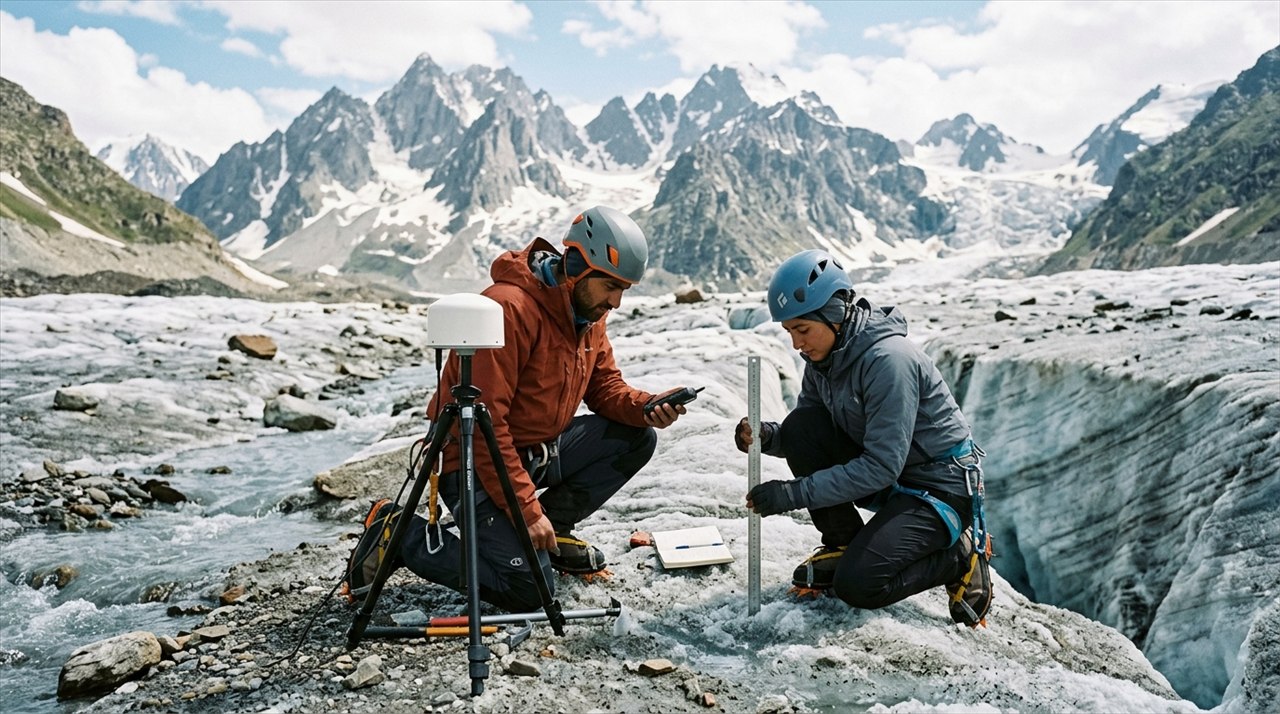
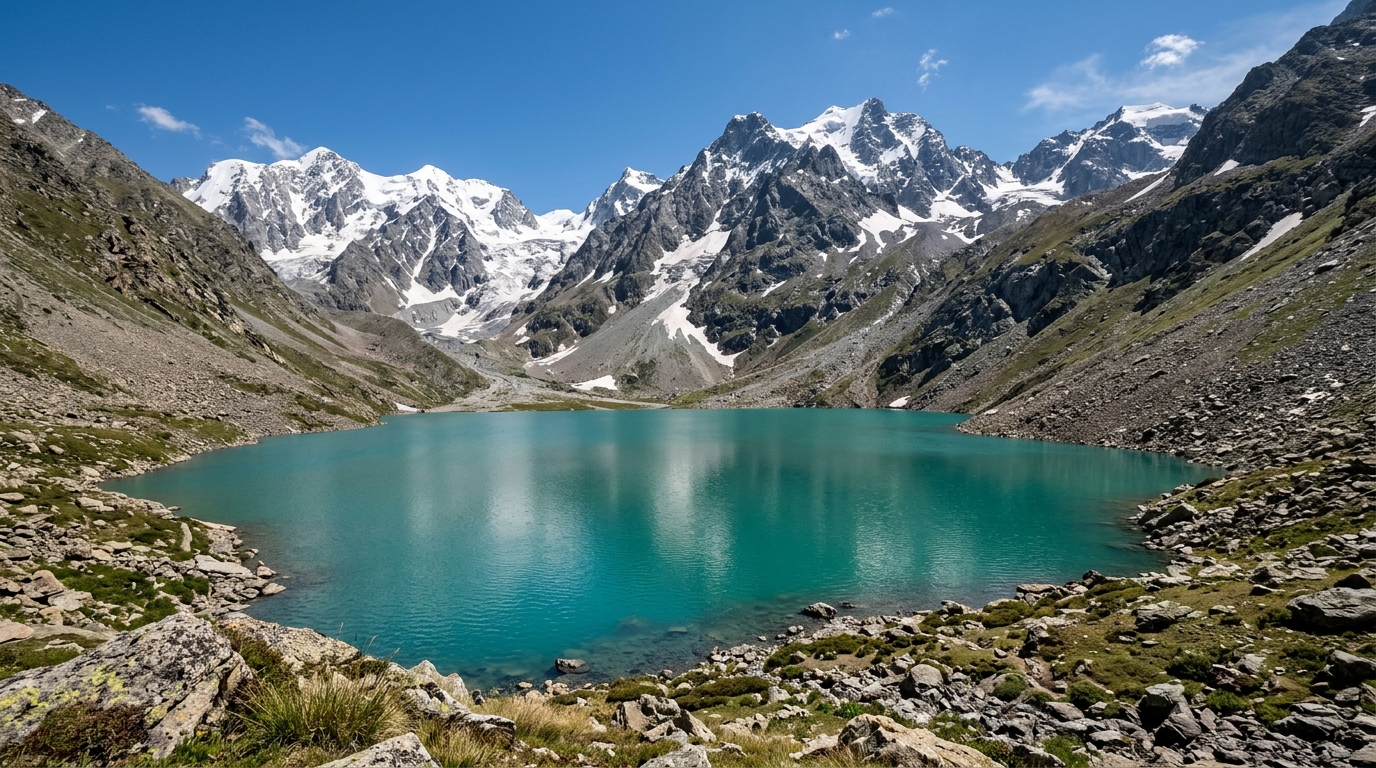
High-altitude Trans-Himalayan glacier ablation zone, moraine threshold, and headwater meltwater drainage representative of Ladakh’s cryosphere-dependent catchments across Zanskar, Suru, Leh, and the Karakoram margin (Illustrative archival plate — Kashmir EcoWatch Cryosphere Visual Archive).
LADAKH SCIENTIFIC INVESTIGATION I · CRYOSPHERE, PERMAFROST & COLD-DESERT WATER SECURITY

When the Glaciers Stop Giving

In a Trans-Himalayan rain shadow where valley floors receive barely 90–150 millimetres of annual precipitation, human settlement exists only where snowfields, small cirque glaciers, and permafrost active layers release meltwater on time. Anchored in a 2026 scientific synthesis documenting ~0.02°C annual warming, earlier snowmelt, and glacier mass losses of 0.21 to 0.37 metres of water equivalent per year, this investigation examines how hydrograph shifts across Zanskar, Suru, Nubra, Leh, Kargil, Drass, and Changthang threaten gravity-fed oases long before the last ice vanishes.

BY Dr. Fayaz Ahmad Khan & Himalayan Dispatch Ladakh Cryosphere, Cold-Desert Ecology, Carrying Capacity and Geospatial Intelligence Desk · SPECIAL SCIENTIFIC ISSUE · LADAKH'S ECOLOGICAL FRONTIERS
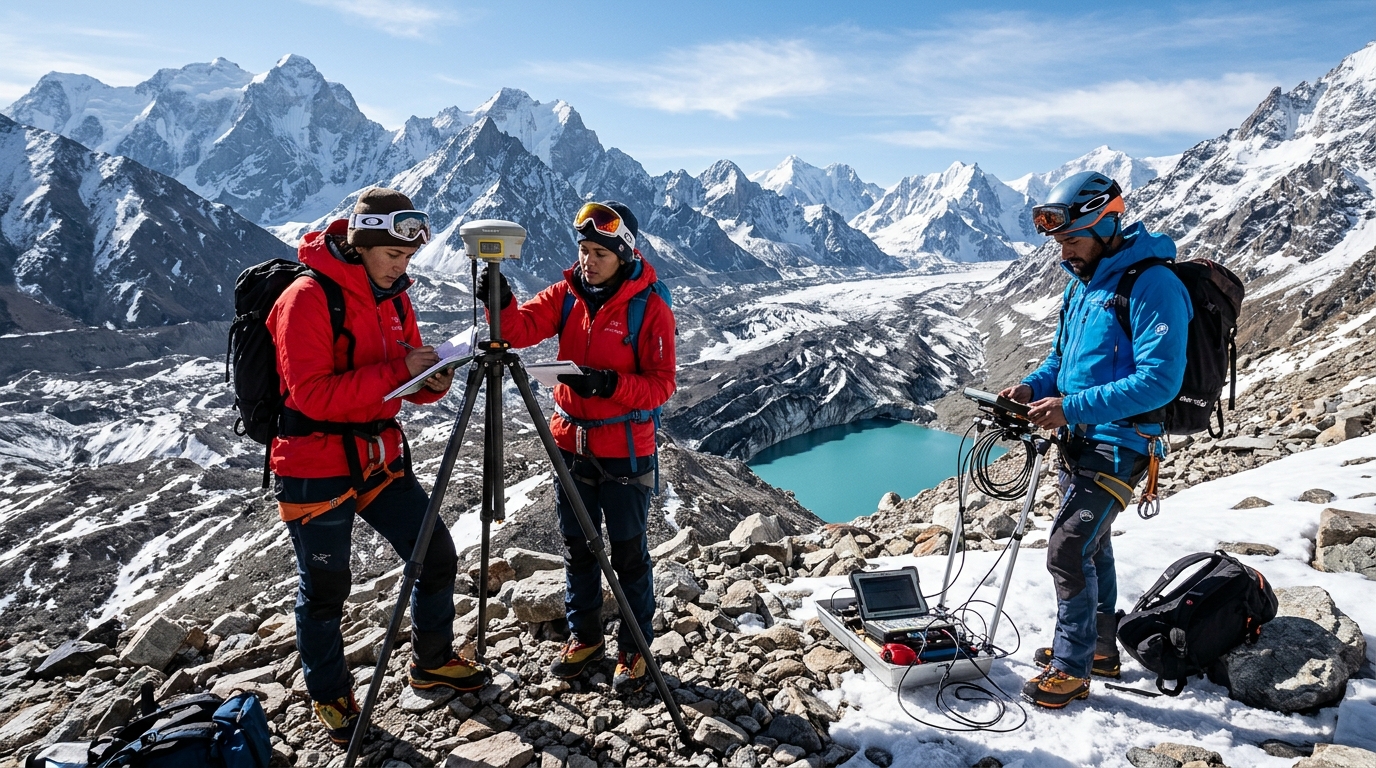
High-altitude Trans-Himalayan cold-desert terrain, alluvial outwash fans, endorheic wetland margins, and cryospheric ridgelines in Ladakh where compressed summer visitor pulses, commercial groundwater extraction, highway corridors, and rangeland energy footprints converge upon hyper-arid hydrological limits (Illustrative archival plate — Kashmir EcoWatch Visual Archive).
LADAKH SCIENTIFIC INVESTIGATION II · TOURISM, URBANIZATION & ECOLOGICAL CARRYING CAPACITY

How Many People Can a Cold Desert Sustain?

As seasonal tourist arrivals rival or outnumber permanent oasis populations across Leh, Nubra, Pangong Tso, and Zanskar—prompting a 2026 parliamentary committee warning on water scarcity and waste alongside strengthened June 2026 plastic restrictions—an empirical investigation examines borewell depletion, the shift from zero-water chakdon sanitation to flush hotels, year-round tunnel connectivity, Changthang solar enclosures, and the biophysical limits of a rain-shadow desert.

BY Dr. Fayaz Ahmad Khan & Himalayan Dispatch Ladakh Cryosphere, Cold-Desert Ecology, Carrying Capacity and Geospatial Intelligence Desk · SPECIAL SCIENTIFIC ISSUE · LADAKH'S ECOLOGICAL FRONTIERS
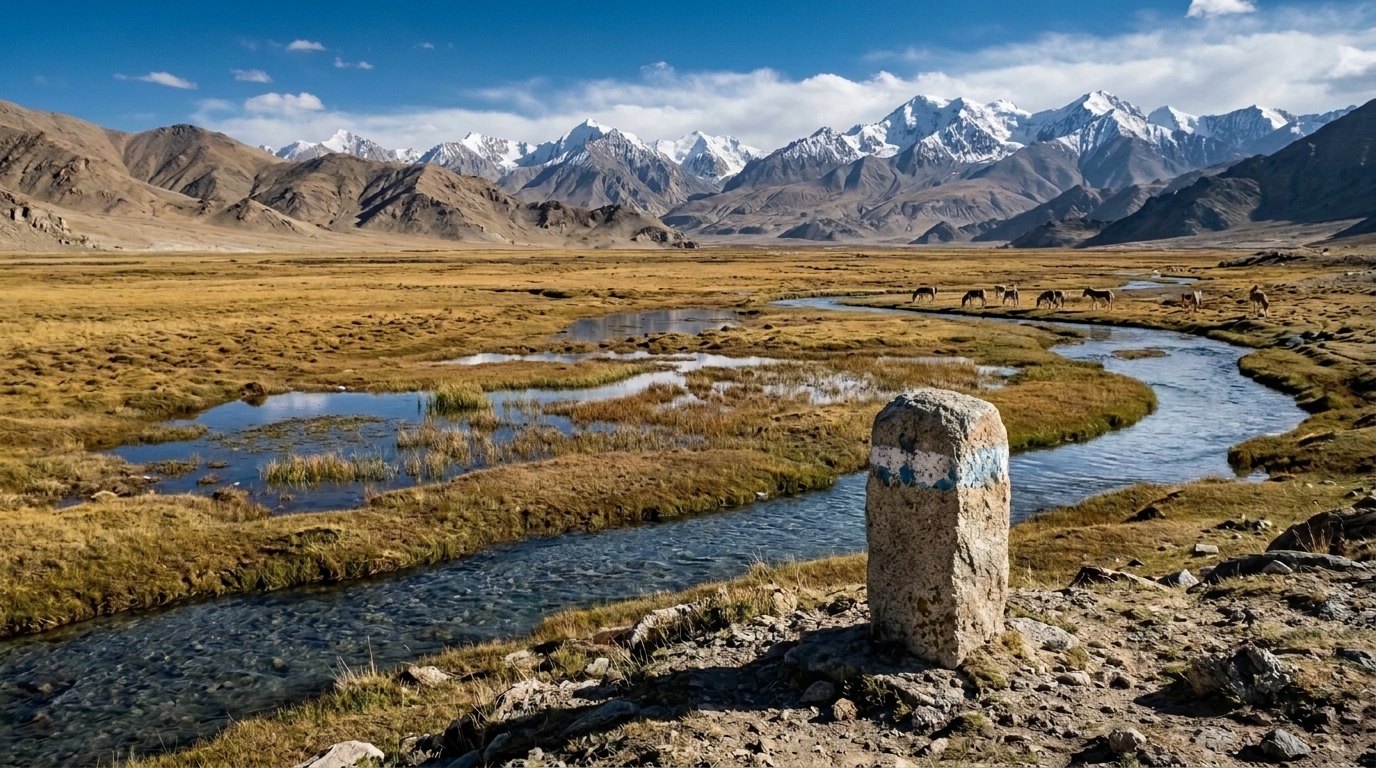
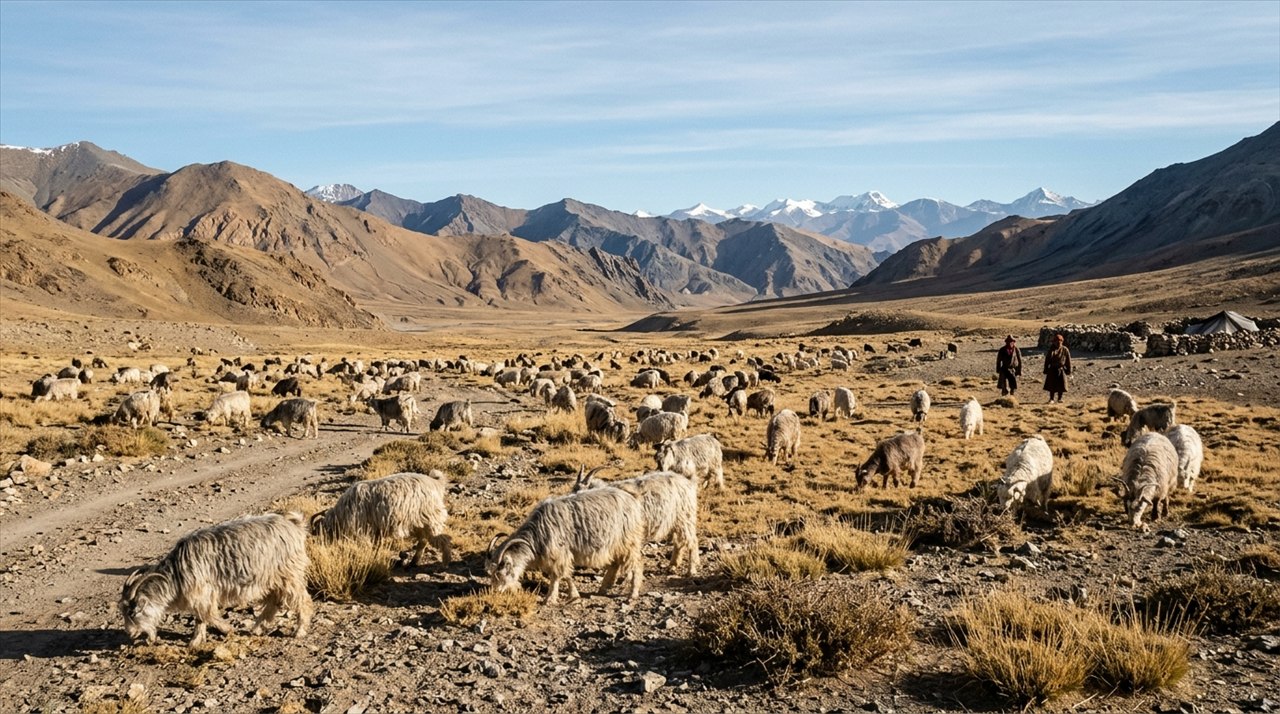
High-elevation sedge-meadow fringes, cryoturbated gravel fans, and seasonal transhumant grazing landscapes across the Changthang plateau—where permafrost soil moisture, snowmelt marshes, wild ungulates, and mobile Changpa pastoralism converge (Illustrative archival plate — Kashmir EcoWatch Visual Archive).
LADAKH SCIENTIFIC INVESTIGATION III · HIGH-ALTITUDE WETLANDS, WILDLIFE CORRIDORS & ALPINE RANGELANDS

The Desert Is Not Empty

Dismissed in colonial revenue ledgers and contemporary land-bank schedules as barren wasteland, Ladakh’s Trans-Himalayan plateau sustains psychrophilic permafrost microbiomes, Ramsar wetland refugia, sixty-five high-concern bird species, snow leopard and wild ungulate corridors, and centuries-old Changpa Pashmina commons now strained by linear fragmentation and climate change.

BY Dr. Fayaz Ahmad Khan & Himalayan Dispatch Ladakh Cryosphere, Cold-Desert Ecology, Carrying Capacity and Geospatial Intelligence Desk · SPECIAL SCIENTIFIC ISSUE · LADAKH'S ECOLOGICAL FRONTIERS

LADAKH BUREAU CORRESPONDENCE

Contact the Ladakh Bureau Desk

Send regional environmental research notes, public-record leads, or community event notices to our editorial desk. Do not transmit confidential whistleblower files via standard web forms.