When Environmental Laws Exist but the Environment Has No Defence
What the Laws Were Intended to Protect, Where Protection Broke Down and What Must Change
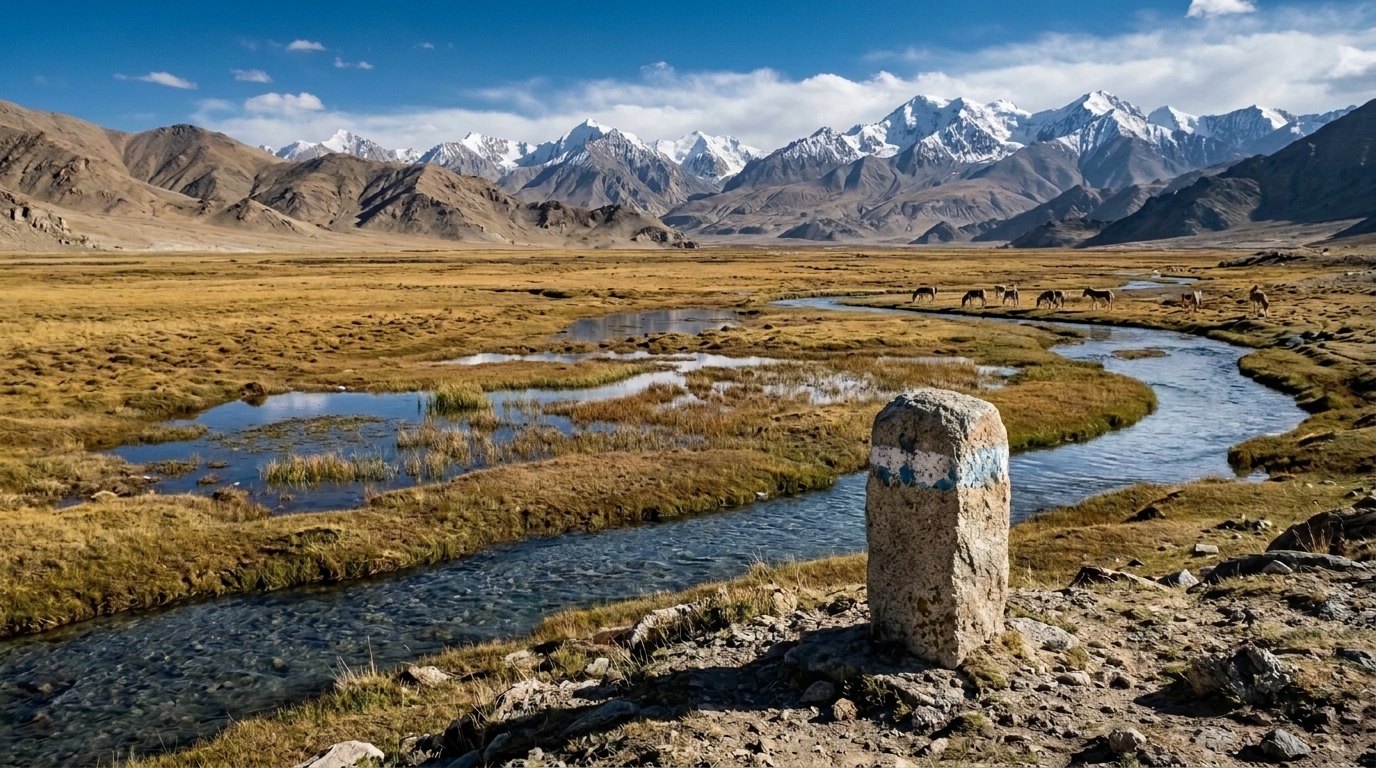
Five Questions Before Demanding Another Environmental Law
From a law-college moot hall in Pulwama to four distinct statutory systems across the Western Himalayas, why legal text alone has not defended living mountains.
The Western Himalayas do not exist in a legislative vacuum. Across Kashmir, Jammu, Ladakh, Azad Jammu & Kashmir, and Gilgit-Baltistan, statutes on the shelf already purport to protect forests, regulate water and air pollution, conserve wildlife, prohibit unauthorized construction, safeguard wetlands, control mineral extraction, appraise development impacts, and defend public health. Inside campus legal-literacy forums—such as the environmental-law dialogues convened at Kashmir Creative Education Foundation (KCEF) Law College in Pulwama with the Jammu & Kashmir Climate Action Group (JKCAG)—young law students open bare acts that read like a solemn covenant with nature. Yet ten kilometres beyond almost any campus or secretariat gate across the mountain arc, excavators slice Plio-Pleistocene karewas, untreated municipal sewage enters lakes and cold-desert streams, diverted rivers thin below hydropower barrages, and boulder-armoured riverbeds drop below century-old irrigation intakes.
Before demanding still more environmental legislation, rigorous accountability requires establishing whether the breakdown lies in the existing statutes themselves, their administrative execution, institutional fragmentation, outdated scientific standards, weakened penalty structures, missing physical infrastructure, or inaccessible judicial remedies. A government can enact admirable environmental legislation and still preside over ecological ruin. Equally, a regulator can faithfully administer a fifty-year-old concentration standard while a contemporary lake or airshed collapses.
Rather than treating environmental law as an abstract textbook inventory—or relying indefinitely on the unpaid nights of three or four heroic citizen litigants—this Special Legal and Scientific Investigation examines twenty-five years of legislation, enforcement, and ecological reality across all five Western Himalayan regions through five foundational questions. Our objective is not simply to call for more laws; it is to determine whether the existing legal architecture is capable of defending the Western Himalayas of today and tomorrow.
- •Question 01: What environmental laws apply across the five regions?
- •Question 02: What were these laws originally intended to accomplish?
- •Question 03: Where is there documented evidence of inadequate environmental protection?
- •Question 04: Which deficiencies require better enforcement, and which require legislative reform?
- •Question 05: What new legal protections are necessary for environmental challenges that existing laws do not adequately address?
This flagship investigation expands Himalayan Dispatch’s original inquiry into grassroots legal sensitization (KCEF Law College, Pulwama & JKCAG) and NGT litigation into a comprehensive five-region comparative legal-scientific audit paired with Monograph 07 (20 Volumes · 100 Proposed Chapters) and KEW’s permanent 16-registry Legislation & Enforcement Observatory.
The Legal Geography of the Western Himalayas: Four Frameworks Across Five Regions
Why cross-Himalayan accountability collapses whenever distinct constitutional, post-2019, and regional statutory regimes are conflated.
No serious legal analysis can treat the Western Himalayas as though they operate under a single environmental code. Across the five geographical regions monitored by Kashmir EcoWatch, four distinct statutory and administrative frameworks govern environmental decision-making: (1) Indian central environmental statutes alongside applicable Union Territory of Jammu & Kashmir laws across the Kashmir Valley and Jammu Division; (2) Indian central statutes alongside adapted regional laws and Autonomous Hill Development Council regulations in the Union Territory of Ladakh; (3) separately enacted Azad Jammu & Kashmir environmental statutes and regulations; and (4) Gilgit-Baltistan’s regional environmental statutes, forest acts, and specifically extended federal provisions.
Two methodological rules govern every finding in this investigation. First, on the Indian-administered side, the Jammu and Kashmir Reorganisation Act, 2019 fundamentally transformed the statutory landscape—extending central enactments, repealing or superseding several former state acts, and reorganizing regulatory authorities between the UT of Jammu & Kashmir and the UT of Ladakh. Second, across Azad Jammu & Kashmir and Gilgit-Baltistan, separate regional environmental protection statutes operate; Pakistan’s federal environmental legislation cannot automatically be assumed to apply identically in either territory without explicit adoption or constitutional extension.
Above all, historical accountability demands inter-temporal fairness: every administrative clearance, forest diversion, mining lease, or municipal default over the past quarter-century must be judged against the exact statute and subordinate rule in force on the date that decision was taken—never retroactively against rules enacted years later.
PART I · JURISDICTIONAL ARCHITECTURE
Four distinct principal legal frameworks operating across the five Western Himalayan geographical regions.
| Geographical Region & Principal Legal Framework | Key Transitional & Constitutional Caveat |
|---|---|
| Kashmir Valley — Indian central environmental legislation and applicable Jammu & Kashmir laws | Substantially reshaped by the Jammu and Kashmir Reorganisation Act, 2019; historical state enactments (e.g., J&K Wildlife Protection Act 1978, State Forest Act) must be distinguished from central statutes and adapted UT laws currently in force. |
| Jammu Division — Indian central environmental legislation and applicable Jammu & Kashmir laws | Shares the UT of Jammu & Kashmir statutory architecture with Kashmir Valley; historical decisions prior to October 31, 2019 must be evaluated against the law in force on the date of decision. |
| Ladakh — Indian central legislation, adapted regional laws and Ladakh-specific regulations | Administered as a Union Territory without legislature since October 31, 2019 alongside the Ladakh Autonomous Hill Development Councils Act, 1997 (Leh & Kargil LAHDCs) and adapted UT notifications. |
| Azad Jammu & Kashmir — AJ&K environmental legislation and separately adopted laws | Governed principally by the AJ&K Environmental Protection Act, 2000 (Act IV of 2000) and AJ&K Interim Constitution arrangements; Pakistan's federal environmental statutes (e.g., PEPA 1997 or federal climate provisions) do not automatically apply identically without separate AJ&K adoption or constitutional extension. |
| Gilgit-Baltistan — GB environmental legislation, regional statutes and applicable federal laws | Governed by the Gilgit-Baltistan Environmental Protection Act, 2014/2015 (registered as Act VI of 2015 by GB Assembly; cited as 2014 in short title and GB-EPA practice) and GB Forest Act, 2019; federal Pakistani environmental laws cannot be assumed to apply identically without specific territorial extension. |
Kashmir, Jammu and Ladakh: Dense Statutes, Contemporary Rules and the Planning Backdoor
Eighteen central acts, five constitutional pillars, twenty-two subordinate rule regimes—including the April 2026 Solid Waste Management Rules—and fifteen regional land and water statutes.
Across Kashmir, Jammu, and Ladakh, the formal statutory edifice is among the most comprehensive in the developing world. Eighteen fundamental central enactments—anchored by the Environment (Protection) Act, 1986, the Water Act, 1974, the Air Act, 1981, the Indian Forest Act, 1927, the Forest (Conservation) Act, 1980 (renamed the Van (Sanrakshan Evam Samvardhan) Adhiniyam), the Wild Life (Protection) Act, 1972, the Biological Diversity Act, 2002, the Forest Rights Act, 2006, the Disaster Management Act, 2005, and the National Green Tribunal Act, 2010—sit beneath five constitutional pillars: Article 21’s judicially expanded fundamental right to a healthy environment and protection against adverse climate effects, Article 48A’s state directive, Article 51A(g)’s citizen duty, and the writ jurisdictions of the Supreme Court (Article 32) and High Court (Article 226).
Yet in daily administrative practice, environmental protection rarely turns on the grand preambles of parent acts; it lives or dies inside twenty-two subordinate notifications and technical rules—from the EIA Notification, 2006 and Wetlands Rules, 2017 to Eco-Sensitive Zone notifications and ambient/effluent standards. Crucially, legal registries cannot copy decade-old academic textbooks: on April 1, 2026, India’s Solid Waste Management Rules, 2026 entered into force, replacing the 2016 rules with stricter duties on segregation, bulk waste generators, local bodies, waste processing, and digital reporting—alongside the Environment (Construction and Demolition) Waste Management Rules, 2025, the Environment Audit Rules, 2025, and the Green Credit Rules, 2023.
Equally decisive—and routinely overlooked by environmental commentators—are fifteen regional land, water, municipal, and mineral statutes: the J&K Water Resources (Regulation and Management) Act, 2010, J&K Development Act, 1970, Control of Building Operations Act, 1988, Land Revenue Act, Agrarian Reforms Act, 1976, Prevention of Ribbon Development Act, 2007, Brick Kilns Act, 2010 and Rules, 2017, Municipal Acts, 2000, Panchayati Raj Act, 1989, Minor Mineral Rules, town-planning/building bye-laws, and the Ladakh Autonomous Hill Development Councils Act, 1997. Across the Western Himalayas, wetlands are filled, floodplains concretized, and karewas stripped not through environmental statutes, but through routine permissions granted—or ignored—under revenue, planning, and minor-mineral laws.
PART II · SELECTED CENTRAL ACTS, CONSTITUTIONAL PILLARS & 2023–2026 SUBORDINATE RULES
Representative cross-section of the 18 central statutes, 5 constitutional provisions, 22 subordinate rules, and 15 regional land/water laws indexed in Monograph 07 (explore all 55 J&K/Ladakh instruments in the Workbench below).
| Instrument Category & Citation | Original Legislative / Regulatory Intention |
|---|---|
| Central Act 01 · Environment (Protection) Act, 1986 | Comprehensive environmental protection and pollution regulation |
| Central Act 02 · Water (Prevention and Control of Pollution) Act, 1974 | Prevention and control of water pollution (including 2024 Amendment Act applicable to UTs) |
| Central Act 03 · Air (Prevention and Control of Pollution) Act, 1981 | Prevention and control of atmospheric pollution |
| Central Act 04 · Indian Forest Act, 1927 | Forest administration and regulation of forest resources |
| Central Act 05 · Forest (Conservation) Act, 1980 — renamed Van (Sanrakshan Evam Samvardhan) Adhiniyam (amended 2023) | Regulation of forest land diversion |
| Central Act 06 · Wild Life (Protection) Act, 1972 | Protection of wildlife, habitats and protected areas |
| Central Act 07 · Biological Diversity Act, 2002 | Biodiversity conservation, sustainable use and benefit sharing |
| Central Act 08 · National Green Tribunal Act, 2010 | Specialized environmental adjudication and remedies |
| Constitution of India · Article 21 | Right to life, judicially interpreted to encompass environmental protection and freedom from adverse effects of climate change (M.K. Ranjitsinh, 2024) |
| Constitution of India · Article 48A | Directive Principle: State responsibility to protect and improve the environment and safeguard forests and wildlife |
| Subordinate Rule 04 · Solid Waste Management Rules, 2026 (in force April 1, 2026 — replacing 2016 Rules) | Strengthened collection, segregation, bulk-waste-generator duties, waste processing and local-authority reporting |
| Subordinate Rule 10 · Environment (Construction and Demolition) Waste Management Rules, 2025 | Construction debris management, muck handling and recycling obligations |
| Subordinate Rule 15 · Environment Audit Rules, 2025 | Structured third-party and regulatory environmental compliance auditing |
| Regional Statutes · J&K Water Resources Act 2010, Development Act 1970, Land Revenue Act & LAHDC Act 1997 | Govern spatial master planning, floodplain/agricultural land classification, minor-mineral leases, and autonomous hill-council resource administration (territorial adaptations require statute-by-statute verification). |
Azad Jammu & Kashmir: A Twenty-Six-Year Act and the Neelum–Jhelum Lesson
Why environmental approval does not equal environmental performance when river diversions reduce flows through Muzaffarabad.
In Azad Jammu & Kashmir, the cornerstone statute is the Azad Jammu and Kashmir Environmental Protection Act, 2000 (Act IV of 2000), supported by the Review of IEE and EIA Regulations, 2009, State Environmental Quality Standards, Environmental Laboratories Certification Regulations, 2009, and the AJ&K Wildlife (Protection, Preservation, Conservation and Management) Act, 2014—operating alongside older forestry and mineral enactments including the Jammu and Kashmir Forest Regulation, 1930, the Forest (Sale of Timber) Act, 1930, the AJ&K Logging and Sawmilling Corporation Act, 1985, and the 1980 Mineral Adaptation Act. Now twenty-six years old, Act IV of 2000 warrants systematic scientific review against twenty-first-century climate hydrology, cumulative basin engineering, and mountain hazard governance, while municipal, disaster, and building regulations require statute-by-statute gazette verification.
Nowhere is the gulf between paper environmental approval and lived downstream reality clearer than in the Neelum–Jhelum Hydroelectric Project. AJ&K’s own official 2019 Voluntary National Review candidly acknowledged reduced Neelum River flows around Muzaffarabad and resulting municipal drinking-water scarcity associated with river diversion. Subsequent World Bank technical assessments likewise documented concerns over environmental-flow adequacy and its revision only after public objections and judicial intervention, while the AJ&K High Court record reflects environmental-flow commitments and alternative water-supply obligations.
Neelum–Jhelum establishes a permanent legal lesson for every Himalayan river basin: environmental flow obligations must never be compressed into a single flat minimum-discharge number negotiated during project clearance. Lawful hydropower licensing must bind operators to seasonal snowmelt and monsoon hydrographs, aquatic biodiversity needs, downstream drinking-water security, reduced wastewater dilution capacity, alluvial groundwater recharge, future drought regimes, and cumulative cascade impacts.
PART III · AZAD JAMMU & KASHMIR STATUTES & NEELUM–JHELUM LEGAL REASSESSMENT
Principal AJ&K legislative instruments alongside the six foundational legal reassessment questions raised by the Neelum–Jhelum diversion record.
| AJ&K Statutory Instrument / Regulatory Intention | Original Purpose or Required Post-Diversion Legal Reassessment |
|---|---|
| AJ&K 01 · Azad Jammu and Kashmir Environmental Protection Act, 2000 (Act IV of 2000) | Environmental protection, pollution prevention and sustainable development (~26 years old in 2026) |
| AJ&K 02 · AJ&K Review of IEE and EIA Regulations, 2009 | Prior Initial Environmental Examination and Environmental Impact Assessment of proposed projects |
| AJ&K 03 · AJ&K State Environmental Quality Standards (SEQS) and associated regulations | Control of industrial/municipal emissions, effluents and ambient pollution |
| AJ&K 04 · AJ&K Environmental Laboratories Certification Regulations, 2009 | Certification and analytical reliability of environmental laboratory testing |
| AJ&K 05 · AJ&K Wildlife (Protection, Preservation, Conservation and Management) Act, 2014 | Protection of wildlife, protected habitats and community-based conservation |
| AJ&K 06 · Jammu and Kashmir Forest Regulation, 1930 (including subsequent AJ&K amendments) | Forest-resource demarcation, management and protection (continuing status requires check against subsequent amendments) |
| Neelum–Jhelum Audit · Environmental impact assessment before construction | Did the original assessment adequately quantify downstream hydrological, thermal and micro-climatic impacts? |
| Neelum–Jhelum Audit · Protection of downstream communities | Were Muzaffarabad drinking-water security, aquifer recharge and riparian livelihoods safeguarded ex-ante? |
| Neelum–Jhelum Audit · Environmental flow requirements | Were ecological flows grounded in seasonal hydrographs rather than a flat negotiated minimum release? |
| Neelum–Jhelum Audit · Conditional environmental approval (NOC) | Were all NOC approval conditions implemented on schedule and independently audited? |
| Neelum–Jhelum Audit · Pollution prevention | Were downstream municipal wastewater dilution and assimilation limits reassessed once river discharge dropped? |
| Neelum–Jhelum Audit · Sustainable hydropower governance | Were cumulative basin impacts across multiple Neelum–Jhelum cascade projects examined together? |
Gilgit-Baltistan: Progressive Forest Law, Citation Anomalies and Placer Gold Realities
Retaining both 2014 and 2015 EPA designations, recognizing the 2019 Forest Act’s glacier scope, and diagnosing enforcement gaps along northern rivers.
Gilgit-Baltistan illustrates both the necessity of meticulous primary-source legal verification and the danger of careless calls to scrap existing regional statutes. Even the citation of its principal environmental law requires archival precision: the Gilgit-Baltistan Assembly’s official acts register records the statute as the Gilgit-Baltistan Environmental Protection Act, 2015 (Act VI of 2015), whereas the published short-title clause and Gilgit-Baltistan Environmental Protection Agency (GB-EPA) practice cite the Gilgit-Baltistan Environmental Protection Act, 2014. Until the authenticated commencement gazette is reconciled, rigorous legal scholarship must retain both references alongside the Northern Areas Wildlife Act, 1975, GB Disaster Management Act, 2017, Industrial and BTS Regulations, 2018, and Tour Operators Act, 2020.
Crucially, Gilgit-Baltistan already possesses one of the region’s most ecologically progressive statutes on paper: as documented in FAOLEX, the Gilgit-Baltistan Forest Act, 2019 (amended 2020) extends far beyond timber administration to encompass rangelands, wetlands, riverbeds, and glaciers, while providing statutory hooks for ecosystem-service valuation and climate-related management. Recommending wholesale replacement of that Act without first auditing its subordinate rules and field implementation would be a serious mistake.
At the same time, statutory authority without field enforcement leaves rivers exposed. In August 2026, Dawn reported statements by the Director of GB-EPA regarding environmental noncompliance in placer gold mining—citing inadequate waste-management arrangements and failure by several operators to observe statutory environmental safeguards. Because the GB EPA Act already prohibits unauthorized pollution and requires prior IEE/EIA approval, that episode points primarily to an enforcement and compliance-monitoring deficit—precisely as a 2026 consultancy notice opens a timely window to review and strengthen GB’s environmental act and regulations across cryosphere hazards, mining, tourism, and cumulative impacts.
PART IV · GILGIT-BALTISTAN STATUTORY INVENTORY (12 INSTRUMENTS)
Regional environmental, forest, wildlife, disaster, industrial, and tourism legislation in Gilgit-Baltistan.
| Legislation or Regulation | Original Legislative Intention |
|---|---|
| 01. Gilgit-Baltistan Environmental Protection Act, 2014 / 2015 (Act VI of 2015) | Pollution prevention, conservation and sustainable development (GB Assembly register: Act VI of 2015; short title & GB-EPA usage: 2014 — both retained) |
| 02. Environmental Assessment Provisions (IEE / EIA) under the GB EPA | Mandatory prior Initial Environmental Examination or EIA and regulatory NOC approval before project commencement |
| 03. Gilgit-Baltistan Environmental Quality Standards (GB-EQS) | Regulatory limits on waste, air emissions, liquid effluents and ambient noise |
| 04. Northern Areas Wildlife Preservation Act, 1975 | Wildlife conservation, protected areas and hunting/trophy regulation (~51 years old in 2026) |
| 05. Gilgit-Baltistan Forest Act, 2019 | Modern ecosystem-wide conservation encompassing forests, rangelands, wetlands, riverbeds, glaciers, ecosystem-service valuation and climate management (FAOLEX) |
| 06. Gilgit-Baltistan Forest (Amendment) Act, 2020 | Targeted amendment of forest governance and administrative provisions |
| 07. Gilgit-Baltistan Disaster Management Act, 2017 | GLOF, landslide, earthquake and flood mitigation, preparedness and response |
| 08. Gilgit-Baltistan Industrial Regulations, 2018 | Industrial siting, operation and environmental safeguards |
| 09. Base Transceiver Station (BTS) Regulations, 2018 | Environmental, generator-noise and siting regulation of telecommunications towers |
| 10. Gilgit-Baltistan Travel Agencies and Tour Operators Act, 2020 | Licensing and regulation of trekking, expedition and tourism-related businesses |
| 11. Applicable Gilgit-Baltistan Mining and Mineral Concession Regulations | Gemstone, dimension-stone and alluvial/placer gold mineral concessions and extraction |
| 12. Applicable Gilgit-Baltistan Local Government Legislation | Municipal solid waste, sanitation and town administration |
Where Protection Broke Down: A 22-Year Unapproved Lake Bill and Cold-Desert Sewage Gaps
Audit proof from CAG Report No. 4 of 2025, NGT Ladakh compliance dockets, and ex-post judicial autopsies across Kashmir.
Where do official public records—not opinion—prove that existing legal and institutional arrangements failed to deliver ecological protection? Perhaps the single most revealing discovery in this investigation lies inside Report No. 4 of 2025 of the Comptroller and Auditor General (CAG) of India (Chapter II, Sections 2.4–2.5, released publicly in 2026). As early as April 2000, a dedicated lake conservation bill was drafted for Jammu & Kashmir. Yet at the audit cutoff in March 2022—twenty-two years later—that bill remained unapproved while nine separate institutions exercised overlapping lake-related functions. Across the wider historical inventory examined by the audit, 518 of 697 historically inventoried lakes had disappeared or shrunk in area, and 50 of 63 sampled lakes were receiving untreated sewage (historical audit-period findings; post-March 2022 legislative and individual-lake status require separate confirmation).
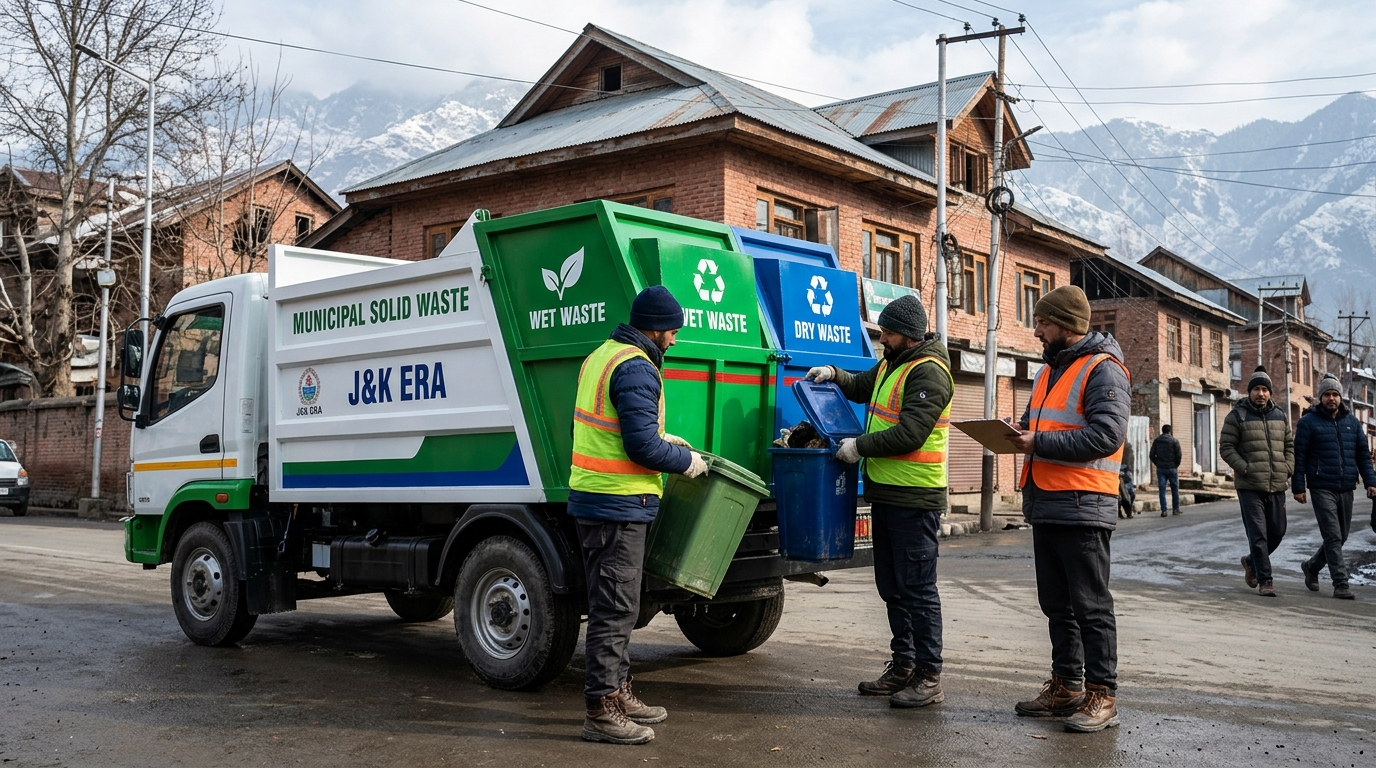
Connect that 22-year statutory vacuum directly to our companion engineering investigation, The Mathematics of a Dying Lake: Jammu & Kashmir spent hundreds of crores of public rupees on harvesters, dredgers, and peripheral STPs without enacting the unified statutory boundary, catchment-protection, and nutrient-load law its own conservation authority had proposed in 2000. Across Ladakh, meanwhile, September 2025 National Green Tribunal proceedings documented a combined reported municipal sewage treatment gap of 12.33 MLD (5.69 MLD in Leh and 6.64 MLD in Kargil—historical tribunal-reported figures alongside continuing 2026 SWM reviews), proving that mandatory pollution standards on paper cannot substitute for cold-climate treatment plants, engineers, and operating budgets.
Even where courageous citizen litigants—such as Dr. Raja Muzaffar Bhat in the Doodhganga ₹35 Crore NGT compensation case (OA No. 241/2021 & OA No. 351/2023) or petitioners defending Dal Lake (WP(C) PIL No. 2/2014), Hokersar, and Pampore karewas—win landmark orders, three structural traps blunt ex-post litigation. First is temporal asymmetry: excavators erase a two-million-year karewa scarp or a snowtrout cobble riffle in six weeks while dockets mature in years across a 700-kilometre distance to New Delhi. Second is fiscal circularity: when municipalities or highway agencies break the law, government-to-government Polluter-Pays transfers tax citizens twice while sparing negligent officers personal liability under Water Act Section 48. Third is compliance opacity: in KEW’s own Master Judicial Inventory (src/data/environmental-pil.ts), satellite cross-checks repeatedly diverged from GOVERNMENT_AFFIDAVIT_ONLY claims (such as 43 buildings expanding inside Dal Lake’s 200 m prohibited buffer), even as KEW candidly quarantined 26 unverified CNR strings and logged historical paper-register gaps.
PART V · DOCUMENTED REGULATORY & INFRASTRUCTURE GAPS (CAG REPORT NO. 4 OF 2025 & NGT LADAKH 2025)
CAG lake inventory/sewage metrics reflect historical audit periods up to March 2022 (not verified November 2026 status of every waterbody); Ladakh 12.33 MLD (Leh 5.69 + Kargil 6.64 MLD) reflects administration figures reported in Sept 2025 NGT proceedings.
Re-Examining the Statutes Themselves: Pre-Satellite Origins, Penalty Shifts and Diagnostic Triage
Why a 99-year-old forest act is not automatically obsolete—and how to separate enforcement failures from genuine legislative vacuums.
Age alone does not indict a statute: the Indian Forest Act (99 years old in 2026), AJ&K Forest Regulation (96 years), Mines and Minerals Act (69 years), Wild Life Protection Act (54 years), and Water Act (52 years) have undergone repeated amendments. Yet their core regulatory architecture was conceived decades before climate attribution science, Sentinel/InSAR satellite change detection, GeoAI, environmental DNA (eDNA), continuous telemetered water-quality sensors, and basin-scale cumulative modelling existed. Modernizing Himalayan environmental law means wiring those scientific capabilities directly into statutory triggers, permit conditions, and admissible evidentiary rules.
Contemporary amendments demand equally dispassionate scrutiny rather than automatic applause. Under India’s Water (Prevention and Control of Pollution) Amendment Act, 2024—applicable directly to Union Territories including Jammu & Kashmir and Ladakh—alongside the Jan Vishwas legislation, several compliance offences shifted from criminal magistrate prosecution toward administrative monetary penalties adjudicated by executive officers, while retaining criminal liability for grave breaches; similarly, the 2023 Van Adhiniyam amendment exempted strategic linear projects within 100 km of international borders and the LoC. Whether administrative penalties deliver faster compliance or weaken deterrence when the state polices its own departments must be tested empirically against actual penalty, closure, and restoration records.
Above all, lawmakers must apply strict diagnostic triage before drafting a single new bill. Where sufficient statutory prohibition already exists—untreated lake sewage, illegal forest clearing, open waste dumping, or unpermitted boulder mining—passing another overlapping statute merely multiplies bureaucratic committees without building a single STP or hiring a single lab chemist. Conversely, where substantive legal recognition is missing—Plio-Pleistocene karewas treated as ordinary clay, unnotified village nambals, glacier periglacial buffers, seasonal river e-flows, or watershed cumulative caps—enforcement alone cannot conjure powers the legislature never wrote.
PART VI & VII · ENFORCEMENT FAILURE VS. LEGISLATIVE FAILURE (15-SECTOR DIAGNOSTIC)
Separating environmental problems requiring rigorous enforcement and infrastructure funding from those requiring targeted statutory amendment or new ecosystem-specific legislation.
| Environmental Problem & Existing Shield | Recommended Legal & Institutional Approach |
|---|---|
| Untreated sewage entering lakes (Pollution-control legislation (Water Act 1974 / AJ&K EPA / GB EPA)) | Enforce existing obligations and fund full sewer/STP interception |
| Illegal forest clearing (Forest legislation (IFA 1927, Van Adhiniyam, AJ&K 1930 Reg., GB Forest Act 2019)) | Strengthen field enforcement, satellite alerts and native restoration |
| Unauthorized wetland construction (Wetland and spatial planning regulations (Wetlands Rules 2017, Municipal/Dev Acts)) | Complete statutory notification, cadastral demarcation and enforcement |
| Illegal riverbed extraction (Mining and environmental laws (MMDR 1957, Minor Mineral Rules, EIA 2006)) | Enforce permits, scientific snowmelt replenishment limits and channel restoration |
| Open waste dumping (Waste-management rules (including India Solid Waste Management Rules, 2026)) | Implement existing segregation, processing and landfill-remediation mandates |
| Harmful pesticide and fungicide use (Insecticides Act, 1968 and agricultural regulations) | Update cold-water/pollinator ecological safeguards and strengthen residue monitoring |
| Chronic lake eutrophication (General water-pollution and wetland protection) | Enact dedicated lake conservation, nutrient-budget (TMDL) and recovery obligations |
| Cumulative impacts of mountain infrastructure (Project-level EIA / IEE framework) | Substantially revise rules to mandate basin-wide and regional cumulative assessments |
| Glacier and permafrost ecosystem disturbance (Fragmented environmental protections (except partial coverage in GB Forest Act 2019)) | Targeted cryosphere and glacier protection legislation or statutory rules |
| Tourism & pilgrimage exceeding ecological capacity (General town-planning and tourism registration laws) | Enact enforceable site-specific biophysical carrying-capacity limits |
| Enclosed-valley & transboundary air pollution (Municipal/stack-focused Air Pollution Acts) | Establish regional airshed management and cooperative monitoring mechanisms |
| Declining downstream environmental water flows (Water-resource statutes and one-off project NOC conditions) | Legislate binding seasonal ecological flow regimes and river connectivity standards |
| Loss of Plio-Pleistocene karewas & geological heritage (Treated merely as ordinary earth / minor mineral under mining & planning laws) | Enact dedicated Himalayan geoconservation and Karewa protection legislation |
| Repeated ecological noncompliance despite fines (Administrative penalties and Polluter-Pays escrow deposits) | Mandate restoration-linked financial liability, performance bonds and disgorgement |
| Scientific & compliance evidence inaccessible to citizens (Reactive request-based Right to Information laws) | Enact proactive machine-readable environmental & scientific disclosure mandates |
Statutory Registry, Enforcement Triage, 15 Reform Packages & Lake TMDL Simulator
Distinguishes enacted statutory authority across Kashmir, Jammu, Ladakh, Azad Jammu & Kashmir, and Gilgit-Baltistan from pure enforcement failures and proposed model legislative reforms.
Kashmir Valley
Indian central environmental legislation and applicable Jammu & Kashmir laws
Jammu Division
Indian central environmental legislation and applicable Jammu & Kashmir laws
Ladakh
Indian central legislation, adapted regional laws and Ladakh-specific regulations
Azad Jammu & Kashmir
AJ&K environmental legislation and separately adopted laws
Gilgit-Baltistan
GB environmental legislation, regional statutes and applicable federal laws
| Jurisdiction | Enacted Legislation / Regulation | Original Legislative Intention | Census Status |
|---|---|---|---|
| J&K & Ladakh Central | Environment (Protection) Act, 1986 | Comprehensive environmental protection and pollution regulation | Verified Primary Statute / Rule |
| J&K & Ladakh Central | Water (Prevention and Control of Pollution) Act, 1974 | Prevention and control of water pollution (including 2024 Amendment Act applicable to UTs) | Verified Primary Statute / Rule |
| J&K & Ladakh Central | Air (Prevention and Control of Pollution) Act, 1981 | Prevention and control of atmospheric pollution | Verified Primary Statute / Rule |
| J&K & Ladakh Central | Indian Forest Act, 1927 | Forest administration and regulation of forest resources | Verified Primary Statute / Rule |
| J&K & Ladakh Central | Forest (Conservation) Act, 1980 — renamed Van (Sanrakshan Evam Samvardhan) Adhiniyam (amended 2023) | Regulation of forest land diversion | Verified Primary Statute / Rule |
| J&K & Ladakh Central | Wild Life (Protection) Act, 1972 | Protection of wildlife, habitats and protected areas | Verified Primary Statute / Rule |
| J&K & Ladakh Central | Biological Diversity Act, 2002 | Biodiversity conservation, sustainable use and benefit sharing | Verified Primary Statute / Rule |
| J&K & Ladakh Central | National Green Tribunal Act, 2010 | Specialized environmental adjudication and remedies | Verified Primary Statute / Rule |
| J&K & Ladakh Central | Public Liability Insurance Act, 1991 | Immediate relief for accidents involving hazardous substances | Verified Primary Statute / Rule |
| J&K & Ladakh Central | Scheduled Tribes and Other Traditional Forest Dwellers (Recognition of Forest Rights) Act, 2006 | Recognition of forest-dwelling communities' rights and conservation responsibilities | Verified Primary Statute / Rule |
| J&K & Ladakh Central | Disaster Management Act, 2005 | Disaster preparedness, mitigation and coordinated response | Verified Primary Statute / Rule |
| J&K & Ladakh Central | Energy Conservation Act, 2001 | Energy efficiency and conservation | Verified Primary Statute / Rule |
| J&K & Ladakh Central | Mines and Minerals (Development and Regulation) Act, 1957 | Regulation of mineral development and extraction | Verified Primary Statute / Rule |
| J&K & Ladakh Central | Insecticides Act, 1968 | Regulation of insecticides and associated risks | Verified Primary Statute / Rule |
| J&K & Ladakh Central | Prevention of Cruelty to Animals Act, 1960 | Prevention of unnecessary animal suffering | Verified Primary Statute / Rule |
| J&K & Ladakh Central | Right to Information Act, 2005 | Public access to government-held information, including environmental records | Verified Primary Statute / Rule |
| J&K & Ladakh Central | Right to Fair Compensation and Transparency in Land Acquisition, Rehabilitation and Resettlement Act, 2013 | Land acquisition safeguards, social assessment and rehabilitation | Verified Primary Statute / Rule |
| J&K & Ladakh Central | National Waterway Act, 2016 | Development and regulation of designated inland waterways | Verified Primary Statute / Rule |
| J&K & Ladakh Subordinate | Environment (Protection) Rules, 1986 | Environmental standards and pollution limits | Verified Primary Statute / Rule |
| J&K & Ladakh Subordinate | Environmental Impact Assessment Notification, 2006 | Prior assessment and clearance of designated development projects | Verified Primary Statute / Rule |
| J&K & Ladakh Subordinate | Wetlands (Conservation and Management) Rules, 2017 | Identification, protection and management of qualifying wetlands | Verified Primary Statute / Rule |
| J&K & Ladakh Subordinate | Solid Waste Management Rules, 2026 (in force April 1, 2026 — replacing 2016 Rules) | Strengthened collection, segregation, bulk-waste-generator duties, waste processing and local-authority reporting | Verified Primary Statute / Rule |
| J&K & Ladakh Subordinate | Plastic Waste Management Rules, 2016, as amended | Plastic pollution and extended producer responsibility | Verified Primary Statute / Rule |
| J&K & Ladakh Subordinate | Bio-Medical Waste Management Rules, 2016, as amended | Safe segregation, treatment and management of medical waste | Verified Primary Statute / Rule |
| J&K & Ladakh Subordinate | E-Waste Management Rules, 2022 | Electronic waste recycling and producer responsibility | Verified Primary Statute / Rule |
| J&K & Ladakh Subordinate | Battery Waste Management Rules, 2022 | Battery collection, recycling and safe disposal | Verified Primary Statute / Rule |
| J&K & Ladakh Subordinate | Hazardous and Other Wastes (Management and Transboundary Movement) Rules, 2016 | Hazardous waste management and movement controls | Verified Primary Statute / Rule |
| J&K & Ladakh Subordinate | Environment (Construction and Demolition) Waste Management Rules, 2025 | Construction debris management, muck handling and recycling obligations | Verified Primary Statute / Rule |
| J&K & Ladakh Subordinate | Noise Pollution (Regulation and Control) Rules, 2000 | Ambient noise standards and silence-zone regulation | Verified Primary Statute / Rule |
| J&K & Ladakh Subordinate | Manufacture, Storage and Import of Hazardous Chemical Rules, 1989 | Industrial chemical safety and hazard control | Verified Primary Statute / Rule |
| J&K & Ladakh Subordinate | Chemical Accidents (Emergency Planning, Preparedness, and Response) Rules, 1996 | Chemical emergency preparedness | Verified Primary Statute / Rule |
| J&K & Ladakh Subordinate | Ozone Depleting Substances (Regulation and Control) Rules, 2000 | Regulation and phase-out of ozone-depleting substances | Verified Primary Statute / Rule |
| J&K & Ladakh Subordinate | Environment Audit Rules, 2025 | Structured third-party and regulatory environmental compliance auditing | Verified Primary Statute / Rule |
| J&K & Ladakh Subordinate | Green Credit Rules, 2023 | Voluntary market-based incentives for qualifying environmental activities | Verified Primary Statute / Rule |
| J&K & Ladakh Subordinate | Biological Diversity Rules and applicable amendments | Biodiversity Management Committees, People’s Biodiversity Registers and benefit sharing | Requires Territorial Adaptation / Amendment Check |
| J&K & Ladakh Subordinate | Van (Sanrakshan Evam Samvardhan) Rules / Forest conservation rules and amendments | Procedures governing forest land diversion and compensatory afforestation | Verified Primary Statute / Rule |
| J&K & Ladakh Subordinate | Eco-Sensitive Zone (ESZ) site-specific notifications | Site-specific land-use and commercial restrictions around protected areas (e.g., Dachigam, Overa-Aru, Gulmarg, Hemis) | Requires Territorial Adaptation / Amendment Check |
| J&K & Ladakh Subordinate | National Ambient Air Quality Standards (NAAQS, 2009) | Permissible ambient air pollution concentrations across 12 pollutants | Verified Primary Statute / Rule |
| J&K & Ladakh Subordinate | General & Industry-Specific Effluent Discharge Standards | Industrial and municipal STP wastewater discharge quality limits | Verified Primary Statute / Rule |
| J&K & Ladakh Subordinate | Groundwater Extraction Guidelines (CGWA / UT Water Resources Authority) | Regulation and NOC appraisal of groundwater withdrawal where applicable | Requires Territorial Adaptation / Amendment Check |
| J&K & Ladakh Regional | J&K Water Resources (Regulation and Management) Act, 2010 | Water allocation, abstraction, embankment protection and water-resource governance | Requires Territorial Adaptation / Amendment Check |
| J&K & Ladakh Regional | J&K Development Act, 1970 | Development authorities (SDA, JDA, tourism authorities) and spatial master planning | Requires Territorial Adaptation / Amendment Check |
| J&K & Ladakh Regional | J&K Control of Building Operations Act, 1988 | Regulation of building permissions and action against unauthorized construction | Requires Territorial Adaptation / Amendment Check |
| J&K & Ladakh Regional | J&K Land Revenue Act, Samvat 1996 (1939 CE) as amended | Land classification (kahcharai, shamilat, abi-awal, nambal) and land-use administration | Requires Territorial Adaptation / Amendment Check |
| J&K & Ladakh Regional | J&K Agrarian Reforms Act, 1976 | Agricultural land tenure, orchard/cultivation rules and associated land rights | Requires Territorial Adaptation / Amendment Check |
| J&K & Ladakh Regional | J&K Prevention of Ribbon Development Act, 2007 | Control of linear commercial/residential development along designated road corridors | Requires Territorial Adaptation / Amendment Check |
| J&K & Ladakh Regional | J&K Brick Kilns (Regulation) Act, 2010 | Licensing, siting (away from orchards/habitations) and regulation of brick kilns | Requires Territorial Adaptation / Amendment Check |
| J&K & Ladakh Regional | J&K Brick Kilns (Regulation) Rules, 2017 | Operational and emission requirements for brick manufacturing | Requires Territorial Adaptation / Amendment Check |
| J&K & Ladakh Regional | J&K Municipal Act, 2000 | Local municipal sanitation, solid waste and urban environmental governance | Requires Territorial Adaptation / Amendment Check |
| J&K & Ladakh Regional | J&K Municipal Corporation Act, 2000 | Metropolitan environmental services, drainage and building control (Srinagar & Jammu) | Requires Territorial Adaptation / Amendment Check |
| J&K & Ladakh Regional | J&K Panchayati Raj Act, 1989 | Halqa Panchayat local governance and village-level resource responsibilities | Requires Territorial Adaptation / Amendment Check |
| J&K & Ladakh Regional | Minor Mineral Concession, Storage, Transportation of Minerals and Prevention of Illegal Mining Rules (2016 & UT adaptations) | Extraction of sand, gravel, cobbles, clay/karewa earth and stone minor minerals | Requires Territorial Adaptation / Amendment Check |
| J&K & Ladakh Regional | Town Planning Act / Master Plan Zoning Regulations | Land-use compatibility, greenbelt buffers and floodplain construction limits | Requires Territorial Adaptation / Amendment Check |
| J&K & Ladakh Regional | Unified Building Bye-Laws (J&K / Ladakh) | Construction setbacks, slope cuts, rainwater harvesting, septic/drainage standards | Requires Territorial Adaptation / Amendment Check |
| J&K & Ladakh Regional | Ladakh Autonomous Hill Development Councils Act, 1997 | Autonomous council governance over land, local development and natural resources in Leh and Kargil | Verified Primary Statute / Rule |
| Azad Jammu & Kashmir | Azad Jammu and Kashmir Environmental Protection Act, 2000 (Act IV of 2000) | Environmental protection, pollution prevention and sustainable development (~26 years old in 2026) | Verified Primary Statute / Rule |
| Azad Jammu & Kashmir | AJ&K Review of IEE and EIA Regulations, 2009 | Prior Initial Environmental Examination and Environmental Impact Assessment of proposed projects | Verified Primary Statute / Rule |
| Azad Jammu & Kashmir | AJ&K State Environmental Quality Standards (SEQS) and associated regulations | Control of industrial/municipal emissions, effluents and ambient pollution | Requires Territorial Adaptation / Amendment Check |
| Azad Jammu & Kashmir | AJ&K Environmental Laboratories Certification Regulations, 2009 | Certification and analytical reliability of environmental laboratory testing | Verified Primary Statute / Rule |
| Azad Jammu & Kashmir | AJ&K Wildlife (Protection, Preservation, Conservation and Management) Act, 2014 | Protection of wildlife, protected habitats and community-based conservation | Verified Primary Statute / Rule |
| Azad Jammu & Kashmir | Jammu and Kashmir Forest Regulation, 1930 (including subsequent AJ&K amendments) | Forest-resource demarcation, management and protection (continuing status requires check against subsequent amendments) | Requires Territorial Adaptation / Amendment Check |
| Azad Jammu & Kashmir | Forest (Sale of Timber) Act, 1930 | Regulation of timber depots, transit and sales | Requires Territorial Adaptation / Amendment Check |
| Azad Jammu & Kashmir | AJ&K Logging and Sawmilling Corporation Act, 1985 | Institutional management of state timber extraction and sawmilling activities | Requires Territorial Adaptation / Amendment Check |
| Azad Jammu & Kashmir | Regulation of Mines and Oil Fields and Mineral Development (Adaptation) Act, 1980 | Regulation of mineral concessions and extraction in AJ&K | Requires Territorial Adaptation / Amendment Check |
| Azad Jammu & Kashmir | Applicable AJ&K Municipal and Local Government Legislation | Urban/rural solid waste, sanitation and local development (requires statute-by-statute verification) | Requires Territorial Adaptation / Amendment Check |
| Azad Jammu & Kashmir | Applicable AJ&K Disaster-Management Legislation | Earthquake, flood and landslide preparedness, mitigation and response (requires statute-by-statute verification) | Requires Territorial Adaptation / Amendment Check |
| Azad Jammu & Kashmir | Applicable AJ&K Land-Use and Building Regulations | Spatial planning, seismic/slope building codes and development control (requires statute-by-statute verification) | Requires Territorial Adaptation / Amendment Check |
| Gilgit-Baltistan | Gilgit-Baltistan Environmental Protection Act, 2014 / 2015 (Act VI of 2015) | Pollution prevention, conservation and sustainable development (GB Assembly register: Act VI of 2015; short title & GB-EPA usage: 2014 — both retained) | Dual Citation Retained (2014/2015) |
| Gilgit-Baltistan | Environmental Assessment Provisions (IEE / EIA) under the GB EPA | Mandatory prior Initial Environmental Examination or EIA and regulatory NOC approval before project commencement | Verified Primary Statute / Rule |
| Gilgit-Baltistan | Gilgit-Baltistan Environmental Quality Standards (GB-EQS) | Regulatory limits on waste, air emissions, liquid effluents and ambient noise | Requires Territorial Adaptation / Amendment Check |
| Gilgit-Baltistan | Northern Areas Wildlife Preservation Act, 1975 | Wildlife conservation, protected areas and hunting/trophy regulation (~51 years old in 2026) | Requires Territorial Adaptation / Amendment Check |
| Gilgit-Baltistan | Gilgit-Baltistan Forest Act, 2019 | Modern ecosystem-wide conservation encompassing forests, rangelands, wetlands, riverbeds, glaciers, ecosystem-service valuation and climate management (FAOLEX) | Verified Primary Statute / Rule |
| Gilgit-Baltistan | Gilgit-Baltistan Forest (Amendment) Act, 2020 | Targeted amendment of forest governance and administrative provisions | Verified Primary Statute / Rule |
| Gilgit-Baltistan | Gilgit-Baltistan Disaster Management Act, 2017 | GLOF, landslide, earthquake and flood mitigation, preparedness and response | Verified Primary Statute / Rule |
| Gilgit-Baltistan | Gilgit-Baltistan Industrial Regulations, 2018 | Industrial siting, operation and environmental safeguards | Verified Primary Statute / Rule |
| Gilgit-Baltistan | Base Transceiver Station (BTS) Regulations, 2018 | Environmental, generator-noise and siting regulation of telecommunications towers | Verified Primary Statute / Rule |
| Gilgit-Baltistan | Gilgit-Baltistan Travel Agencies and Tour Operators Act, 2020 | Licensing and regulation of trekking, expedition and tourism-related businesses | Verified Primary Statute / Rule |
| Gilgit-Baltistan | Applicable Gilgit-Baltistan Mining and Mineral Concession Regulations | Gemstone, dimension-stone and alluvial/placer gold mineral concessions and extraction | Requires Territorial Adaptation / Amendment Check |
| Gilgit-Baltistan | Applicable Gilgit-Baltistan Local Government Legislation | Municipal solid waste, sanitation and town administration | Requires Territorial Adaptation / Amendment Check |
STATUTORY AGE BENCHMARK IN 2026 (18 PRINCIPAL INSTRUMENTS · ENACTMENT DATE ≠ UNAMENDED, BUT PRE-GEOAI / eDNA ORIGINS)
Fifteen Model Legislative & Regulatory Reform Packages for the Western Himalayas
Targeted statutory modernization, consolidate-and-strengthen triage, US/EU Total Maximum Daily Loads, and seven ecological emergency triggers.
Our central legislative conclusion is clear: wholesale replacement of the Western Himalayas’ environmental laws is neither necessary nor desirable. What the region requires is a disciplined triad—stronger independent enforcement of retained pollution, waste, and forest statutes; targeted resetting of EIA, water-resource, mining, and planning rules; and a focused set of ecosystem-specific legal protections where genuine vacuums exist. Across Sections 17 through 31 of our full report, Himalayan Dispatch sets out fifteen proposed legislative and regulatory reform packages as model frameworks for consideration by the respective competent legislatures in Jammu & Kashmir, Ladakh, Azad Jammu & Kashmir, and Gilgit-Baltistan (never as a single cross-border law overriding distinct jurisdictions).
Among the highest-impact structural innovations is adapting the United States Clean Water Act Section 303(d) Total Maximum Daily Load (TMDL) mechanism directly into a Jammu & Kashmir Lake and Wetland Conservation, Restoration and Recovery Act. Instead of asking only whether a single STP outfall meets a generic mg/L effluent standard while Dal, Nigeen, or Anchar still accumulate dozens of tonnes of net phosphorus every year, a statutory TMDL forces regulators to calculate the maximum annual nutrient load the lake can assimilate and legally partition binding reductions across every STP, drain, houseboat cluster, and upstream sub-catchment—paired with EU Nature Restoration Regulation recovery targets, Aarhus Pillar I proactive open disclosure of 10 core compliance records, and 7 statutory Mountain Environmental Emergency triggers.
Constitutional climate jurisprudence across South Asia now provides fertile ground for these reforms. In 2024, the Supreme Court of India in M.K. Ranjitsinh recognized a constitutional right to be free from the adverse effects of climate change under Articles 14 and 21, while Pakistan’s 2024 constitutional amendment inserted Article 9A recognizing an express right to a clean, healthy, and sustainable environment (whose exact constitutional operation in AJ&K and Gilgit-Baltistan merits dedicated regional legal analysis). Grounded in those constitutional milestones—and complementing our companion investigations into Dal Lake mathematics, academic knowledge-return, transboundary airsheds, and migratory bird flyways—the fifteen packages equip lawmakers with a coherent 2027–2035 reform agenda.
PART VIII & IX · THE 15 PROPOSED REFORM PACKAGES (MODEL FRAMEWORKS FOR COMPETENT JURISDICTIONS)
Summary of the 15 legislative and regulatory reform packages proposed for independent legal review and jurisdictional adaptation.
| Proposed Model Legislative / Regulatory Package | Core Substantive Gap Addressed & Integration Path |
|---|---|
| #01 (§17) · Western Himalayan Mountain Ecosystem Protection Framework | Plains-centric infrastructure codes treating mountains merely as elevated terrain rather than coupled slope–cryosphere–hydrology systems. (Can be notified under EPA 1986 §3(2)(v) in J&K/Ladakh and statutory rules under AJ&K EPA 2000 & GB EPA 2014/2015.) |
| #02 (§18) · Lake and Wetland Conservation, Restoration and Recovery Act | Directly addresses Jammu & Kashmir's documented 22-year lake legislation gap (2000–2022, CAG Report No. 4 of 2025) and 9-agency fragmentation, while protecting natural wetland character. (Supplements Wetlands Rules, 2017 and consolidates overlapping powers across LCMA, WUCMA, UEED, Irrigation & Flood Control, Revenue and Municipal bodies.) |
| #03 (§19) · Himalayan Cryosphere and Glacier Protection Act | Absence of dedicated legal protection for glaciers, permafrost, permanent snowfields and moraine-dammed proglacial lakes outside Gilgit-Baltistan’s Forest Act. (Incorporates—rather than duplicates—the glacier provisions already enacted in the Gilgit-Baltistan Forest Act, 2019.) |
| #04 (§20) · Cumulative Environmental Impact Assessment (CEIA) Reform | Parcel-by-parcel EIA approvals ("salami-slicing") that clear 15 mining leases, 3 highway packages and 2 hydropower diversions in one valley as isolated standalone files. (Builds directly upon Supreme Court of India jurisprudence recognizing cumulative basin impacts and Himalayan carrying capacity.) |
| #05 (§21) · River and Environmental Flow Protection Act | Reducing river law to chemical effluent checks or single flat minimum hydropower releases (as exposed in Neelum–Jhelum and Jhelum/Chenab tributary mining). (Amends J&K Water Resources Act 2010, hydropower NOC/licensing templates in AJ&K and GB, and minor-mineral rules.) |
| #06 (§22) · Himalayan Geological Heritage and Karewa Protection Act | Complete absence of geoconservation law—allowing 4-million-year Plio-Pleistocene Karewa loess-palaeosol plateaus, fossil beds and glacial landforms to be excavated as cheap "ordinary clay." (Overrides minor-mineral "ordinary clay" exemptions under MMDR / regional mining rules and links with C&D Waste Rules, 2025.) |
| #07 (§23) · Environmental Carrying Capacity and Sustainable Tourism Act | Setting visitor numbers by hotel beds, road width or revenue targets rather than water availability, sub-zero sewage capacity, slope stability and wildlife sensitivity. (Integrates with Development Authorities, Tourism Acts (including GB Act 2020), Eco-Sensitive Zone notifications and shrine/pilgrimage management boards.) |
| #08 (§24) · Airshed Management and Transboundary Atmospheric Protection Framework | Municipal boundary air-quality rules incapable of governing topographically bowl-trapped winter inversions or distinguishing indigenous vs. transported aerosols. (Directly operationalizes Himalayan Dispatch Monograph 01 (The Atmosphere Has No Borders) under Air Act 1981 / AJ&K & GB EPA rules.) |
| #09 (§25) · Climate Adaptation and Resilience Act | Non-binding climate action plans that lack statutory risk-screening mandates, district adaptation budgets or enforceable public reporting. (Operationalizes constitutional climate jurisprudence alongside Disaster Management Acts (India 2005, GB 2017, AJ&K framework).) |
| #10 (§26) · Environmental Restoration Liability and Performance Assurance Act | Taxpayer-funded inter-departmental fines and "pay-and-pollute" penalties that neither disgorge unlawful private profit nor restore the damaged river, marsh or slope. (Adapts EU Environmental Liability Directive (2004/35/EC) & CERCLA principles without duplicating existing NGT Act §20 remedies.) |
| #11 (§27) · Environmental Information and Scientific Transparency Act | Forcing citizens and researchers to file slow, piecemeal RTI requests merely to view basic pollution consents, STP lab logs, mining boundaries or inspection reports. (Operates as a sector-specific proactive disclosure schedule under EPA / RTI Section 4(1)(b) equivalents.) |
| #12 (§28) · Ecological Land-Use and Floodplain Protection Act | Granting building and land-conversion permits under revenue/municipal laws without binding floodplain, wetland-buffer, natural-drainage or landslide constraints. (Binds Town Planning, Development Acts, Land Revenue Acts and Municipal Building Bye-Laws to environmental risk maps.) |
| #13 (§29) · Biodiversity Connectivity and Migratory Species Protection Framework | Island-style protected areas that leave migratory flyway wetlands, riparian shingle islands, winter ungulate corridors and urban biodiversity unprotected outside park gates. (Expands Wild Life Protection Act 1972 (Conservation/Community Reserves & ESZs), AJ&K Wildlife Act 2014, and GB wildlife modernization.) |
| #14 (§30) · Environmental Research-to-Society and Public Impact Protocol | Publicly financed Himalayan environmental research remaining locked behind paywalls without local stakeholder dissemination, open data or verified policy follow-through. (Adoptable via UGC/DST/MoEFCC, HEC Pakistan, university senate statutes and state science councils.) |
| #15 (§31) · Mountain Environmental Emergency Management Framework | Disaster laws geared toward sudden earthquakes/flash floods while acute ecological emergencies (anoxic fish kills, toxic blooms, extreme winter smog, rapid proglacial lake growth) unfold without statutory emergency triggers. (Links Pollution Control Committees, Wildlife Wardens and Limnology Authorities directly into SDMA/DDMA emergency command rooms.) |
A Permanent Legal Observatory—and the Ultimate Test of Every Statute
Sixteen permanent KEW registries, fourteen primary legal repositories, and the defining axiom of Himalayan environmental jurisprudence.
Because environmental statutes, gazette amendments, clearances, and compliance orders evolve continuously, a static magazine article is not enough. Accompanying this investigation and our twenty-volume, hundred-chapter Monograph 07 (When Environmental Laws Exist but Nature Has No Defence), Kashmir EcoWatch has established the permanent Western Himalayan Environmental Legislation and Enforcement Observatory (/governance/legislation-enforcement-observatory), uniting sixteen specialized registries—from the Environmental Legislation Registry, Historical Amendment Archive, and Jurisdiction Engine to Satellite-Based Evidence, Environmental Compensation, Legislative Gap Analysis, and Environmental Restoration Outcomes.
Every statute catalogued in the Observatory receives a standardized ten-field legal dossier tracking its gazette citation, original purpose, amendment history, exact five-region applicability, implementing agency, coercive powers, statutory deadlines, judicial interpretations, documented ground noncompliance, and Retain/Reset/Supplement status—while strictly separating proposed reforms from enacted law and unverified allegations from adjudicated violations.
When young lawyers step out of classrooms in Pulwama, Srinagar, Jammu, Leh, Muzaffarabad, or Gilgit, the measure of their legal system will not be the thickness of the statute book on their desk. A forest protection law must be judged against living forests; a water pollution law against clean rivers and recovering lakes; a wildlife law against surviving habitats and flyways; an EIA notification against stable slopes and undiminished springs; and restoration law against ecosystems genuinely healed.
PART XI & XII · KEW 16-REGISTRY LEGAL OBSERVATORY & 14 PRIMARY REPOSITORIES
Permanent KEW legal-governance registries paired with official primary statutory and audit repositories across all five regions.
| KEW Observatory Registry | Permanent Evidentiary Function & Primary Repository Anchor |
|---|---|
| WHLEO-01 · Environmental Legislation Registry | Authenticated inventory of central, state/UT, AJ&K and Gilgit-Baltistan environmental acts, ordinances and subordinate rules. (Primary Anchor: indiacode.nic.in) |
| WHLEO-02 · Historical Amendment Archive | Chronological tracking of statutory amendments, repeals, J&K Reorganisation Act 2019 transitions and rule replacements (e.g., SWM Rules 2016 → 2026). (Primary Anchor: moef.gov.in) |
| WHLEO-03 · Jurisdiction and Applicability Engine | Maps exact territorial applicability across Kashmir, Jammu, Ladakh, AJ&K and Gilgit-Baltistan without conflating distinct constitutional systems. (Primary Anchor: law.jk.gov.in) |
| WHLEO-04 · Environmental Case Law Registry | Tracks Supreme Court, High Court (J&K and Ladakh, AJ&K), GB Chief Court and NGT judgments and operative environmental orders. (Primary Anchor: ladakh.gov.in) |
| WHLEO-05 · Environmental Clearance Registry | Indexes publicly accessible EIA/IEE appraisals, EC/NOC conditions, forest diversions and six-monthly post-clearance audits. (Primary Anchor: greentribunal.gov.in) |
| WHLEO-06 · Regulatory Compliance Monitoring | Monitors municipal STP performance, CTE/CTO adherence, solid-waste processing and statutory action-plan deadlines. (Primary Anchor: sci.gov.in) |
| WHLEO-07 · Environmental Violation Registry | Documents official show-cause notices, closure directions, CAG audit findings and adjudicated breaches. (Primary Anchor: cag.gov.in) |
| WHLEO-08 · Satellite-Based Evidence Registry | Pairs statutory buffer boundaries, mining leases, karewa scarps and wetland polygons with multi-temporal optical/SAR imagery. (Primary Anchor: law.gok.pk) |
| WHLEO-09 · Environmental Compensation Registry | Tracks Polluter-Pays fines, administrative penalties (Water Amendment 2024 / Jan Vishwas), CAMPA deposits and actual escrow utilization. (Primary Anchor: epaajk.gok.pk) |
| WHLEO-10 · Legislative Gap Analysis | Systematic diagnostic separating pure enforcement/infrastructure deficits from outdated standards and missing ecosystem statutes. (Primary Anchor: ajkhighcourt.gok.pk) |
The preliminary review has identified the principal environmental statutes, several important amendments (including India’s Solid Waste Management Rules, 2026 effective April 1, 2026, C&D Waste Rules 2025, Environment Audit Rules 2025, Water Amendment Act 2024, Supreme Court M.K. Ranjitsinh 2024, and Pakistan Constitutional Article 9A 2024), official regulatory frameworks, judicial proceedings, and documented implementation deficiencies. However, the exhaustive section-by-section legal census remains incomplete—particularly for subordinate regulations in Azad Jammu & Kashmir and Gilgit-Baltistan, historical territorial adaptations following the J&K Reorganisation Act 2019, and recent gazette notifications. Visual verification of three primary PDFs could not be completed during preliminary scoping, although their indexed legal and audit text was accessible. All 15 proposed reform packages represent model analytical frameworks and must undergo independent review by qualified environmental lawyers in each respective jurisdiction before being presented as draft legislation.
“The ultimate purpose of environmental law is not the protection of an administrative procedure. It is the protection of the environment itself.”
DOCUMENTARY SOURCES & FURTHER READING
| Source | Documentary relevance |
|---|---|
| India Code (Digital Repository of All Central & State Acts) (indiacode.nic.in) | Official primary statutory, regulatory, judicial, or audit repository (India Central, J&K & Ladakh). |
| Ministry of Environment, Forest and Climate Change (MoEFCC) (moef.gov.in) | Official primary statutory, regulatory, judicial, or audit repository (India Rules, Notifications & ESZs). |
| J&K Department of Law, Justice and Parliamentary Affairs (law.jk.gov.in) | Official primary statutory, regulatory, judicial, or audit repository (UT of Jammu & Kashmir Statutes & Rules). |
| UT Administration of Ladakh Official Portal (ladakh.gov.in) | Official primary statutory, regulatory, judicial, or audit repository (UT of Ladakh Notifications & Orders). |
| National Green Tribunal (NGT) (greentribunal.gov.in) | Official primary statutory, regulatory, judicial, or audit repository (Environmental Adjudication (J&K & Ladakh)). |
| Supreme Court of India (sci.gov.in) | Official primary statutory, regulatory, judicial, or audit repository (Constitutional & Appellate Jurisprudence). |
| Comptroller and Auditor General of India (CAG) (cag.gov.in) | Official primary statutory, regulatory, judicial, or audit repository (Performance & Compliance Audits (incl. Report 4 of 2025)). |
| AJ&K Law, Justice, Parliamentary Affairs & Human Rights Dept. (law.gok.pk) | Official primary statutory, regulatory, judicial, or audit repository (Azad Jammu & Kashmir Statutes). |
| AJ&K Environmental Protection Agency (EPA-AJK) (epaajk.gok.pk) | Official primary statutory, regulatory, judicial, or audit repository (AJ&K Environmental Act 2000 & IEE/EIA Rules). |
| High Court of Azad Jammu & Kashmir (ajkhighcourt.gok.pk) | Official primary statutory, regulatory, judicial, or audit repository (AJ&K Constitutional & Environmental Rulings). |
| Gilgit-Baltistan Assembly — Acts Register (gba.gov.pk) | Official primary statutory, regulatory, judicial, or audit repository (Gilgit-Baltistan Enacted Legislation (incl. Act VI of 2015)). |
| Gilgit-Baltistan Environmental Protection Agency (GB-EPA) (gbepa.gog.pk) | Official primary statutory, regulatory, judicial, or audit repository (GB Environmental Protection Act (2014/2015) & Rules). |
| FAO Legal Database (FAOLEX) — Gilgit-Baltistan Forest Act, 2019 & Comparative Texts | Verifies statutory coverage of forests, rangelands, wetlands, riverbeds, glaciers, ecosystem-service valuation, and climate management in GB Forest Act, 2019. |
| Jafri, Jafri & Beg (2025), Central University of Kashmir Law Review & Maske (2026) — Sand Mining & Karewa Erasure | Peer-reviewed legal and geomorphic documentation of River Jhelum minor-mineral enforcement gaps and Plio-Pleistocene Karewa terrace excavation. |
| KEW Western Himalayan Environmental Legislation & Enforcement Observatory (16 Registries) | Permanent KEW legal-governance infrastructure integrating five-region statutory dossiers, 26-case PIL compliance tracking, and 15 proposed reform packages. |
EDITORIAL PUBLICATION METADATA & 10-STAGE GATE LEDGER
| Gate | Status | Record / Scope |
|---|---|---|
| 01 · Commissioned | completed | Himalayan Dispatch Founding Masthead |
| 02 · Research in progress | completed | Himalayan Dispatch Research & Observatory Desk |
| 03 · Manuscript draft | completed | Assigned Author / Editorial Desk |
| 04 · Evidence verification | completed | Cross-checked against 14 official legal and audit repositories (India Code, MoEFCC, law.jk.gov.in, ladakh.gov.in, NGT, Supreme Court of India, CAG Report No. 4 of 2025, law.gok.pk, EPA-AJK, AJ&K High Court, GB Assembly Acts Register, GB-EPA, Auditor General of Pakistan, and FAOLEX), KEW’s 26-case Environmental PIL registry (src/data/environmental-pil.ts), KCEF Law College–JKCAG legal sensitization records, and peer-reviewed geomorphic/limnological studies. |
| 05 · Scientific review (where applicable) | pending | Integrates Clean Water Act §303(d) Total Maximum Daily Load (TMDL) nutrient-budget mathematics with Dispatch 04 Dal Lake balances, seasonal environmental-flow hydrographs, Plio-Pleistocene Karewa stratigraphy, enclosed-valley airshed physics (Monograph 01), and Central Asian Flyway corridor connectivity (Monograph 05). |
| 06 · Editorial review | completed | Founding Editor-in-Chief Desk Review |
| 07 · Copyright and ethics review | completed | Strictly separates enacted statutes from proposed model reforms, historical audit windows from current November 2026 conditions, and legal allegations from adjudicated violations—including full self-audit disclosure of KEW’s quarantined CNR boundaries in environmental-pil.ts. |
| 08 · Administrator approval | in progress | Stage 08 Pre-Release Flagship Legal Investigation staged on localhost for Founding Administrator review. |
| 09 · Published | pending | — |
| 10 · Post-publication corrections | not applicable | — |
| Attribute | Final assignment |
|---|---|
| Publication | Himalayan Dispatch |
| Volume / Issue | Vol. 01 / No. 01 · The Inaugural Issue |
| Investigation Rubric | Special Legal & Scientific Investigation · Environmental Jurisprudence · Legislative Reform · Regulatory Accountability |
| Byline | Dr. Fayaz Ahmad Khan & Himalayan Dispatch Environmental Jurisprudence, Scientific Governance and Legislative Accountability Desk |
| Geographical Scope | 5 Regions · 4 Distinct Legal Frameworks (Kashmir · Jammu · Ladakh · Azad Jammu & Kashmir · Gilgit-Baltistan) |
| Companion Monograph | Monograph 07 — When Environmental Laws Exist but Nature Has No Defence (20 Thematic Volumes · 100 Proposed Chapters) |
| Proposed Reform Architecture | 15 Model Legislative & Regulatory Reform Packages + 15-Row Retain/Reset/Supplement Matrix (Subject to Independent Jurisdictional Legal Review) |
| Permanent KEW Companion | Western Himalayan Environmental Legislation & Enforcement Observatory (16 Registries · /governance/legislation-enforcement-observatory) |
| Publication Gate Status | Stage 08 · Pre-Release Edition Folio Awaiting Administrator Approval |

Founding Editor-in-Chief
Dr. Fayaz Ahmad Khan
Founder of Kashmir EcoWatch and Founding Editor-in-Chief of Himalayan Dispatch; writes on alpine hydrology, cryospheric thresholds, disaster resilience, and mountain commons across the Western Himalayas.
View Portfolio & Approved Commissions →NEXT IN THIS EDITION · CIVIL SOCIETY & ACCOUNTABILITY · III · LACUSTRINE RESTORATION
A Lake Cannot Be Rescued by an Annual Cleanup
By The Editorial Board & Himalayan Dispatch Wetlands & Limnology Desk · 25 min read