South Asia’s Environmental Vanguard
India and Pakistan’s Environmental Giants: Extraordinary Minds and the Lessons They Hold for Kashmir
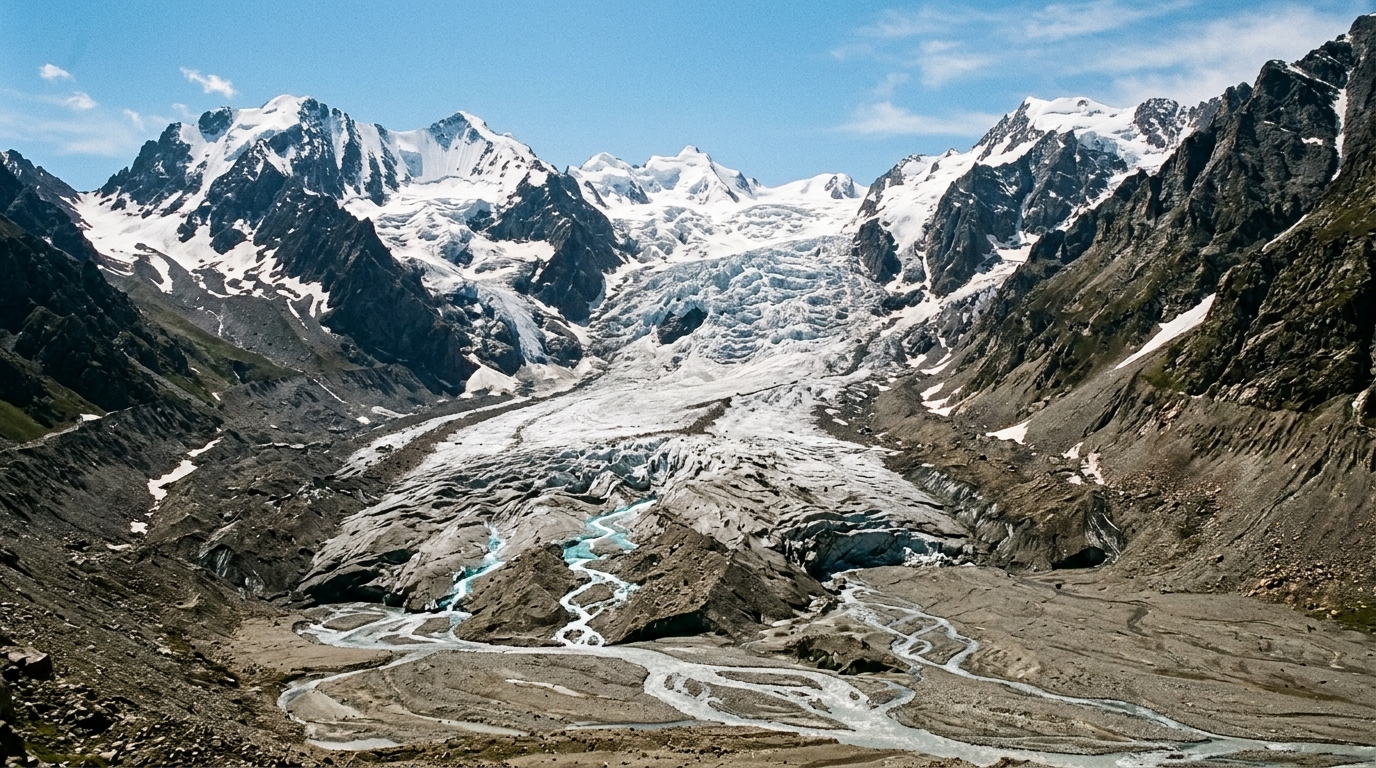
Before They Became Extraordinary—and What Already Lives Within Our Mountains
Their journeys were not easy. Neither will ours be. Why thirty-two South Asian pioneers offer Kashmir an invitation to collective professional introspection rather than distant applause.
Every distinguished environmental personality was once an ordinary professional beginning a journey whose destination was uncertain. Before international recognition came decades of uncelebrated work. Before landmark Supreme Court judgments came dense pleadings, technical mastery, and years of adjournments. Before celebrated scientific breakthroughs came failed field seasons, contested hypotheses, and long nights revising manuscripts. Before enduring conservation movements came the slow, humble task of earning village trust. Before influential environmental journalism came the struggle to master complex hydrochemistry or satellite maps—and to persuade reluctant editors that a dying marsh mattered as much as the day’s political quarrel.
Their careers did not begin with guarantees. They began with questions painfully familiar to anyone working across the Western Himalayas today: Why was a river being poisoned? Why were forests thinning? Why were mountain communities excluded from decisions reshaping their pastures and water? Why was peer-reviewed science failing to move government files? Why were environmental statutes failing to defend nature? It was not easy for them. It is not easy for us. Their journeys merit close study precisely because environmental responsibility has almost never been a comfortable professional path.
At the same time, fairness forbids comparing a scientist working with stretched laboratory instrumentation in Kashmir, Ladakh, AJ&K, or Gilgit-Baltistan against achair endowed at a global research institute—or a district reporter without an investigative budget against an internationally financed newsroom—without acknowledging real differences in resources, autonomy, and employment security. The Western Himalayas already possess universities, eighty-plus environment-related research units, courageous litigants, committed reporters, and community stewards. The central question is not whether our people possess sufficient intelligence or devotion; it is whether our region can build the professional culture, interdisciplinary solidarity, and institutional ambition required for that intelligence to flourish.
“It was not easy for them. It is not easy for us. What their experiences offer Kashmir is not simply inspiration, but an opportunity for collective professional introspection.”
The First Mirror: Environmental Jurisprudence—Carrying Science into the Courtroom
Eight Indian and Pakistani legal pioneers—from Rajouri-born M. C. Mehta to constitutional architect Parvez Hassan—and ten mountain-law specializations awaiting our bar.
Environmental litigation is never bare statutory recitation. Defending an urban lake demands fluency in phosphorus budgets, sewage treatment hydraulics, cadastral revenue maps, and municipal finance; scrutinizing a Himalayan highway or hydropower cascade requires understanding shear-zone geology, sediment replenishment, and cumulative sub-basin thresholds. Across India and Pakistan, eight advocates—M. C. Mehta, Rahul Choudhary, Ritwick Dutta, and Shyam Divan in India; Ahmad Rafay Alam, Parvez Hassan, Saima Amin Khawaja, and Umair Saleem in Pakistan—demonstrate how technical fluency transforms courtroom practice.
For the Western Himalayas, M. C. Mehta’s trajectory carries special resonance because his own roots lie inside the region, in Rajouri district of Jammu & Kashmir. Credited by the Goldman Environmental Prize Foundation with roughly forty landmark Supreme Court rulings—spanning Ganga industrial effluents, atmospheric protection of the Taj Mahal, and the nationwide introduction of unleaded petrol—his record emerged not from a single dramatic speech, but from decades of dogged litigation against entrenched commercial interests, followed by the equally hard battle for post-judgment compliance.
Complementing courtroom litigation, Parvez Hassan’s career in Pakistan illuminates the lawyer as constitutional and statutory architect: appearing in the watershed Shehla Zia v. WAPDA constitutional right-to-life case, helping draft Pakistan’s Environmental Protection Act of 1997, and earning the Elizabeth Haub Prize and IUCN honorary membership. Together with LIFE co-founders Ritwick Dutta and Rahul Choudhary (forensic scrutiny of EIAs and forest clearances), doctrinal scholar Shyam Divan, urban water/air advocate Ahmad Rafay Alam, wildlife/climate litigator Saima Amin Khawaja, and climate-justice counsel Umair Saleem, they pose a respectful question to advocates from Pulwama and Srinagar to Jammu, Leh, Muzaffarabad, and Gilgit: could our legal fraternity build collaborative practices, shared scientific evidence repositories, and mountain jurisprudence studied across the world?
MIRROR I · ENVIRONMENTAL ADVOCATES (8 PERSONALITIES · 10 REGIONAL SPECIALIZATIONS)
The eight Indian and Pakistani environmental jurists alongside ten specialized legal frontiers for the Western Himalayas.
| Distinguished Advocate / Regional Challenge | Learning Pathway for Kashmir & Legal Specialization |
|---|---|
| Ahmad Rafay Alam (Pakistan · Monograph Ch. 07) | Urban environmental law, water governance and accessible environmental communication |
| M. C. Mehta (India · Monograph Ch. 08) | Sustained environmental PILs and landmark legal precedents |
| Parvez Hassan (Pakistan · Monograph Ch. 09) | Constitutional environmental rights and legislative development |
| Rahul Choudhary (India · Monograph Ch. 10) | Environmental clearances and institutional legal advocacy |
| Ritwick Dutta (India · Monograph Ch. 11) | Technical examination of infrastructure approvals and forest diversion |
| Saima Amin Khawaja (Pakistan · Monograph Ch. 12) | Environmental litigation and climate-related legal research |
| Shyam Divan (India · Monograph Ch. 13) | Integration of environmental jurisprudence and legal scholarship |
| Umair Saleem (Pakistan · Monograph Ch. 14) | Development of contemporary climate litigation expertise |
| Deteriorating urban lakes | Enforceable lake restoration & nutrient-load obligations |
| Karewa destruction | Geological heritage & palaeoclimate stratigraphy protection |
| Atmospheric pollution | Airshed compliance, sensor standards & public health |
| Riverbed mining | Replenishment-based extraction limits & channel restoration |
The Second Mirror: Environmental Civil Society—Turning Conviction into Enduring Institutions
From Sunita Narain’s analytical laboratories at CSE to Shafqat Hussain’s community livestock insurance in Baltistan.
Launching a campaign takes passion; building an organization that survives funding droughts, commercial retaliation, and founder transitions takes institutional craft. Measured not by seminar photographs or social-media applause but by lasting societal capability, eight South Asian conservation leaders—Bittu Sahgal, Rajendra Singh, Sunita Narain, and Vivek Menon in India; Aisha Khan, Hammad Naqi Khan, Muhammad Ali Nawaz, and Shafqat Hussain in Pakistan—illustrate how personal conviction becomes durable architecture.
Joining the Centre for Science and Environment (CSE) in 1982, Sunita Narain helped build a public-interest institution uniting laboratory testing, policy forensics, and public communication—receiving the 2005 Stockholm Water Prize under her leadership and standing firm through fierce commercial controversies over pesticide residues in soft drinks. Across the Karakoram–Western Himalayan villages of Baltistan, meanwhile, Shafqat Hussain’s Project Snow Leopard proved that conservation fails whenever vulnerable herders are asked to subsidize global biodiversity alone: by designing community-managed livestock insurance recognized by the Whitley and Rolex programmes, he aligned household economic security directly with predator survival.
Alongside Aisha Khan’s mountain-glacier civil-society coalitions, Bittu Sahgal’s forty-year Sanctuary network, Hammad Naqi Khan’s institutional governance at WWF-Pakistan, Muhammad Ali Nawaz’s Deosai brown-bear and snow-leopard field programmes, Rajendra Singh’s community watershed revival, and Vivek Menon’s national wildlife-corridor institutions at WTI, their journeys ask our regional NGOs: can we evolve beyond episodic plantation and cleanup drives into permanent, scientifically staffed mountain conservation institutions?
MIRROR II · ENVIRONMENTAL NGO LEADERS (8 PERSONALITIES · INSTITUTIONAL EVOLUTION)
Eight South Asian institution builders and the shift from episodic activities to enduring conservation capabilities.
| Distinguished Leader / Conventional Activity | Learning Pathway & Institutional Evolution for Kashmir |
|---|---|
| Aisha Khan (Pakistan · Monograph Ch. 16) | Mountain conservation and coordinated civil society action |
| Bittu Sahgal (India · Monograph Ch. 17) | Environmental education and wildlife protection |
| Hammad Naqi Khan (Pakistan · Monograph Ch. 18) | Institutional conservation programmes and professional environmental governance |
| Muhammad Ali Nawaz (Pakistan · Monograph Ch. 19) | Wildlife research and community-based conservation |
| Rajendra Singh (India · Monograph Ch. 20) | Community-led water restoration |
| Shafqat Hussain (Pakistan · Monograph Ch. 21) | Economic incentives for human-wildlife coexistence |
| Sunita Narain (India · Monograph Ch. 22) | Scientific research, public communication and policy advocacy |
| Vivek Menon (India · Monograph Ch. 23) | Long-term wildlife conservation institutions and habitat connectivity |
| Environmental awareness campaigns | Permanent public environmental education programmes |
| Plantation drives | Long-term native vegetation survival & succession monitoring |
| Lake cleanup campaigns | Scientific pollution-source & catchment load investigation |
| Wildlife awareness programmes | Community-based habitat & livestock-coexistence incentives |
The Third Mirror: Environmental Journalism—Carrying Science Beyond the Laboratory
Eight reporters across India and Pakistan who turned multi-year ecological slow violence into public evidence.
Because wetlands vanish parcel by parcel and aquifers thin centimetre by centimetre across administrations, environmental journalism demands a rare union of scientific literacy, archival patience, and editorial courage. Eight journalists—Ananda Banerjee, Bahar Dutt, Jayashree Nandi, and Nidhi Jamwal in India; Afia Salam, Rina Saeed Khan, Saleem Shaikh, and Zofeen T. Ebrahim in Pakistan—show what happens when reporters refuse to reduce ecological complexity to press-release stenography.
Consider Rina Saeed Khan’s 2017 reporting in Dawn on community-based snow-leopard livestock insurance in Baltistan: by travelling to examine an applied mountain conservation model and explaining its economic logic clearly to a national readership, journalism carried local field innovation far beyond academic circles. Equally, Bahar Dutt’s conservation-biology field investigations, Jayashree Nandi’s rigorous atmospheric-science reporting, Nidhi Jamwal’s rural water-and-livelihood dispatches, Ananda Banerjee’s biodiversity reporting, Afia Salam’s newsroom climate mentorship, Saleem Shaikh’s mountain adaptation coverage, and Zofeen T. Ebrahim’s public-health pollution investigations set a benchmark for our own newsrooms.
Kashmir, Jammu, Ladakh, AJ&K, and Gilgit-Baltistan do not lack world-scale environmental stories. The opportunity before our journalists—amid real financial and editorial pressures—is to cultivate specialized beats in limnology, airshed physics, cryosphere risk, environmental law, and public expenditure so that reporting audits causes and outcomes rather than merely announcing events.
MIRROR III · ENVIRONMENTAL JOURNALISTS (8 PERSONALITIES · INVESTIGATIVE SHIFT)
Eight South Asian environmental journalists alongside key shifts from event reporting to investigative environmental journalism.
| Distinguished Journalist / Conventional Beat | Learning Pathway & Investigative Approach |
|---|---|
| Afia Salam (Pakistan · Monograph Ch. 25) | Public environmental education and climate communication |
| Ananda Banerjee (India · Monograph Ch. 26) | Biodiversity reporting and wildlife journalism |
| Bahar Dutt (India · Monograph Ch. 27) | Field-based environmental investigations |
| Jayashree Nandi (India · Monograph Ch. 28) | Scientific reporting on pollution, climate and environmental governance |
| Nidhi Jamwal (India · Monograph Ch. 29) | Environmental reporting focused on rural livelihoods and water |
| Rina Saeed Khan (Pakistan · Monograph Ch. 30) | Himalayan conservation and climate journalism |
| Saleem Shaikh (Pakistan · Monograph Ch. 31) | Climate adaptation and development reporting |
| Zofeen T. Ebrahim (Pakistan · Monograph Ch. 32) | Connecting environmental change with public health and society |
| A lake is polluted | Identify pollution sources, nutrient loads & responsible institutions |
| Trees have been cut | Examine legal authorization, ecological loss & restoration duties |
| A flood has occurred | Investigate floodplain occupation, drainage loss & preparedness |
| AQI is high | Examine sensor calibration, boundary-layer transport & emission sources |
The Fourth Mirror: Environmental Science—Extending the Boundaries of Knowledge
Eight pioneering scientists—from Madhav Gadgil, Veerabhadran Ramanathan, and Kashmir-born Maharaj K. Pandit to Upper Indus and Karakoram hydro-climatologists.
Scientific authority is earned across decades of measurement, methodological debate, and willingness to defend inconvenient empirical truths. Eight South Asian scientists—Madhav Gadgil, Maharaj K. Pandit, Raman Sukumar, and Veerabhadran Ramanathan in India; Asif Khan, Fahad Saeed, Ghulam Rasul, and Qamar-uz-Zaman Chaudhry in Pakistan—illuminate both the frontier of discovery and the friction between science and governance.
Madhav Gadgil’s leadership of the Western Ghats Ecology Expert Panel offers a sobering, indispensable lesson for Himalayan researchers: even impeccable ecological sensitivity mapping can encounter fierce political and commercial pushback. Establishing scientific truth does not automatically halt an excavator—yet without uncompromised baseline science and community-anchored People’s Biodiversity Registers, governance has no compass at all. Alongside Veerabhadran Ramanathan’s discovery of non-CO₂ radiative forcing and Himalayan black-carbon impacts, Raman Sukumar’s multi-decade permanent forest plots, Kashmir-born Maharaj K. Pandit’s pan-Himalayan biodiversity and dam-density scholarship, Asif Khan’s Upper Indus precipitation/cryosphere reconciliations, Ghulam Rasul’s GLOF hydrometeorology, Fahad Saeed’s extreme-weather modelling, and Qamar-uz-Zaman Chaudhry’s national climate-policy leadership, their careers point directly to our own mountains.
Despite real laboratory and grant constraints, researchers in the Western Himalayas inhabit one of the planet’s most irreplaceable natural observatories—from Plio-Pleistocene karewa archives and enclosed winter airsheds to Karakoram–Zanskar glaciers. Moving from repetitive descriptive papers toward original mountain methodologies—and returning those findings in accessible regional languages—can make Himalayan universities global scientific references.
MIRROR IV · ENVIRONMENTAL SCIENTISTS & EXPERTS (8 PERSONALITIES · 12 FRONTIERS)
Eight pioneering South Asian environmental scientists and priority frontiers for original Western Himalayan science.
| Distinguished Scientist / Discipline | Learning Pathway & Frontier Scientific Opportunity |
|---|---|
| Asif Khan (Pakistan · Monograph Ch. 34) | Mountain hydrology and climate-dependent water security |
| Fahad Saeed (Pakistan · Monograph Ch. 35) | Contemporary climate modelling and extreme-weather research |
| Ghulam Rasul (Pakistan · Monograph Ch. 36) | Meteorology, glaciology and climatic hazards |
| Madhav Gadgil (India · Monograph Ch. 37) | Ecological limits and community-oriented conservation science |
| Maharaj K. Pandit (India · Monograph Ch. 38) | Himalayan biodiversity and mountain ecosystem vulnerability |
| Qamar-uz-Zaman Chaudhry (Pakistan · Monograph Ch. 39) | Climate policy and international scientific collaboration |
| Raman Sukumar (India · Monograph Ch. 40) | Long-term wildlife ecology and conservation biology |
| Veerabhadran Ramanathan (India · Monograph Ch. 41) | Atmospheric chemistry, black carbon and global climate processes |
| Atmospheric science | Enclosed-valley pollution transport & mountain boundary-layer modelling |
| Cryospheric science | Glacier energy/mass evolution & downstream seasonal water availability |
| Limnology | Integrated nutrient mass balances & internal sediment recovery |
| Hydrology | Real-time flood forecasting & coupled karst-snowmelt watershed twins |
Adversity Without Romanticism, Five Shared Habits and Four Professions Working as One
Examining fifteen real professional obstacles honestly while uniting scientist, journalist, advocate, and NGO around shared ecological recovery.
An honest study of leadership must neither romanticize the struggles of celebrated figures into invented folklore nor minimize the structural hurdles confronting professionals across Kashmir, Jammu, Ladakh, AJ&K, and Gilgit-Baltistan. Across funding scarcity, laboratory deficits, restricted government records, commercial pressure, political sensitivity, and delayed implementation, international access and institutional cushions differ sharply. Yet across all thirty-two careers, five recurring habits stand out: (1) deep technical specialization, (2) multi-decade persistence on a single question, (3) institution-building beyond solo ego, (4) cross-disciplinary alliance, and (5) commitment to physical outcomes after awards fade.
Picture how transformative that fourth habit—four professions working together—becomes when applied to a dying urban lake in Kashmir. First, the environmental scientist establishes the true phosphorus, sediment, and hydrological balance. Second, the environmental journalist translates those numbers clearly and investigates why public crores failed to intercept sewage. Third, the environmental advocate converts that empirical record into enforceable statutory lake-load and officer-accountability remedies. Fourth, the environmental NGO works house by house with boatmen, hoteliers, and neighbourhoods to sustain practical compliance. Alone, each profession can be ignored; together, they form an unbreakable civic-scientific shield.
Addressed collectively—never to single out or embarrass any regional colleague—our five letters of introspection invite advocates, NGO leaders, journalists, scientists, and students across all five regions to test that collaborative model on their own watershed, airshed, karewa, or forest.
- •01. They developed deep professional specialization: Advocates who can cross-examine a BOD/nutrient mass balance, journalists who understand boundary-layer inversions, scientists fluent in statutory thresholds, and NGOs grounded in community economics.
- •02. They pursued sustained environmental questions across decades: Maintaining 10-to-30-year continuity on Dal/Wular recovery, Upper Indus/Jhelum glaciers, Hangul corridors, and airshed emissions long after media attention moves on.
- •03. They built institutions that outlive individuals: Evolving solo campaigns and university labs into durable institutions with transparent governance and generational training.
- •04. They connected distinct professional disciplines: Breaking silos among regional science departments, district bars, newsrooms, and grassroots conservation groups.
- •05. They worked for outcomes beyond professional recognition: Evaluating our collective work by what physically improves in the rivers, wetlands, karewas, forests, and air of the Western Himalayas.
SECTION IV · THE DIFFICULTIES THEY FACED & THE DIFFICULTIES WE FACE (15 CHALLENGES)
Fifteen documented professional obstacles paired with constructive institutional responses the Western Himalayan community can examine.
| Documented Professional Challenge | Constructive Pathway for the Western Himalayan Community |
|---|---|
| 01. Limited research funding | Shared scientific infrastructure and collaborative multi-university funding applications |
| 02. Institutional resistance | Professional independence, calm empirical rigour and evidence-based engagement |
| 03. Lack of public awareness | Accessible, multilingual environmental education across local communities |
| 04. Political sensitivities | Consistent, non-partisan application of universal scientific and legal standards |
| 05. Commercial pressures | Research transparency, conflict-of-interest firewalls and editorial independence |
| 06. Limited employment opportunities | Specialized environmental auditing, restoration services and green entrepreneurship |
| 07. Inadequate laboratory infrastructure | Inter-departmental partnerships, NABL co-accreditation and shared instrumentation |
| 08. Restricted access to information | Lawful information-access mechanisms, satellite open data and public repositories |
| 09. Professional isolation | Interdisciplinary regional networks and international scientific collaboration |
| 10. Limited publication opportunities | Diamond/green open-access repositories and independent regional scientific platforms |
| 11. Financial insecurity | Endowed fellowships and sustainable professional/institutional operating models |
| 12. Limited administrative cooperation | Documented constructive engagement paired with lawful statutory accountability |
| 13. Public indifference | Sustained livelihood-relevant stakeholder communication and citizen science |
| 14. Scientific disagreements | Open code/data reproducibility, split-sample testing and independent peer review |
| 15. Delayed implementation | Multi-decade longitudinal research-to-outcome monitoring observatories |
Professional Mirrors, Interdisciplinary Convergence & 2027–2035 Leadership Lab
A non-ranking educational and professional-introspection studio connecting thirty-two South Asian environmental pioneers directly to the challenges facing advocates, NGOs, journalists, scientists, and students across the Western Himalayas.
M. C. Mehta
Public-Interest Environmental Advocate, Supreme Court of India · 1996 Goldman Environmental Prize · Magsaysay Award
Credited by the Goldman Environmental Prize Foundation with ~40 landmark Supreme Court judgments—including Ganga industrial pollution, Taj Mahal atmospheric protection, phase-out of leaded petrol, Delhi CNG transition, and Absolute Liability doctrine (Oleum Gas Leak).
From Admiration to Architecture: The 2027–2035 Leadership Agenda & Monograph 08
Ten proposed fellowships and capacity programmes, a 20-section biographical standard, and a permanent educational home in KEW Green Heroes and the Student Action Hub.
Admiration that leaves no institutional trace soon evaporates. To give the Western Himalayas something practical to build upon, Himalayan Dispatch proposes the ten-part Western Himalayan Environmental Leadership Agenda (2027–2035)—spanning dedicated fellowships in mountain environmental law, investigative science journalism, NGO governance, and frontier research, alongside a Science-to-Society translation programme, cross-generational mentorship, four-profession collaborative watershed grants, engineering innovation challenges, student field fellowships, and a non-ranking Regional Environmental Impact Observatory (all transparently designated as proposed development pathways rather than already-funded schemes).
In our companion seven-volume, sixty-chapter Monograph 08, every one of the thirty-two personalities is assigned a rigorous twenty-section journalistic biography protocol—examining family and educational origins, early uncertainties, documented setbacks, methodologies, controversies, unfinished work, and specific guidance for Kashmir. Simultaneously, this entire feature enters Kashmir EcoWatch permanently as a Special International Educational Collection bridging KEW Green Heroes (/resources/kew-green-heroes/south-asian-vanguard) and the Student Action Hub (/environmental-calendar/outdoor-classroom).
SECTION IX · PROPOSED WESTERN HIMALAYAN ENVIRONMENTAL LEADERSHIP AGENDA (2027–2035)
Ten proposed professional-development and interdisciplinary capacity pathways (2027–2031 initial five-year sequence detailed in the Workbench).
| Proposed Programme (Not Yet Established / Funded) | Intended Regional Outcome & Target Cohort |
|---|---|
| 01. Environmental Legal Fellowship | Develop specialized mountain environmental advocates fluent in hydrology, EIA, and regulatory science (Early-career LL.B./LL.M. advocates across all 5 regions) |
| 02. Environmental Investigative Journalism Fellowship | Strengthen long-horizon scientific, satellite-assisted, and public-expenditure reporting (Print, broadcast & digital reporters in regional newsrooms) |
| 03. Environmental NGO Leadership Programme | Develop audited, institutionally sustainable conservation organizations beyond solo founders (Regional civil-society & community conservation coordinators) |
| 04. Frontier Environmental Research Programme | Encourage original mountain methodologies in cryosphere, limnology, eDNA, airsheds & GeoAI (Doctoral & postdoctoral researchers in regional universities) |
| 05. Science-to-Society Programme | Translate peer-reviewed findings into multilingual community, farmer, and regulator briefs (Joint scientist–communicator–extension teams) |
| 06. Environmental Mentorship Network | Connect experienced South Asian & international specialists with emerging regional talent (Students, fellows & first-generation researchers) |
| 07. Interdisciplinary Environmental Research Grants | Bring one scientist, one journalist, one advocate, and one NGO together on shared watershed problems (Four-profession collaborative project teams) |
| 08. Environmental Innovation Challenges | Prototype sub-zero sewage, clean heating, spring recharge, and non-karewa construction solutions (Engineering, ecology & entrepreneurship teams) |
| 09. Student Research and Conservation Programme | Cultivate empirical field observation and ethical stewardship from secondary school through university (Schools & colleges in KEW Student Action Hub / Outdoor Classroom) |
| 10. Regional Environmental Impact Observatory | Document measurable professional and biophysical outcomes across decades without personality rankings (Open KEW public accountability & learning archive) |
It Was Not Easy for Them. It Is Not Easy for Us.
What we might become when knowledge, perseverance, and integrity meet the mountains we call home.
It was not easy for the advocate who walked into a courtroom knowing an environmental battle might outlast a decade. It was not easy for the scientist whose hypothesis demanded instruments not yet built. It was not easy for the journalist who stayed with a slowly dying wetland while louder headlines commanded the front page. It was not easy for the conservationist who sat in cold mountain villages listening to herders’ economic fears before proposing how to save a snow leopard. And it is not easy today for their counterparts across Kashmir, Jammu, Ladakh, Azad Jammu & Kashmir, and Gilgit-Baltistan.
We see the financial insecurities, stretched laboratories, editorial constraints, bureaucratic walls, and quiet loneliness under which many of our region’s finest professionals labour. Yet the thirty-two lives gathered here offer something far sturdier than applause: they offer perspective. They remind us that environmental stewardship has never been a profession free of obstacles—it is a vocation defined by learning how to navigate them without surrendering integrity.
Kashmir and the wider Western Himalayas possess mountains the world studies, glaciers the world monitors, rivers that sustain tens of millions, and minds fully capable of understanding and defending them. We need not imitate anyone else’s biography; our landscapes and duties are our own. Let us study these pioneers’ methods, honour their perseverance, build institutions worthy of our students, and work toward the day when scholars, jurists, journalists, and conservationists across the world look toward the Western Himalayas with the same intellectual respect.
Addressed constructively to 5 regional communities (Advocates, NGO Leaders, Journalists, Scientists, and Students) without naming or disparaging individual practitioners. Expanded Editorial Architecture & Provenance Disclosure: Representative milestones cited in this feature—including M. C. Mehta (Goldman Environmental Prize; Rajouri birth; ~40 Supreme Court environmental rulings), Parvez Hassan (Shehla Zia v. WAPDA; PEPA 1997 drafting; Elizabeth Haub Prize; IUCN), Sunita Narain (CSE since 1982; 2005 Stockholm Water Prize to CSE; pesticide investigations), Shafqat Hussain (Project Snow Leopard livestock insurance in Baltistan; Rolex & Whitley recognition), Rina Saeed Khan (2017 Dawn reporting on Baltistan snow-leopard insurance), and Madhav Gadgil (Western Ghats Ecology Expert Panel)—are anchored in institutional and award records. Complete 20-section personal biographies, documented setbacks, and impact evaluations across all 32 nominees remain subject to individual primary-source verification without manufacturing stories of adversity. All 2027–2035 Leadership Agenda items represent proposed development pathways, not established or funded programmes.
“Perhaps the most meaningful question is not what made these extraordinary individuals different from us, but what we might become if we pursued our environmental responsibilities with comparable knowledge, perseverance and ambition.”
DOCUMENTARY SOURCES & FURTHER READING
| Source | Documentary relevance |
|---|---|
| Goldman Environmental Prize Archive — M. C. Mehta (1996 Laureate Profile) | Documents M. C. Mehta’s Rajouri origins and landmark Supreme Court environmental litigation on the Ganga, Taj Mahal, and unleaded gasoline. |
| IUCN & International Growth Centre — Dr. Parvez Hassan (Shehla Zia v. WAPDA & PEPA 1997) | Verifies Parvez Hassan’s constitutional environmental litigation, legislative drafting, IUCN leadership, and Elizabeth Haub Prize recognition. |
| Centre for Science and Environment (CSE) & Stockholm International Water Institute (2005 Laureate) | Documents Sunita Narain’s post-1982 institutional leadership at CSE, public-interest pollution testing, and the 2005 Stockholm Water Prize. |
| Rolex Awards for Enterprise & Whitley Fund for Nature — Shafqat Hussain (Project Snow Leopard, Baltistan) | Verifies Shafqat Hussain’s community-based livestock insurance and snow-leopard conservation model in Baltistan. |
| Dawn Archives — Rina Saeed Khan Reporting on Himalayan & Baltistan Conservation | Documents science-to-public conservation journalism, including 2017 reporting on community snow-leopard insurance in Baltistan. |
| UNEP Champions of the Earth (2024) & Western Ghats Ecology Expert Panel Archive — Prof. Madhav Gadgil | Verifies Madhav Gadgil’s ecological research, People’s Biodiversity Registers, and WGEEP governance lessons. |
| KEW Green Heroes & Student Action Hub — South Asia’s Environmental Vanguard Collection | Permanent 32-personality educational collection connecting Himalayan Dispatch Monograph 08 with student fieldwork and professional mentorship. |
EDITORIAL PUBLICATION METADATA & 10-STAGE GATE LEDGER
| Gate | Status | Record / Scope |
|---|---|---|
| 01 · Commissioned | completed | Himalayan Dispatch Founding Masthead |
| 02 · Research in progress | completed | Himalayan Dispatch Research & Observatory Desk |
| 03 · Manuscript draft | completed | Assigned Author / Editorial Desk |
| 04 · Evidence verification | completed | Representative milestones verified against Goldman Environmental Prize archives (M. C. Mehta), IUCN / Elizabeth Haub Prize & Supreme Court of Pakistan records (Parvez Hassan, Shehla Zia v. WAPDA, PEPA 1997), CSE / Stockholm Water Prize & TIME archives (Sunita Narain), Rolex Awards & Whitley Fund for Nature (Shafqat Hussain, Project Snow Leopard Baltistan), Dawn archives (Rina Saeed Khan, 2017), and Western Ghats Ecology Expert Panel records (Madhav Gadgil). |
| 05 · Scientific review (where applicable) | pending | Maps 42 specialized disciplinary pathways across mountain jurisprudence, civil-society governance, science journalism, and frontier Himalayan research without fabricating unverified personal adversity. |
| 06 · Editorial review | completed | Founding Editor-in-Chief Desk Review |
| 07 · Copyright and ethics review | completed | Maintains non-ranking parity across India and Pakistan (4 + 4 in each of 4 professions = 32 personalities) and addresses regional professionals collectively with dignity—never humiliating individual practitioners. |
| 08 · Administrator approval | in progress | Stage 08 Pre-Release Edition Folio staged on localhost for Founding Administrator review. |
| 09 · Published | pending | — |
| 10 · Post-publication corrections | not applicable | — |
| Attribute | Final assignment |
|---|---|
| Publication | Himalayan Dispatch |
| Volume / Placement | Vol. 01 / No. 01 · Dispatch 14 of 27 (Immediately after Dispatch 13 & before Beyond the Conference) |
| Feature Rubric | Special International Feature · Environmental Leadership · Professional Introspection · Intellectual Legacy |
| Byline | Dr. Fayaz Ahmad Khan & Himalayan Dispatch Environmental Leadership and Intellectual Legacy Desk |
| Architecture | 32 Personalities · 4 Professional Mirrors · 2 Countries (4 India + 4 Pakistan per Mirror) |
| Companion Monograph | Monograph 08 — South Asia’s Environmental Vanguard (7 Thematic Volumes · 60 Chapters · 20-Section Biographical Standard) |
| Permanent KEW Legacy | KEW Green Heroes Special International Collection (/resources/kew-green-heroes/south-asian-vanguard) & Student Action Hub |
| Publication Gate Status | Stage 08 · Pre-Release Edition Folio Awaiting Administrator Approval |

Founding Editor-in-Chief
Dr. Fayaz Ahmad Khan
Founder of Kashmir EcoWatch and Founding Editor-in-Chief of Himalayan Dispatch; writes on alpine hydrology, cryospheric thresholds, disaster resilience, and mountain commons across the Western Himalayas.
View Portfolio & Approved Commissions →NEXT IN THIS EDITION · BEYOND THE CONFERENCE · I · SCIENCE & GOVERNANCE
Science Has Diagnosed the Valley. Who Will Prescribe Its Governance?
By The Editorial Board & Himalayan Dispatch Science-Policy Desk · 23 min read