Return to Kashmir EcoWatch

EST. 2026  ·  KEW WESTERN HIMALAYAS

HIMALAYANDISPATCH

LANDSCAPE.  PEOPLE.  SCIENCE.  TRUTH.

Himalayan Dispatch Desk

Collective Editorial, Documentary & Investigative Desk

Himalayan Dispatch Desk

BEAT: Environmental Legacy & Conservation Accountability · Cover Inquiries  ·  BASED IN Fairfax, Virginia & Western Himalayan Bureaus

When an inquiry spans multiple mountain divisions, historical registers, scientific disciplines, and institutional accountability frameworks, it is filed collectively under the Himalayan Dispatch Desk.

Every Desk manuscript undergoes line-by-line documentary verification by the Office of Editorial Standards & Verification, multidisciplinary review by the KEW Scientific Review Council, and final publication sign-off by the Founding Editor-in-Chief.

REPORTING LANGUAGES

English · Kashmiri · Urdu · Dogri

FELLOWSHIPS & CITATIONS

  • Official Editorial Imprint of Kashmir EcoWatch (KEW) Western Himalayan
  • Steward of the Annual September 11 Green Martyrs Memorial Edition

Families of fallen conservation personnel and documentary contributors may contact the Desk with full dignity, consent, and confidentiality protections.

Published Edition Stories

6 IN ARCHIVE
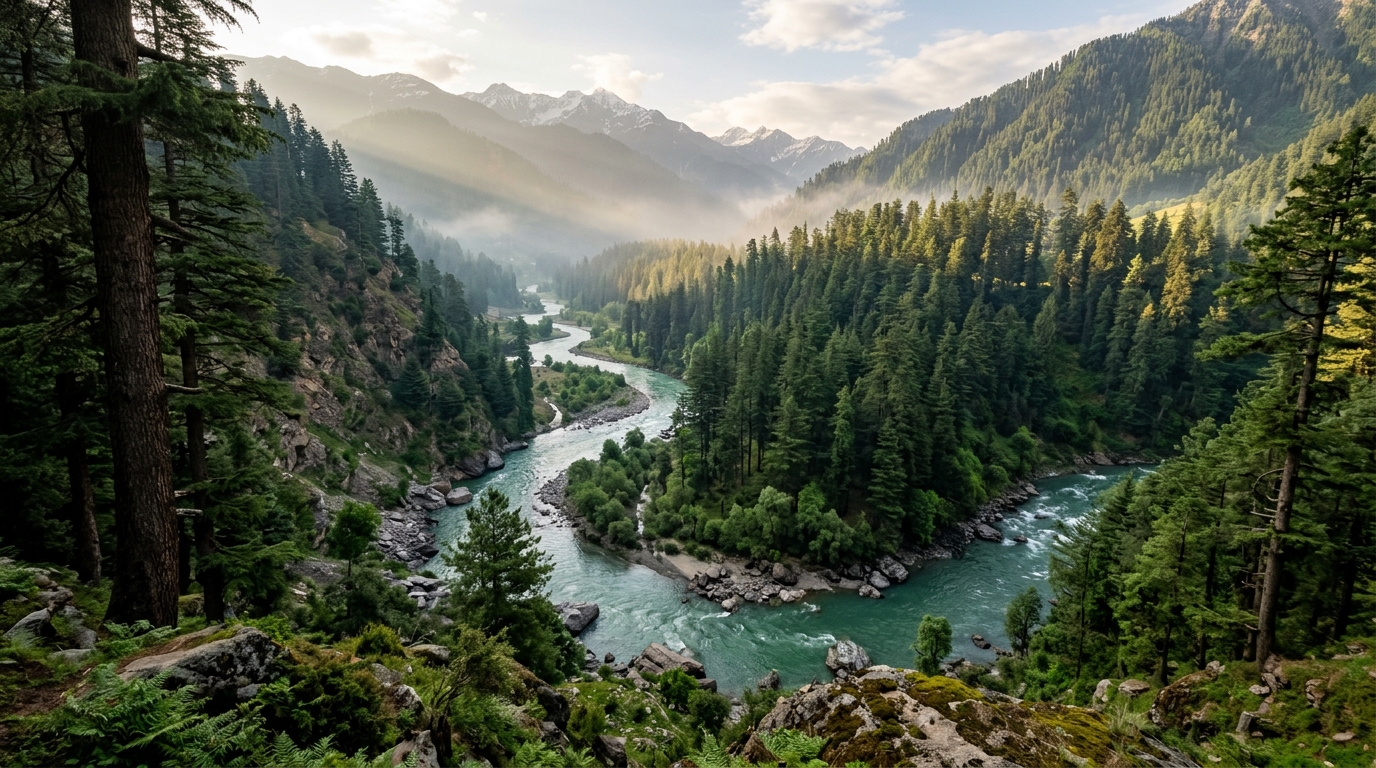
Western Himalayan deodar forest and mountain watershed landscape in Jammu & Kashmir (Illustrative archival plate — representative watershed terrain, not incident photography).
THE INAUGURAL ISSUE · COVER STORY · ENVIRONMENTAL LEGACYVOL. 01 / NO. 01 · THE INAUGURAL ISSUE

The Price of Protecting Paradise

In December 2025, twenty-two days apart, Gull Mohammad Shah in Verinag and Mohammad Iqbal Zargar in Doda never returned home from duty. Their sacrifice opens an unfinished history of the forest guards, range officers, and daily-wage watchers standing between Kashmir’s living watersheds and their destruction.

Read Story (19 min)
Himalayan river-confluence and steep mountain valley corridor context—illustrating the hydrological and civic stakes when upstream hydropower diversions and downstream storage reservoirs reshape river-dependent settlements (Illustrative archival plate — Kashmir EcoWatch Visual Archive; does not depict a specific Muzaffarabad or Mangla structure).
SPECIAL HISTORICAL & HYDROLOGICAL INVESTIGATION · WATER GOVERNANCE · ENERGY JUSTICE · ENVIRONMENTAL ECONOMICS · COMMUNITY RIGHTSVOL. 01 / NO. 01 · THE INAUGURAL ISSUE

The Rivers That No Longer Belong to Their Valleys

From the submerged villages of Mangla to the diminished river flows of Muzaffarabad, an investigation into what happens when mountain waters are transformed into national economic resources while the communities surrounding them confront displacement, water insecurity and ecological uncertainty. When a region’s rivers are valuable enough to sustain economies beyond its mountains, why must the communities living beside those rivers struggle to secure their own water, electricity and environmental future?

Read Story (12 min)
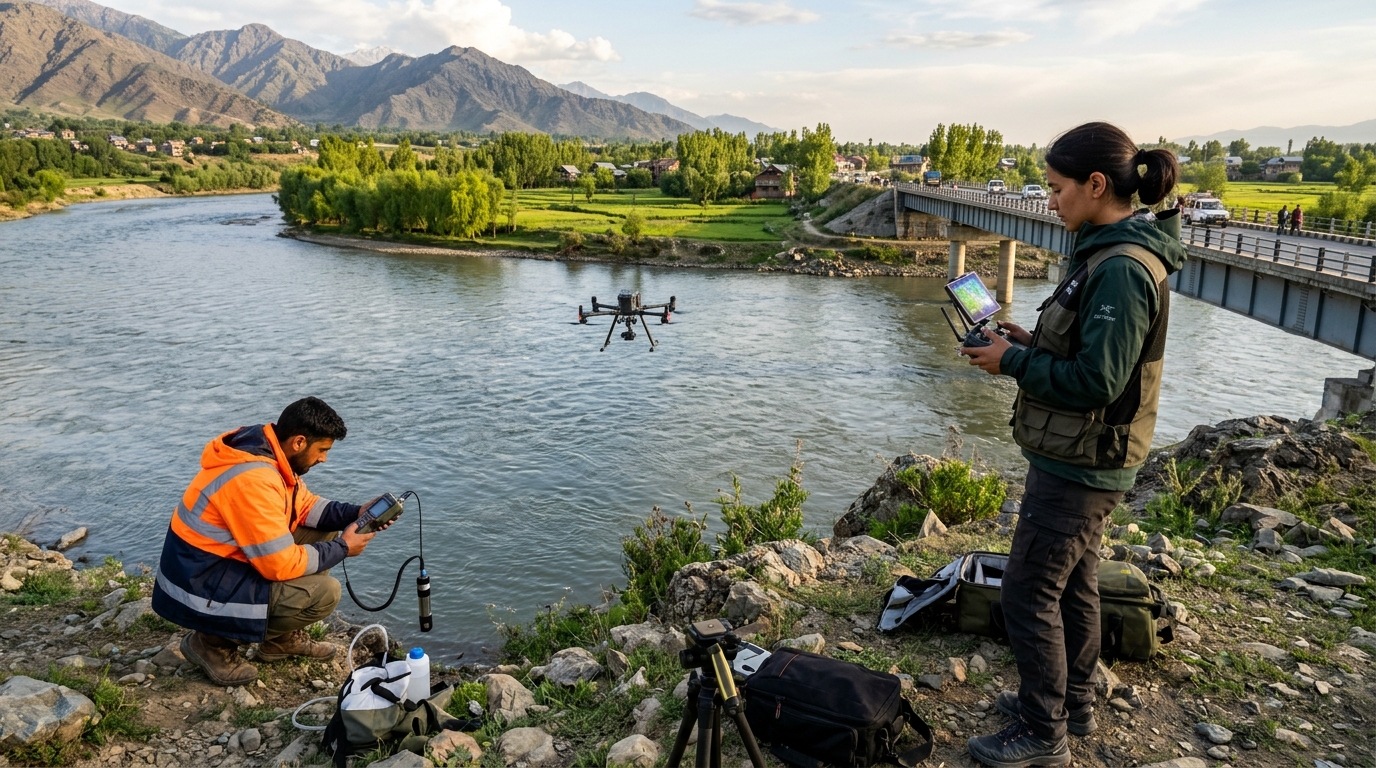
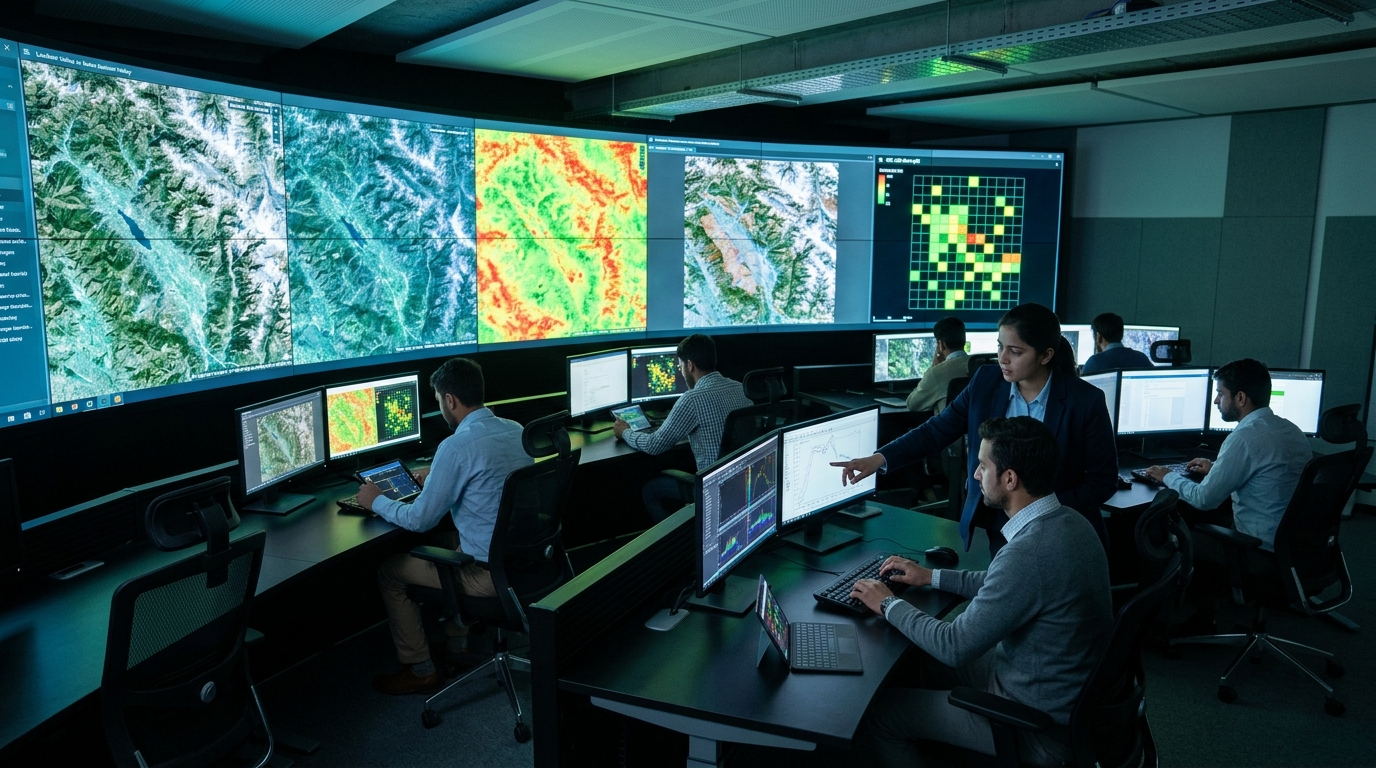
Satellite Earth-observation and watershed synthesis architecture across the Western Himalayas—illustrating the evidentiary shift required when non-binding conference declarations are replaced by continuous, open-access biophysical and fiscal commitment tracking.
CIVIL SOCIETY & ACCOUNTABILITY · V · DECLARATIONS & OBSERVATORYVOL. 01 / NO. 01 · THE INAUGURAL ISSUE

The Mountains Have Heard Enough Declarations

Across a decade of Srinagar, Jammu, Leh, and pan-Himalayan conclaves, earnest environmental charters have proclaimed "Ecology Before Engineering" and "Water Before Infrastructure." Yet ninety days after the ballroom lights dim, almost no clause carries a statutory custodian, a costed budget head, a falsifiable physical unit, or a public audit clock.

Read Story (22 min)
Deeply incised Western Himalayan gorge terrain representative of the middle Chenab corridor between Kishtwar, Ramban, and Reasi—where foliated metamorphic slopes, thrust faults, cascade reservoirs, and headrace tunnels converge (Illustrative archival plate — Kashmir EcoWatch Visual Archive).
JAMMU SCIENTIFIC INVESTIGATION 01 · RIVER BASIN HYDROLOGY, TECTONICS & CUMULATIVE CARRYING CAPACITYMONOGRAPH 18 · JAMMU'S ECOLOGICAL FRONTIERS

The Chenab Has a Breaking Point

Can the Chenab sustain multiple interconnected hydroelectric projects—spanning operational Dulhasti (390 MW), Baglihar (890 MW), and Salal (690 MW) alongside the proposed Sawalkote project—without compromising its geological stability, hydrological integrity, and ecological functions? Establishing a 15-chapter, 6-experiment scientific investigation protocol across the Chenab Gorge.

Read Story (6 min)
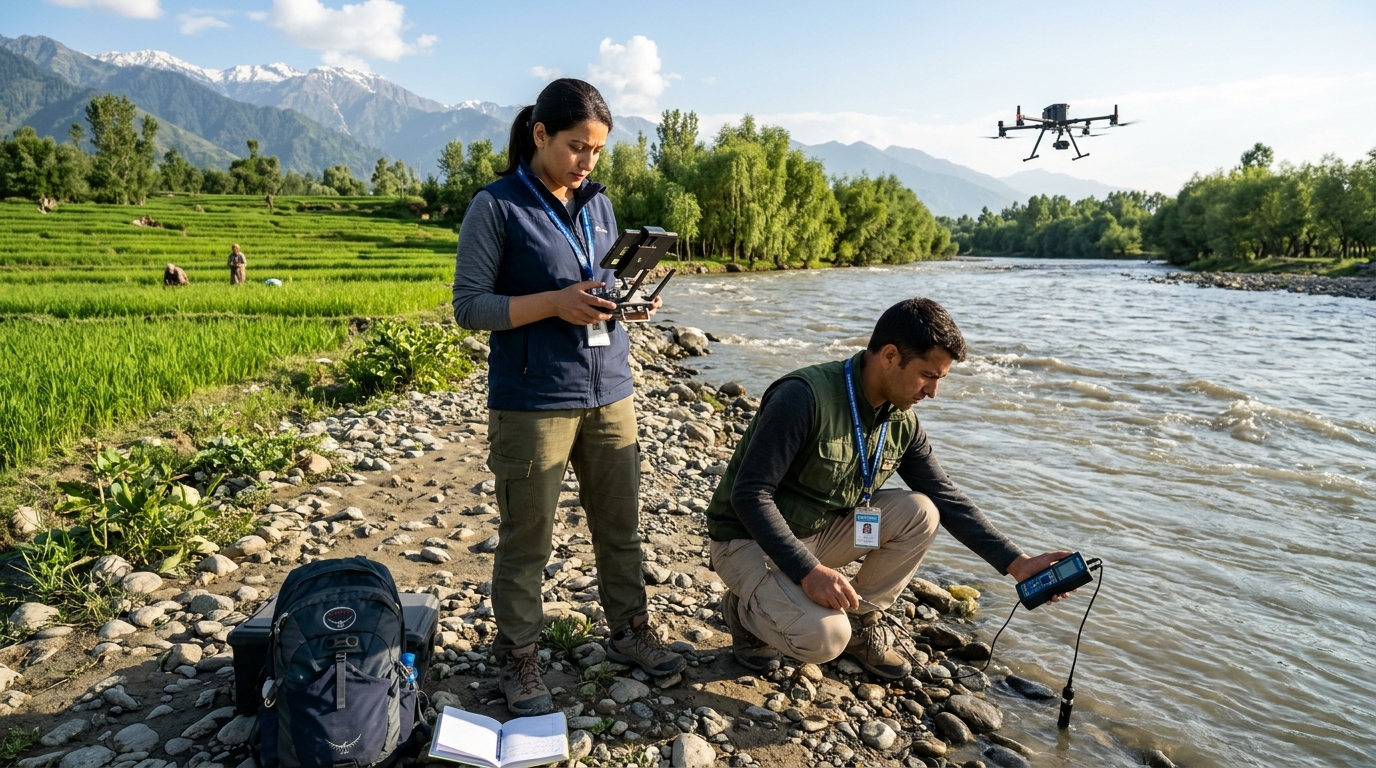
Piedmont gravel-and-sand river corridor representative of Jammu’s Siwalik-fed river systems (Tawi, Basantar, Ujh, and Ravi)—where seasonal monsoon sediment replenishment confronts heavy mechanized excavation, floodplain encroachment, and bridge-pier scour (Illustrative archival plate — Kashmir EcoWatch Visual Archive).
JAMMU SCIENTIFIC INVESTIGATION 02 · FLUVIAL GEOMORPHOLOGY, RIVERBED MINING & INFRASTRUCTURE VULNERABILITYMONOGRAPH 18 · JAMMU'S ECOLOGICAL FRONTIERS

A River Is Not a Construction Site

Is human intervention altering Jammu’s rivers—the Tawi, Ravi, Ujh, and Basantar—faster than their natural geomorphological processes can restore equilibrium? Anchored to the February 6, 2025 National Green Tribunal proceedings on Kathua and Samba sand mining and Basantar bridge-pillar exposure, Investigation 02 sets out a 15-chapter, 7-experiment fluvial science protocol.

Read Story (5 min)
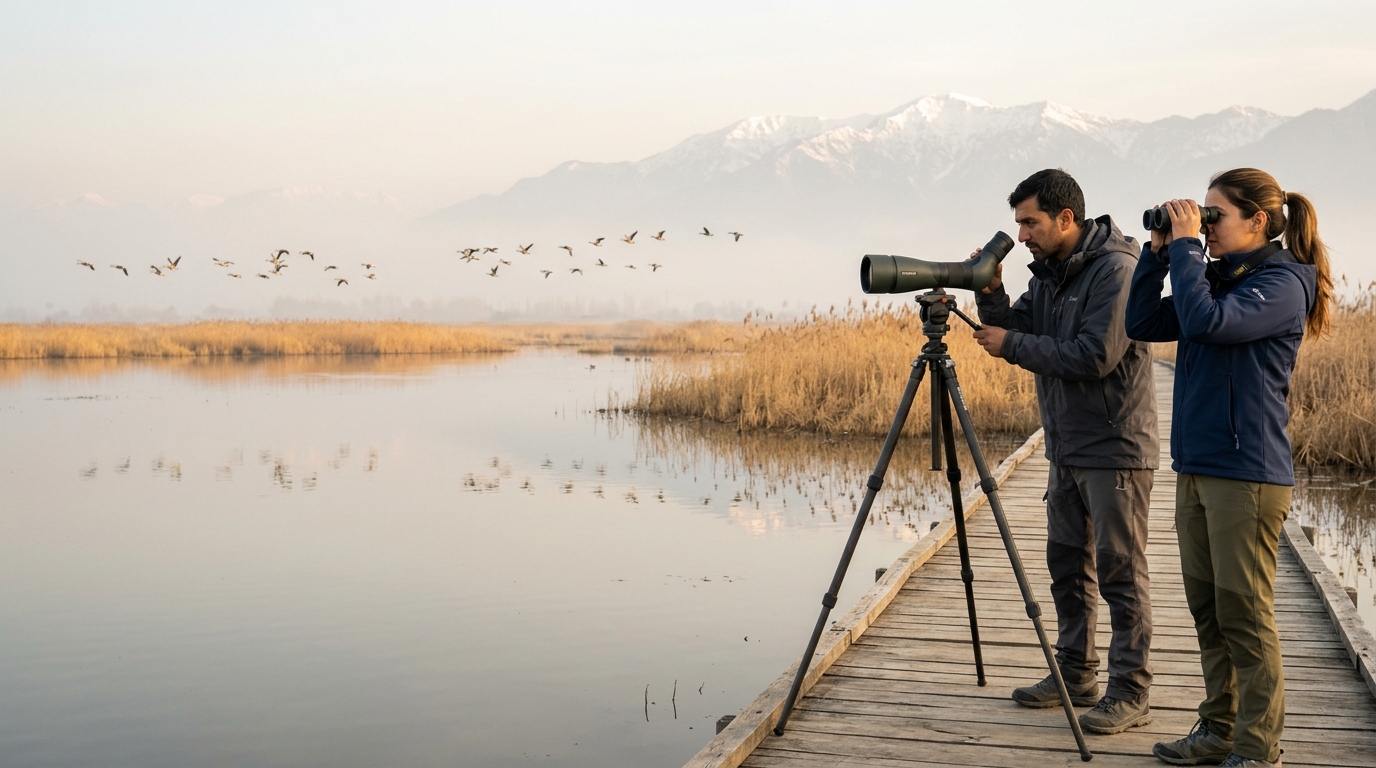
Freshwater wetland habitat and wintering waterfowl representative of Jammu Division’s lacustrine and floodplain refugia—linking the Surinsar–Mansar Ramsar complex with Gharana, Pargwal, Kukarian, and Sanasar along the Central Asian Flyway (Illustrative archival plate — Kashmir EcoWatch Visual Archive).
JAMMU SCIENTIFIC INVESTIGATION 03 · FRESHWATER ECOLOGY, RAMSAR GOVERNANCE & MIGRATORY CORRIDORSMONOGRAPH 18 · JAMMU'S ECOLOGICAL FRONTIERS

The Wetlands That Protect Jammu

Is Jammu adequately protecting the natural freshwater infrastructure—anchored by the 350-hectare Surinsar–Mansar Ramsar lake system (designated November 8, 2005) alongside Gharana, Pargwal, Kukarian, and Sanasar wetlands—that sustains its flood resilience, groundwater recharge, and Central Asian Flyway biodiversity? A 15-chapter, 7-experiment research architecture.

Read Story (4 min)

FORTHCOMING SLATE

Approved Upcoming Assignments

CONFIDENTIAL INVESTIGATIONS OMITTED

No publicly cleared pre-publication assignments are currently listed on the open slate for this correspondent. Sensitive or embargoed reporting remains undisclosed until publication.