Selective Environmental Consciousness
When Ecology Becomes Political and Environmental Responsibility Becomes Optional
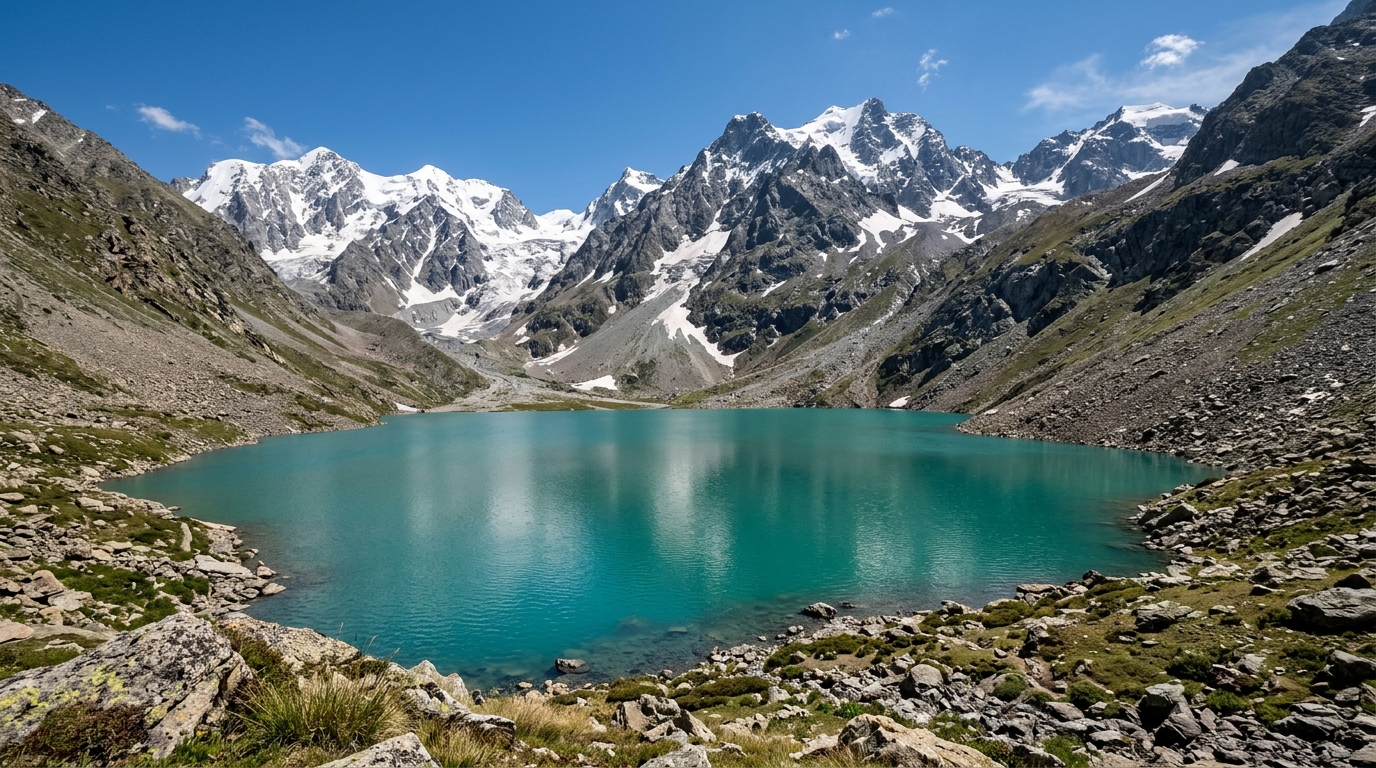
INAUGURAL EDITORIAL FOLIO · DESK & OBSERVATORY SYNTHESIS
Flagship Investigation & Monograph Provenance Note: Expanded from our closing inaugural essay ("Who Speaks for the Environment When Politics Chooses the Landscape?", retained verbatim in mission as the Introductory Cover Essay below), Dispatch 22 establishes the third flagship pillar of Himalayan Dispatch alongside Dispatch 01 (Historical Foundation) and Dispatch 17 (Scientific Foundation). Documented historical events (2008 Baltal–Domail forestland order, 2023–2026 Ladakh constitutional movement, November 2026 Sheshnag track-excavation inquiry) and statutory audit counts (CAG of India Report No. 4 of 2025 for the period ended March 2022) cite verified public records. The accompanying 9-volume, 50-chapter Monograph 02 architecture, 3,000–5,000-respondent Kashmir Environmental Consciousness Survey, randomized Consistency Experiment, 2000–2026 media coverage database, and multi-decadal satellite change-detection protocols are presented transparently as proposed research frameworks not yet conducted in the field.
Introductory Cover Essay — Who Speaks for the Environment When Politics Chooses the Landscape?
Foundational Editorial Statement: The central issue is not whether environmentalism should engage with politics. It is whether environmental responsibility should survive when political attention disappears.
When the government touches a mountain, we protest. When we excavate mountains to construct residential colonies, commercial establishments and private infrastructure, we frequently call it development. When an excavator appears beside a sacred alpine lake, its image travels across the world within hours. When untreated sewage enters dozens of valley and foothill lakes every day through thousands of municipal, commercial, and household outlets, the destruction becomes almost invisible.
When forestland is associated with a politically sensitive project, its ecological value becomes the subject of intense public debate. When forests disappear incrementally through orchard expansion, commercial extraction, and peri-urban real estate, the civic response grows noticeably quieter and more fragmented. Stand at dawn on the lateral moraine above Sheshnag Lake—3,590 metres above sea level in the Upper East Lidder catchment—and ask the question that neither partisan commentators nor comfortable citizens wish to hear: why does the identity of the environmental offender so often appear to determine the intensity of our environmental concern?
Does a fractured Himalayan mountain slope possess a different shear strength when cut by a government highway agency rather than a private hotelier or local housing cooperative? Does an oligotrophic glacial tarn assimilate nitrogen and orthophosphate more benignly because waste originates from a revered spiritual congregation rather than a luxury resort? Does a floodplain marsh lose less September flood-detention storage when filled with karewa earth by our own families and neighbours? Does constitutional autonomy automatically purify groundwater if local municipalities, businesses, and households exceed the carrying capacity of a cold desert?
Nothing in this flagship investigation questions the democratic legitimacy of environmental protest. Across history, collective political mobilization, public petitions, parliamentary scrutiny, and constitutional demands have repeatedly served as necessary instruments to halt reckless ecological harm. Political engagement is not the corruption of environmentalism; in moments of acute institutional overreach, it is often environmentalism’s indispensable shield.
The crisis begins when ecological principles are switched on and off according to political identity, economic gain, religious affiliation, or personal convenience—when biophysical laws are invoked passionately during politically charged controversies and quietly abandoned the morning after headlines fade. Closing the twenty-two-dispatch Inaugural Edition of Himalayan Dispatch and launching our nine-volume, fifty-chapter Monograph 02 research programme, we examine that contradiction through comparative history, earth science, political ecology, behavioural psychology, sacred geography, institutional economics, and measurable ecosystem outcomes.
Retaining our closing inaugural title ("Who Speaks for the Environment When Politics Chooses the Landscape?") as its introductory cover essay, Dispatch 22 completes Himalayan Dispatch’s three inaugural flagship pillars: Dispatch 01 (The Price of Protecting Paradise — The Historical Foundation), Dispatch 17 (The Atmosphere Has No Borders — The Scientific Foundation), and Dispatch 22 (Selective Environmental Consciousness — The Ethical and Institutional Foundation).
“The central issue is not whether environmentalism should engage with politics. It is whether environmental responsibility should survive when political attention disappears.”
Part I (Case 01) — 2008: When 800 Kanals of Forestland Shook an Elected Government
Reconstructing the political earthquake of May–August 2008 alongside the seven unanswered ecological questions left behind in the Baltal–Domail corridor.
Every serious inquiry into political ecology in contemporary Jammu and Kashmir must reckon first with the summer of 2008, when a cabinet file concerning approximately eight hundred kanals—roughly forty hectares—of subalpine forestland in the Baltal–Domail sector of the upper Sindh valley triggered the most sweeping political upheaval of the decade. Indian parliamentary records and official state notifications establish the core chronology with documentary precision: on May 26, 2008, the Jammu and Kashmir government approved the diversion of approximately 40 hectares of forestland in the Baltal–Domail area to the Shri Amarnathji Shrine Board for temporary pilgrimage-related facilities.
Within weeks, what began as objections over forest-department jurisdiction, construction permanence, and high-altitude ecological fragility fused with deep-seated anxieties over land ownership, constitutional autonomy, and regional identity. Mass demonstrations swept the Kashmir Valley; on July 1, 2008, the state cabinet revoked the original May 26 diversion order, immediately igniting counter-mobilizations and a prolonged highway blockade agitation in Jammu. Six days later, on July 7, 2008, Chief Minister Ghulam Nabi Azad resigned after his coalition lost its legislative majority. Only on August 31, 2008 did a negotiated settlement bring the ninety-seven-day crisis to an administrative close, permitting temporary seasonal use of the disputed parcel strictly during the pilgrimage period.
The political consequences of 2008 have been analysed in scores of books, parliamentary debates, and electoral post-mortems. Yet from the standpoint of environmental science, a striking asymmetry persists eighteen years later: the political legacy of those forty hectares is exhaustively documented, whereas their longitudinal ecological legacy has never been subjected to an independent, comprehensive scientific audit.
An impartial investigation cannot stop at the August 31, 2008 political settlement; it must go back to satellite archives, Forest Conservation Act dockets, and upper Sindh hydrology to answer seven empirical questions: What was the baseline canopy density and alpine vegetation cover before May 2008? What temporary and semi-permanent camp, road, helipad, and sanitation infrastructure subsequently expanded along the Baltal–Domail–Sonamarg corridor as annual pilgrimage numbers grew (reaching 414,311 registered Yatris in 2025)? Were statutory restoration or Compensatory Afforestation obligations established and verified? How did upper Sindh water quality, sediment loads, and wildlife movement respond between 2008 and 2026?
Above all, comparative fairness requires asking two mirror questions across the wider landscape: Did the tumultuous mobilization of 2008 yield permanent institutional reforms in forest governance across Jammu and Kashmir? And when hundreds or thousands of hectares of forest, karewa, and wetland commons were subsequently diverted or encroached for highways, commercial resorts, mineral blocks, and domestic residential colonies without a comparable political flashpoint, where did the environmental vigilance of 2008 go?
- •What was the baseline canopy density and subalpine land cover in the Baltal–Domail parcel prior to May 2008?
- •What temporary and semi-permanent camp, road, sanitation, and helipad infrastructure developed along the corridor between 2008 and 2026?
- •Were statutory forestland restoration or Compensatory Afforestation (CAMPA) obligations established, audited, and met?
- •How did seasonal visitor density, pony movement, and solid/liquid waste loads evolve between 2008 and 2026 (414,311 registered Yatris in 2025)?
- •What measurable hydrochemical, benthic, and riparian changes occurred along the upper Sindh watercourses and adjacent alpine habitats?
- •Did the 2008 mobilization produce durable improvements in regional Forest Conservation Act governance across Jammu & Kashmir?
- •Did subsequent non-pilgrimage forest diversions of equal or larger hectare scale receive comparable civic and parliamentary scrutiny?
2008 BALTAL–DOMAIL FORESTLAND CONTROVERSY · DOCUMENTED CHRONOLOGY
Chronology verified from Indian Parliamentary debates and official J&K records: May 26, 2008 (diversion order approved) · July 1, 2008 (original order revoked) · July 7, 2008 (Chief Minister Ghulam Nabi Azad resigns) · August 31, 2008 (negotiated settlement permitting temporary pilgrimage-period use).
Part I (Cases 02 & 03) — Ladakh’s Constitutional Movement (2023–2026) and the Sheshnag Alpine Controversy (November 2026)
Testing whether constitutional autonomy guarantees ecological sustainability in a cold desert—and auditing a 3,590-metre glacial basin beyond viral clips and verbal assurances.
Between 2023 and November 2026, a second historic mobilization across the Western Himalayas fused ecological vulnerability with constitutional governance—this time across the trans-Himalayan cold desert of Ladakh. Anchored by the Leh Apex Body (LAB), the Kargil Democratic Alliance (KDA), and climate educators and hunger strikers, Ladakh’s movement articulated grievances spanning glacier recession, fragile pasture and mineral protection, land and employment safeguards, legislative representation, and inclusion under the Sixth Schedule of the Constitution of India. Through High-Powered Committee talks, marches in 2024, tragic unrest and detentions in September 2025, renewed dialogues in spring 2026, and fresh debates over local council governance in November 2026, ecological survival stood at the centre of Ladakh’s constitutional vocabulary.
Intellectual fairness demands giving full weight to the core argument of Ladakh’s advocates: communities who have sustained irrigated barley oases and high Changthang rangelands at 3,500 to 4,800 metres for centuries possess irreplaceable ecological knowledge and a direct existential stake in preventing unregulated industrial or extractive overshoot. Yet scientific independence requires holding fast to an equally vital truth: local political control does not automatically guarantee sustainable ecological governance. In Leh and Kargil alike, rapid local hotel and guesthouse proliferation, unmetered commercial groundwater borewells, winter faecal-sludge seepage, diesel combustion, unsegregated tourist waste, and peri-urban land conversion prove that political empowerment and enforceable environmental obligations must be built as complementary institutions—never treated as interchangeable.
In November 2026, a third flashpoint returned high-altitude excavation to the front page—this time beside the turquoise glacial waters of Sheshnag Lake (3,590 m ASL) along the Upper East Lidder pilgrimage corridor. When videos of mechanical earthmovers cutting into moraine and talus slopes near the lake circulated online, public alarm surged across political, religious, and environmental lines. As reported by Kashmir Life, an online public petition demanding a halt crossed 10,000 signatures on November 25, 2026; two days later, on November 27, 2026, The Indian Express reported that while the Border Roads Organisation (Project Beacon) maintained it was performing routine post-Yatra safety and track-stabilization maintenance and Jammu and Kashmir’s Forest Minister defended the lake’s safety following an inspection visit, the government simultaneously ordered an internal inquiry into whether work on the ground had departed from the approved plan.
At 3,590 metres, serious environmental journalism cannot adjudicate periglacial geomorphology by choosing between a ten-second social-media clip and an unpublished administrative reassurance. Sheshnag is an oligotrophic proglacial-moraine basin governed by short summer thaw windows, freeze-thaw slope instability, fragile alpine cushion flora, ultra-low phosphorus assimilation ceilings, and downstream Lidder hydrological connectivity. Whether earthwork is commissioned by BRO, a tourism development authority, a private resort concessionaire, or a village road department, only complete public disclosure of the twelve foundational engineering, geological, hydrological, clearance, spoil-management, carrying-capacity, and inquiry documents—audited under identical scientific thresholds—can establish physical truth.
PART I & PART VI · SHESHNAG & LADAKH DUAL DIAGNOSTIC LEDGER
Twelve documentary disclosures required for the November 2026 Sheshnag Accountability Dossier alongside Ladakh’s ten governance-sustainability dimensions
| Required Dossier Record / Dimension | Independent Scientific & Institutional Purpose |
|---|---|
| Original engineering alignment | Establish geo-referenced project boundaries relative to the 3,590 m lakeshore and moraines |
| Approved track dimensions | Determine authorized width, gradient, and cut-slope scope vs. field execution |
| Geological assessment | Evaluate fractured rock, talus, and moraine slope stability under freeze-thaw cycles |
| Hydrological assessment | Evaluate surface runoff, meltwater channels, and lake inflow connectivity |
| Glacial lake hazard assessment | Identify potential moraine destabilization, avalanche, or downstream GLOF risks |
| Forest clearance, where applicable | Establish statutory compliance under the Van (Sanrakshan Evam Samvardhan) / Forest Conservation framework |
| Spoil, alternatives & carrying-capacity plans (Sheshnag 07–10) | Verify zero-siltation muck containment, non-motorized trail stabilization options, and visitor throughput ceilings relative to 3,590 m oligotrophic limits. |
| Compliance inspections & Nov 27, 2026 internal inquiry (Sheshnag 11–12) | Cross-check approved engineering cross-sections against field cut dimensions to establish objectively whether BRO execution departed from sanctioned plans. |
| Ladakh Groundwater, Sewage & Tourism Carrying Capacity (Dims 01–05) | Audit commercial borewell drawdown vs. snowmelt recharge, sub-zero STP performance, hotel expansion, and municipal waste in Leh and Kargil. |
| Ladakh Cryosphere, Energy, Biodiversity & Local Compliance (Dims 06–10) | Track glacier/artificial-ice water security, solar/highway land footprints, Changthang wildlife disturbance, and community adherence to ecological caps. |
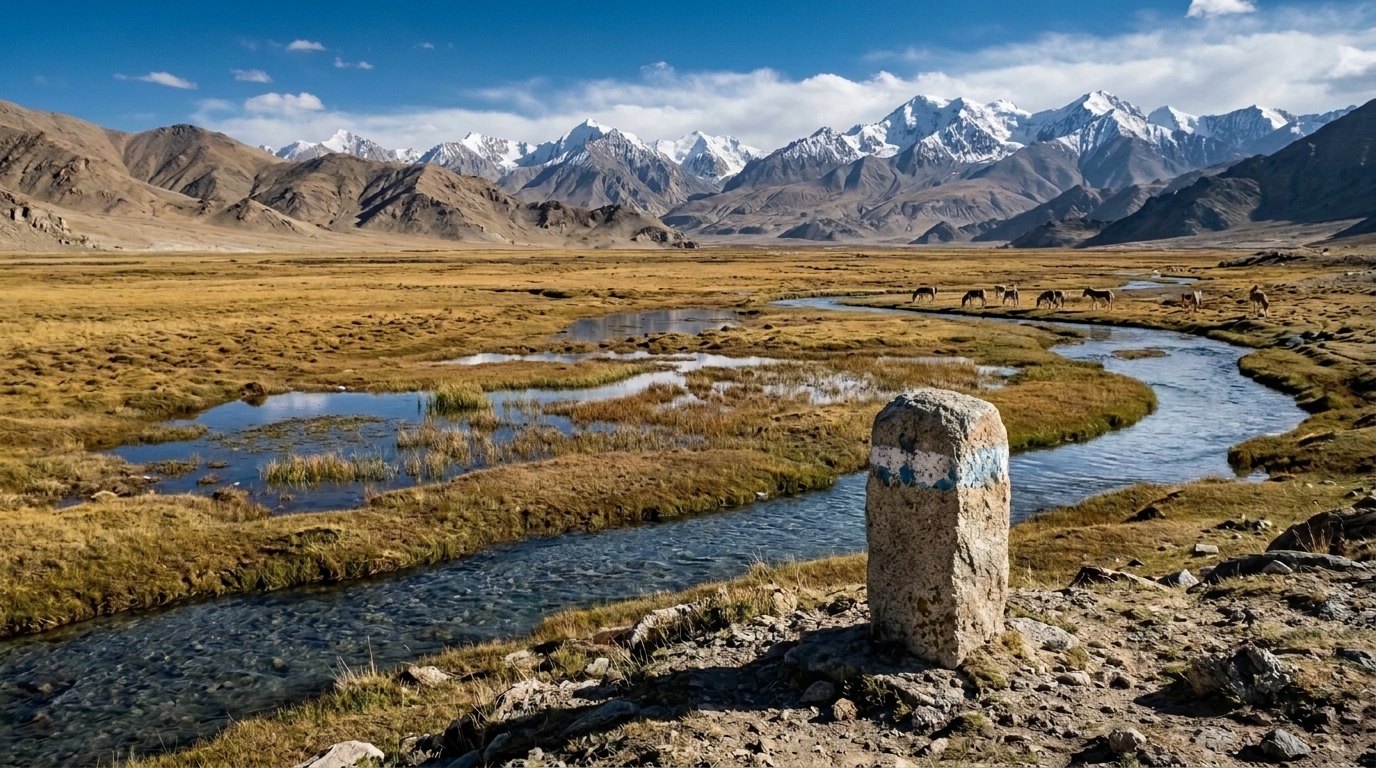
Part II — The Environmental Destruction We Have Learned to Accept
The 44-lake sewage audit (CAG Report No. 4 of 2025) and the twenty-system register of everyday ecological loss across Kashmir and Jammu.
Perhaps the sharpest empirical comparison in this entire investigation lies not between three political movements, but between spectacular episodic controversies and the quiet, continuous degradation of the water, land, and air systems upon which millions of citizens depend every day. Consider a single official document tabled before the legislature: Report No. 4 of the Year 2025 of the Comptroller and Auditor General (CAG) of India, examining the Conservation and Management of Lakes in Jammu and Kashmir for the audited period ending March 2022.
Across a test-checked performance-audit sample of 63 lakes, the CAG found untreated sewage entering 50 lakes—44 of them in Kashmir and 6 in Jammu, leaving only 13 examined lakes free of documented raw sewage inflow during the audit window. In 34 of those waterbodies, wastewater from roughly 91,000 households (~4.55 lakh residents) discharged directly without interception; across examined Sewage Treatment Plants, ammoniacal-nitrogen removal frequently languished between 14 and 65 percent against statutory norms above 90 percent; and against 697 historical waterbodies recorded since 1967, 518 were documented as vanished or severely contracted.
Rigorous journalism requires stating the exact methodological bounds of those numbers: the 63 waterbodies constitute an audit sample rather than a complete census of all 553+ waterbodies cataloged in Kashmir EcoWatch’s hydrographic registry, and the findings reflect the audited period ended March 2022 rather than verified post-remediation 2026 conditions. Yet even within those strict audit bounds, the sociological question is unavoidable. No single excavator video produced raw sewage outfalls in forty-four Kashmir lakes. That crisis accumulated through the braided participation—and mutual tolerance—of under-investing municipal agencies, malfunctioning public STPs, unconnected commercial hotels and houseboats, unapproved shoreline colonies, and thousands of ordinary households.
Extend the lens beyond lakes to our complete Twenty-System Ecological Accountability Register—spanning Dal, Wular, Hokersar, Anchar, Nigeen, Manasbal, the Jhelum, Sindh, and Lidder rivers, Plio-Pleistocene Karewas, temperate forests, alpine meadows, glaciers, groundwater aquifers, perennial nag springs, ~2,150 hectares per year of lost irrigated paddy land, urban floodplains, winter air-sheds, endemic biodiversity, and over-steepened mountain slopes—and the pattern deepens. Strip-mining four-million-year Karewa saffron benches in Budgam and Pulwama, dumping earth into Bemina and Hokersar flood marshes, incising Rambiara and Doodhganga cobble beds, and spraying pollinator-collapsing pesticides across South Kashmir orchards unfold in broad daylight with a fraction of the civic mobilization triggered by a single politically symbolic order.
OFFICIAL PERFORMANCE AUDIT · CAG OF INDIA REPORT NO. 4 OF 2025
Scope & Temporal Caveat: The 63 lakes represent the Comptroller and Auditor General’s test-checked performance-audit sample—not a complete census of all 553+ cataloged regional waterbodies or the 697 historical waterbodies referenced since 1967 (of which 518 were reported vanished or shrunk). Findings strictly reflect the audited period ending March 2022 rather than verified post-remediation 2026 conditions, while establishing an objective statutory baseline of multi-actor municipal, commercial, and household accountability.
All 20 regional ecological systems (EAR-01 Dal Lake through EAR-20 Mountain Slopes)—mapping documented pressures, responsible authorities, affected communities, statutory laws, and live KEW observatory links—are published in full in Monograph 02 and the KEW Environmental Accountability Observatory.
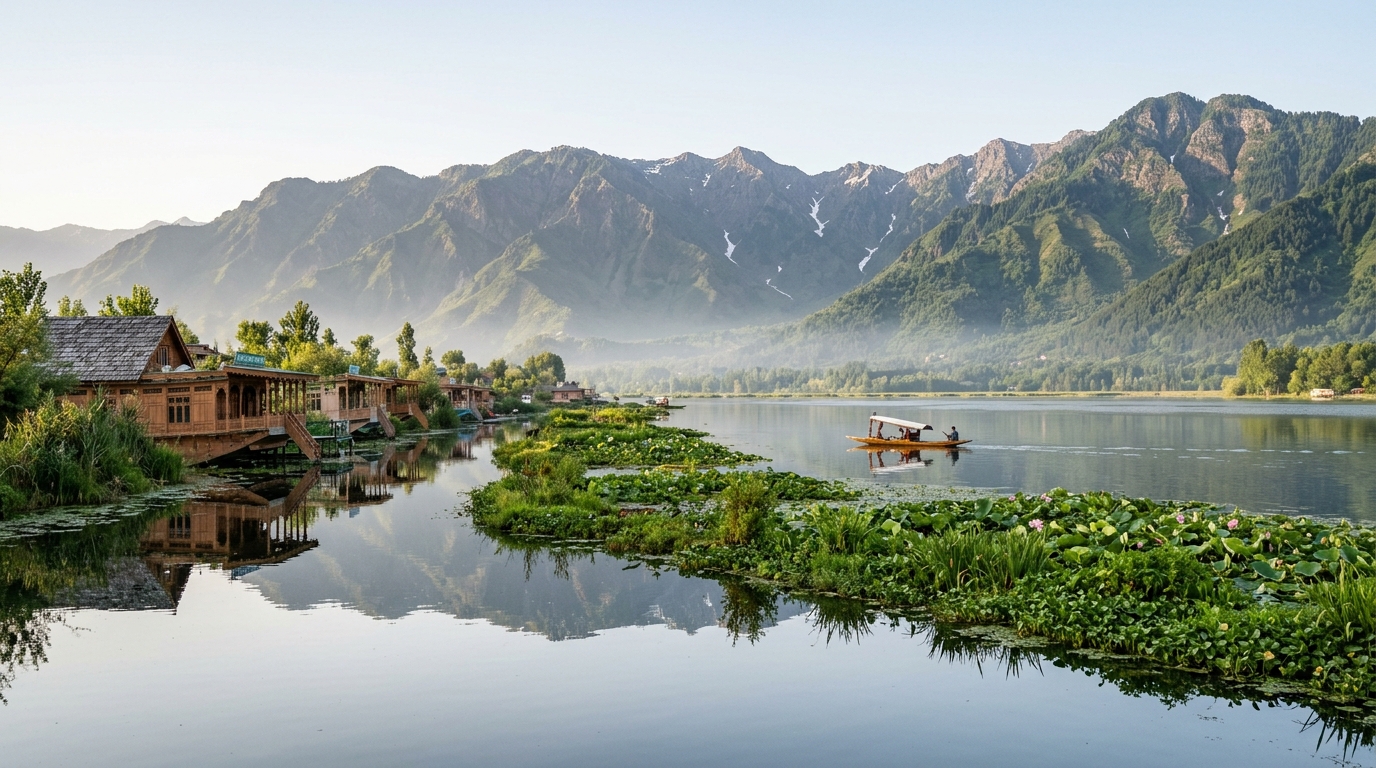
Part III — The Science of Selective Environmental Consciousness
Political ecology, ten cognitive mechanisms of selective outrage, Rob Nixon’s slow violence, and the psychology of ownership.
Why do intelligent, deeply place-attached societies defend one endangered landscape with extraordinary courage while normalizing the slow ruin of another? Environmental destruction is never solely a failure of civil engineering, statutory drafting, or limnological instrumentation. It is simultaneously a phenomenon of political ecology, cognitive psychology, collective identity, and behavioural economics.
Political ecology demonstrates that landscapes in contested mountain regions are rarely experienced as neutral biophysical surfaces. A forest compartment, alpine meadow, river terrace, or cold-desert plateau simultaneously carries memories of sovereignty, livelihood security, sacred belonging, and democratic voice. When an external or politically distrusted authority alters terrain without transparent local consent, legitimate ecological alarm fuses with collective identity protection, generating rapid, high-cohesion mobilization. Conversely, when physically equivalent damage is dispersed across thousands of familiar local actors—neighbours building on a marsh, relatives sinking an orchard borewell, or local tipper syndicates hauling river cobbles—mobilization collides against kinship ties, economic reciprocity, and in-group solidarity.
Behavioural science identifies ten well-established psychological mechanisms capable of amplifying this asymmetry: in-group bias, confirmation bias, motivated reasoning, moral licensing, cognitive dissonance, diffusion of responsibility, availability bias, shifting baseline syndrome, present bias, and classic collective-action dilemmas. Naming these mechanisms requires strict scientific humility: their documented existence in behavioural research does not prove that any particular protester at Sheshnag, hunger striker in Leh, or petitioner in Srinagar is acting from bias rather than genuine ecological conviction. Rather, they constitute testable hypotheses explaining why societal attention can spike during dramatic episodes and dissipate across routine degradation.
Equally decisive is the structural contrast conceptualized by environmental scholar Rob Nixon (2011) as "slow violence"—damage that unfolds gradually, out of sight, and dispersed across years and sub-catchments rather than erupting as an instantaneous visual spectacle. A yellow hydraulic excavator against white snow beside an alpine tarn delivers an immediate, morally legible image within three seconds on a smartphone screen. Orthophosphate climbing microgram by microgram inside Wular, piezometric groundwater tables dropping thirty centimetres a year beneath Shopian karewas, or pollinator network connectance falling 46 percent across sprayed orchards (Riyaz et al., 2026) produces no single cinematic frame—until a September flood or a dry village spring announces the accumulated bill.
Testing whether ownership and actor identity truly alter environmental judgment therefore requires moving beyond editorial assertion to empirical social science: presenting randomized respondent cohorts with identical, scientifically verified wetland or forest violations while varying solely whether the proponent is a government department, private developer, local community body, religious institution, or family enterprise.
PART III · COGNITIVE & STRUCTURAL MECHANISMS OF SELECTIVITY
Ten conceptual behavioural mechanisms and six spectacular-versus-slow destruction pairs examined in Monograph 02 (Volume IV)
| Mechanism / Spectacular Controversy | Potential Manifestation / Gradual Ecological Counterpart |
|---|---|
| In-group bias | Greater tolerance of ecological violations committed by one's own community, social network, or political constituency |
| Confirmation bias | Accepting environmental evidence selectively when it reinforces pre-existing political or regional beliefs |
| Motivated reasoning | Reinterpreting ecological risk thresholds according to personal property, commercial, or institutional interests |
| Moral licensing | Treating visible participation in a high-profile protest or cleanup as justification for overlooking everyday household or business impacts |
| Cognitive dissonance | Publicly endorsing conservation principles while privately participating in wetland infill, borewell extraction, or waste dumping |
| Diffusion of responsibility | Assuming individual domestic sewage outfalls, plastic burning, or orchard sprays are negligible within a basin-wide crisis |
| Availability, Shifting Baselines, Present Bias & Collective Action (07–10) | Stronger reaction to dramatic footage than gradual aquifer/wetland loss; generational normalization of degraded baselines; short-term gain overriding shared watershed survival. |
| Excavation beside an alpine lake | Continuous untreated sewage discharge into 50 audited lakes |
| Single controversial forestland diversion order | Incremental decadal forest-edge encroachment and canopy fragmentation |
| Major public infrastructure announcement | Thousands of unpermitted individual floodplain and hillside construction projects |
Part IV — Religion, Sacred Geography and Environmental Responsibility
Balancing pilgrimage accessibility and safety against periglacial limits—and applying one respectful ecological standard across all eight spiritual traditions and institutions.
Across Kashmir, Jammu, and Ladakh, sacred geography and living watersheds are woven into a single civilizational fabric. Glaciated caves, karst springs, river confluences, cedar ridges, hilltop shrines, khanqahs, temples, monasteries, gurdwaras, and churches have anchored moral reflection for centuries. When high-altitude or waterside spiritual journeys evolve into high-volume modern congregations, environmental ethics must navigate two symmetrical responsibilities without flinching: neither exempting sacred landscapes from biophysical carrying-capacity laws, nor ever allowing environmental regulation to be weaponized selectively against any religious community.
Honest analysis must recognize the genuine humanitarian concerns that motivate pilgrimage infrastructure: protecting elderly and differently abled devotees along steep, oxygen-thin trails, preventing fatal stampedes and hypothermia during sudden Himalayan cloudbursts, and enabling rapid emergency medical evacuation. Those safety imperatives are real and honourable. Yet engineering safety in a 3,590-to-3,888-metre periglacial trough cannot mimic plains highway construction without destabilizing the very moraines and snow-bridges pilgrims traverse. Concentrating 414,311 registered Amarnath Yatris (2025 official disclosure), service camps, ponies, and helicopters into a 45-to-52-day summer ablation window demands non-motorized bio-engineered trail stabilization, zero-bypass cold-climate faecal-sludge treatment, strict solid-waste backhaul, and science-based daily carrying-capacity scheduling.
Universal fairness requires applying that exact same ecological mirror across every spiritual institution in the region—not as an allegation against any shrine, mosque, temple, or monastery, but as a shared covenant of stewardship. At Hazratbal on Dal Lake’s shore (over 1.2 million annual visits) and Charar-e-Sharief atop fragile Budgam karewas (600,000+ visits), peak ablution surges, hillside vehicular congestion, and solid waste test municipal STPs and springsheds. Across Hindu temples and sacred nag springs such as Tulmulla, preserving cold-water dissolved oxygen requires disciplined management of organic offerings. Across Ladakh’s Buddhist monasteries, Sikh gurdwaras hosting massive community langars, historic Sufi khanqahs, and churches alike, water conservation, greywater treatment, composting, and plastic elimination represent universal institutional duties.
Here lies one of the Western Himalayas’ greatest untapped sources of ecological renewal. Where government circulars alone struggle to shift everyday behaviour, spiritual leadership carries profound moral resonance. Imagine Friday khutbahs in mosques, discourses in khanqahs and temples, teachings in gonpas, and ardas gatherings in gurdwaras uniting around Kashmir’s own Rishi-Sufi truth—that water, forest, and soil are a sacred trust (amanat) whose contamination wrongs every neighbour downstream. The measure of spiritual reverence for creation is ultimately our measurable refusal to pollute it.
PART IV · UNIVERSAL SPIRITUAL INSTITUTIONAL STEWARDSHIP MATRIX
Consistent, non-sectarian environmental responsibilities across eight categories of religious and spiritual institutions
| Religious or Spiritual Institution | Universal Environmental Stewardship Responsibilities |
|---|---|
| Mosques | Ablution water conservation, greywater sanitation routing, solid-waste segregation, and Friday khutbah ecological literacy |
| Khanqahs | Custodianship of historic spiritual-ecological ethics (Rishi-Sufi stewardship) and neighbourhood water/tree protection |
| Sufi shrines | Peak Urs congregation sanitation, hillside parking discipline, plastic-free langar/tabarruk norms, and spring/lake protection |
| Hindu temples | Organic offering management in springs/streams, decentralized wastewater interception, and forest-slope fire safety |
| Pilgrimage organizations | Science-based seasonal carrying-capacity quotas, zero-bypass cold-climate sanitation, equine waste management, and non-motorized track ethics |
| Buddhist monasteries | Cold-desert spring and glacier-stream stewardship, solar/passive winter heating, and community rangeland conservation education |
| Gurdwaras | Zero-waste langar composting, water-recycling efficiency, renewable energy adoption, and civic tree/watershed service |
| Churches | Institutional campus sustainability, rainwater harvesting, heritage grove conservation, and youth environmental education |
Part V — The Political Economy of Kashmir’s Environmental Destruction
Private wealth capture, socialized public losses, and the crucial moral distinction between commercial profiteering and household structural constraints.
Follow the balance sheet beneath almost every normalized environmental injury in the Western Himalayas and a stark economic asymmetry emerges: financial gains are captured privately and immediately, while ecological, health, and disaster losses are socialized across the public treasury and downstream communities over decades. Environmental regulations encounter fierce, quiet resistance not because citizens misunderstand nature, but because watershed boundaries directly constrain speculative property values, construction margins, mineral royalties, and seasonal commercial turnover.
Across eight interconnected economic sectors—real estate, construction, tourism, mining, horticulture, transportation, hospitality, and timber-related extraction—externalities operate as hidden subsidies. A private developer filling five kanals of floodplain marsh in Bemina or Lasjan captures immediate commercial plot value while transferring heightened flood-stage risk to thousands of downstream ground-floor homes and public hospitals. A hospitality establishment bypassing winter greywater into Dal Lake or the Lidder saves capital and electricity on heated sewage treatment while shifting eutrophication cleanup bills and lost fishery income onto taxpayers and boatmen. Hybrid state-corporate-local gravel syndicates strip imbricated cobbles from the Rambiara and Doodhganga for immediate tonnage profit while leaving Irrigation and Jal Shakti departments to rebuild undermined bridge piers and stranded village water intakes.
Monograph 02 therefore proposes a formal Ecological Cost-Accounting Methodology for Jammu, Kashmir, and Ladakh—pairing sectoral private revenue estimates against quantified public expenditure on dredging, STP retrofits, flood relief, slope stabilization, drinking-water filtration, and respiratory disease burden.
Yet a just political-economy investigation must enforce a critical ethical boundary: structural constraint is not moral hypocrisy. Environmental journalism forfeits its fairness whenever it lectures low-income households or small shopkeepers for domestic greywater discharge in wards where municipal authorities have failed for thirty years to lay functional sewer lines, provide door-to-door solid-waste collection, supply reliable clean winter heating, or zone affordable flood-safe housing. Deliberate commercial wetland speculation and industrial pollution bypasses deserve uncompromising enforcement; household survival amid missing public infrastructure demands public investment and affordable clean alternatives.
PART V · SECTORAL POLITICAL ECONOMY & EXTERNALITY MATRIX
Eight economic sectors where private financial incentives collide with public watershed, air-shed, and slope integrity
| Economic Sector | Primary Environmental Conflict & Externalized Public Cost |
|---|---|
| Real estate | Speculative conversion of flood-detention wetlands, kahcharai commons, and irrigated paddy lowlands into high-margin colonies and plazas |
| Construction | Demand for unreplenished riverbed aggregate and karewa clay fill, fugitive mineral dust, and unbuttressed hill-slope cutting |
| Tourism | Compressed summer water demand, subalpine meadow enclosure, vehicular black carbon, and unheated winter sewage overload |
| Mining | Mechanized instream cobble/boulder extraction incising thalwegs, stranding gravity kuhls, and undermining bridge foundations |
| Horticulture | High-density M9 summer groundwater pumping, forest-buffer creep, and intensive fungicide/pesticide drift into wetlands |
| Transportation | Diesel freight and commuter tailpipe emissions under winter inversions alongside linear highway slope destabilization |
| Hospitality | Unconnected or under-performing hotel/houseboat sewage systems socializing lake eutrophication costs onto public utilities |
| Timber-related activities | Illicit compartment felling, firewood pressure, and commercial Salix monocultures displacing open-water wetland habitats |
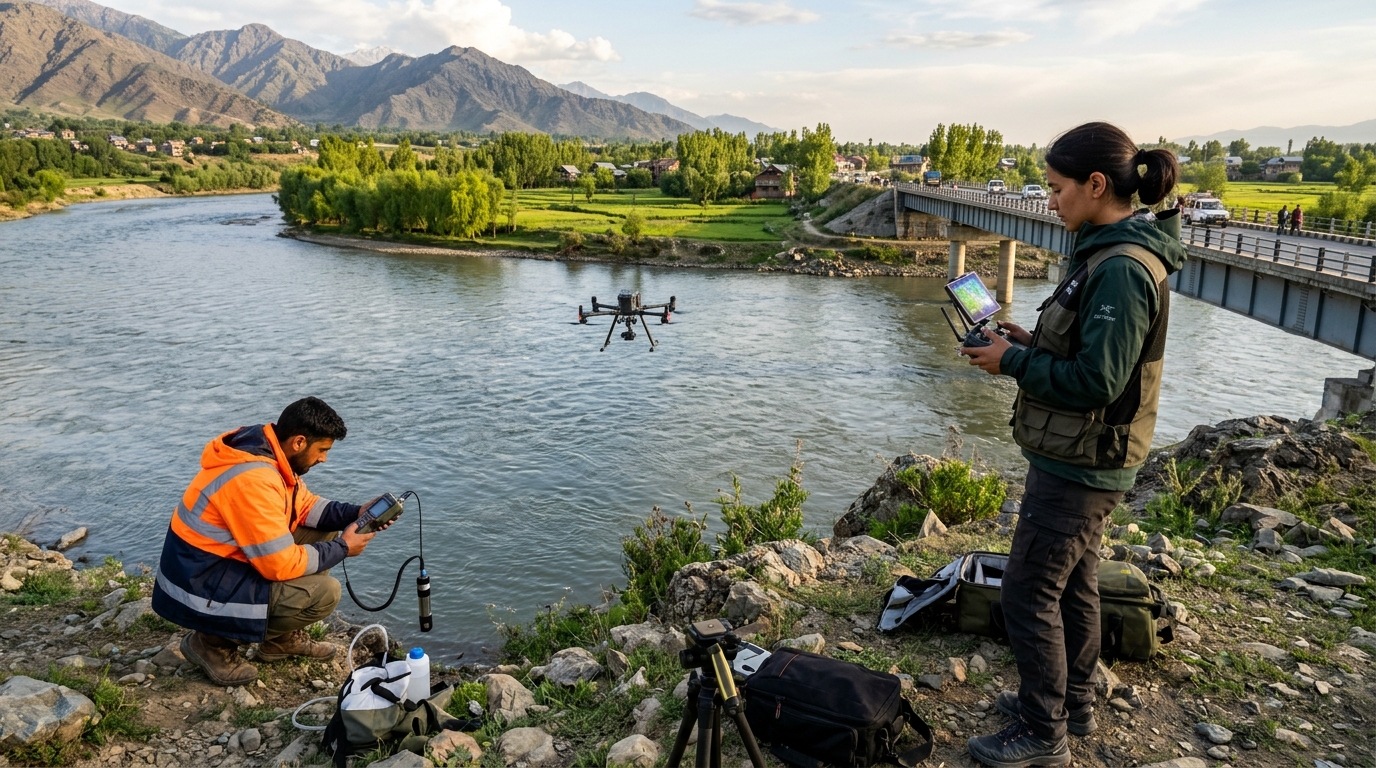
Part VI — Government Accountability: Knowledge, Power and Asymmetric Responsibility
Why universal ecological standards never create a false equivalence between ordinary citizens and state institutions armed with statutory power.
Holding communities, businesses, and religious institutions to universal biophysical standards must never obscure a foundational constitutional truth: government responsibility is structurally and legally greater than individual responsibility. Citizens do not auction minor-mineral blocks, notify Master Plans, split highway packages below 100-kilometre Environmental Impact Assessment thresholds, issue Consent to Operate certificates, command Forest Protection Forces, or manage multi-crore urban sewerage budgets. Under the Public Trust Doctrine embedded in Article 21 of the Constitution of India, state agencies hold sovereign authority, coercive enforcement power, scientific directorates, and public taxation precisely because they are trustees of shared waters, forests, and air.
Does government failure across the Western Himalayas stem from a lack of scientific knowledge? Official records suggest a more sobering diagnosis. Across universities in Srinagar, Jammu, and Leh, remote-sensing centres, Geological Survey of India reports, Central Ground Water Board bulletins, National Green Tribunal expert committees, and CAG performance audits, extensive scientific diagnostics already exist. Breakdowns occur across eight institutional joints downstream of knowledge: fragmented ten-department watershed silos, chronically under-staffed Pollution Control Committees, conflicting revenue-versus-conservation mandates, proponent-funded EIA consultancies, cumulative-impact blind spots, perfunctory public hearings, weak post-clearance field inspections, and periodic regularization of influential violations.
An environmental clearance letter on file is never self-executing proof of ecological safety. Across nine development categories—high-altitude corridors, four-lane highways and tunnels, resort enclaves, urban ring-road expansions, riverbed mining blocks, hydropower diversions, brick-kiln/cement clusters, housing colonies, and wetland-margin projects—accountability requires auditing post-construction reality against pre-approval promises: Were designated muck-disposal sites actually used, or did blasted spoil roll into the Chenab and Sindh? Did winter STPs achieve >90 percent ammoniacal-nitrogen removal, or merely consume capital grants? Were six-monthly compliance reports verified on the ground by independent scientists?
Applying universal physical standards therefore means two things at once: refusing to excuse private or community destruction when citizens violate wetland and forest commons, while holding state regulators to the highest fiduciary accountability whenever public power authorizes—or selectively ignores—ecological harm.
“Universal biophysical standards never create a false equivalence between a household without a sewer line and a state ministry armed with statutory authority, public revenue, and constitutional trusteeship.”
Part VII — Environmental Activism: Measuring Outcomes Rather Than Visibility
Comparing political victories against ecosystem recovery across 2008, 2023–2026, and 2026—and honouring sustained defenders who work when cameras leave.
In the age of viral video and rapid online mobilization, civic environmental campaigns are almost universally judged by metrics of visibility: crowd size, hashtag velocity, petition signatures, assembly walkouts, or the withdrawal of a contested government circular. None of those political or social milestones should be belittled; public pressure and judicial stays frequently create the essential breathing space without which an ecosystem would be irreversibly bulldozed. Yet visibility is an input, not an ecological outcome.
A rigorous longitudinal evaluation of environmental movements—comparing the 2008 Baltal–Domail agitation, Ladakh’s 2023–2026 constitutional movement, and the November 2026 Sheshnag campaign across ten structured evidence dimensions while carefully adjusting for their distinct historical contexts and time horizons—must ask what happened to the physical landscape after the headlines moved on. Was forest canopy measurably conserved? Did dissolved oxygen rise? Were spoil slopes bio-engineered and monitored for five winters? Did the same civic energy stay engaged to audit local municipal sewage, riverbed gravel auctions, and wetland infill in surrounding districts?
When we shift the ruler from momentary publicity to multi-year perseverance, a quieter and deeply admirable tradition of environmental defence comes into focus across Jammu, Kashmir, and Ladakh. Alongside frontline forest guards and wildlife watchers who have risked—and lost—their lives defending compartments (commemorated in Dispatch 01), sustained civic advocates, Right to Information (RTI) and National Green Tribunal petitioners—exemplified in the submitted manuscript and public judicial records by sustained campaigns of advocates such as Dr. Raja Muzaffar Bhat on riverbed mining, karewa excavation, solid waste, and wetland encroachment, alongside independent scientists, environmental lawyers, investigative reporters, boatman and fisher cooperatives, and village spring custodians—have laboured year after year on unglamorous, politically inconvenient local degradation.
To honour that work without partisanship or personality cults, Monograph 02 and Kashmir EcoWatch establish a permanent Community and Civic Environmental Stewardship Archive: recognizing defenders strictly on the basis of verifiable documentary filings, peer-reviewed research, physical restoration survival, and measurable compliance outcomes.
PART VII · POLITICAL VISIBILITY VS. MEASURABLE ECOLOGICAL OUTCOME
Why public mobilization milestones must be paired with verified biophysical recovery indicators
| Political, Legal or Social Milestone | Required Ecological Outcome Verification |
|---|---|
| Government order withdrawn | Target forest, moraine, or wetland habitat demonstrably protected on the ground |
| Public demonstration organized | Measurable reduction in physical pollutant, sediment, or extraction pressure |
| Petition signatures collected | Scientifically justified engineering or conservation intervention implemented |
| Parliamentary or assembly debate initiated | Statutory inspection, STP uptime, and regulatory compliance durably improved |
| Constitutional protection secured | Local groundwater, pastures, waste, and tourism governed within biophysical limits |
| Environmental declaration adopted | Independent water, air, canopy, and biodiversity indicators measurably improved |
| Judicial intervention obtained | Court-ordered remediation funded, executed on schedule, and verified by open telemetry |
Part VIII — Original Scientific and Sociological Research Programme
The Kashmir Environmental Consciousness Survey (n = 3,000–5,000), the interactive Actor-Blind Consistency Experiment, 2000–2026 media analysis, and satellite change detection.
If Himalayan Dispatch wishes to elevate "selective environmental consciousness" from a provocative editorial observation into a falsifiable scientific construct, assertions must give way to transparent empirical testing. Volume VIII of our proposed fifty-chapter monograph sets out five reproducible research protocols—explicitly identified here as proposed scientific instruments and publication targets that have not yet been fielded, with zero synthetic respondent scores or pre-judged conclusions.
First is the Kashmir Environmental Consciousness Survey: an anonymous, IRB-reviewed, stratified probability survey of 3,000 to 5,000 respondents across all ten districts of the Kashmir Valley alongside comparative cohorts in Jammu and Ladakh, spanning urban wards, peri-urban towns, agrarian villages, and mountain settlements. Second—embedded interactively immediately below this chapter as an illustrative demonstration instrument—is the Environmental Consistency Experiment: a randomized between-subjects vignette protocol in which respondents evaluate an identical, scientifically documented wetland or slope violation while only the identity of the responsible proponent (government agency, private developer, local community organization, religious institution, or family-owned enterprise) varies across experimental arms.
Third is a twenty-six-year Environmental Attention and Media Coverage Database (2000–2026), testing whether report volume, front-page duration, scientific expert citation, and outcome follow-up differ systematically across environmental issues after controlling statistically for physical severity, affected population, accessibility, and political salience. Fourth is a ten-process Satellite-Based Environmental Change Detection programme (Landsat, Sentinel-1 SAR, Sentinel-2 optical, and multi-temporal DEM differencing) independently quantifying forest canopy loss, wetland contraction, lake open-water shrinkage, urban sprawl, karewa scarp excavation, paddy loss, floodplain occupation, alpine track disturbance, meadow NDVI trends, and glacier retreat—accompanied mandatory by field ground-truthing, classification confusion matrices, and uncertainty intervals.
Fifth, uniting all empirical streams, is the five-domain Environmental Consistency and Accountability Framework—evaluating Scientific Consistency, Institutional Consistency, Social Consistency, Economic Consistency, and Temporal Consistency on documented evidence rather than moralizing labels, alongside our seven-article Politically Neutral, Evidence-Driven Environmental Assessment Charter (PNEEAC) mandating blind-sponsor Stage-1 technical appraisal and equal restoration escrow across public and private proponents alike.
Explore the illustrative Environmental Consistency Experiment interactive module rendered in this dispatch to see how holding biophysical harm constant while varying responsible-organization identity tests actor-contingent judgment without collecting live personal data.

VOLUME VIII · CHAPTER 44 · ILLUSTRATIVE RESEARCH INSTRUMENT
Illustrative Environmental Consistency Experiment
Proposed survey instrument, not a live research data collection system. No responses are transmitted or stored. Select or randomize the responsible organization below to observe how the proposed randomized vignette holds physical ecological harm constant while varying only institutional or social identity.
A government agency proposes construction within an ecologically sensitive wetland. Independent scientific assessment establishes that the construction would result in habitat loss and increased flood risk. Feasible alternatives are available.
What action would you support?
In the actual IRB-reviewed study (proposed n = 3,000–5,000), actor conditions are randomized between subjects using neutral wording that avoids encouraging any predetermined answer.
Are equivalent ecological impacts assessed using equivalent physical, chemical, and geotechnical evidence regardless of proponent?
Are environmental clearance rules, inspection schedules, and penalties applied irrespective of public, private, religious, or community ownership?
Do public environmental attitudes hold steady—or shift measurably—when conservation obligations impose personal or in-group costs?
Are downstream flood, sewage, and slope externalities acknowledged transparently when activities generate private or sectoral income?
Does civic monitoring, institutional enforcement, and ecological restoration continue after viral or electoral attention disappears?
Proposed analytical framework. No institutional, community or individual scores have been calculated; evaluations prioritize documented physical and statutory evidence over subjective moral judgments.
The Permanent KEW Companion — Western Himalayan Environmental Accountability Observatory
Ten permanent public registries tracking controversies, clearances, court orders, promises, and ecological outcomes—including binding self-scrutiny of Kashmir EcoWatch.
Journalism that diagnoses selective memory cannot itself vanish when an edition closes. To ensure that environmental controversies, statutory clearances, judicial interventions, and everyday ecological pressures remain tracked long after political attention shifts elsewhere, this flagship investigation establishes a permanent institutional capability within Kashmir EcoWatch: the Western Himalayan Environmental Accountability Observatory (WHEAO).
Operating alongside KEW’s Environmental PIL Portal, Change Detection Observatory, Water Systems and 553-Lake Registries, Sectoral EIA Engine, and Himalayan Dispatch, WHEAO organizes longitudinal documentation across ten permanent registries: (1) Environmental Controversy Registry, (2) Ecological Damage Registry, (3) Environmental Clearance Registry, (4) Judicial Intervention Registry, (5) Institutional Commitment Registry, (6) Environmental Restoration Registry, (7) Community Stewardship Registry, (8) Environmental Movement Archive, (9) Ecological Outcome Tracker, and (10) Public Evidence Repository.
Two non-negotiable constitutional and ethical guardrails govern the Observatory. First, its purpose is strictly public-interest scientific and institutional documentation—never political surveillance, ideological scoring, or the profiling of private individuals. Second, Kashmir EcoWatch and Himalayan Dispatch bind themselves first to the exact universal rule we propose for others: refusing partisan or corporate concessionaire funding, publishing explicit uncertainty bounds and Stage 05 peer-review statuses on every synthesis, auditing neglected Jammu, Ladakh, and rural sub-basins alongside high-profile valleys, and guaranteeing full right of reply and timestamped Stage 10 public corrections to every agency, shrine trust, enterprise, NGO, and community.
PERMANENT KEW COMPANION · TEN REGISTRIES OF THE ACCOUNTABILITY OBSERVATORY
Institutional architecture of the Western Himalayan Environmental Accountability Observatory (WHEAO)
| Permanent Observatory Registry | Longitudinal Scientific & Public Accountability Function |
|---|---|
| WHEAO-01 · Environmental Controversy Registry | Documents public environmental disputes from initial emergence through engineering filings, stakeholder positions, and multi-year post-controversy ecological states. |
| WHEAO-02 · Ecological Damage Registry | Records independently verified physical, chemical, and biological degradation across lakes, rivers, wetlands, karewas, forests, and slopes. |
| WHEAO-03 · Environmental Clearance Registry | Tracks publicly accessible PARIVESH/SEIAA/Forest Conservation assessments, stipulated safeguard conditions, and compliance inspection filings. |
| WHEAO-04 · Judicial Intervention Registry | Monitors Supreme Court, J&K and Ladakh High Court, and National Green Tribunal environmental orders, committee inspections, and execution status. |
| WHEAO-05 · Institutional Commitment Registry | Tracks public environmental promises, budgetary allocations, action plans, and conference/civic declarations against scheduled milestones. |
| WHEAO-06 · Environmental Restoration Registry | Monitors lake dredging, STP upgrades, CAMPA afforestation, wetland weir retrofits, and slope bio-engineering for multi-year ecological survival. |
| WHEAO-07 · Community Stewardship Registry | Documents verified non-partisan conservation work by scientists, RTI/NGT advocates, forest rangers, religious trusts, panchayats, and citizens. |
| WHEAO-08 · Environmental Movement Archive | Preserves primary historical charters, parliamentary records, official responses, and stated ecological vs. political goals of regional movements. |
| WHEAO-09 · Ecological Outcome Tracker | Compares statutory clearances, court directives, and movement settlements directly against longitudinal water, air, canopy, and species time series. |
| WHEAO-10 · Public Evidence Repository | Preserves open-access scientific reports, audit tables, satellite methodologies, and right-of-reply submissions for public and scholarly scrutiny. |
Before We Point Our Fingers
A closing examination of conscience for governments, political parties, businesses, religious institutions, communities, and citizens across the Western Himalayas.
Kashmir—and every valley, gorge, and high plateau across Jammu, Ladakh, and the Western Himalayas—deserves an environmental consciousness that does not awaken exclusively when political circumstances demand it.
Sheshnag deserves protection because it is an irreplaceable, cold-water periglacial Himalayan basin at 3,590 metres. Dal Lake deserves protection because its springs, reedbeds, and basins sustain an interconnected aquatic civilization. Wular deserves protection because its flood-detention storage shields an entire valley far beyond Bandipora’s shoreline. Karewas deserve protection because four million years of lacustrine earth and saffron heritage cannot be manufactured again once scraped into highway fill. Forests and alpine meadows deserve protection because their canopy and turf hold snowmelt, slope, and biodiversity together. None of these landscapes should require a political controversy to establish its right to exist.
Governments must be held accountable first and most rigorously because they possess statutory authority, public revenue, and constitutional obligations to safeguard shared natural wealth. Businesses and commercial syndicates must be held accountable because private accumulation cannot treat rivers, wetlands, and winter air as free waste sinks. Political parties must be held accountable when they champion ecology on opposition benches and regularize encroachment in office. Communities must be held accountable because historical belonging confers stewardship duties, never immunity to fill marshes or strip forests. Religious and spiritual institutions are invited to lead because reverence for the Creator’s landscape should strengthen—never weaken—measurable care for water, earth, and living creatures.
And each of us as citizens must recognize that environmental consciousness is not measured solely by the petitions we sign, the videos we share, or the distant projects we condemn. It is measured just as searchingly by the ecological destruction we refuse to participate in—and refuse to excuse—when participation would convenience or enrich our own household, guild, or faction.
The ultimate purpose of this flagship investigation and our fifty-chapter Monograph 02 research programme is not to accuse Himalayan societies of hypocrisy. It is to test honestly whether selective environmental behaviour exists, understand the historical, psychological, and structural forces that produce it, and build the scientific and institutional mechanisms needed to overcome it. We close the Inaugural Edition of Himalayan Dispatch with the single question upon which the ecological future of these mountains turns: If every politically controversial development project were cancelled tomorrow, would Kashmir continue defending its forests, wetlands, rivers, mountains and lakes with the same determination? Or would its environmental consciousness return to sleep?
“If every politically controversial development project were cancelled tomorrow, would Kashmir continue defending its forests, wetlands, rivers, mountains and lakes with the same determination? Or would its environmental consciousness return to sleep?”
DOCUMENTARY SOURCES & FURTHER READING
| Source | Documentary relevance |
|---|---|
| Comptroller and Auditor General (CAG) of India — Report No. 4 of the Year 2025 (Conservation and Management of Lakes in Jammu & Kashmir) | Official performance audit (period ended March 2022) documenting untreated sewage entering 50 of 63 examined lakes (44 Kashmir, 6 Jammu), ~91,000 unintercepted households across 34 lakes, STP nitrogen-removal deficits, and historical contraction across 518 of 697 recorded waterbodies. |
| Parliament of India Digital Library (eparlib.sansad.in) & J&K Cabinet Records (2008) — Baltal–Domail Forestland Diversion Chronology | Primary parliamentary and official chronology of the May 26, 2008 ~40 ha (800 kanals) Baltal–Domail forestland diversion order, July 1 revocation, July 7 Chief Minister resignation, and August 31, 2008 temporary-use settlement. |
| The Indian Express (Nov 27, 2026) & Kashmir Life (Nov 25, 2026) — Sheshnag Excavation Petition, BRO Response & J&K Internal Inquiry | Documented reporting on the >10,000-signature public petition opposing Sheshnag (3,590 m) excavation, BRO Project Beacon maintenance claims, J&K Forest Minister statements, and the internal inquiry into potential plan deviations. |
| Ministry of Home Affairs High-Powered Committee Disclosures & National Reporting (The Week / Tribune, 2023–Nov 2026) — Ladakh Constitutional & Ecological Movement | Chronicles LAB, KDA, and civil-society demands regarding Sixth Schedule safeguards, ecological fragility, local governance, and 2023–2026 institutional negotiations. |
| Nixon, R. (2011), Slow Violence and the Environmentalism of the Poor — Harvard University Press (DOI: 10.4159/harvard.9780674061194) | Foundational theoretical framework distinguishing instantaneous, camera-visible environmental spectacle from attritional, temporally dispersed ecological destruction. |
| J&K Economic Survey 2025–26, J&K Assembly Cut-Motion Disclosures (2025) & LCMA GIS Houseboat Census (2024) | Official statistical baselines for Kashmir Division visits (1,116,043 in 2025; 3,140,000 in 2024), Amarnath Yatris (414,311 in 2025), Vaishno Devi pilgrims (6,932,922 in 2025), and Dal–Nigeen houseboat STP compliance (42%–81%). |
| Romshoo et al. (2018), Geomatics, Natural Hazards and Risk & Yousuf & Romshoo (2022), Sustainability — Jhelum Floodplain & LULC Impacts | Quantifies how 1980–2020 forest loss, urban floodplain infill, and wetland contraction amplify peak flood discharge and sediment yield. |
| Irfan et al. (2026), Sustainable Development; Rashid et al. (2020), Water; & Pu et al. (2021), The Cryosphere — Alpine Lake & Cryospheric Sensitivity | Establishes high-altitude alpine lake recreational/climatic vulnerability, 23.6% Kolahoi glacier loss, and black-carbon snow-albedo reduction. |
| Jasrotia et al. (2026), Scientific Reports & Sattar et al. (2026), NHESS — Himalayan Slope Susceptibility & GLOF Cascades | Demonstrates 87% clustering of J&K landslides in high-susceptibility zones and mass-movement cascades in steep glaciated valleys. |
| Alam et al. (2023), EMA; Mushtaq et al. (2022), Earth and Space Science; & Sultan et al. (2024), Water Science & Technology — Wetland & Lake Degradation | Peer-reviewed evidence on Kashmir wetland spatial contraction, Wular eutrophication (Carlson TSI Chl-a 68.2), and Dal nutrient enrichment. |
| Jafri, Jafri & Beg (2025), CUK Law Review; Riyaz et al. (2026), PLOS ONE; & Irshad et al. (2026), Wetlands Ecology and Management | Documents riverbed mining enforcement gaps, 46% orchard pollinator-network loss from agrochemicals, and pesticide residues in Hokersar Ramsar Wetland. |
| Monograph 02 (9 Volumes · 50 Chapters) & KEW Western Himalayan Environmental Accountability Observatory | Full 50-chapter interdisciplinary research protocol, 20-system accountability register, and 10 permanent KEW outcome-tracking registries. |
EDITORIAL PUBLICATION METADATA & 10-STAGE GATE LEDGER
| Gate | Status | Record / Scope |
|---|---|---|
| 01 · Commissioned | completed | Himalayan Dispatch Founding Masthead |
| 02 · Research in progress | completed | Himalayan Dispatch Research & Observatory Desk |
| 03 · Manuscript draft | completed | Assigned Author / Editorial Desk |
| 04 · Evidence verification | completed | Verified against Indian Parliamentary records & J&K Cabinet chronology (May 26, July 1, July 7 & Aug 31, 2008 Baltal–Domail 800-kanal / ~40 ha forestland diversion), MHA/LAHDC & public reporting on Ladakh (2023–Nov 2026), November 25–27, 2026 Sheshnag reporting (Kashmir Life >10,000-signature petition; Indian Express report on BRO response & J&K internal inquiry), CAG of India Report No. 4 of 2025 (63 audited lakes; 50 receiving untreated sewage: 44 Kashmir, 6 Jammu, period ended March 2022), J&K Economic Survey 2025–26, LCMA GIS Census 2024, Nixon (2011) slow-violence scholarship, and peer-reviewed Himalayan earth-system studies. |
| 05 · Scientific review (where applicable) | pending | All empirical audit boundaries (including CAG sample scope vs. total lake census and March 2022 cut-off) and proposed sociological/satellite research targets are explicitly qualified; independent external Stage 05 specialist review across political ecology, psychometrics, and earth sciences is required prior to post-pre-release certification. |
| 06 · Editorial review | completed | Founding Editor-in-Chief Desk Review |
| 07 · Copyright and ethics review | completed | Every political movement, spiritual tradition, livelihood sector, community, and state institution—including Kashmir EcoWatch itself—is examined under one non-sectarian, non-partisan evidentiary standard without attributing unverified personal motives or fabricating field interviews or camera EXIF metadata. |
| 08 · Administrator approval | in progress | Staged on localhost at Stage 08 (editorial_approval) as Dispatch 22 of 22 alongside Monograph 02 and the KEW Environmental Accountability Observatory awaiting Founding Administrator approval. |
| 09 · Published | pending | — |
| 10 · Post-publication corrections | not applicable | — |
| Attribute | Final assignment |
|---|---|
| Publication | Himalayan Dispatch |
| Volume / Issue placement | Vol. 01 / No. 01 · Dispatch 22 of 22 (Closing Flagship Special Investigation) |
| Companion monograph designation | Monograph 02 — Selective Environmental Consciousness (9 Thematic Parts · 50 Proposed Chapters) |
| Rubric classification | Special Investigation · Political Ecology & Environmental Ethics |
| Headline | Selective Environmental Consciousness |
| Subtitle | When Ecology Becomes Political and Environmental Responsibility Becomes Optional |
| Retained introductory cover essay | Who Speaks for the Environment When Politics Chooses the Landscape? |
| Proposed byline | Dr. Fayaz Ahmad Khan & Himalayan Dispatch Political Ecology and Environmental Accountability Desk |
| Geographic scope | Kashmir Valley · Jammu · Ladakh · Western Himalayas (Core Period: 2008–2026) |
| Permanent KEW scientific companion | Western Himalayan Environmental Accountability Observatory (10 Permanent Registries · /governance/environmental-accountability-observatory) |
| Canonical URL | /himalayan-dispatch/issues/volume-01-issue-01/selective-environmental-consciousness |
| Verification & review status | Stage 04 Documentary Audit Completed · Stage 08 Pre-Release Flagship Investigation Awaiting Stage 05 External Specialist Review & Founding Administrator Approval |

Founding Editor-in-Chief
Dr. Fayaz Ahmad Khan
Founder of Kashmir EcoWatch and Founding Editor-in-Chief of Himalayan Dispatch; writes on alpine hydrology, cryospheric thresholds, disaster resilience, and mountain commons across the Western Himalayas.
View Portfolio & Approved Commissions →NEXT IN THIS EDITION · THE INAUGURAL ISSUE · COVER STORY · ENVIRONMENTAL LEGACY
The Price of Protecting Paradise
By Himalayan Dispatch Desk · 19 min read