Return to Kashmir EcoWatch

EST. 2026  ·  KEW WESTERN HIMALAYAS

HIMALAYANDISPATCH

LANDSCAPE.  PEOPLE.  SCIENCE.  TRUTH.

BUREAU IV·In Establishment

AJ&K Bureau

Neelum Valley, MuzaffarabadSyntaxis & Mangla–Jhelum Catchments

Examines seismic hazard memory along the Kashmir–Hazara syntaxis, Neelum–Jhelum river diversion ecology, Himalayan moist temperate forestry, and cross-watershed flood warning gaps.

GEOGRAPHICAL COVERAGE (10 DISTRICTS / VALLEYS)

Muzaffarabad · Neelum · Hattian Bala · Bagh · Haveli · Poonch (AJK) · Sudhnoti · Kotli · Mirpur · Bhimber

Regional Daily Dispatches

Daily Dispatch Wire →

AJ&K Bureau is currently in establishment as a distributed correspondent desk. No regional Daily Dispatch wires have been published under this bureau dateline yet; earth-observation scoping is coordinated via our Fairfax desk while correspondent applications remain open.

Submit Correspondent Credentials →

Monthly Magazine Features

Current Edition →
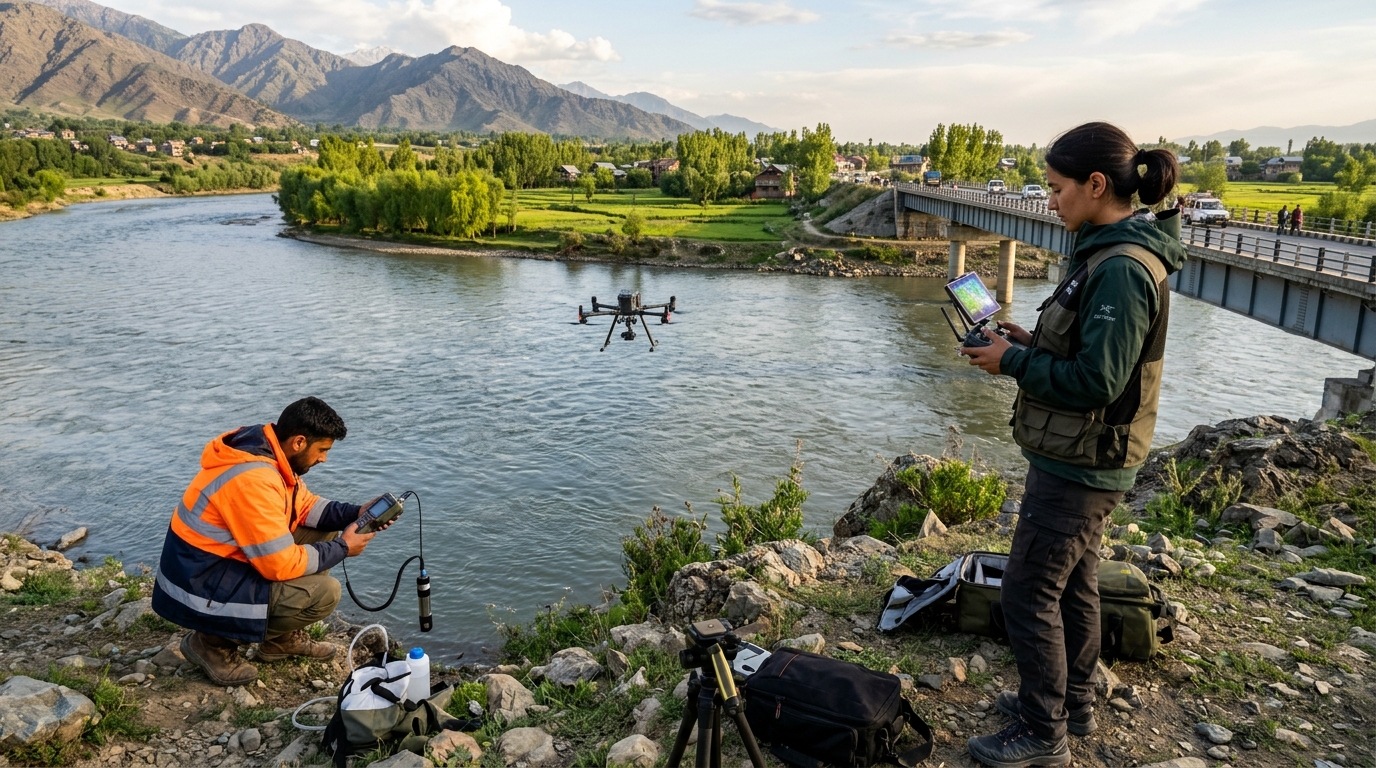
Steep Western Himalayan river-gorge and mountain infrastructure corridor—where snowmelt gradients generate thousands of megawatts while generating districts confront forest submergence, tunnel hydrogeological shifts, slope instability, and winter power curtailment (Illustrative archival plate — Kashmir EcoWatch Visual Archive).
SPECIAL SCIENTIFIC INVESTIGATION · HYDROPOWER · FOREST SUBMERGENCE · WILDLIFE DISPLACEMENT · TECTONIC HAZARDS · ENERGY JUSTICE

The Price of Power

Rivers are diverted, forests are submerged, mountains are tunnelled, wildlife corridors are severed, and communities surrender ancestral valleys to generate low-carbon electricity—yet on November 27, 2026 Jammu & Kashmir warned of a ~1,300 MW winter power gap, flood-damaged stations in Gilgit-Baltistan dropped to 157 MW against 285 MW summer demand, Ladakh ran Nimoo Bazgo and Chutak in emergency isolated mode, and AJ&K residents endured winter outages beside major dams. Completing our three-part mountain engineering sequence, this investigation asks: who receives the electricity, who receives the revenue, and who inherits the ecological and geological risks?
BY Dr. Fayaz Ahmad Khan & Himalayan Dispatch Hydropower Engineering, Environmental Geology, Geospatial Intelligence and Energy Justice Desk · VOL. 01 / NO. 01 · THE INAUGURAL ISSUE
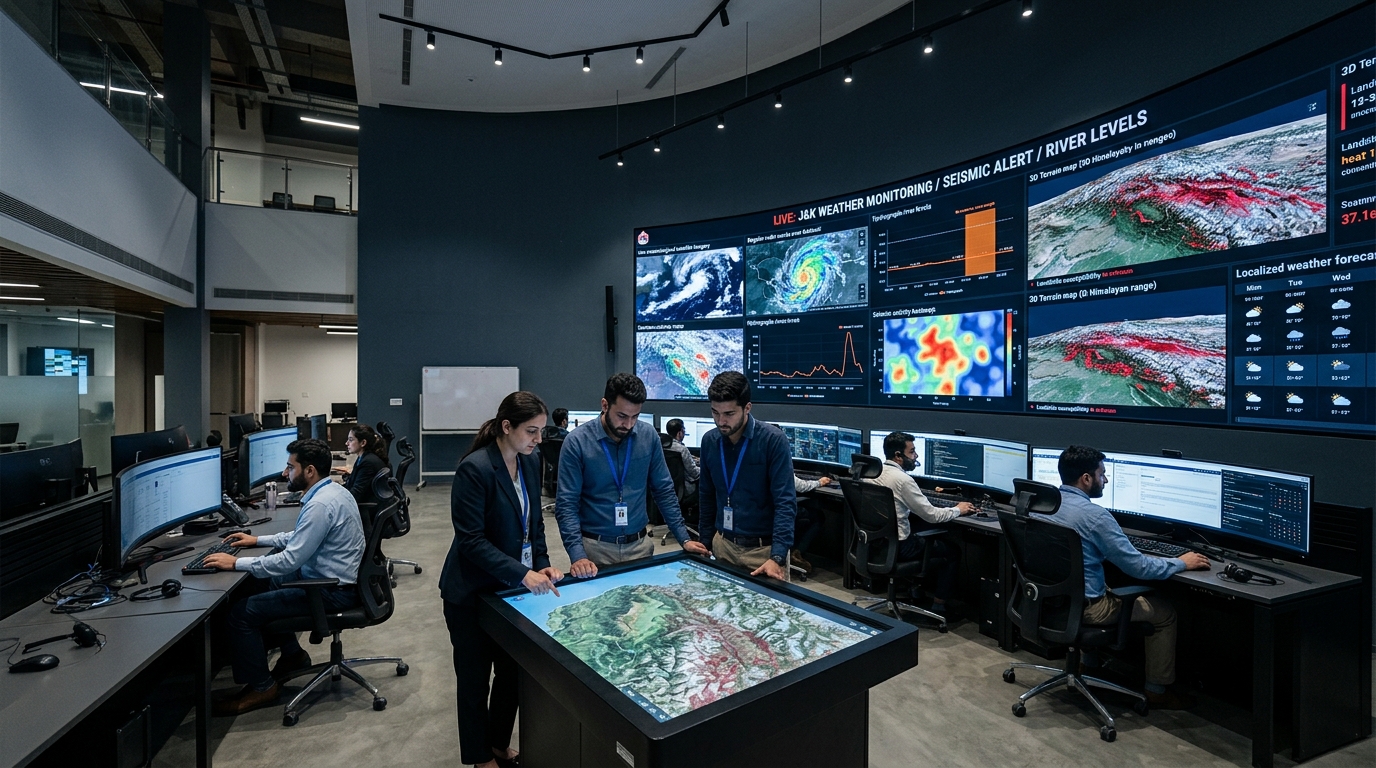
Himalayan river-confluence and steep mountain valley corridor context—illustrating the hydrological and civic stakes when upstream hydropower diversions and downstream storage reservoirs reshape river-dependent settlements (Illustrative archival plate — Kashmir EcoWatch Visual Archive; does not depict a specific Muzaffarabad or Mangla structure).
SPECIAL HISTORICAL & HYDROLOGICAL INVESTIGATION · WATER GOVERNANCE · ENERGY JUSTICE · ENVIRONMENTAL ECONOMICS · COMMUNITY RIGHTS

The Rivers That No Longer Belong to Their Valleys

From the submerged villages of Mangla to the diminished river flows of Muzaffarabad, an investigation into what happens when mountain waters are transformed into national economic resources while the communities surrounding them confront displacement, water insecurity and ecological uncertainty. When a region’s rivers are valuable enough to sustain economies beyond its mountains, why must the communities living beside those rivers struggle to secure their own water, electricity and environmental future?

BY Himalayan Dispatch Research Desk | Muzaffarabad Coverage · VOL. 01 / NO. 01 · THE INAUGURAL ISSUE
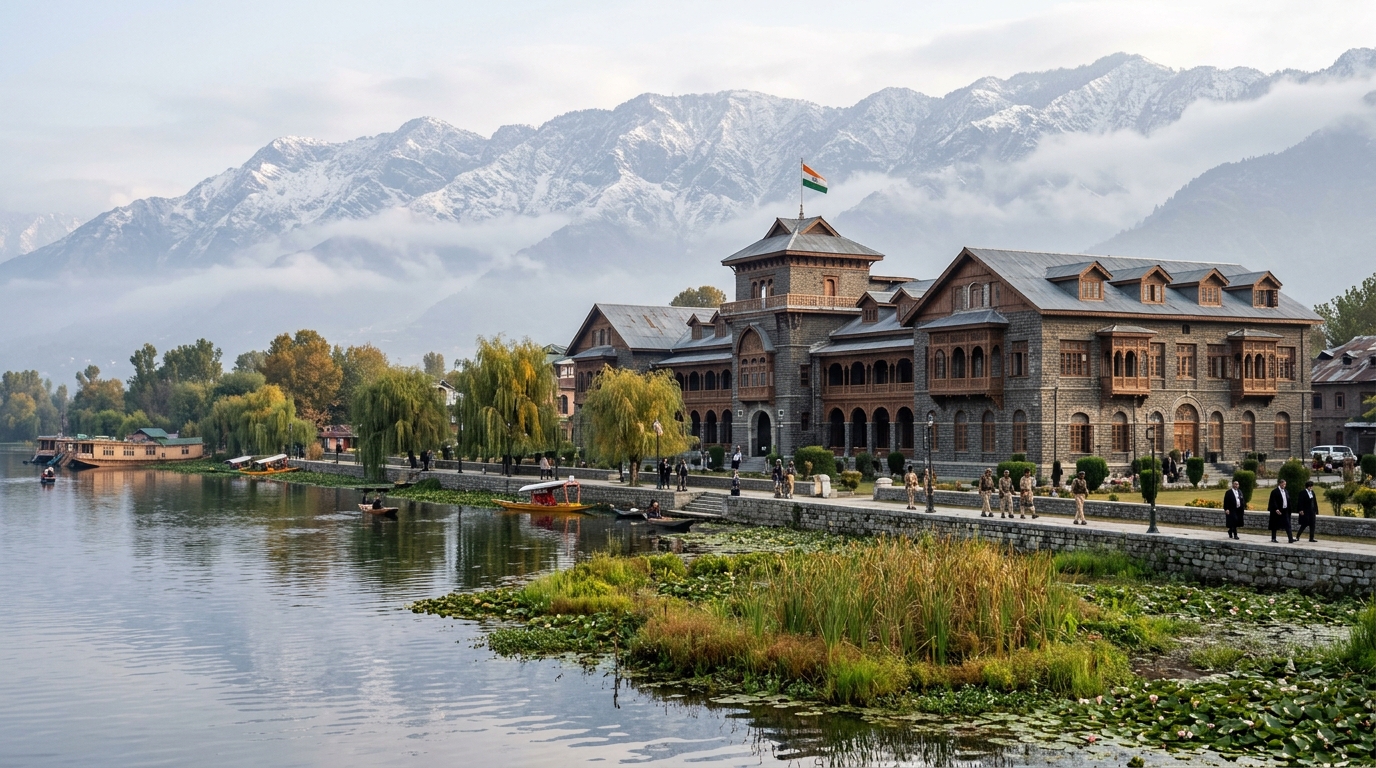
High-relief Western Himalayan mountain, glacier, and valley-corridor terrain—where locked thrust structures, cryospheric retreat, steep fractured slopes, contracted floodplains, and critical human lifelines converge (Illustrative archival plate — Kashmir EcoWatch Visual Archive).
SPECIAL SCIENTIFIC INVESTIGATION · TECTONIC INSTABILITY · MULTI-HAZARD INTELLIGENCE · CASCADING DISASTERS · CRITICAL INFRASTRUCTURE · DISASTER GOVERNANCE

The Western Himalayas Are Sitting on a Time Bomb

Beneath the extraordinary beauty of the Western Himalayas lies an interconnected landscape of active geological faults, retreating glaciers, unstable mountain slopes, expanding glacial lakes, vulnerable settlements, aging infrastructure and intensifying climatic extremes. What happens when these hazards begin interacting with one another? The greatest danger may not be the next earthquake, flood or landslide, but the convergence of multiple hazards within an increasingly vulnerable mountain civilization.

BY Dr. Fayaz Ahmad Khan & Himalayan Dispatch Tectonic Sciences, Multi-Hazard Intelligence, Critical Infrastructure Resilience and Disaster Risk Governance Desk · VOL. 01 / NO. 01 · THE INAUGURAL ISSUE
Floodplain wetlands, river channels, and mountain catchments in the Western Himalayas—where five-year electoral pledges on tourism, highways, hydropower, mining, and lake rejuvenation meet generational hydrological and ecological law (Illustrative archival plate — Kashmir EcoWatch Visual Archive).
SPECIAL INVESTIGATION · ELECTORAL ACCOUNTABILITY · ENVIRONMENTAL MANIFESTOS · GOVERNANCE

When Politics Promises Green

Across Kashmir, Jammu, Ladakh, Azad Jammu & Kashmir, and Gilgit-Baltistan, every election brings pledges of tourism, highways, hydropower, employment, and green conservation. Examining twenty-six years of electoral politics (2000–2026) under one non-partisan evidentiary ruler, Himalayan Dispatch investigates what parties actually promised, where development pledges contradict ecological limits, who held constitutional power to act, what public budgets delivered on the ground, and how our ten-part Western Himalayan Environmental Manifesto Protocol (WHEMP) turns slogans into auditable century-scale stewardship.

BY Dr. Fayaz Ahmad Khan & Himalayan Dispatch Environmental Governance, Legislative Affairs and Public Accountability Desk · VOL. 01 / NO. 01 · THE INAUGURAL ISSUE

AJ&K BUREAU CORRESPONDENCE

Contact the AJ&K Bureau Desk

Send regional environmental research notes, public-record leads, or community event notices to our editorial desk. Do not transmit confidential whistleblower files via standard web forms.