Who Are We Researching For? The World Knows Our Mountains. Do We?
Twenty-Five Years of Environmental Research, International Academic Recognition, Local Scientific Knowledge Accessibility and the Missing Journey from Publication to Environmental Impact.
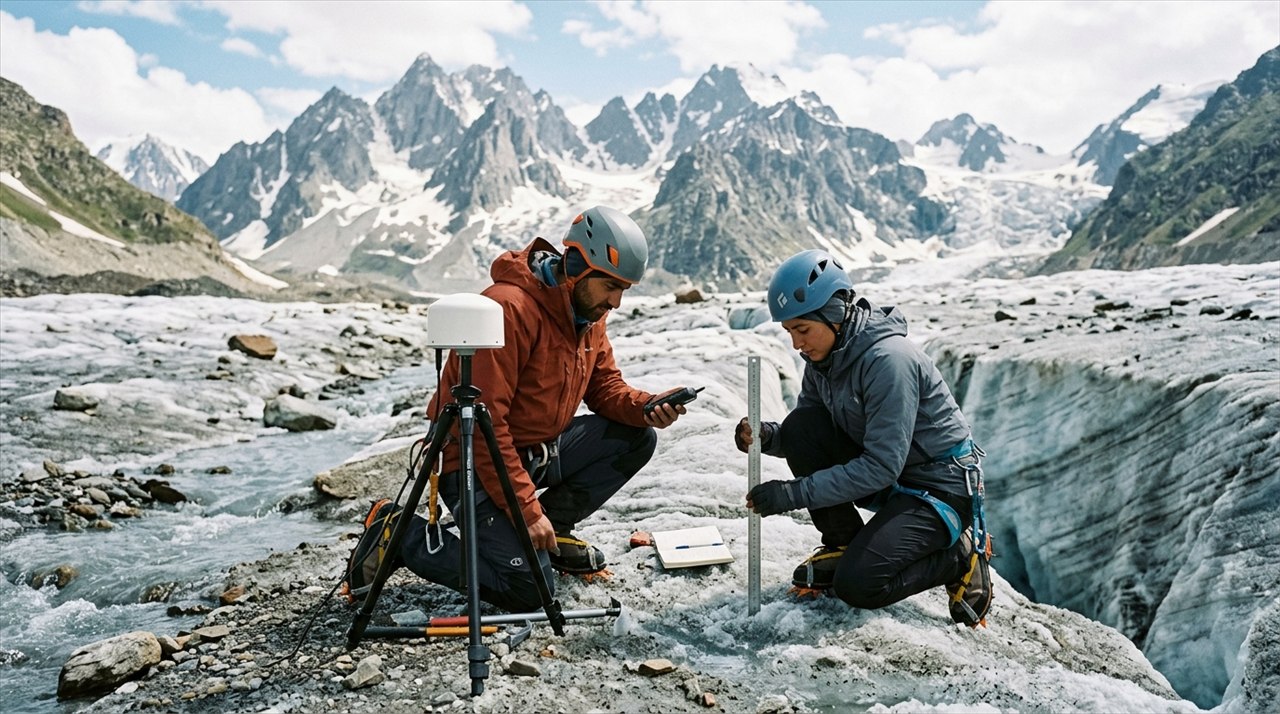
INAUGURAL EDITORIAL FOLIO · DESK & OBSERVATORY SYNTHESIS
Mandatory Bibliometric Non-Fabrication Disclosure: In strict compliance with Himalayan Dispatch’s editorial condition, this investigation publishes ZERO estimated or invented regional publication totals. Only two verified starting anchors are stated numerically: (1) our preliminary working inventory of 80 environment-related academic departments, laboratories, centres, programmes, and field facilities across all five Western Himalayan regions (24 Kashmir Valley, 19 Jammu, 16 Gilgit-Baltistan, 11 Ladakh, 10 Azad Jammu & Kashmir—explicitly research units rather than 80 independent universities, pending complete verification), and (2) the University of Kashmir Department of Geography and Disaster Management’s institutional publication register reporting 145 publications during 2019–2023 (29/year average, cited strictly as documentary proof of retrievability prior to environmental-topic filtering and deduplication). Every unretrieved 2001–2026 regional publication cell and 7-stage research-to-ground conversion rate remains transparently marked TBD ("not yet retrieved and validated", never "zero") until programmatic OpenAlex, Crossref, Scopus, Web of Science, Shodhganga, Pakistan HEC, and institutional-register verification is completed.
Numbers Before Criticism: Why Evidence Must Precede the Argument
Before examining individual academic conferences in Dispatches 13–17, we must first measure the true scale of twenty-five years of Western Himalayan environmental science.
In our Founding Manifesto (Dispatch 11), Himalayan Dispatch committed itself to unhurried, trans-regional witness across the unbroken mountain, river, and atmospheric systems of Kashmir, Jammu, Ladakh, Azad Jammu & Kashmir, and Gilgit-Baltistan. In the five dispatches immediately following this one (Dispatches 13 through 17, Beyond the Conference), we examine five major 2026 academic conferences—interrogating the missing statutory, engineering, ecological, and agroecological bridges between university lecture halls and endangered landscapes. Yet fairness and intellectual rigour demand that before we critique any single conference or campus, we step back to ask a much larger foundational question across all five regions at once: Who are we researching for?
This investigation must begin with numbers, institutional records, and documented scientific productivity—never with sweeping accusation. First, we must establish the magnitude of the Western Himalayas’ environmental scientific infrastructure: its universities, autonomous institutes, laboratories, field stations, faculty, doctoral scholars, and public research outlays. Second, we must establish how much peer-reviewed research that infrastructure has produced over the quarter-century from January 1, 2001 through November 27, 2026, where that research has been published, who can read it, who has benefited from it, and what verified environmental improvements can be traced to it.
Only after assembling that empirical foundation—and expressing genuine appreciation for the professors, laboratory analysts, and doctoral scholars who have braved sub-zero glaciers, floodplains, and remote passes to build our scientific archive—can we legitimately challenge the prevailing academic incentive model and propose a constructive alternative. Readers feel the weight of the local knowledge divide only when they first grasp the sheer volume of intelligence our region has already generated.
Equally non-negotiable is our own metrological honesty: Himalayan Dispatch will never publish estimated or invented publication totals. Where our preliminary working inventory and departmental registers establish concrete starting anchors, we report them with exact caveats; where the complete deduplicated 2001–2026 five-region census remains underway, every unretrieved cell is printed plainly as TBD or Outstanding.
- •First: Count the institutions.
- •Second: Count the scientists.
- •Third: Count the research papers.
- •Fourth: Establish annual research productivity.
- •Fifth: Identify research funding and expenditure.
- •Sixth: Establish where the knowledge was published and disseminated.
- •Seventh: Determine what reached local stakeholders.
- •Eighth: Determine what was implemented.
- •Ninth: Determine what environmental improvements were independently demonstrated.
- •Tenth: Challenge the existing system and propose a scientifically credible alternative.
“Publish for the world. Explain to the people. Demonstrate on the ground. Measure the impact.”
Part I — The Environmental Scientific Infrastructure Across Five Regions
A preliminary working inventory of 80 environment-related academic departments, laboratories, centres, and field facilities—and the 15-metric institutional census still outstanding.
How large is the scientific apparatus studying the environment of the Western Himalayas? Across our preliminary cross-regional survey, we have identified 80 environment-related academic departments, specialized laboratories, university research centres, degree programmes, and high-altitude or agroecological field facilities: 24 in the Kashmir Valley, 19 in Jammu, 16 in Gilgit-Baltistan, 11 in Ladakh, and 10 in Azad Jammu & Kashmir.
Strict precision is essential in reading that figure. Those 80 entries represent individual environment-related research units—such as separate departments of environmental science, earth sciences, geoinformatics, glaciology, forestry, botany, zoology, and mountain agriculture housed within multi-faculty universities—not 80 standalone universities, and the working inventory itself remains incomplete pending formal institutional verification.
Consequently, Chapter 01 of Monograph 04 is chartered to replace preliminary unit counts with a definitive, institution-verified statistical census across fifteen structural indicators: from the exact number of universities, independent institutes, and disciplinary laboratories to tenured faculty, full-time scientists, Ph.D. scholars, postdoctoral fellows, and annual public research expenditure.
PRELIMINARY WORKING INVENTORY · ENVIRONMENT-RELATED RESEARCH UNITS
Working inventory of environment-related academic departments, laboratories, centres, programmes, and field facilities—not 80 independent institutions. Complete census across all 15 structural and human-resource indicators remains Outstanding.
PART I · REGIONAL DISTRIBUTION & OUTSTANDING INFRASTRUCTURE CENSUS
Preliminary 80-unit working inventory paired with the 15 definitive infrastructure metrics awaiting verification
| Region / Infrastructure Indicator | Preliminary Count / Census Status |
|---|---|
| Kashmir Valley (24 preliminary units) | University of Kashmir (Env. Science, Geoinformatics, Geography & Disaster Mgmt, CORD, Earth Sciences, Botany, Zoology), NIT Srinagar, SKUAST-Kashmir, IUST Awantipora, Central University of Kashmir & regional stations — Preliminary working unit count · Institutional verification ongoing |
| Jammu (19 preliminary units) | University of Jammu (Environmental Sciences, Geology, Remote Sensing/GIS, Botany, Zoology), SKUAST-Jammu, Central University of Jammu, IIT Jammu, SMVDU & IIIM/NIH regional laboratories — Preliminary working unit count · Institutional verification ongoing |
| Gilgit-Baltistan (16 preliminary units) | Karakoram International University Gilgit (Environmental Sciences, Glaciology/Mountain Areas Research, Earth Sciences, Biological Sciences, Forestry), University of Baltistan Skardu & high-altitude field stations — Preliminary working unit count · Institutional verification ongoing |
| Ladakh (11 preliminary units) | University of Ladakh (Leh & Kargil campuses: Environmental Science, Geology, Mountain Research), SKUAST-K High Mountain Arid Agriculture (HMAARI), DIHAR, GBPHIED Ladakh unit & atmospheric/cryospheric stations — Preliminary working unit count · Institutional verification ongoing |
| Azad Jammu & Kashmir (10 preliminary units) | University of Azad Jammu & Kashmir Muzaffarabad (Geology, Botany, Zoology, Environmental Science), MUST Mirpur, University of Poonch Rawalakot, University of Kotli & Women University Bagh — Preliminary working unit count · Institutional verification ongoing |
| Universities conducting environmental research | Outstanding |
| Independent environmental research institutes | Outstanding |
| Environmental science departments | Outstanding |
| Earth science departments | Outstanding |
| Geography and geospatial departments | Outstanding |
| Agricultural and forestry research facilities | Outstanding |
| Atmospheric and climatological laboratories | Outstanding |
| Hydrological and limnological laboratories | Outstanding |
| Cryospheric research facilities | Outstanding |
| Environmental monitoring laboratories | Outstanding |
| Faculty members | Outstanding |
| Full-time research scientists | Outstanding |
| Doctoral research scholars | Outstanding |
| Postdoctoral researchers | Outstanding |
| Annual public research expenditure | Outstanding |
Part II — Twenty-Five Years of Environmental Research (2001–2026)
From one department’s 145 reported papers (2019–2023) to a reproducible, deduplicated 30-discipline bibliometric census across 10 scientific databases.
Today, no single verified, deduplicated publication count exists for environmental science across all five regions of the Western Himalayas. Yet concrete institutional records prove that such a census does not require guesswork—it can be reconstructed empirically. Consider just one academic department at one university: the Department of Geography and Disaster Management at the University of Kashmir reports 145 research publications between 2019 and 2023 in its official departmental register (geogrd.uok.edu.in), an average of 29 publications per year from a single department before filtering exclusively for environmental topics or deduplicating cross-departmental co-authorships.
Pause on the implication of that single verifiable anchor. If one department over five years records 145 publications, what is the cumulative intellectual archive generated across twenty-five years (January 1, 2001 through November 27, 2026, with 2026 clearly flagged as a partial reporting year) when all environmental science, earth science, glaciology, hydrology, forestry, horticulture, geospatial, and hazard departments across Kashmir, Jammu, Ladakh, Azad Jammu & Kashmir, and Gilgit-Baltistan are united? Rather than speculate, Monograph 04 establishes a programmatic retrieval pipeline to calculate the exact number.
That pipeline triangulates ten complementary sources: OpenAlex (which supports programmatic filtering by institutional ROR ID, publication year, research topic, and document type with automated annual group_by aggregation), Crossref (DOI and ISSN verification), Scopus, Web of Science, Google Scholar, India’s Shodhganga doctoral thesis repository, Pakistan’s HEC Research Repository, departmental publication registers, audited annual institutional reports, and ORCID researcher profiles. Crucially, the census classifies publications across thirty environmental disciplines—from climatology, limnology, and glaciology to agroecology, nature-based solutions, and environmental governance—deduplicating multi-disciplinary and multi-institutional papers in the regional total while distinguishing research led by regional institutions from external studies conducted about the Western Himalayas.
DOCUMENTED DEPARTMENTAL PROOF OF RETRIEVABILITY · UNIVERSITY OF KASHMIR
2019–2023 departmental publication register cited strictly as documentary proof that institutional publication histories can be reconstructed; not yet filtered exclusively to environmental research or independently deduplicated across co-authoring departments. In the 2001–2026 regional census table, TBD strictly denotes "not yet retrieved and validated"—never zero publications.
PART II · TEN BIBLIOMETRIC SOURCES & THIRTY ENVIRONMENTAL DISCIPLINES
Database reconciliation stack paired with the 30 environmental research disciplines of the 2001–2026 census
| Database / Discipline Group | Verification Role / Covered Specialties |
|---|---|
| OpenAlex | Programmatic institutional ROR filtering, annual group_by counts, topic classification, open-access status, and citation networks. |
| Crossref | Canonical DOI verification, journal ISSN reconciliation, funder metadata, and publication date validation. |
| Scopus | Indexed peer-reviewed scientific literature, author affiliation histories, and international citation benchmarking. |
| Web of Science | Long-horizon Science Citation Index / ESCI archival publication and citation verification (2001–2026). |
| Google Scholar | Supplementary discovery of regional-journal articles, book chapters, conference papers, and grey-literature citations. |
| Shodhganga (INFLIBNET) | Full-text doctoral (Ph.D.) thesis census across universities in Kashmir, Jammu, and Ladakh. |
| Pakistan HEC Research Repository (PRR) | Doctoral dissertations and accredited academic research across Azad Jammu & Kashmir and Gilgit-Baltistan universities. |
| University & Departmental Repositories | Department-level faculty publication registers, IQAC/NAAC self-study reports, and laboratory outputs. |
| Annual Institutional & Statutory Reports | Audited research grants, sponsored projects (DST, MoEFCC, NMHS, PSF, HEC), manpower, and annual productivity. |
| ORCID Registry | Persistent researcher identity disambiguation and multi-institution co-authorship reconciliation. |
| Disciplines 01–10 (Earth, Air & Water) | 01. Environmental science · 02. Climatology · 03. Atmospheric science · 04. Air pollution · 05. Hydrology · 06. Limnology · 07. Water pollution · 08. Glaciology · 09. Cryospheric science · 10. Geology |
| Disciplines 11–20 (Geospatial, Ecology & Land) | 11. Geomorphology · 12. Remote sensing · 13. GIS and geospatial science · 14. Forest ecology · 15. Biodiversity · 16. Wildlife conservation · 17. Wetland ecology · 18. Soil science · 19. Agroecology · 20. Climate-resilient horticulture |
| Disciplines 21–30 (Hazards, Engineering & Governance) | 21. Natural hazards · 22. Disaster risk reduction · 23. Environmental engineering · 24. Renewable energy and environmental systems · 25. Environmental governance · 26. Environmental economics · 27. Nature-based Solutions · 28. Ecological restoration · 29. Environmental health · 30. Sustainable development |
Part III — Where Did All This Knowledge Go? The Missing Research-to-Ground Pipeline
Tracing twelve knowledge destinations and the seven-stage attrition funnel between journal publication and sustained ecological recovery.
Counting papers measures scholarly industry; it does not measure public or ecological return. Once the 2001–2026 publication census is assembled, the true investigation begins with a twelve-category Knowledge Destination Audit: What percentage of Western Himalayan environmental papers appeared in international versus national journals? What fraction is openly readable by a teacher in Kupwara, a municipal engineer in Muzaffarabad, an orchardist in Shopian, or a student in Skardu or Kargil—and what fraction sits locked behind forty-dollar international publisher paywalls? How many papers ever generated a plain-language summary, a regional-language guide, a formally docketed policy brief, a field-tested pilot, or an independently verified environmental improvement?
To measure knowledge survival without speculation, Section 07 establishes a seven-stage Research-to-Ground Audit Pipeline—tracking how much scientific work survives from Stage 01 (Environmental research published) through Stage 02 (Publicly accessible / open access), Stage 03 (Explained in simple language), Stage 04 (Communicated to stakeholders), Stage 05 (Adopted on the ground), Stage 06 (Environmental impact verified against baseline), and Stage 07 (Long-term impact sustained). Every stage remains marked TBD until measured empirically across our institutional corpus.
PART III · TWELVE KNOWLEDGE DESTINATIONS & SEVEN PIPELINE STAGES
Measuring how much published mountain research survives from academic journals to verified ground recovery
| Output / Pipeline Stage | Evidence Required & Current Measurement Status |
|---|---|
| International journal publications | Number and percentage (TBD pending census) |
| National journal publications | Number and percentage (TBD pending census) |
| Open-access publications | Number and percentage (Gold/Green/Diamond OA vs. paywalled) |
| Subscription-restricted publications | Number and percentage (inaccessible without institutional subscription) |
| Regional-language summaries | Number and percentage (Kashmiri, Urdu, Dogri, Balti, Shina, Ladakhi, Pahari, Gojri) |
| Plain-language public summaries | Number and percentage (non-specialist citizen accessibility) |
| Government policy briefs | Number and percentage (formally docketed with line departments) |
| Community training materials | Number and percentage (farmer, pastoralist, fisher & village-committee guides) |
| Stakeholder guidance documents | Number and percentage (actionable municipal, school & disaster-response protocols) |
| Operational scientific applications | Number and percentage (live forecasting, monitoring or engineering tools) |
| Field-validated solutions | Number and percentage (piloted and empirically tested under Himalayan conditions) |
| Independently verified environmental improvements | Number and percentage (demonstrated biophysical recovery against baseline) |
| Pipeline Stage 01 · Environmental research published | Establish the complete deduplicated 2001–2026 publication census — Status: TBD (Proposed audit framework; not yet measured) |
| Pipeline Stage 02 · Research accessible to the public | Verify open-access availability versus subscription paywalls — Status: TBD (Proposed audit framework; not yet measured) |
| Pipeline Stage 03 · Research explained in simple language | Locate accessible plain-language and vernacular scientific summaries — Status: TBD (Proposed audit framework; not yet measured) |
| Pipeline Stage 04 · Research communicated to stakeholders | Verify workshops, statutory guidance notes, and community engagement — Status: TBD (Proposed audit framework; not yet measured) |
| Pipeline Stage 05 · Research adopted on the ground | Locate documented administrative, engineering, or community implementation — Status: TBD (Proposed audit framework; not yet measured) |
| Pipeline Stage 06 · Environmental impact verified | Measure actual physical, chemical, or ecological outcomes against baselines — Status: TBD (Proposed audit framework; not yet measured) |
| Pipeline Stage 07 · Long-term impact sustained | Verify continuing multi-year effectiveness after grant closure — Status: TBD (Proposed audit framework; not yet measured) |
Parts IV & V — Twenty-Five Years of Research, Yet the Same Questions in a Changed World
Twelve legitimate questions across endangered Himalayan systems—and ten transitions from yesterday’s descriptive checklists to contemporary environmental intelligence.
Walk across twelve defining environmental fronts of the Western Himalayas—Dal Lake, Wular Lake, winter air pollution, Jhelum floods, karewa strip-mining, glacier recession, wetland loss, forest fragmentation, orchard vulnerability, highway landslides, threatened biodiversity, and mountain tourism—and an uncomfortable paradox emerges. Each domain has inspired scores or hundreds of academic papers since 2001, yet the underlying physical degradation has frequently outpaced remediation.
Scientific fairness requires stating plainly what that paradox does—and does not—prove. Persistent lake eutrophication or karewa excavation does not automatically indict the scientists who documented it: researchers neither command municipal budgets nor wield statutory police powers, and environmental outcomes depend heavily on executive governments, funding agencies, commercial lobbies, and civic behaviour. What the investigation must determine empirically is where the chain broke: Was the research ever communicated in actionable form? Did agencies ignore rigorous warnings? Or did parts of the academic corpus remain trapped in repetitive diagnosis without operational models or field-tested solutions?
At the same time, global environmental science has undergone a technological revolution. Part V asks whether regional research investment is still overly weighted toward static land-use descriptions, isolated AQI spot-readings, and general conservation homilies when contemporary mountain stewardship demands automated continuous satellite change detection, coupled 3D hydrodynamic-nutrient lake models, chemical source attribution, operational ensemble flood forecasting, environmental DNA, and before-after-control-impact restoration trials.
PARTS IV & V · TWELVE DOMAIN QUESTIONS & TEN CONTEMPORARY FRONTIERS
Pairing domain-specific outcome questions with the methodological shift from descriptive reporting to dynamic intelligence
| Domain / Conventional Activity | Accountability Question / Contemporary Frontier |
|---|---|
| Dal Lake | Which published research solutions have demonstrated measurable restoration in nutrient or sediment balances? |
| Wular Lake | Which research-informed interventions have measurably reduced catchment sedimentation or restored floodplain hydroperiods? |
| Atmospheric pollution | Has twenty-five years of air-quality research established a validated, open regional emission and source-apportionment inventory? |
| Jhelum floods | Which university hydrological and hydraulic flood models have become operational public early-warning forecasting systems? |
| Karewa destruction | Has quaternary geological and stratigraphic research been translated into enforceable statutory protection for karewa tablelands? |
| Glaciers | Have cryospheric mass-balance observations been integrated into municipal irrigation and drinking-water security planning? |
| Wetlands | Has wetland remote-sensing and biodiversity research altered urban master-plan land-use decisions or halted marsh infilling? |
| Forests | Has forest-ecology and fragmentation monitoring resulted in documented compartment recovery or frontline protection upgrades? |
| Horticulture | Have agroecological, pest, and climate-resilience findings reached orchardists and farmers in practical vernacular formats? |
| Landslides | Have geotechnical slope-stability and hazard-zonation papers altered highway cut-slope alignments or spoil-disposal engineering? |
| Biodiversity | Have threatened-species and corridor studies produced legally notified habitat protections or population recoveries? |
| Tourism | Have alpine carrying-capacity assessments governed visitor caps, hotel borewells, or solid-waste ceilings in Gulmarg, Pahalgam, Sonamarg, Leh, or Hunza? |
| From: Describing historical land-use change | To: Continuous automated satellite land-change & encroachment alerting |
| From: Documenting past glacier retreat | To: Sub-basin prediction of glacier-dependent seasonal water insecurity |
| From: Measuring isolated station AQI | To: Coupled chemical-transport & receptor regional source attribution |
| From: Describing lake eutrophication symptoms | To: Coupled 3D hydrodynamic, benthic-flux, and nutrient mass-balance modelling |
| From: Mapping static flood vulnerability zones | To: Real-time ensemble operational flood & cloudburst forecasting |
| From: Identifying ecological degradation | To: Field-testing and validating scalable ecological restoration interventions |
| From: Studying historical climate variability | To: Convection-permitting high-resolution Himalayan climate projections |
| From: Conducting periodic biodiversity checklists | To: Environmental DNA (eDNA), bioacoustics & automated camera-trap intelligence |
| From: Publishing general conservation recommendations | To: Demonstrating before-after-control-impact (BACI) intervention effectiveness |
| From: Producing static journal PDF maps | To: Maintaining open, dynamic, API-accessible environmental intelligence systems |
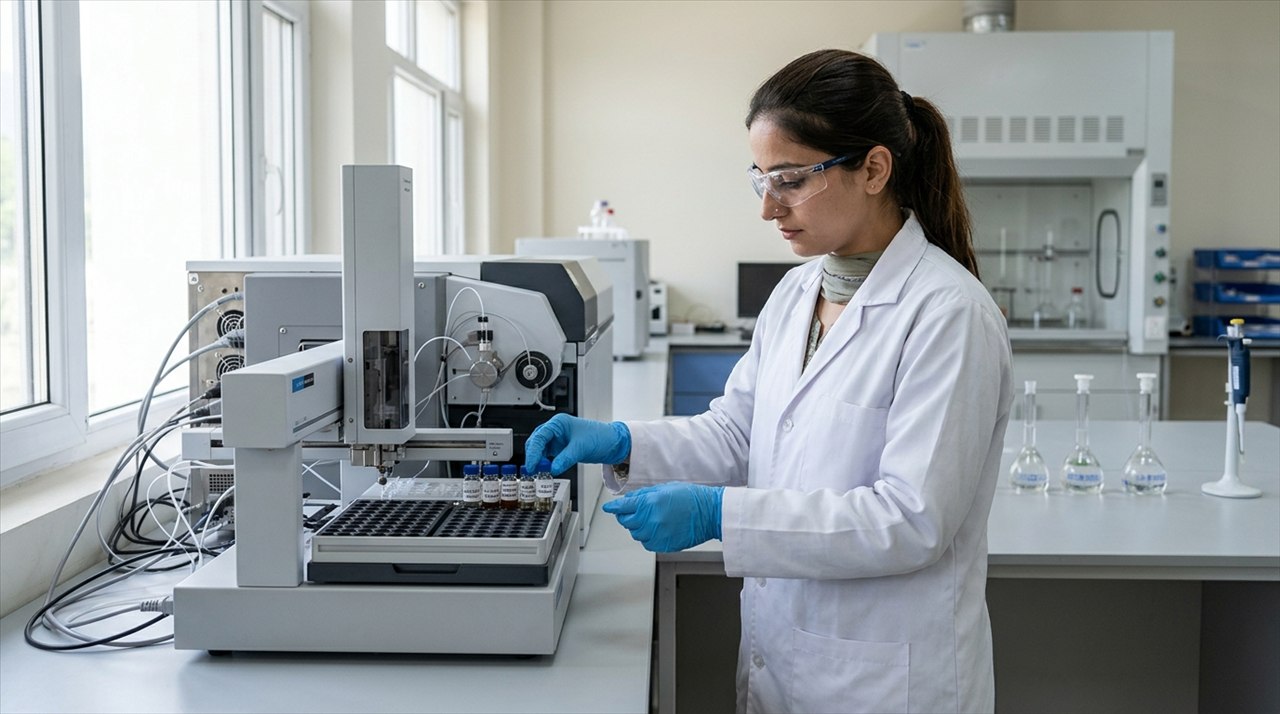
Part VI — A Way Forward: The Research-to-Society Protocol & Every Paper’s Second Life
Nine differentiated research categories, nine stakeholder questions, and vernacular dissemination across Kashmiri, Urdu, Dogri, Balti, Shina, Ladakhi, Pahari, and Gojri.
Criticism without a workable institutional reform leaves scholars caught between unfair blame and unchanged promotion rules. Part VI advances the Western Himalayan Research-to-Society and Impact Protocol (WH-RSIP)—a nine-category framework calibrating obligations to the true nature of each inquiry. Fundamental theoretical and empirical discoveries must be published freely without artificial demands for immediate policy implementation; conversely, diagnostic studies must identify affected stakeholders, predictive models must disclose validation skill and uncertainty, proposed engineering or ecological solutions must undergo Himalayan field validation before effectiveness is claimed, claimed restorations must demonstrate independent baseline recovery, and publicly funded research must deliver open knowledge-transfer outputs.
To make that covenant practical for every laboratory and doctoral scholar, Section 11 proposes a simple rule: every environmentally relevant research paper should have a Second Life. Alongside the peer-reviewed journal PDF, authors prepare a concise, nine-question stakeholder companion answering what problem was studied, what was established, why it matters to local residents, what stakeholders should know, what practical action is justified, which authority holds responsibility, whether the recommendation has been tested, what improvement occurred, and what remains uncertain.
Where communities live with the ecological consequences, those Second-Life summaries belong in the languages of the mountains—English, Kashmiri, Urdu, Dogri, Balti, Shina, Ladakhi, Pahari, Gojri, and neighbouring vernaculars—so that a glacier or orchard paper written on data from a Himalayan village can be read inside that village.
PART VI · WESTERN HIMALAYAN RESEARCH-TO-SOCIETY & IMPACT PROTOCOL (WH-RSIP)
Nine research categories protecting pure discovery while requiring empirical validation and public return for applied claims
| Research Category | Publication & Societal Impact Requirement |
|---|---|
| Fundamental science | Publish validated theoretical or empirical discoveries openly without artificial or inappropriate implementation burdens. |
| Observational research | Publish reproducible datasets/methods and communicate relevant long-term implications to public repositories. |
| Diagnostic environmental research | Publish contaminant, hazard, or degradation evidence alongside clear identification of affected communities and authorities. |
| Predictive research | Publish forecast or projection ensembles with explicit out-of-sample model validation, skill scores, and uncertainty bounds. |
| Applied experimental research | Publish complete pilot or laboratory experimental performance, failure modes, and cost parameters. |
| Proposed environmental solutions | Require real-world Himalayan field validation before claiming operational or policy effectiveness. |
| Implemented environmental solutions | Require documented institutional/community adoption records and post-installation operational monitoring. |
| Claimed ecological restoration | Require independently verified biophysical improvement against pre-intervention baselines. |
| Publicly funded research | Require open plain-language and regional-language knowledge-transfer outputs accessible to taxpayers and mountain residents. |
INTERACTIVE BIBLIOMETRIC & KNOWLEDGE-RETURN WORKBENCH · ZERO INVENTED TOTALS
2001–2026 Research Census Protocol & Second-Life Paper Standard
Inspect the five-region census framework (Jan 1, 2001 – Nov 27, 2026 partial), generate reproducible OpenAlex queries across 30 disciplines, and classify research obligations under the Western Himalayan Research-to-Society and Impact Protocol.
| Publication period | Kashmir | Jammu | Ladakh | AJ&K | Gilgit-Baltistan | Unique regional total |
|---|---|---|---|---|---|---|
| 2001–2005 | TBD | TBD | TBD | TBD | TBD | TBD |
| 2006–2010 | TBD | TBD | TBD | TBD | TBD | TBD |
| 2011–2015 | TBD | TBD | TBD | TBD | TBD | TBD |
| 2016–2020 | TBD | TBD | TBD | TBD | TBD | TBD |
| 2021 | TBD | TBD | TBD | TBD | TBD | TBD |
| 2022 | TBD | TBD | TBD | TBD | TBD | TBD |
| 2023 | TBD | TBD | TBD | TBD | TBD | TBD |
| 2024 | TBD | TBD | TBD | TBD | TBD | TBD |
| 2025 | TBD | TBD | TBD | TBD | TBD | TBD |
| 2026, partial (through Nov 27) | TBD | TBD | TBD | TBD | TBD | TBD |
| Total (2001–Nov 27, 2026) | TBD | TBD | TBD | TBD | TBD | TBD |
Note: TBD indicates that the deduplicated publication count has not yet been retrieved and validated—it does not indicate zero publications. The completed database will publish individual annual counts for every single year (2001–2026), not merely five-year aggregates.
REPRODUCIBLE OPENALEX API CENSUS QUERY GENERATOR (30 DISCIPLINES)
https://api.openalex.org/works?filter=publication_year:2001-2026,default.search:%22Environmental%20science%22%20%22Western%20Himalaya%22,institutions.country_code:IN|PK&group_by=publication_yearPart VII & Epilogue — The Permanent Knowledge Infrastructure & Defining Argument
Twelve permanent KEW registries, the 15-volume / 60-chapter Monograph 04 architecture, Institutional Right of Response, and returning mountain science home.
To ensure that this inquiry outlives a single magazine issue, Part VII charters the Western Himalayan Environmental Research Observatory inside Kashmir EcoWatch’s Research Library (/research-library/environmental-research-observatory). Structured across twelve permanent registries—from verified Institutional, Laboratory, Researcher, and Publication catalogues to Bibliometric Intelligence, Science in Simple Language, a Multilingual Knowledge Repository, Implementation and Impact ledgers, and Public Funding Accountability—the Observatory creates a permanent civic home through which scientific discoveries return to the society whose mountains made them possible.
Companion Monograph 04 organizes the complete investigation across fifteen thematic volumes and sixty proposed chapters, governed strictly by our ten-step sequence—counting institutions, scientists, papers, annual output, funding, dissemination, stakeholder reach, implementation, and verified outcomes before challenging conventional academic incentives and setting a collaborative 2027–2035 regional research agenda, with guaranteed Right of Response for every academic institution across Kashmir, Jammu, Ladakh, Azad Jammu & Kashmir, and Gilgit-Baltistan.
The Western Himalayas do not suffer merely from environmental problems. They may also suffer from an inadequate circulation of environmental knowledge.
Our universities study our mountains. Our laboratories analyze our water. Our scientists investigate our glaciers. Our researchers examine our atmosphere. The scientific community deserves appreciation for this intellectual contribution.
But knowledge must not become an export commodity that earns academic recognition abroad while remaining inaccessible to the communities whose landscapes made the research possible.
After thousands of potential scientific discoveries concerning the Western Himalayas, how much of that accumulated knowledge has actually returned to the Western Himalayas?
PART VII · TWELVE PERMANENT REGISTRIES OF THE KEW RESEARCH OBSERVATORY
Integrated directly into the Kashmir EcoWatch Research Library to return verified science to regional communities
| Observatory Registry | Permanent Public & Scientific Function |
|---|---|
| WHERO-01 · Institutional Registry | Catalogues verified universities, environmental departments, and independent research institutes across all five Western Himalayan regions. |
| WHERO-02 · Laboratory Registry | Documents analytical instrumentation, water/air/soil testing capabilities, field stations, and calibration accreditation. |
| WHERO-03 · Researcher Registry | Maps ORCID-verified environmental scientists, faculty, and doctoral scholars across 30 disciplines for peer review and collaboration. |
| WHERO-04 · Publication Registry | Maintains a deduplicated, DOI-verified index of environmental research produced by regional institutions and external teams studying the region. |
| WHERO-05 · Bibliometric Intelligence | Computes reproducible annual (2001–2026+) publication, open-access, co-authorship, and discipline-wise trajectories via OpenAlex & Crossref. |
| WHERO-06 · Research Frontier Observatory | Tracks regional adoption of contemporary methods—eDNA, coupled hydrodynamics, WRF-Chem, SAR interferometry, and operational forecasting. |
| WHERO-07 · Science in Simple Language | Hosts 9-question Second-Life plain-language translations of technical Himalayan papers for citizens, schools, and journalists. |
| WHERO-08 · Multilingual Knowledge Repository | Disseminates stakeholder summaries across English, Kashmiri, Urdu, Dogri, Balti, Shina, Ladakhi, Pahari, and Gojri. |
| WHERO-09 · Stakeholder Guidance Registry | Organizes actionable scientific evidence by user group—orchardists, fishers, pastoralists, urban planners, and disaster responders. |
| WHERO-10 · Implementation Registry | Tracks whether published recommendations were formally docketed, piloted, or adopted by municipal, forest, or water authorities. |
| WHERO-11 · Research Impact Registry | Records independently verified biophysical improvements attributable to implemented regional scientific research. |
| WHERO-12 · Public Funding Accountability | Cross-links publicly funded environmental research grants with open data availability and societal knowledge-transfer deliverables. |
“After thousands of potential scientific discoveries concerning the Western Himalayas, how much of that accumulated knowledge has actually returned to the Western Himalayas?”
DOCUMENTARY SOURCES & FURTHER READING
| Source | Documentary relevance |
|---|---|
| University of Kashmir · Department of Geography and Disaster Management Publication Register (2019–2023) | Documented institutional register reporting 145 research publications during 2019–2023 (29/year average)—demonstrating empirical retrievability of departmental publication histories prior to environmental-topic filtering and deduplication. |
| OpenAlex Open Bibliometric Knowledge Graph & Institutional Grouping API | Primary open bibliometric index supporting programmatic filtering by institutional ROR affiliation, publication year (2001–2026), research topic, and open-access status with group_by annual counts. |
| Crossref Metadata & DOI Verification Registry | Canonical DOI, ISSN, funder-award, and publication-date reconciliation across regional and international environmental journals. |
| Shodhganga — Reservoir of Indian Theses (INFLIBNET) | Doctoral dissertation census source for universities across Kashmir, Jammu, and Ladakh (complemented by the Pakistan HEC Research Repository for AJ&K and Gilgit-Baltistan). |
| KEW Western Himalayan Environmental Research Observatory (12 Registries) | Permanent Kashmir EcoWatch companion infrastructure housing institutional verification, Second-Life plain-language summaries, 9+ regional languages, and implementation tracking. |
EDITORIAL PUBLICATION METADATA & 10-STAGE GATE LEDGER
| Gate | Status | Record / Scope |
|---|---|---|
| 01 · Commissioned | completed | Himalayan Dispatch Founding Masthead |
| 02 · Research in progress | completed | Himalayan Dispatch Research & Observatory Desk |
| 03 · Manuscript draft | completed | Assigned Author / Editorial Desk |
| 04 · Evidence verification | completed | Verified against University of Kashmir Department of Geography & Disaster Management publication register (geogrd.uok.edu.in: 145 reported publications, 2019–2023), OpenAlex REST API institutional/topic/year grouping documentation (help.openalex.org), Crossref, Shodhganga (INFLIBNET), Pakistan HEC Research Repository specifications, and KEW’s preliminary 80-unit five-region working inventory. |
| 05 · Scientific review (where applicable) | pending | Strict 10-step editorial sequence, 30-discipline deduplication rules, regional-vs-external authorship separation, and 9-category Research-to-Society Protocol internally audited; complete 2001–2026 publication census execution and external Stage 05 bibliometric specialist review required before replacing TBD statistical tables. |
| 06 · Editorial review | completed | Founding Editor-in-Chief Desk Review |
| 07 · Copyright and ethics review | completed | Enforces non-scapegoating academic fairness, protects fundamental scientific discovery from inappropriate implementation mandates, guarantees five-region Institutional Right of Response, and uses institutional Kashmir EcoWatch Visual Archive plates without fabricated metadata. |
| 08 · Administrator approval | in progress | Staged at Stage 08 (editorial_approval) as Dispatch 12 of 24—immediately following the Founding Manifesto (Dispatch 11) and preceding Beyond the Conference (Dispatches 13–17). |
| 09 · Published | pending | — |
| 10 · Post-publication corrections | not applicable | — |
| Attribute | Final assignment |
|---|---|
| Edition Placement | Himalayan Dispatch Vol. 01 / No. 01 · Dispatch 12 of 24 (immediately after Dispatch 11, Founding Manifesto, and before Dispatches 13–17, Beyond the Conference) |
| Flagship Domain | Academic and Scientific Accountability (Flagship 03 of 05 in the Inaugural Edition) |
| Geographic Scope | Kashmir · Jammu · Ladakh · Azad Jammu & Kashmir · Gilgit-Baltistan · Western Himalayas |
| Assessment Window | January 1, 2001 – November 27, 2026 (2026 partial reporting year) |
| Companion Monograph | Monograph 04 — Who Are We Researching For? (15 Thematic Volumes · 60 Proposed Chapters · 2027–2035 Research Agenda) |
| Permanent KEW Companion | Western Himalayan Environmental Research Observatory (/research-library/environmental-research-observatory) |
| Editorial Condition | Zero estimated or invented publication totals; unverified 2001–2026 regional cells strictly retained as TBD until bibliometric census completion, with Institutional Right of Response guaranteed. |

Founding Editor-in-Chief
Dr. Fayaz Ahmad Khan
Founder of Kashmir EcoWatch and Founding Editor-in-Chief of Himalayan Dispatch; writes on alpine hydrology, cryospheric thresholds, disaster resilience, and mountain commons across the Western Himalayas.
View Portfolio & Approved Commissions →NEXT IN THIS EDITION · SPECIAL INTERNATIONAL FEATURE · ENVIRONMENTAL LEADERSHIP · PROFESSIONAL INTROSPECTION · INTELLECTUAL LEGACY
South Asia’s Environmental Vanguard
By Dr. Fayaz Ahmad Khan & Himalayan Dispatch Environmental Leadership and Intellectual Legacy Desk · 16 min read