Return to Kashmir EcoWatch

EST. 2026  ·  KEW WESTERN HIMALAYAS

HIMALAYANDISPATCH

LANDSCAPE.  PEOPLE.  SCIENCE.  TRUTH.

DEPARTMENT III · DISPATCHES FROM THE FIELD

Field Reports

Intimate dispatches from wetlands, pastures, and forest lines.

Filed directly from Ramsar reed margins, subalpine forest compartments, orchard terraces, and high passes, Field Reports capture the lived daily texture of ecological stewardship and environmental stress.

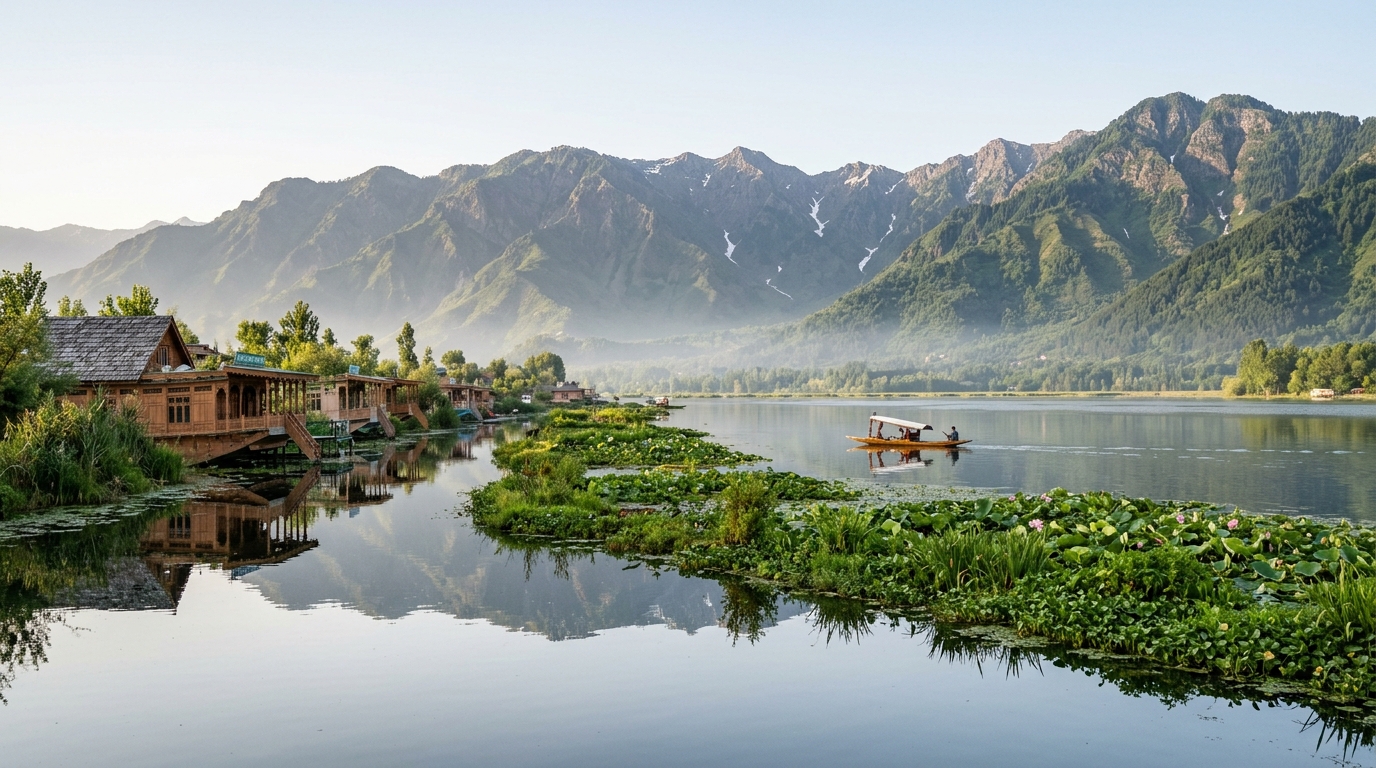
Mooring channels, shoreline embankments, vegetative margins, and Zabarwan foothill slopes across Dal Lake in Srinagar—illustrating the lacustrine geography where open water, traditional habitation, tourism infrastructure, and urban land pressure intersect (Illustrative archival plate — Kashmir EcoWatch Visual Archive; general landscape reference without parcel-specific evidentiary allegation).
FEATURED IN VOL. 01 / NO. 01 · THE INAUGURAL ISSUE

The Art of Encroachment

From 1859 shoreline surveys through decades of political conflict, lost enforcement archives, and documented anti-corruption proceedings to 2026 restoration claims, an investigation into how Kashmir’s flagship lake has been progressively converted from within—and what the institutions entrusted with protecting it actually did.

BY Dr. Fayaz Ahmad Khan & Himalayan Dispatch Geospatial Intelligence, Environmental Criminology, Land Governance and Public Accountability Desk · 36 MINRead Feature

Published in Current Edition

11 STORIES

Latest from Daily Dispatch

All Daily Dispatches →

Archival & Forthcoming Slate

Edition Archive →
MONOGRAPH 18 · JAMMU'S ECOLOGICAL FRONTIERS · ARCHIVED

A River Is Not a Construction Site

Is human intervention altering Jammu’s rivers—the Tawi, Ravi, Ujh, and Basantar—faster than their natural geomorphological processes can restore equilibrium? Anchored to the February 6, 2025 National Green Tribunal proceedings on Kathua and Samba sand mining and Basantar bridge-pillar exposure, Investigation 02 sets out a 15-chapter, 7-experiment fluvial science protocol.

SPECIAL SCIENTIFIC ISSUE · LADAKH'S ECOLOGICAL FRONTIERS · ARCHIVED

When the Glaciers Stop Giving

In a Trans-Himalayan rain shadow where valley floors receive barely 90–150 millimetres of annual precipitation, human settlement exists only where snowfields, small cirque glaciers, and permafrost active layers release meltwater on time. Anchored in a 2026 scientific synthesis documenting ~0.02°C annual warming, earlier snowmelt, and glacier mass losses of 0.21 to 0.37 metres of water equivalent per year, this investigation examines how hydrograph shifts across Zanskar, Suru, Nubra, Leh, Kargil, Drass, and Changthang threaten gravity-fed oases long before the last ice vanishes.

SPECIAL SCIENTIFIC ISSUE · LADAKH'S ECOLOGICAL FRONTIERS · ARCHIVED

How Many People Can a Cold Desert Sustain?

As seasonal tourist arrivals rival or outnumber permanent oasis populations across Leh, Nubra, Pangong Tso, and Zanskar—prompting a 2026 parliamentary committee warning on water scarcity and waste alongside strengthened June 2026 plastic restrictions—an empirical investigation examines borewell depletion, the shift from zero-water chakdon sanitation to flush hotels, year-round tunnel connectivity, Changthang solar enclosures, and the biophysical limits of a rain-shadow desert.

SPECIAL SCIENTIFIC ISSUE · LADAKH'S ECOLOGICAL FRONTIERS · ARCHIVED

The Desert Is Not Empty

Dismissed in colonial revenue ledgers and contemporary land-bank schedules as barren wasteland, Ladakh’s Trans-Himalayan plateau sustains psychrophilic permafrost microbiomes, Ramsar wetland refugia, sixty-five high-concern bird species, snow leopard and wild ungulate corridors, and centuries-old Changpa Pashmina commons now strained by linear fragmentation and climate change.

FORTHCOMING IN ISSUE 02

Living Alongside the Hangul

Portraits of wildlife guards, seasonal herders, and corridor researchers navigating survival around Dachigam and Overa-Aru.

In development

STAGE 01 · COMMISSIONING DESK

Pitch a Story to Himalayan Dispatch

We commission deeply reported environmental narratives, field notebooks, monochrome and color photo essays, investigative dispatches, and cartographic essays rooted in the Western Himalayas.

CONFIDENTIAL SOURCE PROTOCOL

Never paste sensitive whistleblower identities, raw leaked files, or unredacted coordinates of endangered taxa into a standard web form. Check the confidential channel box to request an encrypted Signal/PGP handoff with our Managing Editor.

WHAT WE LOOK FOR

  • • Specific place, season, and human stakes—not broad topic overviews.
  • • Primary field reporting paired with verifiable documentary or scientific anchors.
  • • Original documentary photography with zero digital fabrication.

SEEKING AN ONGOING NEWSROOM ROLE?

Submitting an independent story pitch is distinct from applying to become a regular reporter, district correspondent, or masthead contributor.

Apply via Join the Newsroom →