Return to Kashmir EcoWatch

EST. 2026  ·  KEW WESTERN HIMALAYAS

HIMALAYANDISPATCH

LANDSCAPE.  PEOPLE.  SCIENCE.  TRUTH.

BUREAU VI·In Establishment

Baltistan Bureau

Central Karakoram Icefields · Skardu, Shigar, Shyok & Baltoro

Covers the Baltoro, Biafo, and Siachen–Shyok cryospheric complexes, high-elevation oasis irrigation heritage, cold-desert riparian dunes, and Upper Indus meltwater regimes.

GEOGRAPHICAL COVERAGE (5 DISTRICTS / VALLEYS)

Skardu · Shigar · Kharmang · Ghanche · Roundu

Regional Daily Dispatches

Daily Dispatch Wire →

Monthly Magazine Features

Current Edition →
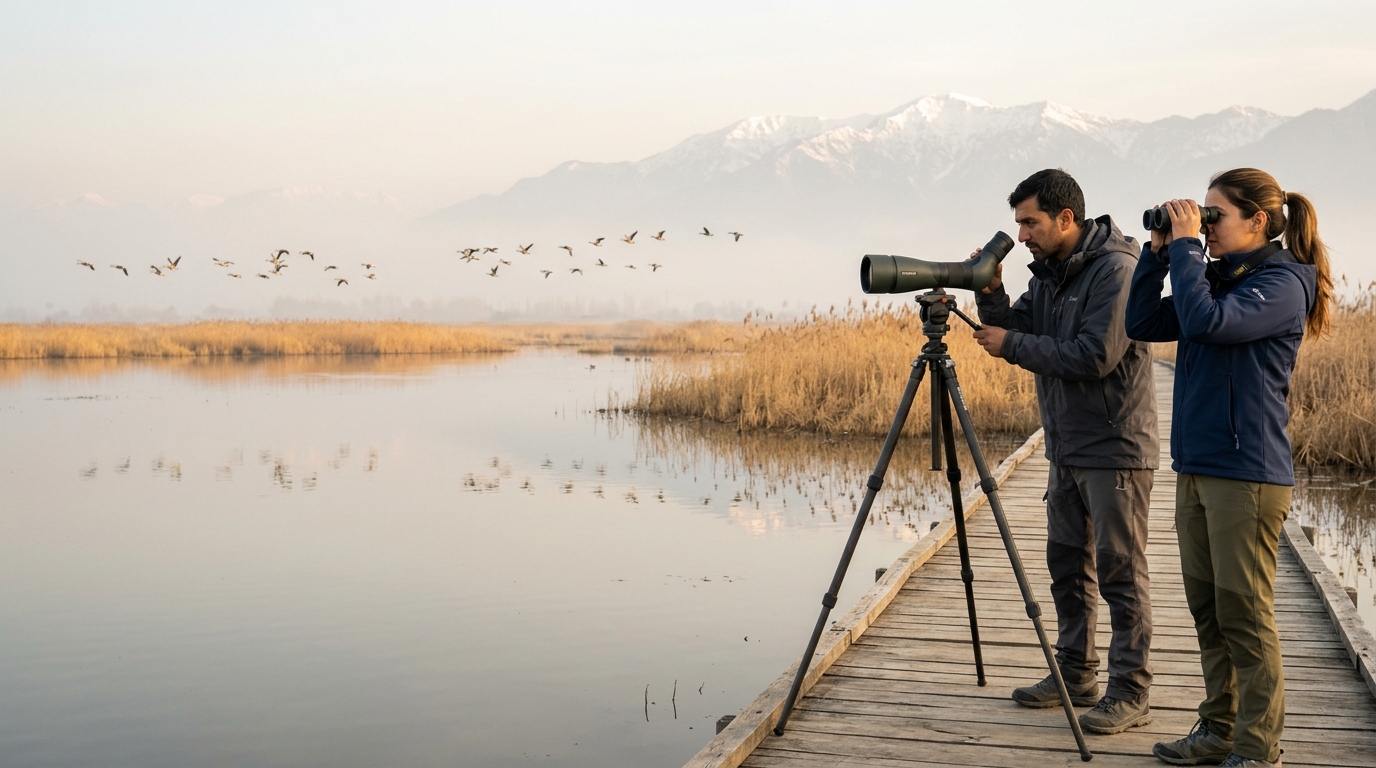
Migratory waterbirds over emergent reedbeds and open winter marsh channels across the Kashmir Valley—where Central Asian Flyway stopover energetics, benthic invertebrate availability, and floodplain hydroperiods converge beneath Western Himalayan ridges (Illustrative archival plate — thematic habitat reference without species-census evidentiary claim).
SPECIAL SCIENTIFIC INVESTIGATION · ORNITHOLOGY · MIGRATORY ECOLOGY · BIODIVERSITY ACCOUNTABILITY

The Sky Has No Borders

A migratory bird crossing the Karakoram or Pir Panjal recognizes neither the Line of Control nor the Line of Actual Control—only open water, benthic invertebrates, forest canopy architecture, thermal gradients, and tailwinds. Expanding our inquiry from floodplain wetlands to the entire Western Himalayan sky across Kashmir, Jammu, Ladakh, Azad Jammu & Kashmir, and Gilgit-Baltistan, Dispatch 06 audits regional checklists, scrutinizes KEW’s own 601-taxa registry, tests whether 1.34 million counted waterbirds signify recovery or refugia compression inside four surviving wetlands, and establishes the eighteen-volume Monograph 04 research framework.

BY Dr. Fayaz Ahmad Khan & Himalayan Dispatch Ornithology, Biodiversity and Geospatial Intelligence Desk · VOL. 01 / NO. 01 · THE INAUGURAL ISSUE
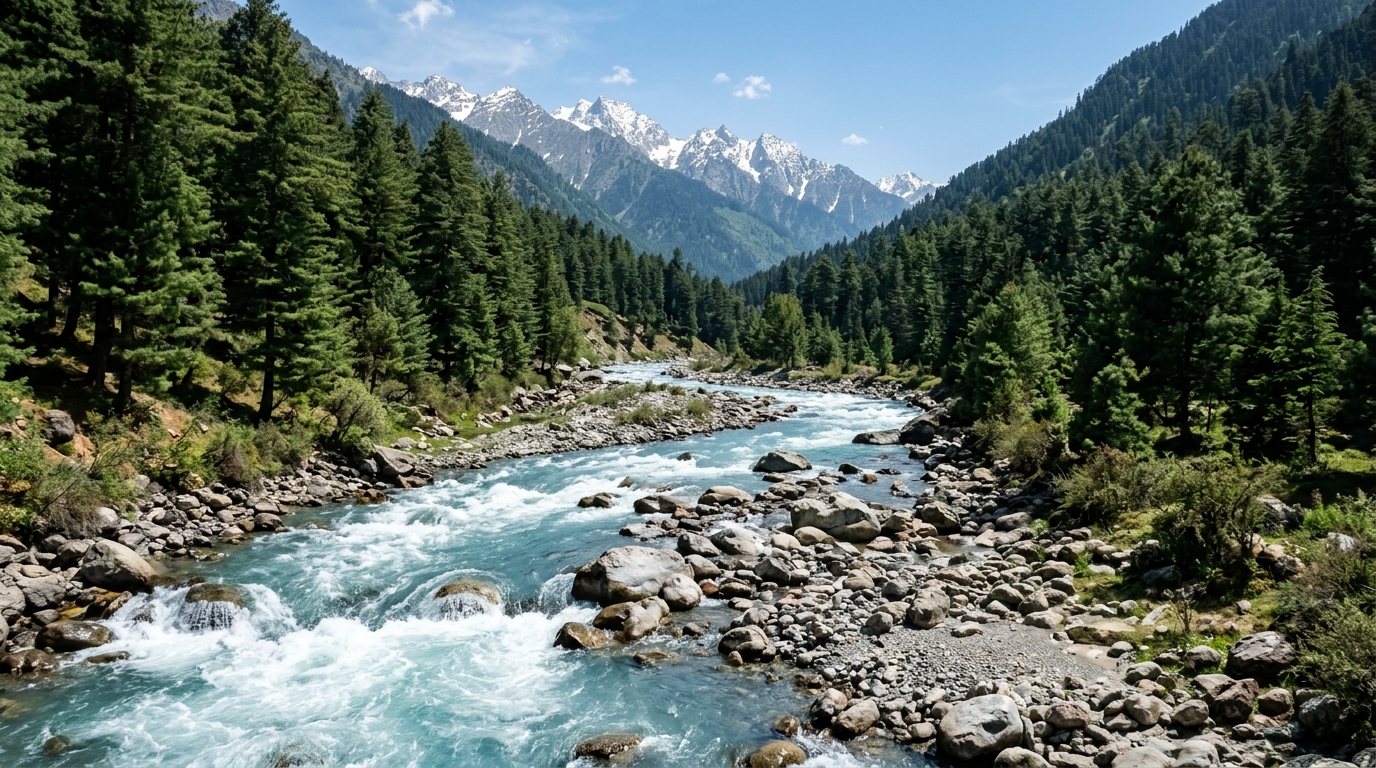
Snowmelt discharge threading over granodiorite and limestone boulders in the Lidder catchment—where geological time outlasts the forty-eight-hour news cycle (Illustrative archival plate).
FROM THE MASTHEAD · FOUNDING MANIFESTO

Why the Western Himalayas Demand Slow, Fearless Journalism

Born after two years of unanswered correspondence, Himalayan Dispatch exists for the decades between forty-eight-hour flood headlines: uniting transboundary watershed reporting, explicit error bars, source protection, visual honesty, and self-accountable publication gates.

BY The Editorial Board · Signed by Dr. Fayaz Ahmad Khan · VOL. 01 / NO. 01 · THE INAUGURAL ISSUE
Printed broadsheets, string-tied archival gazette dockets, a reporter’s notebook, and a brass loupe beside dual monitors displaying Himalayan glacier and watershed Earth-observation telemetry—evoking the crossroads between conventional press-release reporting and independent, documentary, scientifically literate mountain journalism (Illustrative editorial study — Himalayan Dispatch Visual Editions Desk; carries no depiction of or allegation against any specific publication or individual).
SPECIAL EDITORIAL INVESTIGATION · POLITICAL ECONOMY OF MEDIA · JOURNALISTIC INDEPENDENCE · SCIENTIFIC LITERACY · MEDIA OWNERSHIP · INVESTIGATIVE ACCOUNTABILITY · PUBLIC INTEREST

Journalism at a Crossroads

Beyond breaking news, political statements, press conferences and institutional publicity lies an extraordinary landscape of unexplored scientific questions, forgotten environmental histories, unexamined public expenditure and emerging threats to human civilization. Positioned immediately after the Founding Manifesto as Dispatch 17, this investigation examines the political establishment–media house nexus, government advertising dependency, professional vulnerability, scientific specialization, and the institutional architecture required for independent public-interest journalism across Kashmir, Jammu, Ladakh, Azad Jammu & Kashmir, and Gilgit-Baltistan.

BY Dr. Fayaz Ahmad Khan & Himalayan Dispatch Editorial Independence, Media Political Economy, Scientific Communication and Investigative Journalism Desk · VOL. 01 / NO. 01 · THE INAUGURAL ISSUE
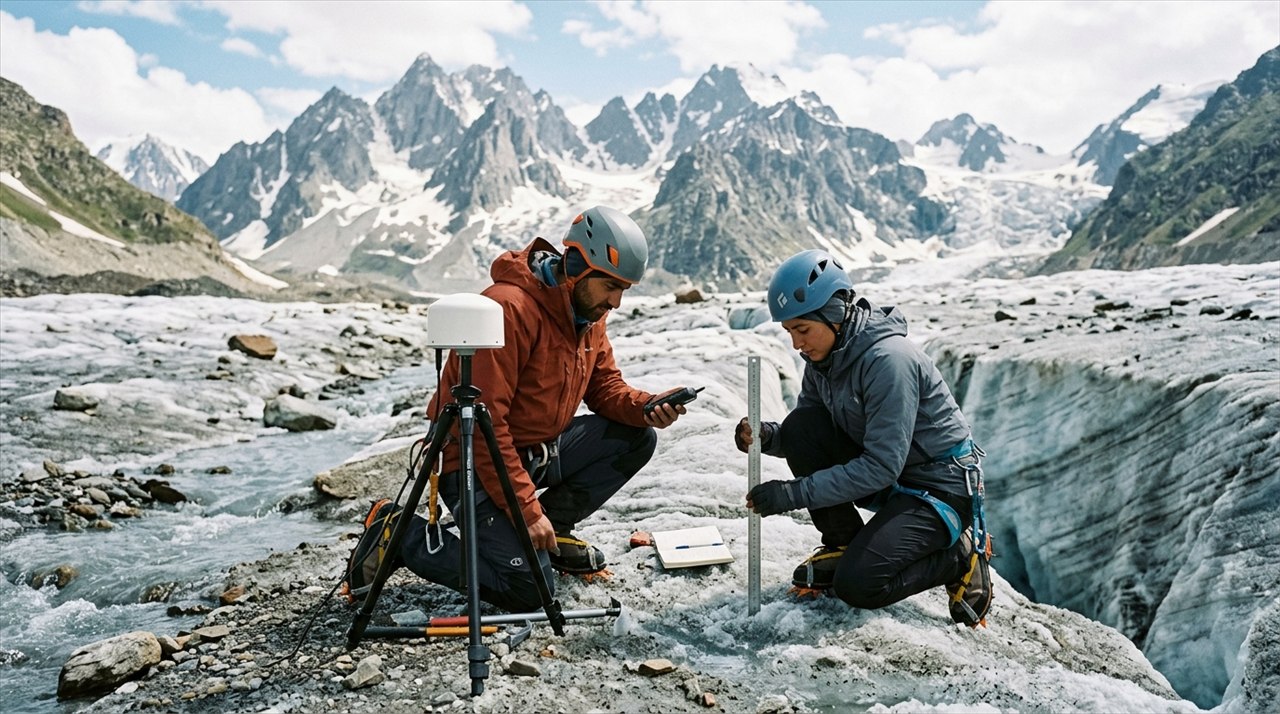
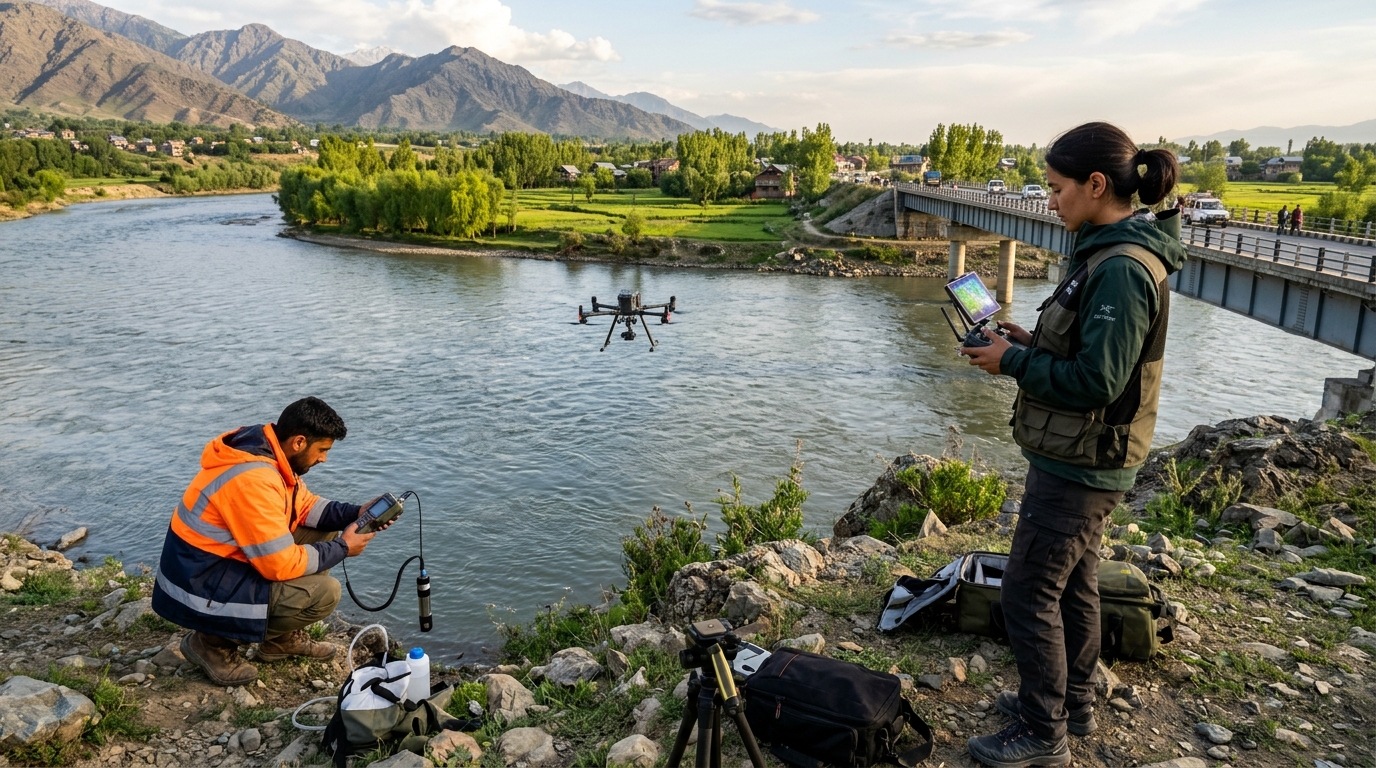
High-altitude scientific measurement and mountain watershed research context in the Western Himalayas—where decades of field scholarship earn global journal recognition while raising the foundational question of how scientific knowledge returns to local communities and ecosystems (Illustrative archival plate — Kashmir EcoWatch Visual Archive).
SPECIAL SCIENTIFIC INVESTIGATION · ACADEMIC RESEARCH · KNOWLEDGE DISSEMINATION · SCIENTIFIC IMPACT ACCOUNTABILITY

Who Are We Researching For? The World Knows Our Mountains. Do We?

Across Kashmir, Jammu, Ladakh, Azad Jammu & Kashmir, and Gilgit-Baltistan, a preliminary working inventory identifies 80 environment-related academic departments, laboratories, research centres, and field facilities—and a single University of Kashmir departmental register records 145 publications in five years alone. Positioned immediately before our Beyond the Conference series, Dispatch 12 inaugurates a strict, non-fabricated 2001–2026 bibliometric census and the Western Himalayan Research-to-Society and Impact Protocol to ask: how much of twenty-five years of mountain science has actually returned to the people and landscapes that made it possible?

BY Dr. Fayaz Ahmad Khan & Himalayan Dispatch Scientific Research, Academic Affairs and Knowledge Accountability Desk · VOL. 01 / NO. 01 · THE INAUGURAL ISSUE
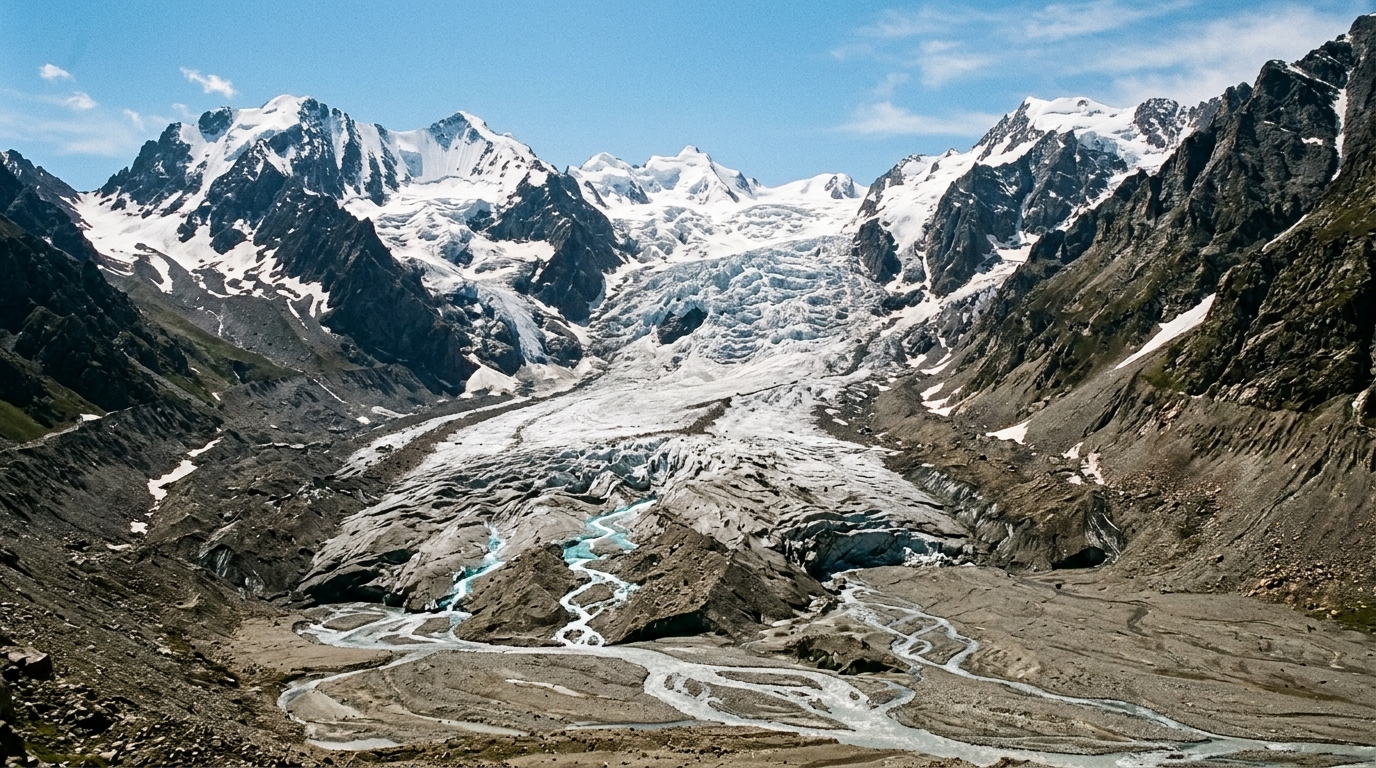
Glaciated headwaters and high mountain ridges of the Western Himalayas—landscapes studied across the world and sustained at home by scientists, advocates, journalists, conservationists, and students navigating formidable institutional odds (Illustrative archival plate — Kashmir EcoWatch Visual Archive).
SPECIAL INTERNATIONAL FEATURE · ENVIRONMENTAL LEADERSHIP · PROFESSIONAL INTROSPECTION · INTELLECTUAL LEGACY

South Asia’s Environmental Vanguard

Their journeys were not easy. Neither will ours be. Examining thirty-two distinguished environmental advocates, institution-building NGO leaders, investigative journalists, and pioneering scientists across India and Pakistan—not as distant celebrities, but as four professional mirrors through which the Western Himalayas can confront its own aspirations, institutional constraints, and possibilities.

BY Dr. Fayaz Ahmad Khan & Himalayan Dispatch Environmental Leadership and Intellectual Legacy Desk · VOL. 01 / NO. 01 · THE INAUGURAL ISSUE
Steep Western Himalayan river-gorge and mountain infrastructure corridor—where snowmelt gradients generate thousands of megawatts while generating districts confront forest submergence, tunnel hydrogeological shifts, slope instability, and winter power curtailment (Illustrative archival plate — Kashmir EcoWatch Visual Archive).
SPECIAL SCIENTIFIC INVESTIGATION · HYDROPOWER · FOREST SUBMERGENCE · WILDLIFE DISPLACEMENT · TECTONIC HAZARDS · ENERGY JUSTICE

The Price of Power

Rivers are diverted, forests are submerged, mountains are tunnelled, wildlife corridors are severed, and communities surrender ancestral valleys to generate low-carbon electricity—yet on November 27, 2026 Jammu & Kashmir warned of a ~1,300 MW winter power gap, flood-damaged stations in Gilgit-Baltistan dropped to 157 MW against 285 MW summer demand, Ladakh ran Nimoo Bazgo and Chutak in emergency isolated mode, and AJ&K residents endured winter outages beside major dams. Completing our three-part mountain engineering sequence, this investigation asks: who receives the electricity, who receives the revenue, and who inherits the ecological and geological risks?

BY Dr. Fayaz Ahmad Khan & Himalayan Dispatch Hydropower Engineering, Environmental Geology, Geospatial Intelligence and Energy Justice Desk · VOL. 01 / NO. 01 · THE INAUGURAL ISSUE
High-relief mountain river gorge and alluvial gravel corridor representative of Upper Indus extractive landscapes—where mechanized placer dredging, hard-rock pegmatite mining, glacier-fed hydrology, and steep tectonic slopes converge (Illustrative archival plate — Kashmir EcoWatch Visual Archive).
SPECIAL GEOLOGICAL INVESTIGATION · MINERAL EXPLOITATION · EXTERNAL COMMERCIAL INTERESTS · RESOURCE OWNERSHIP · ENVIRONMENTAL JUSTICE

The Wealth Beneath the Mountains

Where the Himalayan, Karakoram, and Hindu Kush orogenic belts collide, Gilgit-Baltistan holds documented occurrences of rubies, aquamarine, topaz, tourmaline, gold, copper, graphite, and lithium-bearing pegmatites—attracting official mineral-development interest across a reported 43,494 km². Yet public inspection of the regional mining portal shows 590 study-area entries alongside zero displayed private-lease records, April 2025 saw mass protests in Shigar over mineral-rights reforms, consolidated rules point to an illustrative 85% drop in community royalty share (from 2× royalty to 30%), and August 2026 environmental warnings flagged mechanized placer gold mining threatening rivers and the Diamer-Basha corridor.

BY Himalayan Dispatch Research Desk | Gilgit-Baltistan Coverage · VOL. 01 / NO. 01 · THE INAUGURAL ISSUE
High-relief Western Himalayan mountain, glacier, and valley-corridor terrain—where locked thrust structures, cryospheric retreat, steep fractured slopes, contracted floodplains, and critical human lifelines converge (Illustrative archival plate — Kashmir EcoWatch Visual Archive).
SPECIAL SCIENTIFIC INVESTIGATION · TECTONIC INSTABILITY · MULTI-HAZARD INTELLIGENCE · CASCADING DISASTERS · CRITICAL INFRASTRUCTURE · DISASTER GOVERNANCE

The Western Himalayas Are Sitting on a Time Bomb

Beneath the extraordinary beauty of the Western Himalayas lies an interconnected landscape of active geological faults, retreating glaciers, unstable mountain slopes, expanding glacial lakes, vulnerable settlements, aging infrastructure and intensifying climatic extremes. What happens when these hazards begin interacting with one another? The greatest danger may not be the next earthquake, flood or landslide, but the convergence of multiple hazards within an increasingly vulnerable mountain civilization.

BY Dr. Fayaz Ahmad Khan & Himalayan Dispatch Tectonic Sciences, Multi-Hazard Intelligence, Critical Infrastructure Resilience and Disaster Risk Governance Desk · VOL. 01 / NO. 01 · THE INAUGURAL ISSUE
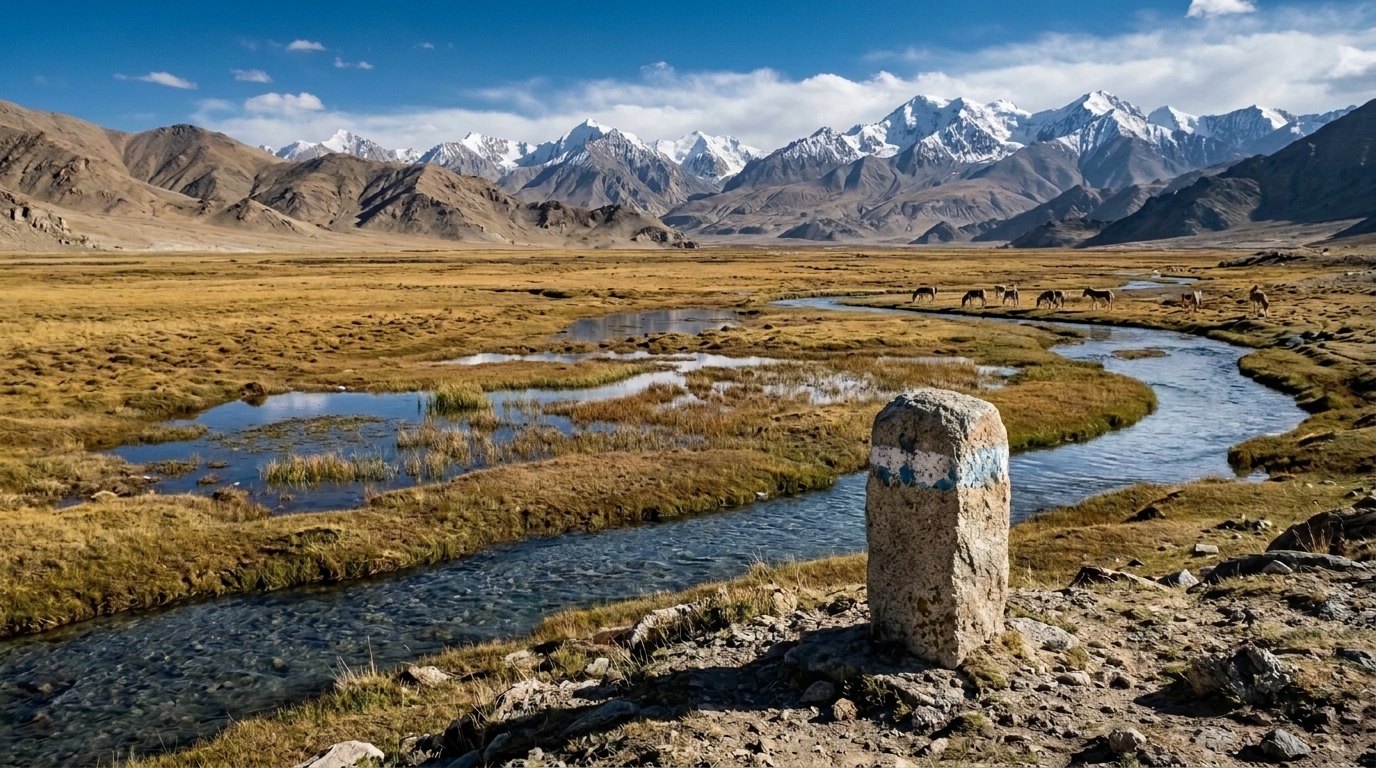
Fragile Western and Trans-Himalayan wetland, pasture, and mountain watershed terrain—landscapes governed across five regions by four distinct legal frameworks yet repeatedly left defenceless between administrative clearance, missing infrastructure, and ex-post judicial review (Illustrative archival plate — Kashmir EcoWatch Visual Archive).
SPECIAL LEGAL & SCIENTIFIC INVESTIGATION · ENVIRONMENTAL JURISPRUDENCE · LEGISLATIVE REFORM · REGULATORY ACCOUNTABILITY

When Environmental Laws Exist but the Environment Has No Defence

The Western Himalayas do not exist in a legislative vacuum: across Kashmir, Jammu, Ladakh, Azad Jammu & Kashmir, and Gilgit-Baltistan, four distinct legal systems deploy dozens of statutes, constitutional guarantees, and subordinate rules—yet 518 of 697 historically inventoried lakes in J&K have disappeared or shrunk after a 22-year lake-bill delay, Ladakh reported a 12.33 MLD sewage treatment gap before the NGT, Neelum–Jhelum diversions triggered downstream water scarcity around Muzaffarabad, and placer gold mining along Gilgit-Baltistan rivers exposed enforcement gaps. Answering five foundational questions, this Special Legal & Scientific Investigation separates pure enforcement failure from statutory obsolescence and sets out 15 model legislative reform packages.

BY Dr. Fayaz Ahmad Khan & Himalayan Dispatch Environmental Jurisprudence, Scientific Governance and Legislative Accountability Desk · VOL. 01 / NO. 01 · THE INAUGURAL ISSUE
Floodplain wetlands, river channels, and mountain catchments in the Western Himalayas—where five-year electoral pledges on tourism, highways, hydropower, mining, and lake rejuvenation meet generational hydrological and ecological law (Illustrative archival plate — Kashmir EcoWatch Visual Archive).
SPECIAL INVESTIGATION · ELECTORAL ACCOUNTABILITY · ENVIRONMENTAL MANIFESTOS · GOVERNANCE

When Politics Promises Green

Across Kashmir, Jammu, Ladakh, Azad Jammu & Kashmir, and Gilgit-Baltistan, every election brings pledges of tourism, highways, hydropower, employment, and green conservation. Examining twenty-six years of electoral politics (2000–2026) under one non-partisan evidentiary ruler, Himalayan Dispatch investigates what parties actually promised, where development pledges contradict ecological limits, who held constitutional power to act, what public budgets delivered on the ground, and how our ten-part Western Himalayan Environmental Manifesto Protocol (WHEMP) turns slogans into auditable century-scale stewardship.

BY Dr. Fayaz Ahmad Khan & Himalayan Dispatch Environmental Governance, Legislative Affairs and Public Accountability Desk · VOL. 01 / NO. 01 · THE INAUGURAL ISSUE

BALTISTAN BUREAU CORRESPONDENCE

Contact the Baltistan Bureau Desk

Send regional environmental research notes, public-record leads, or community event notices to our editorial desk. Do not transmit confidential whistleblower files via standard web forms.