Early November Gate Retention Restores Shallow Staging Pools Across Hokersar’s Central Reedbeds
Timely hydraulic closure ahead of the first Siberian cold front holds winter water depth steady for early-arriving Northern Pintails and Gadwalls, though tributary silt plumes remain under watch.
BY Himalayan Dispatch · Wetlands & Forest Desk
EDITORIAL & SYNTHESIS DISCLOSURE
Inaugural Editorial Desk & Observatory Synthesis: Prepared from Kashmir EcoWatch Ramsar hydro-period baselines and published wetland literature; not an on-site field-interview dispatch.
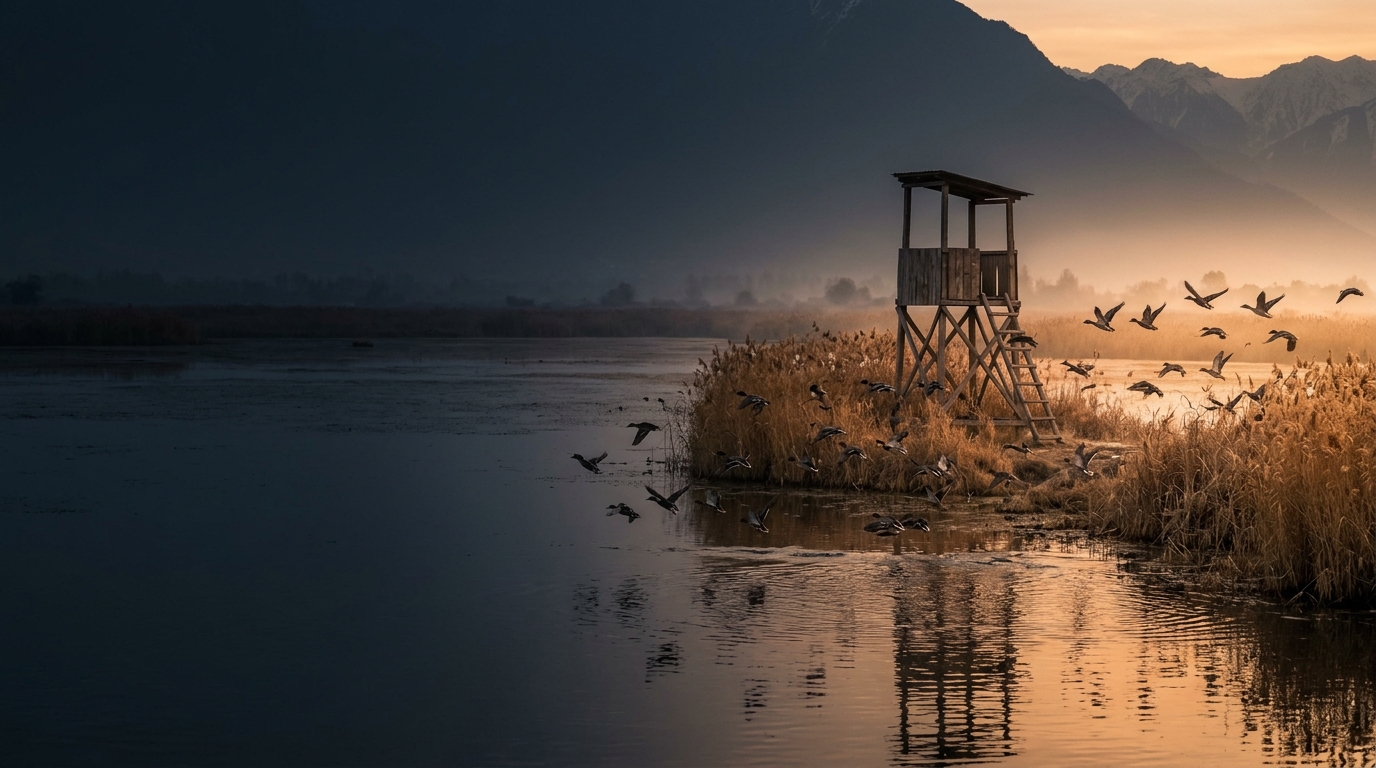
Across the central open-water mirror of Hokersar, seasonal outlet retention ahead of late-autumn cold fronts determines whether shallow foraging depths remain available for early waves of dabbling waterfowl arriving along the Central Asian Flyway. Unlike dry autumns in which delayed gate closure leaves mudflats exposed into late November, coordinated retention holds autumn inflow inside the core marsh.
Hydrological syntheses nonetheless caution that wetland management cannot stop at the outlet gate. Along the eastern inflow channel, fine silt carried off upstream karewa scarps and construction corridors continues to shallow peripheral reed lagoons, narrowing the buffer between roosting flocks and suburban roads.
Maintaining quiet, unlit perimeter zones along the Zainakote–Soibugh margin through December and January remains decisive in determining whether wintering flocks disperse across the valley’s satellite marshes or crowd into shrinking central pools.

Ramsar Wetlands, Montane Commons & Biodiversity Desk
Himalayan Dispatch · Wetlands & Forest Desk
Produces ecological syntheses on Ramsar wetland hydroperiods, migratory waterbirds, temperate conifer commons, and frontline forest stewardship.
RECENT DAILY DISPATCHES