Nature Is Not a Contractor
An independent response to the International Conference on Nature-Based Solutions, IUST.
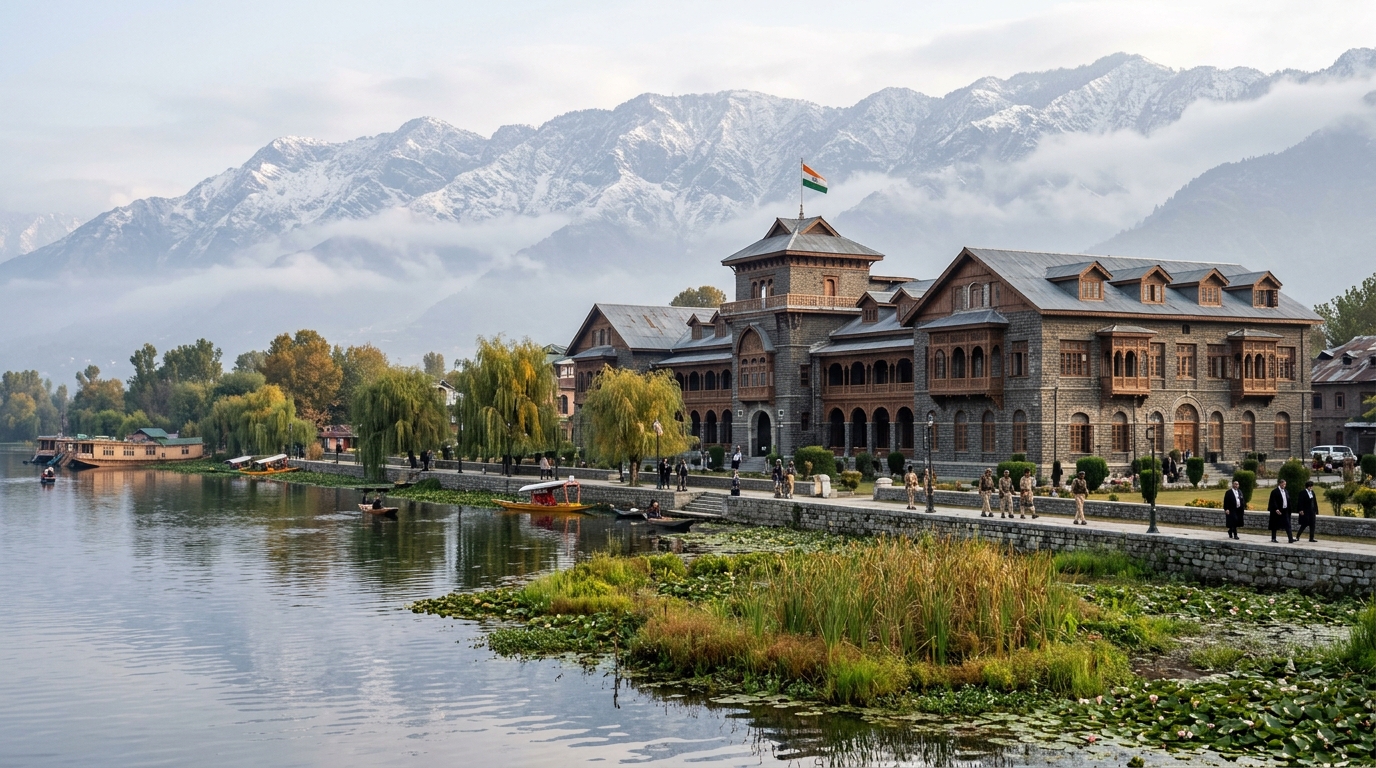
Between the Campus at Awantipora and the Levee Below
From the lecture halls above the middle Jhelum floodplain, one can look straight down onto the bureaucratic habit that turns living ecosystems into expired civil tenders.
Stand on the upper terrace of the Islamic University of Science and Technology (IUST) at Awantipora after an August monsoon shower, and the geography of the Kashmir Valley writes its own syllabus below you. Directly to the west, the River Jhelum coils sluggishly between earthen embankments, carrying fine suspended silt stripped from overgrazed Pir Panjal headwaters and incised karewa gullies. Across the floodplain, remnant oxbow marshes, willow belts, and low-lying paddy basins—the historic hydraulic lungs that once absorbed snowmelt surges before they could drown Srinagar thirty kilometers downstream—lie pinched by brick kilns, highway fill, and rectilinear drainage ditches.
From August 3 to 6, 2026, that vantage point hosted one of the year’s most ambitious scientific gatherings in the region: the *International Conference on Nature-Based Solutions (NbS) for Enhanced Climate Resilience and Livelihoods in the Himalayas*. Spearheaded at IUST under Vice-Chancellor Prof. Shakil Ahmad Romshoo and Convener Prof. Javed Hussain Mir, anchored by IUST’s Centre for Disaster Risk Reduction (CDRR), inaugurated in the presence of Lieutenant Governor Manoj Sinha and Chief Justice Sanjeev Kumar, enriched by senior scientific voices including Prof. V. K. Gaur and Prof. N. H. Ravindranath, and capped on August 6 by a high-level policy dialogue at the Amar Singh Club in Srinagar on *“Leveraging Nature-based Solutions for Fiscal Diversification and Resilience in Jammu and Kashmir,”* the conference advanced an indispensable premise: healthy watersheds, wetlands, and forests are primary public infrastructure.
Walk five kilometers off any highway across Jammu & Kashmir’s afforestation compartments or dredged wetland margins, however, and a sobering institutional reality confronts that premise. Scattered across degraded hillsides from Budgam and Pulwama to Baramulla and Ramban stand rusted barbed-wire enclosures erected under three-year government schemes—their painted signboards still announcing “100% Target Achieved,” their sun-baked pits holding brittle stems of exotic black locust or nothing at all. Along the rims of Wular, Hokersar, and Dal, towering spoil bunds left by heavy mechanical excavators sprout invasive weeds while turbid tributary plumes re-choke the dredged channels within two snowmelt seasons.
Between the intellectual sophistication of Awantipora’s conference podium and the silent mortality of Year Four on the hillside lies an unresolved governance pathology. Whenever Indian public administration adopts a new ecological concept—social forestry in the 1980s, integrated watershed management in the 1990s, compensatory afforestation in the 2000s, and now Nature-Based Solutions—it translates living biology into the only operational language its finance and engineering manuals recognize: the short-cycle civil works contract. This response begins where the August 2026 dialogue ended, insisting upon a first principle of ecological science: nature is not a contractor.
Hosted August 3–6, 2026 by IUST Awantipora (CDRR), concluding August 6 at Amar Singh Club, Srinagar on fiscal diversification and climate resilience. Publicly accessible post-conference records comprise institutional summaries, inaugural and keynote reports, and policy-dialogue communiqués rather than published verbatim technical transcripts or parcel-level restoration audits.
Recognizing the Achievement at IUST, Defining the Evidence Boundary
Why elevating ecosystems to public infrastructure was a vital conceptual advance—and why assimilating NbS into procurement schedules threatens to hollow it out.
Fair institutional critique begins by recognizing genuine scientific leadership. For decades after the catastrophic September 2014 Jhelum flood—and across recurring flash-flood, drought, and slope-failure episodes—official disaster management in Jammu & Kashmir remained overwhelmingly captive to grey-infrastructure reflexes: higher concrete floodwalls, straightened river channels, gabion crates, and mechanical desilting contracts. By convening earth-system scientists, forest ecologists, judicial and executive leaders, Disaster Risk Reduction specialists, and public-finance planners around Nature-Based Solutions in the Jhelum River Basin, IUST and its Centre for Disaster Risk Reduction challenged that concrete monopoly head-on. Framing intact upper-catchment forests, permeable floodplains, and Ramsar wetlands as flood-attenuating, livelihood-supporting infrastructure represents a major intellectual contribution to Himalayan policy discourse.
Evidentiary scrupulousness requires drawing a sharp distinction before pressing our critique. Himalayan Dispatch does not fault an academic conference for not single-handedly rewriting government treasury codes in four days, nor do we infer omissions in technical paper sessions merely because full post-conference proceedings and parcel-level survival datasets are not yet published in an open public archive. Publicly documented materials confirm substantive deliberations on Jhelum Basin flood risk, GeoAI spatial mapping, forest-carbon science, green livelihoods, and fiscal diversification instruments. What remains absent from the public domain is a binding statutory procurement reform translating those scientific insights into enforceable twenty-year ecological accountability.
At the level of intellectual foundations, however, the global and domestic “Nature-Based Solutions” paradigm carries a structural vulnerability the moment it pairs ecological restoration with “fiscal diversification” and public-works budgeting. In engineering economics, an infrastructure asset—a bridge, a storm drain, a retaining wall—is fabricated to a fixed blueprint within twelve to thirty-six months, inspected upon physical completion, handed over after a twelve-month defect-liability window, and depreciated linearly over time. A living Himalayan ecosystem obeys the exact opposite trajectory.
A restored subalpine birch-fir ecotone or a re-wetted Jhelum floodplain marsh is at its weakest, most disturbance-prone, and least functional state on the day the contractor’s bill is cleared. Its flood-detention roughness, ectomycorrhizal soil aggregation, benthic trophic webs, and carbon stability emerge non-linearly across fifteen to fifty years of autogenic and assisted ecological succession. When ministries pour “Nature-Based Solutions” into existing Schedule-of-Rates templates—CAMPA Annual Plans of Operation, Green India Mission targets, Amrit Dharohar wetland grants, municipal smart-city lake packages, or sovereign carbon-credit pipelines—they force a fifty-year biological symphony to march to a thirty-six-month fiscal drumbeat.
“A concrete culvert is strongest on the day the contractor’s final bill is paid; a restored Himalayan forest or wetland is at its most fragile. Treating both under the same thirty-six-month tender guarantees ecological theatre.”
Fiscal-Year Amnesia: What Happens in Year Four and Year Ten?
Tracing the institutional lifecycle of a three-year Himalayan restoration grant after the March 31 utilization certificate is signed.
To understand why billions of rupees expended on Himalayan afforestation, watershed treatment, and wetland rejuvenation over the past quarter-century have yielded disproportionately thin ecological recovery, follow the calendar of a standard government Detailed Project Report (DPR). Year One is consumed by administrative sanction, tendering, barbed-wire procurement, pit excavation, or earthmoving mobilization—frequently compressed into the frantic final quarter before the March 31 financial-year lapse deadline, even when late-March planting misses optimal winter-dormant root windows. Years Two and Three fund modest casualty replacement and temporary daily-wage watch-and-ward watchers.
Then arrives April of Year Four. On the departmental ledger, the scheme is marked “Completed; 100% Funds Utilized.” Watch-and-ward stipends cease; fence posts loosened by winter frost-heave or snow creep go unmended; unconsulted neighbourhood livestock or displaced transhumant flocks breach the wire; summer grass fires sweep unchecked through unweeded dry thatch; and the Divisional office moves its scarce beat guards onto the next newly sanctioned three-year polygon five ridges away. Nobody returns in Year Seven or Year Twelve to measure canopy stratification, spring discharge, or soil organic carbon, because no budget line or audit rule exists for Year Twelve.
The same fiscal-year amnesia governs Jhelum basin hydrology. Hydrological and land-system modelling in the Upper Jhelum and temperate Himalayan catchments by Romshoo and Yousuf (2022) and Attar et al. (2025) underscores how upper-catchment vegetative loss, land-use intensification, and extreme design-storm runoff govern downstream flood peaks and sediment yields. Yet administrative fragmentation splits a single watershed across non-communicating silos: Irrigation and Flood Control engineers dredge lower Jhelum and flood-spill channels; the Wetland Division or Wular Conservation and Management Authority excavates marsh cells; Soil Conservation builds isolated check-dams; and Territorial or Social Forestry plants hillside compartments—each operating on separate three-year grants without coupled sediment budgets.
Consequently, while excavators scrape silt out of Wular’s Watlab or Bandipora margins or Hokersar’s inlet channels, unstabilized upland catchments along the Erin, Madhumati, Ningli, Pohru, and Doodhganga tributaries continue shedding hundreds of thousands of tons of eroded topsoil every spring snowmelt. Within three to five monsoons, the dredged pool refills to its prior bathymetric equilibrium. Public money has paid for temporary earth movement, not watershed restoration—because sediment detachment at 2,400 meters and wetland siltation at 1,580 meters were budgeted as unrelated files.
Public restoration schemes across J&K routinely allocate >85% of budgets to upfront capital works (fencing, earthmoving, nursery pits, masonry check-dams) within 12–36 months while reserving zero endowed operating funds for Years 4–20 ecological tending and monitoring.
Pit Counts Are Not Forests: Monocultures, Mycorrhizal Silence, and the Betula Treeline
Why sapling tallies of Robinia and Populus cannot substitute for subterranean fungal networks or the physiological delicacy of Himalayan birch.
Inside forestry nurseries and compensatory afforestation returns under the Compensatory Afforestation Fund Act (CAMPA), institutional pressure to plant millions of stems within single-season campaigns systematically distorts species selection. Fast-germinating, browse-tolerant exotics and pioneers—above all North American black locust (*Robinia pseudoacacia*), hybrid *Populus* clones, *Ailanthus altissima*, *Salix* cuttings, or uniform single-age conifer blocks—dominate nursery beds because they survive bare-root transport and produce rapid two-year greening visible during early departmental inspections. Native late-successional broadleaves and subalpine specialists—Himalayan oak (*Quercus semecarpifolia*, *Quercus floribunda*), walnut, horse chestnut, bird cherry, yew (*Taxus wallichiana*), and Himalayan birch (*Betula utilis*)—require multi-month cold stratification, shade-cloth hardening, elevation-matched seed provenance, and intact forest soils.
Planting *Robinia pseudoacacia* across degraded Pir Panjal or Zabarwan slopes is not forest restoration; it is biological simplification. Fixing atmospheric nitrogen aggressively and spreading via root suckers, *Robinia* alters soil C:N stoichiometry, suppresses native herbaceous and medicinal flora (such as threatened *Aconitum heterophyllum* communities in subalpine belts), and fails to support the specialist avian and ungulate browse guilds of native mixed temperate forests. Meanwhile, genuine establishment of Kashmir’s foundational conifers—deodar (*Cedrus deodara*), blue pine (*Pinus wallichiana*), and silver fir (*Abies pindrow*)—depends critically on subterranean ectomycorrhizal fungal partnerships. Molecular and mycological investigations in the Kashmir Himalaya by Koukol (2019) and Itoo and Reshi (2014) reveal rich, host-associated root microfungi and ectomycorrhizal assemblages that mediate phosphorus uptake, drought resistance, and pathogen defence—fungal networks wholly absent from sterilized polybag nursery soil dumped into sun-baked, compacted hillside pits.
At the upper elevational frontier between 3,100 and 3,800 meters, where subalpine *Betula utilis* groves anchor snowpacks against spring avalanches and regulate early-summer meltwater infiltration, plantation contractor logic breaks down completely. Ecophysiological fieldwork on *Betula utilis* in the Western Himalayan treeline ecotone by Singh et al. (2024) demonstrates acute seasonal water-relations sensitivity, with osmotic potential at full turgor declining by −0.66 MPa and at zero turgor by −1.07 MPa under moisture stress, while synthesis by Kumar and Khanduri (2024) documents heterogeneous treeline shifts ranging from 0.80 to 503 meters alongside altered phenophases under rapid Himalayan warming.
You cannot “contract” a *Betula utilis* treeline back into existence through March pit-digging tenders. Birch seedling recruitment depends on micro-topographic nurse-shrub shelter (*Rhododendron campanulatum*, *Juniperus*), snow-lie duration protecting winter buds from freeze-thaw embolism, soil fungal symbionts, and seasonal grazing rest negotiated consensually with highland Gujjar and Bakarwal pastoralists during critical spring thaw windows. Counting excavated pits without measuring multi-decade cohort recruitment, understory diversity, and rhizosphere health mistakes carpentry for silviculture.
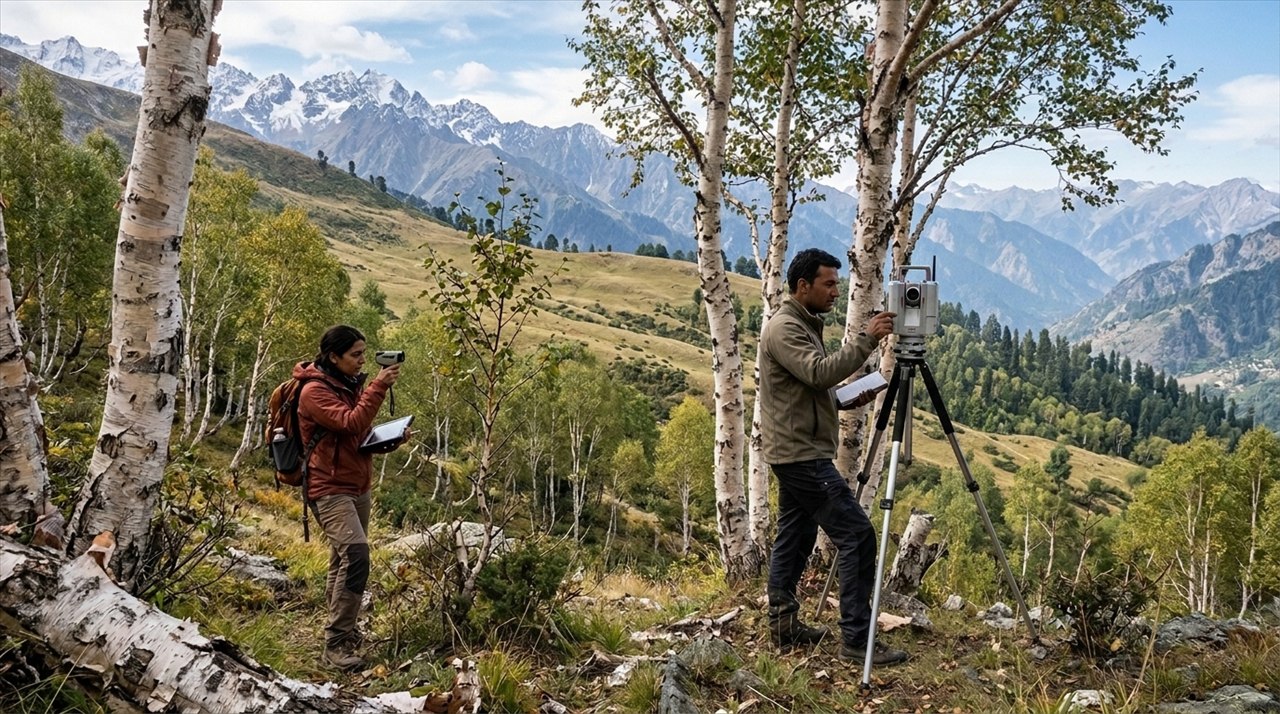
When Backhoes Pose as Wetland Restoration
How cubic-meter dredging targets in Wular, Hokersar, and Dal destroy benthic seed banks, flatten waterfowl foraging shelves, and mobilize legacy nutrients.
If monoculture pit-counting is the cardinal sin of terrestrial NbS procurement, mechanical dredging billed as “wetland rejuvenation” is its aquatic twin. Across the Kashmir Valley—where satellite time-series assessments by Alam et al. (2023) document persistent spatial contraction and hydroperiod fragmentation across floodplain wetlands, and soil physicochemical analyses across four Valley wetlands by Mir et al. (2025) confirm severe anthropogenic degradation—state restoration budgets overwhelmingly flow into heavy earthmoving contracts measured in cubic meters of silt excavated and linear kilometers of perimeter bund raised.
Limnologically, turning heavy backhoes and suction dredgers loose across shallow Ramsar wetlands such as Wular, Hokersar, Hygam, or Shallabugh—or inner basins of Dal Lake—inflicts acute trophic trauma when executed as civil earthwork rather than precision ecological bathymetry. Empirical benthic monitoring in Dal Lake’s Hazratbal basin by Mushtaq et al. (2013) demonstrated significant post-dredging collapse in macrozoobenthos density and diversity—wiping out the oligochaete, chironomid, and mollusc communities that form the benthic processing engine of lacustrine food webs. Simultaneously, deep bucket scraping strips away the upper ten to twenty centimeters of organic hydrosoil containing the viable oospore, rhizome, and seed bank of native submerged and emergent macrophytes, whose vital role in seasonal carbon sequestration and nutrient immobilization in Hokersar Wetland was quantified by Lolu et al. (2018).
Waterbird ecology suffers an equally severe blow from geometric channelization. Hundreds of thousands of migratory Anatidae—pintails, mallards, gadwalls, common teal, shovellers, and red-crested pochards—arriving in Kashmir along the Central Asian Flyway do not require uniform two-meter-deep rectangular reservoirs. Dabbling ducks require gently sloping micro-bathymetric mudflats and littoral shelves between fifteen and forty-five centimeters deep, interspersed with mosaic reedbeds (*Typha angustata*, *Phragmites australis*, *Sparganium*) for anti-predator nesting and thermal shelter. When contractors excavate steep-sided cells to maximize billable cubic-meter volume and pile unstabilized dredge spoil onto marginal bunds, dabbling guilds lose foraging access while disturbed spoil banks are rapidly colonized by invasive alligator weed (*Alternanthera philoxeroides*), documented in Wular Lake by Masoodi and Khan (2012).
Meanwhile, along Jhelum tributaries and mainstem reaches, instream channel dredging, boulder extraction, and concrete weir barriers marketed as flood-resilience works fragment riffle-pool habitats essential to native snow trout (*Schizothorax* spp.) and the Critically Endangered endemic rheophilic Kashmir catfish (*Glyptothorax kashmirensis*), whose conservation survival Gilani et al. (2026) directly link to intact substrate and basin connectivity. And in Wular Lake—where Hassan et al. (2015) proved that agricultural land-use dominance (47.04 percent) drives dissolved-oxygen depletion—dredging lake-bed silt without intercepting catchment fertilizer runoff and raw municipal sewage merely resets the clock on eutrophication.
Mushtaq et al. (2013, DOI: 10.12816/0000258) documented macrozoobenthos destruction following Dal Lake dredging; Lolu et al. (2018, Wetlands, DOI: 10.1007/s13157-018-1092-8) established macrophyte carbon-sequestration functions in Hokersar; Alam et al. (2023, EMA, DOI: 10.1007/s10661-023-12185-7) tracked satellite wetland dynamics across Kashmir.
The Illusion of Green Pixels and Carbon Credits
Methodological blind spots in GeoAI remote sensing, single-metric carbon finance, and top-down enclosures of pastoral and fishery commons.
Two methodological frontiers enthusiastically explored at the August 2026 IUST conference—GeoAI satellite monitoring and green-fiscal / carbon-credit diversification—hold genuine analytical value when paired with field ecology, yet carry dangerous blind spots if deployed as standalone bureaucratic verification tools. Consider multispectral remote sensing. At 10-to-30-meter Sentinel-2 or Landsat resolution, Normalized Difference Vegetation Index (NDVI) and Enhanced Vegetation Index (EVI) algorithms measure chlorophyll reflectance, not ecological integrity. To an uncalibrated greenness model, an aggressive monoculture thicket of invasive *Robinia pseudoacacia* or *Lantana camara* on a degraded hillside registers a higher “forest recovery” score than a diverse, open native montane grassland-oak mosaic.
Over Kashmir’s wetlands and lakes, optical greenness indices fail even more deceptively. Dense surface mats of free-floating *Azolla cristata*, *Salvinia natans*, invasive *Alternanthera philoxeroides*, or hypereutrophic cyanobacterial blooms across Hokersar, Anchar, Brari Nambal, or Wular backwaters generate vigorous near-infrared reflectance that naive GeoAI classifiers can misread as “vegetative wetland productivity,” when in reality dissolved oxygen beneath the mat has plunged toward zero and submerged native *Potamogeton* beds have suffocated. Remote sensing without seasonal ground-truthed floristic quadrats, hyperspectral species discrimination, bathymetric sonar, and dissolved-oxygen profiling invites automated greenwashing.
A parallel distortion arises when “leveraging Nature-Based Solutions for fiscal diversification” narrows ecosystem valuation into single-metric carbon-credit monetization. Himalayan watersheds are not tropical carbon plantations; their primary societal value in Jammu, Kashmir, and Ladakh lies in hydrological regulation—snowpack retention, spring baseflow recharge, peak-flood attenuation, slope shear cohesion, genetic biodiversity, and cultural-pastoral sustenance. Optimizing a Pir Panjal slope solely to maximize rapid woody stem biomass for voluntary carbon buyers encourages dense, high-transpiration plantations that can reduce dry-season spring yield and accumulate volatile resinous fuel loads in a region experiencing intensifying pre-monsoon fire episodes.
Most troubling is the social blind spot of carbonized enclosures. Across the Kashmir Valley and Pir Panjal, “degraded commons” targeted for plantation closures or wetland fencing are rarely empty wastelands; they are seasonal grazing corridors (*kandi* and *marg* pastures) stewarded by Gujjar and Bakarwal pastoralists, or *nadru* (lotus stem), water-chestnut (*Trapa natans*), fodder, and artisanal *Schizothorax* fishing grounds sustaining thousands of Wular, Dal, and Shallabugh households. Fencing out customary stewards to secure short-term sapling survival or carbon title displaces grazing pressure onto steeper, unmonitored alpine ridges while breeding local alienation that guarantees fence collapse the day project guards depart.
“To an uncalibrated satellite algorithm, an invasive Robinia thicket on a hillside and a suffocating algal mat on a dying marsh both glow brightly green. Pixels without taxonomy are an invitation to self-deception.”
Replacing Paper Targets with Living Proof
Why public restoration will continue failing until treasury audits abolish administrative input tallies in favour of ecological performance indicators.
At the heart of Himalayan restoration failure lies an accounting category error. Every government department in Jammu, Kashmir, and Ladakh reports what it *spent* and what it *installed*, never what *lived* and *functioned*. In legislative assemblies, Comptroller and Auditor General (CAG) annexures, CAMPA annual reports, and district review slides, six administrative indicators monopolize official truth: trees planted, area treated, funds utilized, project completed, plantation coverage, and infrastructure installed. Every one of those six metrics can reach 100 percent on paper while the watershed itself deteriorates.
“Trees planted” counts nursery polybags emptied into March pits, remaining silent when eighty-five percent desiccate by October. “Area treated” aggregates polygon hectares enclosed on a Divisional map, regardless of whether invasive weeds overran the plot or natural regeneration was suppressed. “Funds utilized” rewards frantic end-of-fiscal-year expenditure spikes rather than cost-effective natural assisted regeneration. “Project completed” confuses the expiry of a contractor’s work order with the recovery of a self-sustaining hydroperiod.
“Plantation coverage” celebrates single-species canopy closure even where understory herbs, pollinators, and forest-floor litter sponges have vanished. And “infrastructure installed” tallies gabion check-dams, concrete retaining spurs, or dredged bunds without testing whether peak-flood discharge actually attenuated or simply accelerated erosion against the next downstream village bank.
To operationalize the scientific spirit of the IUST conference inside government finance rules, Himalayan Dispatch sets forth below the mandatory indicator substitution table that every forestry, wetland, watershed, and disaster-resilience agency in the Western Himalayas must adopt as a condition of public or climate-finance disbursement.
MANDATORY METRIC REFORM · TABLE 01
Required substitution of bureaucratic input reporting with verifiable, multi-decadal ecological performance indicators across all Himalayan Nature-Based Solutions programmes.
| Administrative indicator | Ecological performance indicator |
|---|---|
| Trees planted | Native vegetation survival (5-, 10-, and 20-year multi-strata cohort survival, natural regeneration & mycorrhizal establishment) |
| Area treated | Functional ecosystem recovery (SER reference-ecosystem trajectory, trophic integrity & absence of invasive dominance) |
| Funds utilized | Environmental return on investment (verified unit cost per cubic meter of flood detention, spring baseflow, or ton of soil retained) |
| Project completed | Watershed functionality (multi-season hydroperiod stability, dry-season spring discharge & sediment-trap efficiency) |
| Plantation coverage | Biodiversity recovery (native floristic richness, pollinator/avian guild occupancy & habitat corridor permeability) |
| Infrastructure installed | Long-term hazard reduction (25-year slope shear stability, peak-flood attenuation & zero downstream erosion transfer) |
Judicial Mandates Without Ecological Escrow
Why High Court wetland PIL orders and CAMPA statutes falter when implementing departments grade their own survival ledgers.
Legal enforceability and institutional accountability expose why well-intentioned judicial and statutory interventions in Kashmir’s wetlands and forests repeatedly stall mid-stream. Over the past decade, the High Court of Jammu & Kashmir and Ladakh—acting through landmark *suo motu* Public Interest Litigations on Dal, Wular, Hokersar, Anchar, and Khushalsar—alongside the National Green Tribunal and the statutory Wetland (Conservation and Management) Rules, 2017, has issued repeated directives ordering boundary demarcation, encroachment removal, sewage interception, and integrated management plans. Similarly, the Compensatory Afforestation Fund Act, 2016 and Rules, 2018 created dedicated statutory funds running into thousands of crores nationwide to compensate for diverted forest land.
Yet across both wetland rejuvenation and CAMPA afforestation, a fatal conflict of interest cripples enforcement: the agency that designs the DPR and executes the expenditure is the very same agency that certifies ecological success. When a Forest Division plants two hundred thousand saplings or a Wetland Authority finishes a desilting contract, internal departmental officers sign the survival or completion certificate submitted to the secretariat or court committee. Independent, statistically randomized third-party field audits—with publicly downloadable GPS plot coordinates, tagged stem IDs, pre- and post-dredging bathymetric grids, and benthic/water-quality raw data—remain virtually non-existent in the public domain.
Contractual law reinforces this impunity. Under standard Public Works and Forest engineering procurement, a contractor executing wetland earthworks, bio-engineering slope stabilization, or fenced commercial nursery planting bears at most a six-to-twelve-month defect liability period. If a bio-engineered retaining slope along a Pir Panjal road collapses in Year Three because unrooted willow stakes rotted in uncompacted fill, or if seventy percent of planted saplings perish in Year Four, the state holds zero legal escrow to claw back payment or compel replanting.
Genuine institutional accountability requires breaking the monopoly of self-certification. Executing agencies (Territorial Forestry, Social Forestry, LCMA, WUCMA, Irrigation & Flood Control) must be legally separated from ecological verification authorities, and public citizens, Gram Sabhas, and High Court *amici curiae* must have statutory open-data access to every rupee, polygon, species list, and survival audit across a twenty-year horizon.
What Science Still Does Not Know About Healing a Warming Himalaya
Four urgent empirical research frontiers that Himalayan universities must resolve before standardized NbS templates scale across the basin.
Honest scientific assessment must also confront where Himalayan restoration science itself remains incomplete. Enthusiasm at policy dialogues frequently outruns site-specific empirical parameterization across the Western Himalayas’ steep climatic gradients. Four outstanding scientific questions demand coordinated, multi-year experimental research across IUST, SKUAST-Kashmir, the University of Kashmir, and Ladakh research stations before standardized NbS prescriptions are scaled across hundreds of thousands of hectares.
First, **Rhizosphere Inoculation and Soil Microbiome Recovery**: while studies such as Koukol (2019) and Itoo and Reshi (2014) catalogued ectomycorrhizal diversity under intact *Pinus wallichiana* and *Cedrus deodara* stands, Himalayan silviculture still lacks field-validated nursery inoculation protocols quantifying how native fungal symbionts and soil-crust cyanobacteria accelerate seedling survival on severely eroded, low-organic-matter *karewa* silts and road-cut talus slopes.
Second, **Internal Phosphorus Loading and Post-Dredging Sediment Geochemistry**: in shallow eutrophic basins such as Dal, Anchar, Hokersar, and Wular margins—where heavy-metal and nutrient accumulation in sediments and macrophytes has been documented across recent KEW-indexed studies—limnologists have yet to establish quantitative shear-stress and redox thresholds predicting when mechanical sediment disturbance liberates legacy pore-water phosphorus and trace metals into the overlying water column, triggering toxic algal shifts rather than water-clarity gains.
Third, **Assisted Provenance Adaptation at the Warming Treeline**: as Western Himalayan winter precipitation regimes fluctuate and spring vapour-pressure deficits sharpen, ecophysiologists following Singh et al. (2024) and Kumar and Khanduri (2024) have not yet mapped which lower-elevation seed provenances of *Betula utilis*, *Abies pindrow*, and *Quercus semecarpifolia* possess sufficient drought-osmotic plasticity to survive 2050 climate trajectories without out-breeding local cold-hardiness adaptations. Fourth, **Afforestation Evapotranspiration vs. Dry-Season Spring Yield**: across semi-arid Ladakh and rain-shadowed Pir Panjal/Kandi belts, paired-catchment hydrological experiments are urgently needed to determine where dense tree planting increases groundwater infiltration—and where high canopy interception and transpiration actually *deplete* downstream village springs compared to restored native tussock grasslands.
Priority empirical gaps: (1) native ectomycorrhizal nursery inoculation trials; (2) post-dredging sediment redox and internal phosphorus release models; (3) climate-adjusted seed provenance trials for Betula utilis and oaks; (4) paired-catchment water-yield balances comparing tree planting against native grassland recovery.
Global Standards Against Greenwashing
What the IUCN Global Standard, SER Recovery Wheel, US Wetland Mitigation Banking, and China’s post-Grain-for-Green reckoning teach Kashmir.
International restoration science and environmental law have already confronted—and built institutional guardrails against—every pathology currently threatening Himalayan Nature-Based Solutions. First, the **IUCN Global Standard for Nature-based Solutions (2020)** establishes eight binding criteria and twenty-eight indicators specifically designed to prevent civil works and monoculture plantations from masquerading as NbS. Under Criterion 3, an intervention cannot be classified or financed as an NbS unless it delivers measurable **biodiversity net gain** and ecosystem connectivity; under Criterion 2, design must operate at **landscape and watershed scale** rather than isolated project plots; and under Criterion 5, governance must rest on inclusive, transparent consent with Indigenous and local rightsholders.
Second, the **Society for Ecological Restoration (SER) International Principles and Standards for the Practice of Ecological Restoration (2nd ed., 2019)** mandates that every project establish an empirical **Reference Ecosystem** before ground-breaking—benchmarking six core attributes on the **5-Star Recovery Wheel**: absence of threats, physical conditions, species composition, structural diversity, ecosystem function, and external exchanges. Under SER standards, a single-species *Robinia* plantation or a steep-walled dredged pond scores near zero on structural diversity and species composition, disqualifying it from restoration certification regardless of survival headcount.
Third, in regulatory public finance, the **United States Army Corps of Engineers and EPA Compensatory Wetland Mitigation Rule (33 CFR Part 332 / 40 CFR Part 230)** solved the “Year Four abandonment” problem through legally binding **10-to-20-year phased credit release schedules** backed by financial assurances (escrow bonds, letters of credit, and permanent stewardship endowments). Only a minor fraction of ecological credits is released upon initial grading and planting; subsequent tranches unlock only when independent field audits verify multi-year hydroperiod duration, hydric soil development, ≥80 percent native plant cover, and <5 percent invasive species dominance.
Fourth—and most instructive for Asian mountain basins—is **China’s empirical reckoning following the Grain-for-Green (Sloping Land Conversion) Program**. After planting tens of millions of hectares with fast-growing single-species stands (*Robinia pseudoacacia*, *Pinus tabuliformis*, *Populus*) across the Loess Plateau and Tibetan margins in the early 2000s, Chinese hydrologists documented widespread soil desiccation (“dried soil layers”), reduced river runoff by up to thirty to fifty percent in water-limited sub-basins, and stunted “old-man trees.” That hard-earned scientific evidence forced a historic national policy pivot after 2016: halting exotic monocultures in moisture-limited zones, prioritizing natural regeneration and mixed native shrub-grassland mosaics, and tying fiscal ecological-compensation transfers (*shengtai buchang*) to verified downstream water quality and hydrological performance. Jammu & Kashmir need not spend twenty years repeating an experiment earth science has already graded.
The Long-Term Ecosystem Recovery and Restoration Accountability Framework
A twenty-year statutory escrow, BACI reference-site, and community co-stewardship architecture to reform NbS governance in Jammu, Kashmir, and Ladakh.
To translate the highest scientific aspirations of the August 2026 IUST conference into durable institutional law, Himalayan Dispatch proposes the **Long-Term Ecosystem Recovery and Restoration Accountability Framework (LTER-RAF)**. Designed for statutory adoption by the Jammu & Kashmir and Ladakh administrations across all CAMPA Annual Plans of Operation, Wetland Authority budgets, Green India Mission tranches, Jhelum Disaster Risk Reduction packages, and externally aided climate-resilience loans, LTER-RAF replaces thirty-six-month contractor procurement with six enforceable rules.
First, **Pre-Intervention Reference-Site & BACI Baselines**: no restoration DPR above ₹50 lakh may receive treasury sanction without a published Before-After-Control-Impact (BACI) baseline benchmarking local reference floristics, soil mycorrhizal/organic status, bathymetric contours, or seasonal spring discharge. Second, **Twenty-Year Phased Ecological Escrow Schedules**: public and climate funds cease paying 100 percent upon Year-1 to Year-3 installation. Only 30 percent disburses upon verified site preparation and native planting/re-grading; the remaining 70 percent sits in a ring-fenced statutory Ecological Performance Escrow released at Year 3 (15%), Year 7 (20%), Year 12 (20%), and Year 20 (15%) strictly upon meeting SER Recovery Wheel and hydrological thresholds.
Third, **Independent University & Citizen-Science Verification Consortia**: implementing departments are legally barred from auditing their own survival rates. Verification is vested in an independent consortium uniting IUST, SKUAST-Kashmir, University of Kashmir, University of Jammu, and University of Ladakh ecologists alongside trained local youth monitors, rotated randomly across districts to prevent institutional capture. Fourth, an **Open Public Geo-Tagged Restoration & Hydroperiod Registry** publishes downloadable KML/GeoJSON polygons, nursery seed-provenance certificates, seasonal water-level logger series, and survival photographs for every rupee spent.
Fifth, a **Statutory Exclusion List** permanently disqualifies exotic/invasive monocultures (*Robinia*, hybrid *Populus*, *Ailanthus*) and indiscriminate flat-bottom wetland backhoe dredging from NbS, CAMPA, and green-bond eligibility, mandating multi-species native nurseries with 3-to-5-year lead contracts so slow-growing *Betula*, oaks, and native wetland rhizomes are propagated on schedule. Sixth, **Community Co-Stewardship Endowments** replace barbed-wire exclusion with twenty-year revenue-sharing compacts paying Gram Sabhas, Gujjar-Bakarwal rotational grazing committees, and Wular–Hokersar–Dal wetland cooperatives annual stewardship stipends tied directly to verified native cohort survival and bird/fishery habitat health.
PROPOSED GOVERNANCE ARCHITECTURE · TABLE 02
The 6-Pillar Long-Term Ecosystem Recovery and Restoration Accountability Framework (LTER-RAF) proposed by Himalayan Dispatch.
| LTER-RAF Governance Pillar | Statutory Procurement Rule, Escrow Schedule & Verification Mechanism |
|---|---|
| 1. Pre-Intervention Reference & BACI Baselines | Mandatory pre-work ecological, bathymetric, soil-microbial, and hydrological baseline paired with an undisturbed Reference Ecosystem plot prior to DPR sanction. |
| 2. 20-Year Phased Ecological Escrow Schedule | Caps initial installation payout at 30%; locks 70% in statutory escrow released at Years 3 (15%), 7 (20%), 12 (20%), and 20 (15%) only upon verified functional milestones. |
| 3. Firewall Separating Implementer & Auditor | Abolishes departmental self-certification; assigns randomized field verification to independent regional university laboratories and citizen-science monitors. |
| 4. Open Geo-Tagged Survival & Hydroperiod Registry | Public portal hosting exact GIS polygons, seed-provenance lots, bathymetric sonar grids, continuous water-level logs, and time-stamped plot imagery. |
| 5. Exotic Monoculture & Backhoe Exclusion Rule | Disqualifies non-native monocultures (Robinia, hybrid Populus) and seed-bank-destroying flat dredging from NbS/CAMPA funds; mandates 5-year native nursery advance contracts. |
| 6. Community Co-Stewardship Endowments | Replaces exclusionary fencing with 20-year performance stipends to FRA Gram Sabhas, pastoralist rotational-rest councils, and wetland fisher cooperatives. |
The Patience of Roots Against the Haste of Tenders
A watershed remembers whether we came to heal its soil and water—or merely to close a financial year.
In late autumn across the Kashmir Valley, the surface theatre of summer green fades, revealing the true architecture of the landscape. Along the Watlab and Bandipora shallows of Wular and the reed channels of Hokersar, early cohorts of migratory mallards, teal, and greylag geese circle downward, reading water depth, submerged *Potamogeton* beds, and mudflat contours with evolutionary precision that no contractor’s completion certificate can fool. Two thousand meters higher along the Pir Panjal and Sindh ridges, papery silver-white stems of *Betula utilis* stand leafless against November wind, their winter survival already decided underground by fungal hyphae, root starch reserves, and soil moisture stored months earlier.
The International Conference on Nature-Based Solutions hosted by IUST at Awantipora in August 2026 rendered a lasting public service by placing those wetlands, floodplains, and mountain forests at the centre of Jammu & Kashmir’s climate-resilience and fiscal conversation. Now comes the harder test that no four-day conference can pass on its own: confronting the procurement machine waiting outside the university gate.
If “Nature-Based Solutions” becomes merely a fashionable new budget header under which the same agencies pour concrete toe-walls, dig three-year *Robinia* pits, scrape Ramsar seed banks with heavy excavators, and sell unverified carbon offsets before vanishing in Year Four, we will have betrayed both fiscal prudence and Himalayan ecology under the banner of saving them.
Nature does not bid on e-procurement portals, does not rush photosynthesis to meet a March 31 treasury deadline, and does not sign twelve-month defect-liability waivers. A floodplain marsh, a deodar rhizosphere, and a birch treeline will work tirelessly for Kashmir’s safety across centuries—but only when our laws, budgets, and institutions acquire the humility to match the twenty-year patience of roots.
“Migratory waterfowl reading the winter depth of Hokersar and fungal hyphae sustaining a Pir Panjal cedar cannot be fooled by a March 31 utilization certificate. Only twenty-year accountability speaks the language of living systems.”
DOCUMENTARY SOURCES & FURTHER READING
| Source | Documentary relevance |
|---|---|
| Islamic University of Science and Technology (IUST), Awantipora — Centre for Disaster Risk Reduction & August 3–6, 2026 International Conference on Nature-Based Solutions Record | Host university institutional record for the International Conference on Nature-Based Solutions for Enhanced Climate Resilience and Livelihoods in the Himalayas and August 6 Srinagar policy dialogue. |
| IUCN Global Standard for Nature-based Solutions (First Edition, 2020) | Global benchmark establishing 8 criteria and 28 indicators requiring biodiversity net gain, landscape-scale hydrological design, and inclusive governance. |
| Singh et al. (2024), Scientific Reports — Water Relations & Phenological Traits of Betula utilis in Western Himalayan Treeline Ecotone | Quantifies osmotic potential declines (−0.66 MPa at full turgor; −1.07 MPa at zero turgor) and moisture sensitivity in Himalayan birch. |
| Kumar & Khanduri (2024), Heliyon — Impact of Climate Change on Himalayan Alpine Treeline Vegetation | Synthesizes treeline elevational shifts (0.80 to 503.00 m) and phenological reorganization across the Himalaya. |
| Lolu et al. (2018), Wetlands — Carbon Sequestration Potential of Macrophytes in Hokersar Wetland, Kashmir | Demonstrates the seasonal carbon-sequestration and primary-productivity role of intact native wetland macrophyte guilds. |
| Alam et al. (2023), Environmental Monitoring and Assessment — Satellite Data-Based Assessment of Wetland Dynamics in Kashmir Himalaya | Multi-temporal Earth-observation assessment of spatial contraction and hydroperiod variability across Kashmir Himalayan wetlands. |
| Mushtaq et al. (2013), Jordan Journal of Biological Sciences — Effect of Dredging on Macrozoobenthos in Dal Lake, Kashmir | Empirical documentation of benthic invertebrate community loss caused by mechanical lake-bed dredging. |
| Koukol (2019), Canadian Journal of Forest Research — Root-Associated Microfungi of Pinus wallichiana in Kashmir Himalaya | Molecular characterization of root-associated and ectomycorrhizal fungal communities essential to native Himalayan conifer health. |
| Mir et al. (2025), Scientific Reports — Anthropogenic Impacts on Soil Characteristics in Four Wetlands of Kashmir Valley | Comparative soil physicochemical evidence across disturbed and undisturbed Kashmir Valley wetland compartments. |
| Hassan et al. (2015), Ecological Processes — Land Use / Land Cover Influence on Water Chemistry of Wular Lake | Links catchment agricultural land-use intensity (47.04%) to dissolved-oxygen depletion inside Wular Ramsar site. |
| Gilani et al. (2026), iScience — Molecular Phylogenetics & Basin Connectivity of Critically Endangered Glyptothorax kashmirensis | Establishes riverine habitat degradation and impoundment connectivity barriers threatening endemic Western Himalayan rheophilic fauna. |
| Attar et al. (2025), Scientific Reports — Design Storm Estimation & Flood Risk Hydrological Modelling in Temperate Himalayan Basin | Hydrological flood-risk modelling underscoring catchment runoff dynamics across temperate Kashmir Himalayan sub-basins. |
EDITORIAL PUBLICATION METADATA & 10-STAGE GATE LEDGER
| Gate | Status | Record / Scope |
|---|---|---|
| 01 · Commissioned | completed | Himalayan Dispatch Founding Masthead |
| 02 · Research in progress | completed | Himalayan Dispatch Research & Observatory Desk |
| 03 · Manuscript draft | completed | Assigned Author / Editorial Desk |
| 04 · Evidence verification | completed | Verified against documented public records of the IUST International Conference on Nature-Based Solutions (August 3–6, 2026, Awantipora & Amar Singh Club Srinagar), CAMPA / Compensatory Afforestation Fund Act 2016, Wetland (Conservation and Management) Rules 2017, IUCN Global Standard for NbS (2020), SER International Standards (2019), USACE/EPA 33 CFR Part 332 mitigation rules, and peer-reviewed Himalayan restoration and wetland studies (Singh et al. 2024; Kumar & Khanduri 2024; Lolu et al. 2018; Alam et al. 2023; Mushtaq et al. 2013; Koukol 2019; Mir et al. 2025; Hassan et al. 2015; Gilani et al. 2026). |
| 05 · Scientific review (where applicable) | pending | Internal scholarly review across wetland macrophyte ecology, treeline ecophysiology, ectomycorrhizal silviculture, and hydrological modelling completed; awaiting independent external specialist sign-off at Stage 05 prior to post-pre-release certification. |
| 06 · Editorial review | completed | Founding Editor-in-Chief Desk Review |
| 07 · Copyright and ethics review | completed | Visual assets verified on disk under Kashmir EcoWatch Visual Archive governance; zero fabricated speaker quotations, field interviews, or camera EXIF claims. |
| 08 · Administrator approval | in progress | Staged on localhost at Stage 08 (editorial_approval) for Founding Administrator review prior to production release. |
| 09 · Published | pending | — |
| 10 · Post-publication corrections | not applicable | — |
| Attribute | Final assignment |
|---|---|
| Publication | Himalayan Dispatch |
| Volume / Issue | Vol. 01 / No. 01 · The Inaugural Issue |
| Series rubric | Beyond the Conference: What Himalayan Science Has Yet to Resolve (Part IV) |
| Folio code | 14 / INDEPENDENT RESPONSE · IUST NBS 2026 |
| Title | Nature Is Not a Contractor |
| Byline | The Editorial Board & Himalayan Dispatch Wetlands & Forest Desk |
| Primary department | Editorials |
| Secondary departments | Field Reports · Longform Features |
| Conference examined | International Conference on Nature-Based Solutions (NbS) for Enhanced Climate Resilience and Livelihoods in the Himalayas, IUST Awantipora (Aug 3–6, 2026) |
| Proposed policy framework | Long-Term Ecosystem Recovery and Restoration Accountability Framework (LTER-RAF) |
| Canonical URL slug | nature-is-not-a-contractor |
| Workflow gate | Stage 08 · Pre-Release Edition Folio Awaiting Administrator Approval |
Ramsar Wetlands, Montane Commons & Biodiversity Desk
Himalayan Dispatch · Wetlands & Forest Desk
Produces ecological syntheses on Ramsar wetland hydroperiods, migratory waterbirds, temperate conifer commons, and frontline forest stewardship.
View Portfolio & Approved Commissions →NEXT IN THIS EDITION · BEYOND THE CONFERENCE · V · AGROECOLOGICAL REDESIGN
The Climate Has Changed. Has Agricultural Science?
By The Editorial Board & Himalayan Dispatch Data & Cartography Desk · 24 min read