Late-Season Optical & Radar Synthesis Tracks Autumn Drainage Stability Across Karakoram Ice-Dammed Tributaries
Multi-temporal satellite observations across the Hunza, Ghizer, and Shyok headwaters highlight why transboundary cryospheric data sharing remains vital for downstream valley communities.
EDITORIAL & SYNTHESIS DISCLOSURE
Inaugural Editorial Desk & Observatory Synthesis: Remote-sensing synthesis compiled from open Sentinel-1/2 observations and KEW GLOF Observatory baselines.
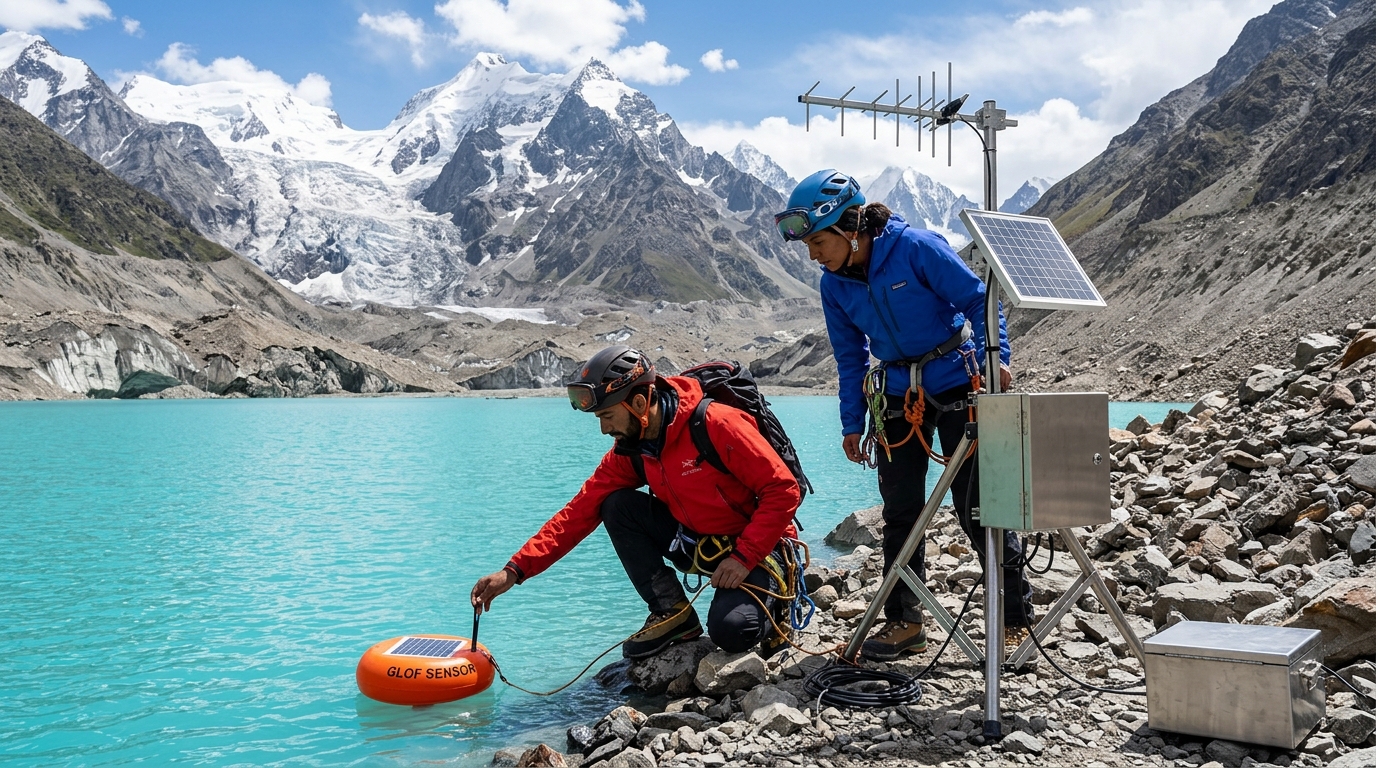
Unlike steadily retreating valley glaciers further south, several steep tributary glaciers across the Hunza, Nagar, and Shyok basins exhibit episodic surges—advancing across main valley floors and temporarily blocking meltwater streams behind walls of fractured ice.
Reviewing late-ablation Sentinel-1 radar and Sentinel-2 optical passes from our Fairfax geospatial synthesis desk confirms stable autumn water-level recession across monitored basins as sub-zero air temperatures lock upper accumulation zones for winter.
As Himalayan Dispatch establishes distributed correspondent networks across Gilgit and Baltistan, combining open satellite earth observation with verified local community reporting remains a central editorial priority.

Founding Editor-in-Chief
Dr. Fayaz Ahmad Khan
Founder of Kashmir EcoWatch and Founding Editor-in-Chief of Himalayan Dispatch; writes on alpine hydrology, cryospheric thresholds, disaster resilience, and mountain commons across the Western Himalayas.
RECENT DAILY DISPATCHES