Post-Monsoon Subsurface Seepage Keeps Cut-Slopes Fragile Along the Ramban–Kishtwar Chenab Gorge
Geotechnical slope-stability syntheses along steep phyllite and slate road benches show why slope failures often lag weeks behind peak rainfall—and why drainage weep-holes matter as much as retaining concrete.
BY Himalayan Dispatch · Investigations & Urban Water Desk
EDITORIAL & SYNTHESIS DISCLOSURE
Inaugural Editorial Desk & Observatory Synthesis: Prepared from Kashmir EcoWatch landslide susceptibility dossiers and published Himalayan geotechnical literature; no firsthand bureau field interviews are claimed.
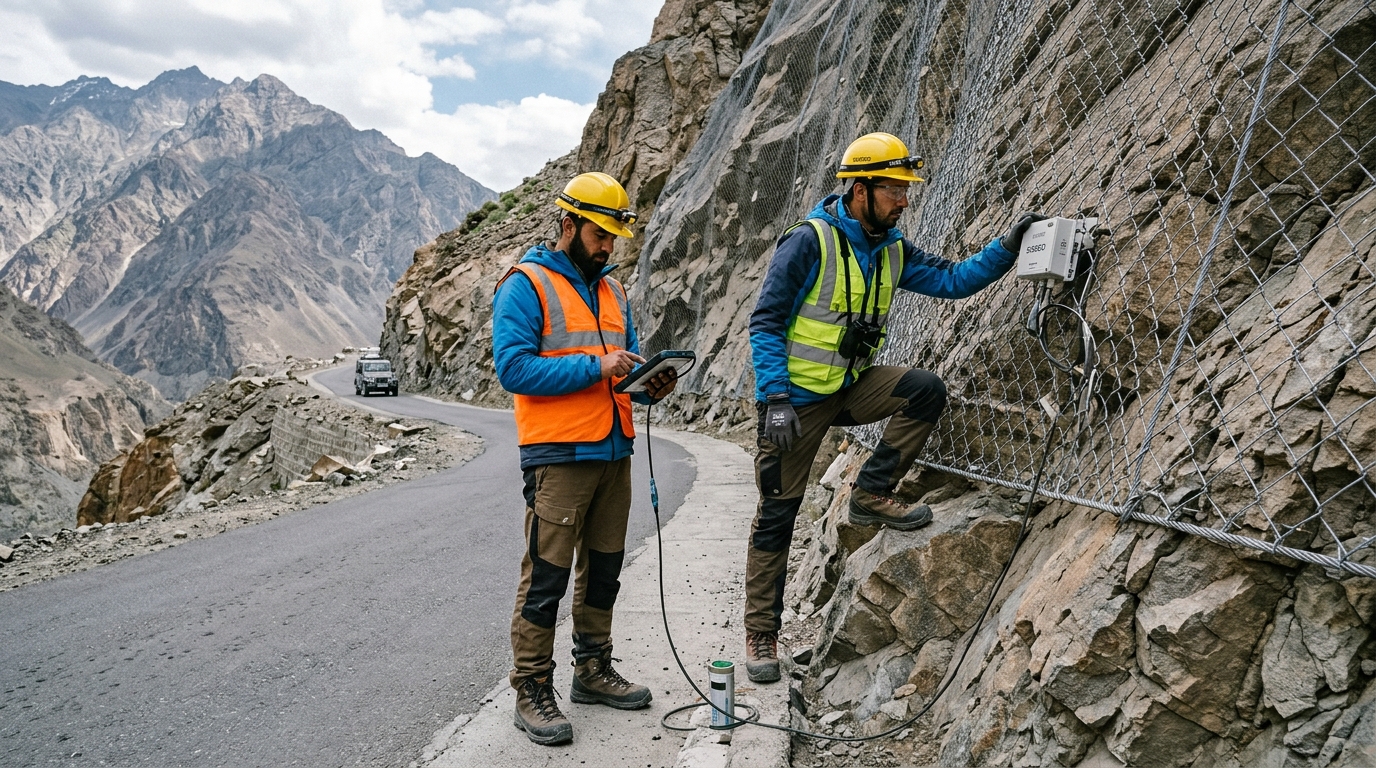
Travelers through the Middle Chenab gorge between Nashri, Ramban, Doda, and Kishtwar are accustomed to associating landslides with torrential July downpours or March snowmelt. Yet mountain highway engineering literature highlights a subtler hazard: the dry-weather November slump triggered by slow subsurface seepage and early nocturnal frost.
Where vertical bench cuts intersect fractured metamorphic rock without deep horizontal drainage pipes, water stored upslope continues migrating toward the exposed face weeks after skies clear. Overnight sub-zero temperatures freeze moisture at the rock face, wedging joints apart until midday sun releases stone onto the carriageway.
Published Himalayan slope-stability studies and mountain highway assessments stress that bio-engineering, stepped bench geometry, and unblocked drainage galleries offer far higher long-term resilience than rigid vertical concrete walls built against active colluvium.
Institutional Investigative & Urban Hydrology Desk
Himalayan Dispatch · Investigations & Urban Water Desk
Institutional investigative desk synthesizing statutory environmental filings, judicial orders, archival water history, and fluvial geomorphology across the Jhelum and Chenab basins.
RECENT DAILY DISPATCHES