The Price of Protecting Paradise
The forgotten guardians of Kashmir's forests, the lives sacrificed in defence of nature, the families left behind, and the unfinished responsibility of a society that inherited their ecological legacy.

The Men Who Never Returned
On December 7, 2025, while much of Kashmir was spending an ordinary winter Sunday, a forest employee named Gull Mohammad Shah was helping contain a forest fire in the Verinag area of southern Kashmir.
He was 54 years old.
Shah had served the Forest Department for nearly three decades. According to his relatives, he was approaching a long-awaited promotion. But on that December day, while participating in firefighting operations in the forests of Anantnag, he suffered a fatal fall on a steep mountainside.
He never returned home.
Twenty-two days later, on December 29, 2025, another forest employee, Mohammad Iqbal Zargar, lost his life after being struck by a falling stone while on duty near Gaadi Nallah in Doda.
Two men. Two different mountain landscapes. Two families confronted with irreversible loss.
Their deaths were reported in newspapers. Their colleagues mourned them. Their names became part of a continuing history of sacrifice within Jammu and Kashmir’s forestry services.
But beyond the immediate news cycle, how many people remembered them?
How many of those who travel through Kashmir’s forests, admire its mountains, drink water originating in its watersheds or celebrate its natural beauty know the names of the people who protect those landscapes?
This is their story.
It is also the story of an ecological inheritance whose human cost has rarely received the attention it deserves.
Reported in Greater Kashmir and Kashmir Observer (Verinag firefighting fatality of Gull Mohammad Shah, Dec 7, 2025) and Kashmir Life / Kashmir Vision (Gaadi Nallah Doda stone-slide fatality of Mohammad Iqbal Zargar, Dec 29, 2025); cross-indexed in KEW Dossiers martyr-003 and martyr-017.
Paradise Has Its Protectors
Kashmir is celebrated throughout the world for its extraordinary natural beauty.
Its ancient forests, towering deodars, snow-covered mountains, crystalline waters and remarkable biodiversity have inspired poets, mystics, historians, travellers and generations of artists.
Yet behind this celebrated landscape lies another history.
It is not a history written principally by kings, politicians, poets or conquerors. It is a history written by forest guards, watchers, conservation personnel and ordinary individuals whose responsibilities placed them between nature and those who threatened it.
Some never returned home.
The forests that inspire our admiration are neither invulnerable nor self-protecting. Their preservation depends upon the relationship between natural processes, human settlements, economic interests, administrative institutions and frontline personnel.
Forest employees patrol isolated landscapes, confront illegal timber extraction, monitor encroachments, assist in controlling forest fires and protect wildlife habitats.
They work in environments where difficult terrain, extreme weather, limited communications and inadequate access to emergency services can transform an ordinary assignment into a dangerous undertaking.
Much of this service takes place outside public attention.
There are no spectators in most forest compartments. No audiences accompany routine patrols. No television cameras document every act of conservation.
“The public sees the forest. It rarely sees the people standing between that forest and its destruction.”
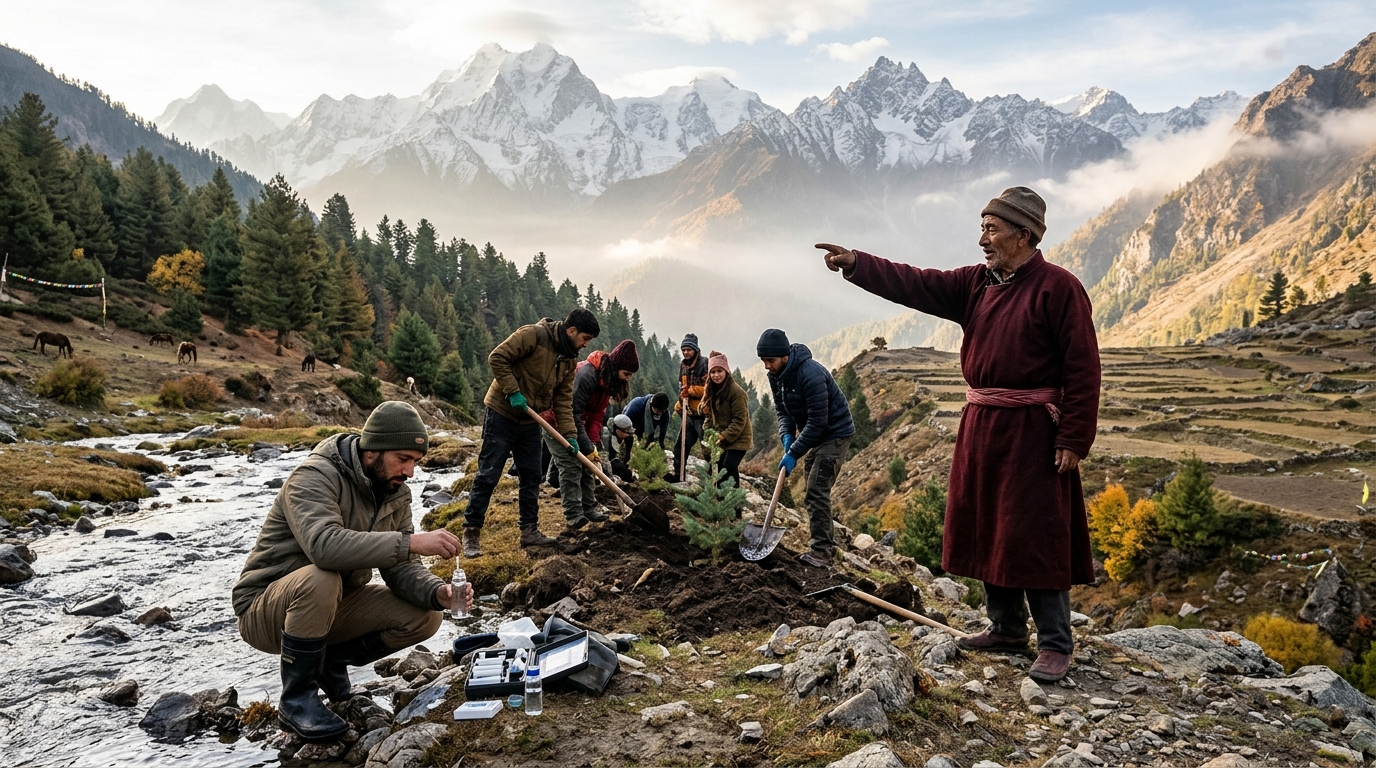
The Green Martyrs: An Unfinished History
On September 11, 2020, the Jammu and Kashmir Forest Department released a commemorative publication titled Green Hearts: Protecting Forests and Wildlife.
A revised edition was released in September 2021.
The publication represented an important institutional effort to preserve the names and histories of forest personnel who had lost their lives during service.
However, the publicly reported historical totals have not always been consistent. Departmental commemorations reported in September 2022 and September 2024 cited approximately one hundred fallen forest personnel across Jammu and Kashmir, whereas official Forest Martyrs Day statements reported in September 2023 cited eighty-five.
Close archival examination shows that this numerical divergence reflects shifting administrative and legal classification boundaries rather than historical carelessness alone. First, forest governance in Jammu and Kashmir is distributed across distinct institutional wings—permanent gazetted and non-gazetted Territorial Forest Department cadres operating under the Indian Forest Act, 1927, the specialized Jammu and Kashmir Forest Protection Force (FPF), the Department of Wildlife Protection operating under the Wildlife (Protection) Act, 1972, Social Forestry divisions, and police or security detachments posted to joint anti-smuggling checkposts. Depending on whether a commemorative roll aggregates only Territorial establishment registers or incorporates FPF and Wildlife Protection rosters, the baseline shifts.
Second, employment categorization has historically created unequal archival visibility. Permanent beat guards, deputy foresters, range officers and conservators leave behind formal service books and pension files, whereas daily-rated workers (DRWs), casual labourers, consolidated helpers and ad-hoc village forest watchers—such as Daily-Rated Forest Worker Shabir Ahmad Khan, killed on duty in Kamraj Forest Division in May 1999, or forest activist and reported ad-hoc guard Sonaullah Zargar, murdered in Budgam’s Sukhnag forests in June 2011—have not always been counted uniformly across departmental tallies.
Third, commemorative rolls have periodically oscillated between a narrower definition limited to homicides during counter-insurgency violence and armed timber-smuggling ambushes—exemplified by Conservator of Forests Parvez Qadri in Daksum (1990) or Forest Guard Imran Yousaf Wani at Bangender Bridge in Pulwama (2023)—and a broader operational standard encompassing line-of-duty fatalities caused by wildland firefighting falls, ridge-line rockslides, swift-water drownings in mountain tributaries, and night-patrol collisions. Post-2019 administrative reorganization separating the Union Territory of Ladakh from Jammu and Kashmir, alongside unresolved orthographic discrepancies inside Green Hearts itself—such as a 2003 Panar Block entry naming Chowkidar Farooq Ahmad Lone in its heading and Farooq Ahmad Khan in its text—further underscores why rigorous documentary reconciliation is indispensable.
For Himalayan Dispatch, the objective is not to establish the largest possible number.
It is to establish the most accurate possible record.
Because behind every number stands an individual whose identity deserves to be preserved.
The Historical Record of Sacrifice
Reported historical figures from Forest Department commemorations. Differences in totals require reconciliation rather than being interpreted as changes in cumulative fatalities.
The Names That Must Never Disappear
The historical publication Green Hearts offers an important foundation for reconstructing the human history of forest conservation in Jammu and Kashmir. Its memorial profiles and supplementary records deserve permanent preservation, wider public accessibility and continued historical verification.
The names of fallen personnel should not remain confined to departmental publications, ceremonial memorials or administrative records.
They belong within the environmental history of the region.
Some served as senior officers. Others occupied relatively modest positions in the departmental hierarchy. Some held permanent appointments, while others served as helpers, watchers and temporary workers.
Their professional rank may have determined their administrative status. It should never determine the dignity of their remembrance.
Kashmir EcoWatch has initiated a dedicated Green Martyrs Memorial Registry to preserve this important environmental legacy.
The registry should ultimately become a permanent historical record containing authenticated photographs, individual biographies, professional designations, service histories, geographical associations and documented circumstances of death.
Where historical information remains incomplete, the absence of evidence must be acknowledged rather than concealed.
Where records conflict, they must be reconciled.
Where families possess photographs, letters, service documents or personal memories, their contributions should be invited with dignity, sensitivity and consent.
The objective must be to restore individual identity to a history too often expressed through collective statistics.
“They were not merely employees of a department. They were individuals whose lives became inseparable from the protection of a landscape.”
From Conservators to Daily-Wage Workers
One of the most revealing aspects of forest conservation is that occupational danger does not respect professional hierarchy.
A conservator, a range officer, a forest guard and a daily-wage watcher may possess different administrative responsibilities, salaries and employment protections. Yet all can encounter dangerous circumstances while performing conservation duties.
For frontline personnel, the distinction between administrative responsibility and physical danger can be particularly stark.
Those responsible for patrolling forests, identifying illegal activities and responding to emergencies may have comparatively limited institutional authority while facing substantial occupational exposure.
Under the statutory framework of the Indian Forest Act, 1927 and the Wildlife (Protection) Act, 1972, frontline beat guards and watchers are legally expected to detect illicit felling, seize contraband timber, dismantle forest-land encroachments and guard night checkpoints across vast mountain compartments. Yet unlike armed enforcement services, territorial forest personnel and daily-rated helpers routinely enter nocturnal deodar and blue-pine compartments unarmed, confronting organized timber syndicates or hazardous slopes without tactical backup or parity in service protections.
The historical contribution of these workers should therefore be understood not only through the language of sacrifice but also through the realities of environmental labour.
Conservation is not merely an academic discipline, a government policy or an international development objective.
It is also physical work.
It requires people to enter difficult landscapes, endure adverse weather, monitor ecological threats and respond when the natural environment or human activity creates dangerous conditions.
The individuals who perform this work deserve recognition equal to the significance of the resources they protect.
What Exactly Were They Protecting?
Living ecological infrastructure connecting atmosphere, water, geology, biodiversity and human security.
From an environmental science perspective, Kashmir’s forests are far more than collections of trees. They constitute living ecological infrastructure. Their functions extend across multiple scientific disciplines, connecting atmospheric processes, hydrological systems, geological stability, biological diversity and human livelihoods.
Watershed protection: Forests influence the movement of water through mountain landscapes. Their canopy, root systems, forest litter and soils affect rainfall interception, infiltration, surface runoff and sediment transport. Healthy forest ecosystems can help moderate certain hydrological extremes and preserve downstream water quality, although their effectiveness varies with geology, rainfall intensity, vegetation characteristics and watershed conditions.
Geological and slope stability: Vegetation contributes to soil stability through root reinforcement, surface protection and regulation of soil moisture. In susceptible mountain environments, forest degradation can increase erosion and sediment delivery into rivers and lakes. Forest cover cannot eliminate every landslide or geological hazard, but it remains an important component of landscape resilience.
Atmospheric and climate regulation: Forests participate in the carbon cycle, influence local temperatures and exchange moisture with the atmosphere through evapotranspiration. Their destruction can alter microclimatic conditions, reduce carbon storage and disrupt regional ecological processes.
Biodiversity conservation: Kashmir’s forests provide habitats for mammals, birds, insects, fungi and countless other organisms. They support food webs, pollination, nutrient cycling, biological reproduction and ecological connectivity. The survival of many species depends upon the continuity and integrity of these habitats.
Human ecological security: Forest ecosystems support communities through water resources, livelihood opportunities, medicinal plants, landscape protection and cultural identity. Their significance extends well beyond administrative forest boundaries.
A forest employee protecting a mountainside may also be protecting ecological processes upon which communities many kilometres downstream depend. Seen through this scientific perspective, the Green Martyrs were protecting much more than timber. They were protecting components of Kashmir’s ecological security.
MULTIDISCIPLINARY ECOLOGICAL SYNTHESIS
Scientific disciplines and ecological functions safeguarded by frontline forest protection
| Scientific discipline | Ecological function protected |
|---|---|
| Hydrology | Watershed regulation and water quality |
| Geomorphology | Erosion control and sediment dynamics |
| Soil science | Soil integrity and nutrient cycling |
| Climatology | Carbon storage and microclimate regulation |
| Wildlife ecology | Habitat protection and species survival |
| Conservation biology | Biodiversity and ecological connectivity |
| Environmental economics | Natural capital and ecosystem services |
| Disaster risk science | Contributions to landscape resilience |
| Environmental sociology | Community livelihoods and cultural relationships |
| Environmental governance | Intergenerational protection of natural resources |

The Invisible Economics of Environmental Sacrifice
Modern societies frequently measure economic value through market transactions, industrial production, infrastructure investment and government revenue.
The ecological services provided by forests are more difficult to quantify.
What is the economic value of a protected watershed?
What is the value of reduced soil erosion, biological diversity, carbon storage, clean water and the preservation of a mountain landscape for future generations?
Environmental economics attempts to assess these benefits through ecosystem service valuation and natural capital accounting.
Yet the human labour responsible for protecting natural capital often receives less public attention than the economic activities that consume it.
This reveals a fundamental contradiction.
The destruction of forests may generate immediate financial returns for those exploiting them. The protection of forests produces benefits distributed across entire communities, ecosystems and generations.
The financial rewards and ecological consequences are therefore experienced by different people, often over entirely different timescales.
Frontline conservation personnel occupy the difficult space between these competing interests.
Their responsibilities can place them in confrontation with activities that produce private economic benefits while imposing environmental costs on society.
The Green Martyrs represent the most irreversible human cost associated with that responsibility.
Their sacrifices cannot be adequately understood through departmental compensation figures or employment classifications alone.
They belong within a larger conversation about the value society assigns to environmental protection and to the people entrusted with its enforcement.
Connected to KEW-EIAI Series VII investigations on Natural Capital Accounting (KEW-INV-0043), Forest & Wildlife Conservation Economics (KEW-INV-0046), and Environmental Staffing & Institutional Deficits (KEW-INV-0052).
The Families They Left Behind
Every environmental martyr leaves behind more than an employment record.
There may be children whose education becomes uncertain, spouses confronted with sudden financial insecurity, parents who lose their support and families whose futures change permanently.
The loss continues long after the funeral.
It continues when a child reaches a milestone without a parent.
When a family must navigate administrative procedures while grieving.
When financial responsibilities previously shared by two people fall upon one.
When the annual memorial ceremony concludes, but the consequences of that loss remain.
In January 2026, representatives of Jammu and Kashmir’s frontline forestry personnel renewed demands for improved employment conditions, risk allowances and a structured relief policy for families of personnel who die in service.
At the centre of those grievances lies a long-standing statutory divide in post-fatality welfare. Under the Jammu and Kashmir (Compassionate Appointment) Rules, 1994—notified as SRO-43—compassionate government employment and regular family pension security historically applied to dependents of permanent state employees dying in harness or killed in certified militancy-related incidents. Families of daily-rated workers, casual labourers and Need-Based seasonal watchers—categories later routed through the restrictive regularisation/engagement framework of SRO-520 of 2017—have repeatedly faced exclusion from automatic compassionate appointment, alongside ex-gratia relief ceilings far below those accorded to police and central paramilitary personnel serving in the same mountain districts.
These structural inequities deserve serious institutional reform.
Himalayan Dispatch has not independently interviewed the families or examined their individual compensation records for this article. Their personal experiences must therefore not be invented or presented as established testimony.
Future reporting should provide families with an opportunity to describe their experiences in their own words, should they wish to participate.
“The responsibility of society toward a fallen environmental defender does not end with the recognition of their sacrifice. It extends to the dignity and security of those they leave behind.”
Who Protects the Protectors?
Conservation institutions are entrusted with protecting forests, wildlife and ecological resources.
But who protects the people responsible for performing that work?
The deaths of forest personnel invite a broader examination of occupational safety, institutional preparedness and administrative responsibility.
Across the Pir Panjal, Chenab Valley (Doda, Ramban and Kishtwar) and North Kashmir forest circles, operational risk is compounded by acute equipment and communications deficits. Investigative reporting following Gull Mohammad Shah’s fatal fall while fighting a December 2025 blaze in Compartment 48 of Verinag documented frontline staff battling steep slope fires with green pine boughs and ordinary winter clothing—lacking flame-resistant wildland firefighting garments, helmets, smoke respirators, mountaineering boots or safety harnesses, even as prolonged autumn dry spells and pre-monsoon fire episodes intensify regional wildfire exposure (Bawari et al., 2026, DOI: 10.1007/s10661-026-15709-z). Equally critical are extensive cellular, VHF radio and satellite dead zones inside deeply incised metamorphic gorges, where a guard struck by rockfall, injured during night anti-smuggling interdiction, or mauled in human–wildlife conflict may lie hours beyond motorable roadheads and golden-hour trauma care.
Himalayan Dispatch identifies the following matters as priorities for documentary investigation.
These questions are not accusations that particular institutions have failed in every case.
They are legitimate matters of public interest that require examination through official documents, departmental responses, employment policies and independently verified evidence.
A modern conservation institution must consider the safety of its employees an integral component of environmental governance.
Protecting forests and protecting forest personnel should never be treated as competing responsibilities.
DOCUMENTARY INVESTIGATION PRIORITIES
Ten occupational safety and welfare questions requiring documented institutional answers
| Area | Questions requiring institutional answers |
|---|---|
| Occupational safety | Are frontline personnel adequately equipped for dangerous assignments? |
| Firefighting preparedness | Are appropriate protective equipment, training and evacuation procedures available? |
| Mountain operations | Are terrain hazards assessed before personnel are deployed? |
| Emergency communications | Can employees reliably request assistance from remote forest compartments? |
| Insurance | What occupational injury and life insurance arrangements exist? |
| Compensation | Are bereaved families receiving timely and appropriate financial relief? |
| Employment equity | Are temporary workers protected on terms appropriate to their exposure to risk? |
| Risk allowances | Are compensation structures proportionate to occupational hazards? |
| Medical response | Are emergency evacuation and treatment arrangements sufficient? |
| Institutional accountability | Are fatal incidents systematically investigated and preventive recommendations implemented? |
Remembrance Without Responsibility
Every year on September 11, National Forest Martyrs Day provides an opportunity to remember individuals who lost their lives protecting forests and wildlife.
In Jammu and Kashmir, memorial observances have included floral tributes, departmental gatherings and commemorative activities.
On September 11, 2026, the Forest Department held remembrance proceedings at Shankaracharya Hills in Srinagar. A separate observance in Kupwara also recognized the families of fallen personnel.
These ceremonies are important.
They restore public recognition to individuals whose sacrifices might otherwise disappear from collective memory.
But remembrance must also generate responsibility.
An annual ceremony cannot substitute for adequate occupational safety.
A memorial plaque cannot substitute for financial security for bereaved families.
A commemorative publication cannot substitute for an accurate and continuously maintained historical record.
And institutional tributes cannot substitute for the continued protection of the landscapes those individuals defended.
The deepest measure of remembrance is not the ceremony itself.
It is what society changes because of the sacrifice being remembered.
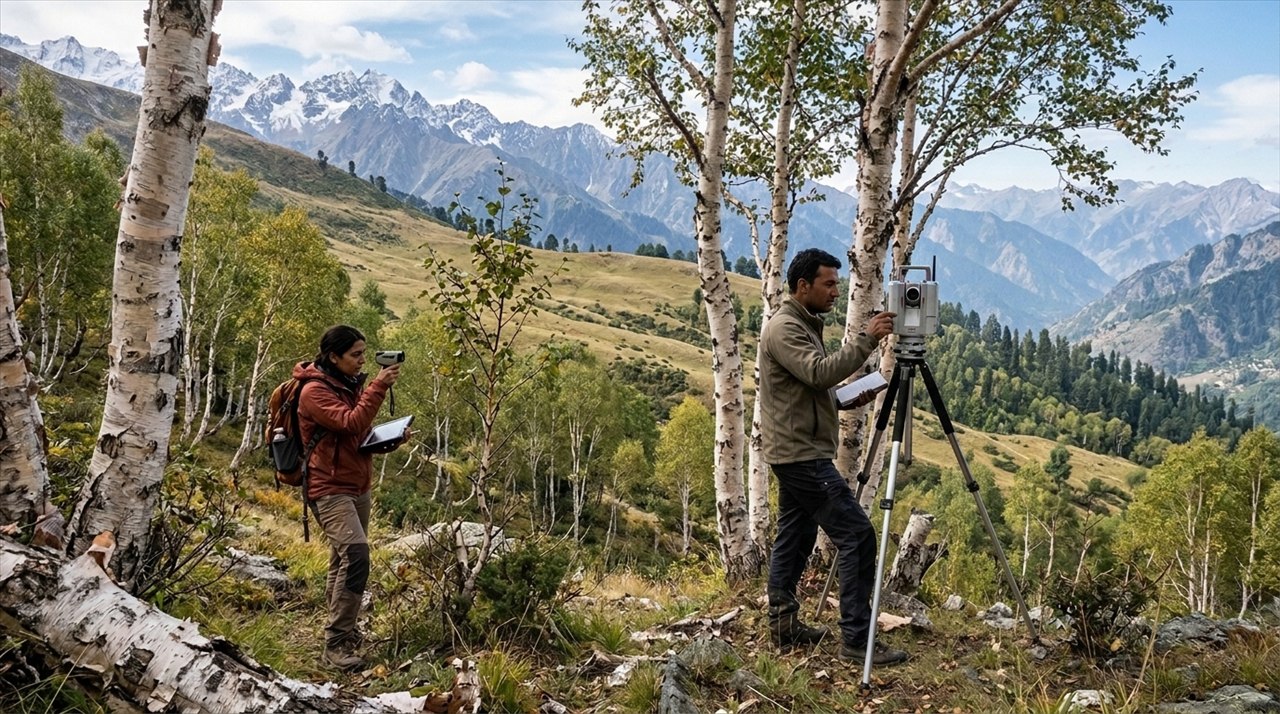
Kashmir's Moral Contradiction
Kashmir frequently expresses pride in its natural beauty.
Its landscapes appear in tourism campaigns, political speeches, cultural narratives, commercial advertising and international promotional material.
Yet admiration for nature does not automatically produce environmental responsibility.
When forests are illegally exploited, wetlands encroached upon, waterways polluted or fragile mountain landscapes degraded, the consequences extend beyond the immediate environmental damage.
Such destruction also raises a question of collective moral responsibility.
How can a society celebrate its natural heritage while tolerating the degradation of that same heritage?
How can it honour individuals who sacrificed their lives protecting forests while remaining indifferent to activities that undermine those forests?
How can environmental protection remain the responsibility of a comparatively small frontline workforce when the benefits of conservation belong to everyone?
These questions apply to governments, commercial interests, institutions, local communities and individual citizens alike.
Environmental responsibility cannot be selectively assigned according to political convenience, economic interest or administrative jurisdiction.
The Green Martyrs remind us that protecting nature is not merely a matter of policy.
It is a matter of conscience.
From a Departmental Memorial to a Civilizational Archive
The history of Kashmir’s environmental defenders deserves a permanent institutional home.
Kashmir EcoWatch’s Green Martyrs initiative can contribute to that objective by developing an evidence-based, publicly accessible memorial archive.
The proposed archive should preserve the following ten documentary pillars:
The archive should distinguish between formally recognized forest martyrs, other conservation personnel who died in service and additional environmental defenders whose circumstances require independent assessment.
Their stories must be preserved with historical precision and without political appropriation.
The significance of their contribution should not be determined by religion, ethnicity, geographical origin, employment category or institutional rank.
Their common legacy is the protection of nature.
- •Verified names and authenticated photographs.
- •Individual biographies and professional service histories.
- •Dates and documented circumstances of death.
- •Forest divisions, ranges and geographical associations.
- •Historical departmental records and official publications.
- •Family histories and personal recollections, with consent.
- •Verified memorial and commemorative records.
- •Information about occupational safety and institutional reforms.
- •Clearly identified incomplete or disputed historical records.
- •Permanent source references and transparent correction histories.
An International Perspective
The experience of Kashmir’s forest personnel is part of a broader global challenge.
Across the world, forest rangers, wildlife protection personnel and environmental defenders undertake responsibilities that can expose them to dangerous terrain, extreme weather, illegal resource extraction and violent confrontation.
International conservation strategies increasingly recognize that protected areas require more than geographical boundaries and legislative declarations.
They require effective institutions, trained personnel, community participation, scientific knowledge, adequate financial resources and occupational protection.
The effectiveness of conservation cannot be separated from the conditions under which conservation personnel operate.
Kashmir’s environmental protection institutions should therefore be examined in the wider context of international conservation professionalism.
The development of modern forest monitoring systems, satellite intelligence, geospatial surveillance, fire detection, emergency communications and environmental risk modelling can strengthen conservation capacity.
However, technology cannot eliminate every occupational hazard.
Nor can it replace institutional responsibility toward the individuals operating on the ground.
Kashmir EcoWatch’s environmental intelligence infrastructure can contribute scientific information and analytical capabilities to this wider conservation effort.
The human dimension must remain central.
A Charter for the Protection of Environmental Defenders
Himalayan Dispatch proposes that remembrance of the Green Martyrs be accompanied by a wider institutional commitment to protecting environmental defenders.
This proposed charter is an editorial call for consideration, not a representation of policies already adopted by the Forest Department.
The ultimate objective should be to reduce the likelihood that future generations will need to add more names to the memorial.
EDITORIAL CALL FOR INSTITUTIONAL CONSIDERATION
Twelve proposed commitments for the protection and dignity of frontline environmental defenders
| Commitment | Proposed objective |
|---|---|
| Historical recognition | Establish a comprehensive verified memorial register |
| Occupational dignity | Recognize frontline conservation as essential public service |
| Protective equipment | Provide equipment appropriate to operational hazards |
| Professional training | Strengthen emergency response and mountain safety |
| Financial protection | Establish transparent compensation and insurance arrangements |
| Family welfare | Support bereaved families through appropriate assistance |
| Employment equity | Address disparities affecting vulnerable categories of personnel |
| Scientific integration | Use environmental intelligence to reduce occupational exposure |
| Institutional transparency | Publish relevant safety policies and verified incident records |
| Annual remembrance | Maintain meaningful public recognition |
| Preventive accountability | Investigate occupational fatalities and implement lessons learned |
| Ecological continuity | Strengthen protection of the landscapes associated with fallen personnel |
The Annual Green Martyrs Memorial Edition
Proposed annual publication date: September 11 (subject to formal editorial adoption)
Himalayan Dispatch will dedicate an annual special editorial edition to environmental defenders, their families and the continuing responsibility of ecological protection, subject to formal editorial adoption.
Proposed annual publication date: September 11.
The edition will bring together historical profiles, documentary journalism, environmental science, conservation policy, verified photographic archives and family perspectives.
It will also provide an opportunity to examine progress in occupational safety, institutional accountability, forest conservation and public recognition.
The annual edition should not merely reproduce the historical record. It should ask whether the lessons of that record have been learned.
Every year, Himalayan Dispatch should return to the same fundamental questions:
Have conservation personnel become safer? Have bereaved families received appropriate support? Have historical records become more complete? Have ecological protection mechanisms improved? Are the forests these individuals protected receiving the protection they deserve?
Remembrance must become a continuing process of public accountability.
The Forests They Left Behind
Somewhere in Kashmir, a deodar continues to grow on a mountainside once patrolled by a forest guard who is no longer alive.
Somewhere, a mountain spring continues to flow through a landscape protected by people whose names have largely disappeared from public conversation.
Somewhere, wildlife moves through a forest whose preservation depended, in part, upon individuals who never received widespread public recognition.
The forest does not distinguish between a senior conservator and a daily-wage watcher.
The river does not distinguish between an officer and a helper.
The mountain does not remember administrative rank.
Nature continues through the interconnected processes of life, regeneration and ecological continuity.
It is human society that must remember.
Kashmir’s forests are not merely an inheritance from previous generations. They are also an inheritance preserved through the service, courage and sacrifice of individuals whose stories deserve to be told.
The most meaningful tribute to these individuals would not be another ceremonial speech.
It would be to prevent the destruction of the landscapes they protected. To ensure that their families are not forgotten. To protect the people who continue their work. And to recognize that environmental conservation is a responsibility shared by every generation.
They protected forests for children they would never meet.
They protected waters that would sustain communities they would never visit.
They protected landscapes whose future beauty they would never witness.
They gave their lives protecting a paradise that belonged not merely to them, but to all of us.
The least we can do is remember their names.
The greatest thing we can do is protect what they left behind.

IN PERPETUAL REMEMBRANCE
The Green Martyrs of Kashmir
To those who gave their lives protecting the natural inheritance of generations yet unborn.
An official publication of Kashmir EcoWatch (KEW) Western Himalayan
Roll of Honour & Evidentiary Memorial Register
Imported directly from the Kashmir EcoWatch Green Martyrs database, distinguishing formally commemorated Forest Protection Martyrs, Fallen Environmental Service Personnel, and supporting enforcement/security cases while flagging unresolved archival records transparently.
Sonaullah Zargar
Forest protection activist and reported ad-hoc forest guard | Sukhnag Forests
Sonaullah Zargar was associated with forest protection work in the Sukhnag area of Budgam. He was murdered in June 2011. Police investigations linked the case to suspected timber smugglers and reported the arrest of a Block Forest Officer and three alleged smugglers. His case illustrates the dangers of confronting illegal timber extraction and suspected institutional complicity.
Imran Yousaf Wani
Forest Guard | J&K Forest Department, Budgam
Imran Yousaf Wani was part of a Forest Department team attempting to apprehend timber smugglers near Bangender Bridge in Pulwama. Gunmen attacked the checkpoint on July 18, 2023, injuring Wani and Forester Jahangir Ahmed Chechi. Wani succumbed to his injuries the following day.
Gull Mohammad Shah
Forest Guard | Verinag Forest Range, Anantnag
Gull Mohammad Shah, 54, had served the J&K Forest Department for nearly three decades and, according to relatives, was approaching a long-awaited promotion. On Sunday, December 7, 2025, while helping contain a forest fire in the Hengipora area of Verinag (Anantnag), he suffered a fatal fall down a steep mountainside while moving away from advancing flames. Subsequent investigative reporting described significant shortages of personal protective equipment among frontline firefighting personnel.
Shameem Ahmad Mir
Forest Guard | Paribal Forest Division
Shameem Ahmad Mir, a forest guard from the Ganderbal area, drowned in Nallah Sindh while reportedly performing departmental duty in May 2025. His body was recovered after a search operation lasting several days. Published accounts support his duty-related death, but the exact activity immediately preceding the incident requires further official confirmation.
Mohammad Maqbool Khandey
Deputy Forester | Lehenvan Block, Daksum Forest Range
Mohammad Maqbool Khandey served as Deputy Forester in Anantnag Forest Division. The J&K Forest Department records that he died on December 18, 2019, while patrolling Compartment 43/K in Lehenvan Block, Daksum Forest Range. The memorial does not specify the medical or physical cause of death.
Parvez Qadri
Conservator of Forests | Kashmir South Circle
Parvez Qadri, originally from the Jammu region, served as Conservator of Forests for Kashmir South Circle. In 1990, he accompanied then Divisional Forest Officer Mia Javed on an inspection of the Daksum forests. According to the departmental memorial, an armed attacker shot him in the leg. He died from blood loss while being taken for medical treatment.
Mumtaz Ahmad Mir
Chowkidar | Bandipora Forest Division, Kodara
Mumtaz Ahmad Mir was serving as Chowkidar in the Kodara forest area of Bandipora. On October 4, 1997, he was patrolling inside the forest when unidentified gunmen abducted him and subsequently shot him dead. The case is included in the J&K Forest Department's official memorial.
Farooq Ahmad Lone
Chowkidar | Panar Block, Bandipora Forest Division
The departmental memorial identifies the individual in its heading as Farooq Ahmad Lone, but the narrative names Farooq Ahmad Khan. The account states that a Chowkidar on night duty in Panar Block was attacked by suspected smugglers on February 12–13, 2003, sustained serious injuries, and was subsequently found dead. KEW must not resolve the two names by assumption.
Archival Note: Identity discrepancy unresolved (Lone vs Khan). Service register or death certificate required before final verification.
Mohammad Yaqoob Khan
Deputy Forester | Panar Block, Bandipora Forest Division
Mohammad Yaqoob Khan was patrolling Panar forests on August 22, 2003, when armed smugglers reportedly abducted him. His body was recovered near Athwatoo on August 23. The J&K Forest Department memorial identifies this as a fatal attack against a serving Deputy Forester.
Mushtaq Ahmad Sofi
Forest Guard | Ningli Beat, Bandipora Forest Division
Mushtaq Ahmad Sofi was serving in Ningli Beat III, Compartment 9, when unidentified armed attackers shot him dead during the night of November 19–20, 2011. The J&K Forest Department officially commemorates his service and death.
Ghulam Mohammad Itoo
Forest Guard | Qazigund Range, Anantnag Forest Division
Ghulam Mohammad Itoo was engaged in forest firefighting in Compartment 35–36/V, Akhal Block, on November 2, 2007. During the operation, he slipped and fell into a deep gorge. His death is recorded in the official departmental memorial.
Nazir Ahmad Sheikh
Forest Department Helper | Verinag Range, Anantnag
Nazir Ahmad Sheikh was serving in Batagund Beat, Verinag Range, on June 14, 2014. The J&K Forest Department memorial records that he died while fighting a forest fire in Compartment 56/V, Batagund Block.
Mohammad Amin Wani
Forest Guard | Bindoo Zalangam Beat, Kokernag Range
Mohammad Amin Wani served as the Forest Guard responsible for Bindoo Zalangam Beat. The departmental memorial records that he died on August 18, 2017, in a motorcycle accident at Bindoo Kokernag while undertaking night patrol duties in Compartments 67–68/V.
Ghulam Mohammad Kawa
Forest Guard | Yamberzalwari Block, Kamraj Forest Division
Ghulam Mohammad Kawa served in the Yamberzalwari area of Kamraj Forest Division. The departmental memorial records that he was returning home from routine forest patrol on April 19, 1995, when unidentified gunmen shot and killed him near Tujer Sharief.
Shabir Ahmad Khan
Daily-Rated Forest Worker | Terds Beat, Kulangame Block
Shabir Ahmad Khan was working as a daily-rated employee in Compartment 18/K, Terds Beat, Kamraj Forest Division. On May 8, 1999, unidentified gunmen shot him dead while he was performing his official duties inside the forest compartment.
Ghulam Hassan Bhat
Forest Guard | Shangus Beat, Kuthar Range
Ghulam Hassan Bhat served in Shangus Beat of Kuthar Forest Range. According to the J&K Forest Department memorial, he was killed by unidentified gunmen during nighttime in September 1994 while posted in the Shangus forest area. The precise day of death is not specified.
Mohammad Iqbal Zargar
Forest Guard | Doda Forest Service
Mohammad Iqbal Zargar, from Mancher in the Bhagwa area of Doda, was killed after being struck by falling stones near Gaadi Nallah on December 29, 2025. News reporting identifies him as a forest guard. Confirmation of the precise operational assignment at the time of the incident remains necessary.
Bashir Ahmad Malik
Forest Department Helper | Neel Block, Ramban Forest Division
Bashir Ahmad Malik was a Helper posted in Neel Forest Block of Ramban Division. The departmental memorial states that he slipped from a ridge during routine patrol on July 21, 2019, fell into a deep gorge, and died at the scene. He is also included in the Government of India's national forest martyrs list.
Tariq Hussain
Forest Guard | Chenab Forest Division
Tariq Hussain was identified by the Wildlife Trust of India as a Forest Guard associated with Chenab Division who died during the catastrophic Honzar flash flood in Kishtwar in July 2021. Contemporary reports documented his name among people missing after the disaster. The available sources do not establish that he was undertaking an environmental protection operation when the flood struck.
Muhammad Farman
Police Head Constable | Forest Land Encroachment Response
Muhammad Farman was a police head constable killed on June 26, 2026, when armed assailants opened fire on a police team responding to reports of encroachment on government forest land in Bhimber. Another officer was injured. His case demonstrates the risks faced by enforcement personnel supporting forest-land protection, although he was not a Forest Department employee.
Muhammad Gul Sher
Frontier Constabulary Personnel | Thore Forest Checkpost
Muhammad Gul Sher, originally from Dera Ismail Khan, was serving at a forest checkpost in the Thore area of Diamer on July 20, 2025, when gunmen attacked the post. The checkpoint was reportedly used to inspect vehicles for illegal timber transportation. Dawn subsequently reported that two men were convicted in connection with the killing in October 2026. He must be classified as supporting security personnel, not a Forest Department guard.
No named forest protection martyr from Ladakh has yet met the rigorous documentary standard required for the 21 individual dossiers above. KEW strictly refrains from creating speculative placeholder biographies or claiming that no historical sacrifices occurred.
DOCUMENTARY SOURCES & FURTHER READING
| Source | Documentary relevance |
|---|---|
| KEW Green Martyrs Memorial Registry | Environmental legacy and memorial documentation (21 individual dossiers currently under archival verification audit) |
| Green Hearts: Protecting Forests & Wildlife | J&K Forest Department historical memorial publication (2020 / 2021 editions) |
| Government of India National Forest Martyrs Roll (PIB) | National statutory memorial register cross-checked for J&K line-of-duty entries |
| Forest Martyrs Day, 2020 (KNS Kashmir) | Commemorative publication launch (September 11, 2020) |
| Forest Martyrs Day, 2021 (The Kashmir Horizon) | Revised historical publication (September 2021) |
| Forest Martyrs Day, 2022 (KNS Kashmir) | Historical memorial and departmental statistics (≈100 reported) |
| Forest Martyrs Day, 2023 (KNS Kashmir) | Reported departmental historical count (85 reported) |
| National Forest Martyrs Day, 2024 (The Tribune) | Departmental remembrance (≈100 reported) |
| Greater Kashmir, December 2025 | Death of Gull Mohammad Shah (December 7, 2025, Verinag) |
| Kashmir Observer, December 9, 2025 | Investigative reporting on frontline firefighting PPE shortages in Verinag |
| Kashmir Life, December 2025 | Death of Mohammad Iqbal Zargar (December 29, 2025, Gaadi Nallah, Doda) |
| Kashmir Convener, January 2026 | Frontline personnel welfare, SRO-43/SRO-520 equity, risk-allowance and martyr-policy demands |
| Forest Martyrs Day, September 2026 (Kashmir Convener) | Institutional commemoration at Shankaracharya Hills & Kupwara |
| Bawari et al. (2026), Environmental Monitoring and Assessment | Seasonal dynamics of wildfire-influenced aerosols and pre-monsoon fire episodes in the Western Himalaya |
EDITORIAL PUBLICATION METADATA & 10-STAGE GATE LEDGER
| Gate | Status | Record / Scope |
|---|---|---|
| 01 · Commissioned | completed | Himalayan Dispatch Founding Masthead |
| 02 · Research in progress | completed | Himalayan Dispatch Research & Observatory Desk |
| 03 · Manuscript draft | completed | Assigned Author / Editorial Desk |
| 04 · Evidence verification | completed | Cross-checked against J&K Forest Department Green Hearts (2020/2021), Forest Martyrs Day commemorative statements (2020–2026), Government of India Forest Martyrs rolls, J&K SRO-43 (1994) and SRO-520 (2017) statutory provisions, and the 21 documented dossiers in src/data/kew-green-martyrs.ts. |
| 05 · Scientific review (where applicable) | pending | Watershed, forest-fire aerosol, and natural-capital claims verified internally against published Himalayan literature; independent external specialist sign-off pending at Stage 05 prior to post-pre-release certification. |
| 06 · Editorial review | completed | Founding Editor-in-Chief Desk Review |
| 07 · Copyright and ethics review | completed | No personal family interviews have been fabricated or implied. Landscape plates carry institutional Kashmir EcoWatch Visual Archive credits with explicit clarification that they depict general Himalayan forest terrain rather than specific martyrdom incidents. |
| 08 · Administrator approval | in progress | Stage 08 Pre-Release Edition Folio awaiting Founding Administrator release sign-off while 21 KEW Green Martyrs dossiers remain under archival verification audit. |
| 09 · Published | pending | — |
| 10 · Post-publication corrections | not applicable | — |
| Attribute | Final assignment |
|---|---|
| Publication | Himalayan Dispatch |
| Volume | 01 |
| Issue | 01 |
| Editorial designation | Inaugural Cover Story |
| Title | The Price of Protecting Paradise |
| Byline | Himalayan Dispatch Desk |
| Primary department | Cover Stories |
| Secondary department | Longform Features |
| Associated department | Investigative Desk |
| Reporting beat | Environmental Legacy & Conservation Accountability |
| Geographical coverage | Jammu & Kashmir, Western Himalayas |
| Article format | Longform commemorative and environmental analysis |
| Proposed recurring edition | Annual Green Martyrs Memorial Edition |
| Annual observance | September 11 |
| Supporting KEW initiative | Green Heroes · Green Martyrs |
| Canonical URL slug | the-price-of-protecting-paradise |
| SEO title | Kashmir's Green Martyrs: The Price of Protecting Paradise |
| Publication status | Published Inaugural Cover Inquiry · Documentary & Citation Audit Completed (21 KEW Green Martyrs dossiers under ongoing archival verification) |
Collective Editorial, Documentary & Investigative Desk
Himalayan Dispatch Desk
Institutional byline of Himalayan Dispatch uniting documentary reporting, archival verification, environmental science synthesis, and conservation accountability across Jammu & Kashmir and the Western Himalayas.
View Portfolio & Approved Commissions →NEXT IN THIS EDITION · FOUNDING COVER ESSAY
When Mountains Speak, Who Is Listening?
By Dr. Fayaz Ahmad Khan · 18 min read