A Lake Cannot Be Rescued by an Annual Cleanup
An independent inquiry into Nigeen Lake Conservation Organisation, Rotary Club, and civil society lake initiatives across Kashmir.
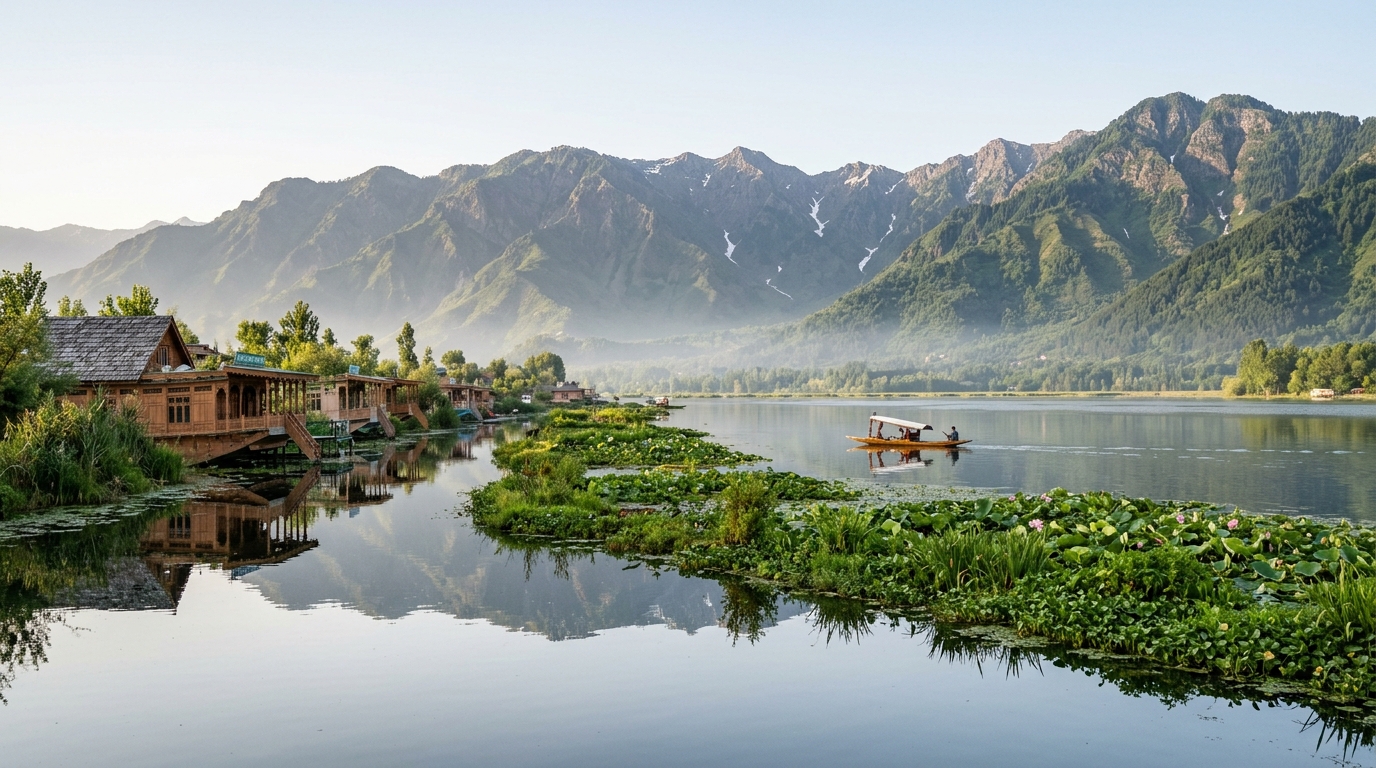
Two Mornings on Srinagar’s Twin Waters
Between the citizen brigades that reopened Khushal Sar and the June banners along Dal Boulevard lies a question Kashmir can no longer evade.
Two distinct mornings define how civic Srinagar meets its dying lakes. The first unfolded in the chill of February 2021 along the suffocated margins of Khushal Sar and Gilsar in the old city’s northwestern drainage corridor. For nearly three decades, those twin urban floodplain basins—once vital hydraulic links carrying water from Dal and Nigeen through Nallah Amir Khan and Pokhribal toward Anchar Lake and the Sindh–Jhelum confluence—had been treated by officialdom as cartographic ghosts. Choked beneath floating islands of municipal plastic, slaughterhouse offal, invasive water fern, and earth-filled encroachments, their open water had nearly vanished from public sight when the Nigeen Lake Conservation Organisation (NLCO), founded and chaired by Manzoor Ahmad Wangnoo, launched *Mission Ehsaas* alongside neighbourhood volunteers, boatmen, and municipal crews.
The second morning repeats every June 5 along the manicured stone parapet of Dal Lake’s Boulevard Road and Nigeen’s foreshore ghats. Under crisp vinyl banners celebrating World Environment Day or corporate sustainability weeks, service clubs including local Rotary chapters, school contingents, hoteliers, and banking executives pull on disposable gloves, pose beside rows of green waste bins, and spend two sunlit hours lifting floating polythene wrappers and beverage bottles from the immediate shoreline. By noon, press releases circulate praising civic stewardship, refreshments are served, and the convoy of cars departs along the lakeshore.
Thirty meters beyond that tidied stone embankment, the unseen life of the lake continues without interruption. Submerged storm-drain outfalls and unsewered residential lanes keep discharging greywater rich in ammonium, soluble reactive phosphorus, laundry surfactants, and faecal coliforms. Beneath stationary houseboat hulls and inner *radh* channels, oxygen-starved black mud quietly releases legacy orthophosphate accumulated since the 1980s. Within weeks, as July solar radiation warms the shallow water column, emerald scums of cyanobacteria and dense mats of *Ceratophyllum* and *Azolla* recolonize the very basins cleared for the cameras.
Separating genuine civic courage from ceremonial optics—and testing both against the unforgiving laws of limnology—requires asking one central question across every standing waterbody in the Kashmir Valley: *Are we cleaning the surface of Kashmir’s lakes while allowing the processes that destroy them to continue?*
This inquiry evaluates documented public records of NLCO’s Mission Ehsaas (2021–2026 across Khushal Sar, Gilsar, Pokhribal, and Srinagar urban springs), Rotary Club and corporate shoreline drives, and LCMA/SMC restoration programmes. Per Kashmir EcoWatch’s November 22, 2026 audit rule (NGOS_COMMUNITY_TELEMETRY), media-reported cleanup volumes (such as thousands of truckloads of waste and silt removed) are treated fairly as documented civic mobilization outputs while awaiting independent bathymetric and continuous hydrochemical corroboration. No unrecorded interviews or synthetic quotations are used.
Credit Where It Is Earned: What Civic Mobilization Actually Rescued
Why NLCO’s sustained neighbourhood stewardship at Khushal Sar, Gilsar, and historic urban springs stands apart from one-day photo-op cleanups.
Any honest institutional inquiry must begin by crediting what civil society achieved when statutory authorities looked away. Prior to February 2021, Khushal Sar and Gilsar suffered from a particularly cruel bureaucratic orphanhood: too encroached and foul-smelling to feature on tourism brochures like Dal and Nigeen, yet too hydrologically entangled with densely populated downtown wards around Zadibal, Hawal, Soura, and Saidapora to be solved by a single department. By mobilizing local mohalla committees, *shikara* labourers, Srinagar Municipal Corporation (SMC) sanitation fleets, Lake Conservation and Management Authority (LCMA) skimmers, trade associations, student volunteers, and civic partners including Rotary Club chapters, NLCO’s *Mission Ehsaas* broke decades of administrative fatalism.
Physical channel reopening mattered. Clearing compacted solid waste, decomposing macrophyte rafts, and earthen blockages along the Gil Kadal, Pokhribal, and Sontkul–Nallah Amir Khan linkages restored visible surface water flow across stretches where children had walked over crusted garbage mats years earlier. Between 2024 and 2025, NLCO extended that neighbourhood model to forgotten groundwater heritage—initiating desiltation, stone bunding, and perimeter protection at two historic Gasiyar–Khushalsar springs and collaborating with SMC and Kashmir Concern on restoring an eleventh urban spring in Srinagar. In neighborhoods starved of municipal attention, citizen action restored public dignity to waterbodies the state had effectively written off.
Equally telling is what NLCO itself concluded five years into *Mission Ehsaas*. In June 2026, rather than declaring victory on the strength of reported truckloads cleared, NLCO publicly flagged urgent institutional warnings to LCMA and the regional administration: without scientific sewage diversion, perimeter demarcation, and sustained maintenance, the ecological recovery of Gilsar and Khushal Sar remained acutely imperilled. That admission from Kashmir’s most visible citizen lake campaigner is worth a shelf of official brochures. It confirms from frontline experience that volunteer labour can pry open a strangled channel, but it cannot substitute for municipal sanitary engineering.
Fair analysis must also distinguish multi-year neighbourhood campaigns like *Mission Ehsaas* from the episodic one-day cleanup drives staged by Rotary clubs, corporate CSR desks, campus NSS units, and visiting dignitaries. Service clubs such as Rotary have contributed useful civic solidarity—co-sponsoring awareness drives, waste-bin installations, school sanitation literacy, and occasional joint cleanups around Nigeen and Dal. Yet when shoreline plastic picking is advertised to the public as “lake conservation,” it fosters a comforting civic illusion: the belief that lacustrine collapse is a littering problem curable by brooms, rather than a basin-scale biogeochemical crisis driven by sewage, sediment redox, and severed hydrology.
“Citizen volunteers rescued Khushal Sar and Gilsar from bureaucratic invisibility—and then discovered the hard law of limnology: no volunteer barge or shovel can filter dissolved orthophosphate out of an open sewer.”
What Floats Versus What Kills: Debris and Chemistry Across 88 Waterbodies
Separating visible plastic and macrophyte mats from the dissolved nutrients, heavy metals, pesticides, and pathogens driving trophic collapse.
Human eyes judge a lake by its surface; aquatic ecosystems live or die by what is dissolved in the water column and pore-water below. Floating PET bottles, polystyrene food trays, footwear, and tangled canopies of free-floating water fern (*Azolla cristata*, *Salvinia natans*) or submerged hornwort and milfoil (*Ceratophyllum demersum*, *Myriophyllum spicatum*) offend visual aesthetics and impede *shikara* paddles. Yet plastic wrappers are chemically inert over short timescales, and dense macrophyte beds are not the *cause* of lake sickness—they are its biological symptom, metabolizing vast surpluses of dissolved inorganic nitrogen and phosphorus.
Statutory monitoring compiled in the Kashmir EcoWatch Western Himalayan lakes database reveals the scale of invisible chemical and biological failure: out of **88 waterbodies monitored across eight districts of Kashmir, 72 fail Central Pollution Control Board (CPCB) Class B outdoor-bathing standards** on Biochemical Oxygen Demand (BOD), dissolved oxygen, pH, or faecal coliform counts. In Dal Lake, multi-season physiological profiling by Sultan et al. (2024) demonstrates how sustained organic and inorganic nutrient loads have driven macrophytic proliferation across 48.11 percent of surveyed zones, depressing bottom-water dissolved oxygen during nocturnal respiration and late-autumn senescence.
Beneath nutrient enrichment lies a subtler toxicological burden completely invisible to surface skimmers. Inductively coupled plasma spectroscopy across Dal Lake’s floating gardens (*radh*) by Elbagory et al. (2025) documented elevated potentially toxic elements in sediment—including iron at 1,610.51 mg/kg, manganese at 31.48 mg/kg, and chromium at 29.72 mg/kg—with measurable uptake into edible lotus (*Nelumbo nucifera*) rhizomes. Expanding across Dal, Hokersar, Manasbal, and Wular in 2026, Elbagory et al. confirmed bioconcentration factors above unity for trace metals (`Cd`, `Cr`, `Cu`, `Ni`, `Zn`) in water chestnut (*Trapa natans*), with Dal exhibiting the steepest contamination gradient and cadmium reaching 0.11 mg/kg in edible fruit, alongside Parray et al.’s (2024) economic and heavy-metal risk characterization.
Add to heavy metals the emerging micropollutant cocktail entering Valley wetlands: orchard fungicides and organophosphate pesticides documented in Hokersar’s aquatic matrices by Irshad et al. (2026), household pharmaceutical and antibiotic residues driving environmental antimicrobial resistance across South Asian surface waters (Fatima et al. 2026), and raw enteric pathogens (*Escherichia coli*, *Salmonella*, *Vibrio*, and helminths) pouring from unsewered drains. A thousand volunteers filling burlap sacks with shoreline polythene leave 100 percent of those dissolved ions, trace metals, pesticides, and faecal bacteria untouched in the lake.
The Unbroken Pipe: Cold-Winter Sewage Failures and 849 Houseboats
Why Fluidized Aerobic Bed treatment plants fail when Himalayan winter water chills, while peripheral drains and houseboats bypass interception.
Trace the nutrient budget of Dal, Nigeen, Brari Nambal, Gilsar, Khushal Sar, or Anchar upstream from the shoreline, and every trail leads to untreated or inadequately treated domestic wastewater. Around the Dal–Nigeen perimeter, official agencies point to Sewage Treatment Plants (STPs) commissioned at Habak, Hazratbal, Laam, Brari Nambal, and Nallah Amir Khan—predominantly built around Fluidized Aerobic Bed (FAB) technology originally calibrated for warm peninsular Indian plains. In a temperate Himalayan valley where winter air temperatures plunge below freezing and raw influent chills to 4–8 °C between December and March, conventional FAB microbial kinetics falter.
Autotrophic nitrifying bacteria (*Nitrosomonas* and *Nitrobacter*) responsible for oxidizing toxic ammonium (`NH4+`) into nitrate prior to denitrification lose sixty to seventy-five percent of their metabolic activity below 10 °C. Worse, standard secondary biological plants without dedicated tertiary chemical co-precipitation (ferric chloride or alum dosing with sand/membrane filtration) or insulated subsurface constructed wetlands strip only twenty to thirty-five percent of soluble reactive phosphorus (`SRP`)—the single master limiting nutrient governing freshwater cyanobacterial blooms. Even when an STP meets nominal BOD norms on a mild afternoon, its outfall pipe can legally discharge tonnes of bioavailable orthophosphate directly back into a closed, shallow basin.
Beyond plant stoichiometry lies massive hydraulic bypass. Rapidly expanding peripheral settlements across Srinagar’s northern and western fringes—from Bilal Colony, Soura, Ahmadnagar, and Buchpora feeding Anchar, Gilsar, and Khushal Sar to downtown drains entering Brari Nambal and the urban Jhelum (documented in hydrochemical field profiling by Shah, 2026)—lack complete lateral household sewer connections, routing combined storm-and-blackwater surges straight into open *nallahs* during every rainstorm or power outage at pumping stations. Meanwhile, floating atop Dal and Nigeen sit **849 GPS-enumerated stationary cedar houseboats** alongside hundreds of commercial *dunga* kitchens and foreshore hotels.
For over two decades, courts and expert committees have debated connecting those 849 houseboats to pressurized vacuum-sewer manifolds or closed-loop pump-out barges—technologies that cut hospitality phosphorus loads by over sixty-five percent on Lake Geneva (CIPEL) and Japan’s Lake Biwa. Instead, piecemeal pilot tenders, unresolved mooring realignments, and disputes with houseboat owners over livelihood compensation have left large clusters discharging greywater and septic seepage directly into low-flushing littoral pockets. Cleaning floating wrappers off Gagribal or Nigeen while 849 stationary vessels and dozens of municipal storm drains lack verified, winter-proof tertiary interception is hydrological theatre.
The Memory of Mud: Anoxic Sediments and the Dredging Paradox
How ferric-to-ferrous iron reduction unlocks decades of legacy phosphorus—and why unscientific mechanical dredging makes blooms worse.
Suppose, by an administrative miracle, every raw sewer pipe and houseboat outfall entering Dal, Nigeen, Khushal Sar, Gilsar, and Anchar were sealed tonight. Would those lakes turn crystal-clear next summer? Limnological geochemistry answers with an unequivocal no—because shallow eutrophic lakes store a multi-decadal chemical memory inside their bottom mud. Across forty years of sewage and eroded topsoil deposition, vast quantities of phosphorus settled onto lake beds adsorbed onto oxidized ferric iron oxyhydroxides (`Fe(OH)3` / `Fe3+`) and organic detritus.
So long as the sediment-water interface remains well-oxygenated (`DO > 2–4 mg/L`), ferric iron holds orthophosphate tightly insoluble in the benthic crust. During calm, warm Kashmiri summers—or beneath thick, light-blocking blankets of *Salvinia*, *Azolla*, and decaying winter macrophyte litter—microbial respiration consumes bottom oxygen faster than atmospheric diffusion can replenish it. Once benthic redox potential drops below roughly +200 mV, facultative anaerobic bacteria reduce insoluble ferric iron (`Fe3+`) to soluble ferrous iron (`Fe2+`), abruptly liberating massive pulses of dissolved orthophosphate (`PO4^3-`) and ammonium out of pore-waters into the sunlit water column. Through this internal loading loop, a shallow polymictic basin fertilizes its own summer algal blooms for fifteen to thirty years after external pipes are shut.
Here both state agencies and well-meaning civic lobbyists walk into the **dredging and mechanical de-weeding paradox**. Public clamour routinely equates “saving a lake” with deploying heavy backhoe dredgers and paddle-wheel weed harvesters to scrape the bottom and shave submerged vegetation. Yet empirical benthic sampling in Dal Lake’s Hazratbal basin by Mushtaq et al. (2013) proved that mechanical dredging decimates macrozoobenthos populations—destroying the oligochaete, chironomid, and gastropod detritivores essential to sediment processing—while hydraulic bucket disturbance resuspends anoxic pore-water phosphorus and sediment-bound heavy metals (`Cr`, `Cd`, `Zn`) straight into the water column.
Indiscriminate mechanical de-weeding triggers an equally perverse regime shift known in shallow-lake ecology as flipping from a clear-water macrophyte state to a turbid phytoplankton state. Rooted submerged macrophytes stabilize bottom silt against wind resuspension, oxygenate the rhizosphere, secrete allelopathic compounds inhibiting cyanobacteria, and lock up dissolved nutrients during peak summer warmth. When LCMA harvesters or volunteer drives shear submerged macrophyte beds mid-summer without removing roots cleanly—or dump wet, decomposing weed piles along shoreline bunds where rain leaches soluble phosphorus right back into the lake—they eliminate the phytoplankton’s primary competitor and hand the entire nutrient pool over to toxic cyanobacteria.
Mushtaq et al. (2013, DOI: 10.12816/0000258) documented post-dredging macrozoobenthos collapse in Dal Lake; Elbagory et al. (2025, DOI: 10.3390/toxics13040306; 2026, DOI: 10.1038/s41598-026-39522-3) and Parray et al. (2024, DOI: 10.1016/j.heliyon.2024.e34108) quantified heavy-metal reservoirs in Dal, Hokersar, Manasbal, and Wular sediments and macrophytes susceptible to disturbance mobilization.
Trophic Cascade: Algal Blooms from Srinagar’s Lagoons to Alpine Tarns
Mapping the continuum of cyanobacterial and phytoplankton proliferation across Kashmir’s valley basins and high glacial cirques.
Cross-referencing satellite chlorophyll/NDCI observations and hydrochemical field surveys across the Kashmir EcoWatch Algal Bloom Lakes database exposes a valley-wide trophic cascade that defies single-lake firefighting. At the `Critical` frontier stand **Dal Lake** (`1,584 m`, verified `Eutrophic`, confirmed cyanobacterial and phytoplankton blooms; historic euglenoid red-blooms already warning limnologists three decades ago in Khan, 1993), **Brari Nambal Lagoon** (`1,580 m`, `Critical` threat, severely anoxic urban sink), **Anchar Lake** (`1,580 m`, verified `Eutrophic`, confirmed cyanobacterial blooms fuelled by municipal sewage, agricultural runoff, and hospital/urban effluent), and **Wular Lake** (`1,580 m`, verified `Eutrophic`, where satellite and water-quality synthesis found roughly 57 percent of Asia’s largest floodplain freshwater lake eutrophic amid agricultural nitrogen and silt loading; Hassan et al. 2015).
Immediately alongside them sit **Khushal Sar** and **Gilsar** (`1,584 m`), classified at `Hypereutrophic` risk—where NLCO’s physical channel clearing heroically restored open-water corridors, yet continuous domestic sewage saturation still triggers dense summer weed chokes and suspected phytoplankton surges. **Nigeen Lake** (`~3.5 km²`, `Mesotrophic` with `High` live bloom risk) and Dal’s interconnected sub-basins—**Gagribal**, **Lokut Dal**, and **Bod Dal**—hover on a knife-edge where restricted internal circulation, houseboat waste, and warm July–August thermal stratification periodically tip localized coves into green turbidity. Deeper karst-spring-fed **Manasbal Lake** (`1,583 m`) now exhibits confirmed phytoplankton and cyanobacterial bloom episodes driven by shoreline encroachment, quarry/catchment siltation, and agricultural wash-in.
Up at the roof of the watershed between 3,200 and 4,200 meters, the Kashmir Himalaya still cradles jewel-like `Oligotrophic` glacial tarns—**Gangbal** (`~3,600 m`, verified diatom dominance and pristine low-conductivity hydrochemistry), **Nundkol**, **Vishansar**, **Krishansar**, **Tarsar** (`~3,720 m`), **Marsar** (`~3,700 m`), **Sheshnag** (`~3,657 m`), **Tulian**, **Konsarnag** (`~4,191 m`), and **Alpather**. As pioneering high-altitude limnological surveys from Zutshi, Kaul, and Vass (1972) and Vass et al. (1989) to landscape sustainability assessments by Irfan et al. (2026) emphasize, cold ultra-oligotrophic alpine lakes possess virtually zero buffering capacity against nutrient shocks.
Because alpine tarns remain ice-covered for seven to eight months, have ultra-low baseline phosphorus (`<5–10 µg/L`), and host slow-growing cold-stenothermal diatom and crustacean food webs, even modest seasonal inputs of pony dung, uncontained camp latrines, food waste, and trampled turf along the Kashmir Great Lakes trek or the Sheshnag pilgrimage corridor can trigger littoral filamentous algal rings and irreversible biodiversity shifts. Waiting to stage “alpine cleanup treks” in September after thousands of trekkers and pack-horses have already leached urea and phosphorus into glacial gravel repeats the Valley’s lowland mistake three vertical kilometers higher.
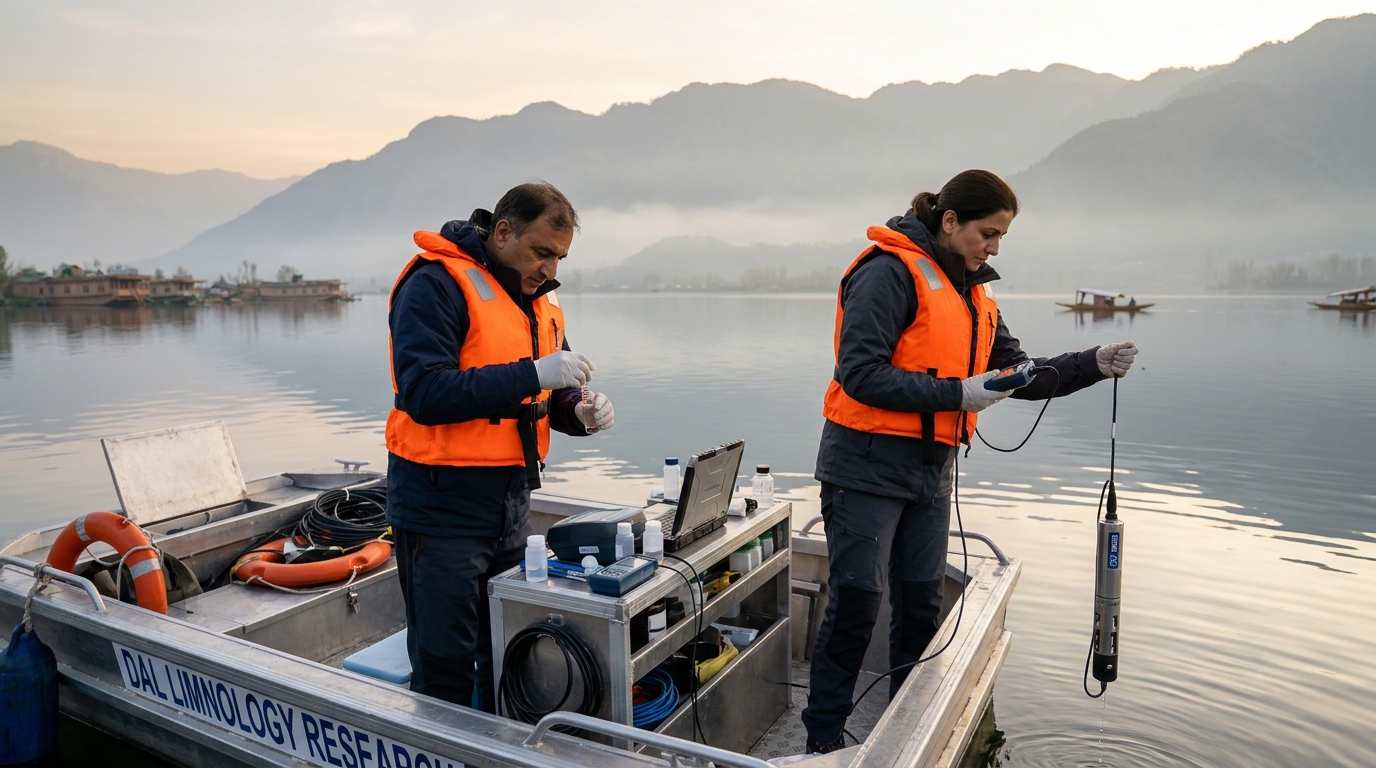
Severed Arteries and Shrinking Rims: Marshes, Catchments, and Locked Weirs
Four structural landscape injuries—reedbed destruction, upper-watershed erosion, artificial water locks, and landfill encroachment—that no cleanup touches.
Four basin-scale physical transformations lock Srinagar’s and Kashmir’s lakes into chronic degradation regardless of how many weekends volunteers spend along their banks. First is **wetland fragmentation and the destruction of biofiltration reedbeds**. Historically, wide emergent littoral marshes of *Typha angustata*, *Phragmites australis*, and *Sparganium* along the Telbal delta, Hokersar, Shallabugh, Mirgund, and Anchar margins acted as living kidneys—trapping suspended silt, assimilating nitrate, and sequestering organic carbon, a function quantified in Hokersar by Lolu et al. (2018). Multi-temporal satellite analyses by Alam et al. (2023), Mir et al. (2025), and Dar, Rashid, and Bhat (2021)—who documented a 23 percent wetland area loss alongside a 706.2 percent built-up surge between 1980 and 2017—show that urban sprawl has systematically amputated the very marsh buffers that once scrubbed inflowing water.
Second is **upper-catchment degradation**. Every lake is a mirror of its hillsides. Deforestation, overgrazed alpine/subalpine slopes, unstabilized road cuts across the Zabarwan, Dachigam–Telbal, Sindh, Erin, and Madhumati catchments, and intensive urea/diammonium phosphate and fungicide applications across Karewa orchards and paddy plains (Hassan et al. 2015; Ganaie, Jamal & Ahmad 2020) deliver hundreds of thousands of tonnes of fine mineral silt and agricultural nutrients into Telbal Nallah, Dal, Manasbal, and Wular every spring melt. Each centimetre of silt shrinks lake volume, warms the shallower water column faster in summer, and buries spring vents on the lake floor.
Third is **severed hydrological connectivity and artificial weir locking**. Srinagar’s lakes evolved not as isolated ornamental ponds, but as a dynamic, seasonally pulsing flow-through delta linking Dachigam snowmelt through Dal, Nallah Mar, Brari Nambal, Nigeen, Pokhribal, Gilsar, Khushal Sar, and Anchar back to the Jhelum and Sindh rivers. Filling Nallah Mar into a paved road in the 1970s strangled Brari Nambal; pinching Nallah Amir Khan and Gil Kadal under narrow culverts choked Gilsar and Khushal Sar; and operating gated weirs at Dalgate and Munshi Bagh to hold Dal at a static, high summer elevation for *shikara* tourism eliminated the natural spring-flood flushing pulse and autumn drawdown that historically exported dissolved nutrients and oxidized littoral muds.
Fourth is **perimeter encroachment and land-fill conversion**. Across Dal’s inner basins, Khushal Sar, Gilsar, Anchar, and Wular’s margins, decades of incremental earth dumping—converting floating *radh* vegetable mats into rooted willow groves, then into compacted soil plots, fenced yards, and multi-storey masonry—have carved open-water fetch into stagnant, dead-end alleys. Reduced wind fetch suppresses vertical mixing and atmospheric oxygen transfer, turning encroached coves into warm, windless incubators for *Microcystis* and *Salvinia*.
The Mass-Balance Audit: Weed Harvesters Against Daily Sewer Outfalls
Why hauling wet macrophyte biomass and shoreline plastic removes a fraction of the phosphorus entering urban lakes every week.
Apply strict engineering mass-balance accounting to lake cleanups and mechanical de-weeding, and the scale mismatch becomes unmistakable. Freshly harvested aquatic macrophytes (*Ceratophyllum*, *Myriophyllum*, *Hydrilla*, *Salvinia*) consist of approximately 90 to 93 percent water by wet weight. Dry plant matter represents only 7 to 10 percent of the barge load, and elemental phosphorus constitutes roughly 0.20 to 0.35 percent of that dry tissue—meaning **one metric tonne (1,000 kg) of dripping wet lake weed hauled ashore contains barely 150 to 300 grams of actual phosphorus**, alongside 1.2 to 2.0 kilograms of nitrogen.
Compare that painstaking extraction against continuous municipal wastewater inflows. Domestic raw or partially treated sewage across South Asian urban drains typically carries 3 to 6 mg/L of total phosphorus and 25 to 45 mg/L of total nitrogen. A single unintercepted cluster of urban drains and non-nitrifying winter STP bypasses discharging just 35 million litres per day (MLD) into a lake system injects **105 to 210 kilograms of pure phosphorus every twenty-four hours**—or roughly 38 to 76 metric tonnes of phosphorus per year. To export via weed harvesting the phosphorus that unintercepted drains inject in *one single day*, mechanical skimmers or volunteers would have to haul out **500 to 1,000 metric tonnes of wet macrophyte biomass every afternoon without pause**.
Shoreline solid-waste cleanups perform an important aesthetic, navigational, and microplastic-prevention service—especially given recent evidence on microplastic transport and biofilm antibiotic-resistance gene transfer in lake-river networks—but their dissolved nutrient removal is virtually zero. Even sustained community channel-clearing campaigns like NLCO’s *Mission Ehsaas*, which genuinely reopened hydraulic throats and removed decomposing organic sludge plugs in Khushal Sar and Gilsar, face immediate biogeochemical reversal if upstream Soura, Buchpora, and downtown drains keep recharging the cleared channel with fresh sewage every morning.
Table 01 synthesizes this mass-balance reality across the six principal intervention types currently deployed or debated across Kashmir’s lakes, separating visible surface relief from permanent trophic recovery.
MASS-BALANCE & INTERVENTION AUDIT · TABLE 01
Comparative limnological effectiveness and nutrient mass-balance audit of civic, mechanical, and watershed interventions across Kashmir’s urban lakes.
| Intervention or Loading Pathway | Hydrochemical Mass-Balance Reality & Long-Term Trophic Effect |
|---|---|
| One-day shoreline plastic & CSR/service-club cleanups | Removes visible shoreline litter and prevents macro-plastic fragmentation; ~0% removal of dissolved NH4+, NO3-, soluble reactive phosphorus (SRP), heavy metals, or faecal coliforms. Purely cosmetic unless paired with outfall closure. |
| Sustained community channel clearing (e.g., NLCO Mission Ehsaas) | High civic & hydraulic value: reopens choked surface conduits (Gil Kadal–Pokhribal–Khushal Sar), restores public oversight, and clears solid plugs; cannot prevent hypereutrophic rebound while municipal sewage drains remain connected. |
| Mechanical lake-surface de-weeding harvesters | 1,000 kg wet weed removes only ~0.15–0.30 kg P; mid-summer cutting without root capture fragments invasive stems, strips clear-water macrophyte competition, and triggers turbid cyanobacterial blooms if external/internal P persists. |
| Unscientific flat-bottom backhoe dredging | Exports bulk sediment but destroys benthic macrozoobenthos (Mushtaq et al. 2013), erases native oospore/seed banks, and resuspends anoxic Fe2+-bound pore-water phosphorus and trace metals into the water column. |
| Unintercepted drains, houseboats & cold-winter FAB bypasses | Each 35 MLD of untreated/partially treated effluent injects ~105–210 kg total P and ~900–1,500 kg total N every single day—overwhelming annual volunteer or mechanical biomass harvesting within weeks. |
| Sub-catchment sewer interception + tertiary P-stripping + reedbeds | Cuts external SRP & pathogen loads >80–90% year-round when paired with insulated cold-climate nitrification, vacuum houseboat manifolds, seasonal weir flushing, and constructed Phragmites–Typha biofiltration marshes. |
“One metric tonne of dripping wet lake weed hauled ashore removes scarcely two hundred grams of phosphorus—while unintercepted municipal drains pour over a hundred kilograms back in before sunset. Skimming yesterday’s biomass without sealing today’s pipe is aquatic mowing, not restoration.”
Following the Restoration Rupee: Promenades Versus Pipes
How capital budgets reward visible foreshore concrete, fountains, and recurring harvester tenders over subterranean sewer laterals.
If limnology has understood eutrophication since Vollenweider’s nutrient-loading equations half a century ago, why does lake spending in Jammu & Kashmir keep funding surface symptom management? Follow the political economy of public engineering budgets. Over the past quarter-century, billions of rupees channeled through centrally sponsored lake conservation packages, LCMA capital grants, and urban beautification missions have disproportionately favoured **visible shoreline civil works**: granite walkways, ornamental cast-iron railings, illuminated fountains, concrete toe-walls that sever natural littoral reed shelves, and annual recurring contracts for mechanical weed-cutting barges.
Every one of those expenditures produces immediate, photogenic concrete or machinery that administrators can inaugurate and contractors can bill on cubic-meter Schedule-of-Rates items within a single financial year. Subterranean household lateral sewer connections down narrow *Shehr-e-Khas*, Zadibal, Saidapora, Habak, or Telbal lanes offer the exact opposite incentive: they are politically disruptive to excavate, invisible once buried beneath asphalt, require meticulous house-by-house plumbing verification, and demand disciplined twenty-four-hour electricity and chemical-dosing O&M budgets that carry zero ribbon-cutting glamour.
Fountain “aerators” anchored across Dal’s Boulevard and Gagribal basins epitomize this cosmetic misallocation. Decorative vertical spray fountains oxygenate a tiny hydraulic radius of ten to fifteen meters around the nozzle while leaving thousands of hectares of anoxic benthic mud across Bod Dal, Brari Nambal, Khushal Sar, and Anchar untouched—yet they consume continuous grid electricity and visually mimic “water treatment” for passing tourists.
Meanwhile, genuine hydrological assets go starved of ring-fenced finance. Natural sub-lacustrine and foothill karst/alluvial springs—whose vital baseflow and escalating nitrate/coliform vulnerability across the Kashmir Valley were documented by Bhat, Dar, and Hamid (2022)—receive tiny fractions of municipal capital despite supplying the clean, cold dilution water that historically flushed urban lagoons. Until treasury rules legally prohibit spending lake-conservation funds on foreshore concrete or decorative fountains before achieving ≥95 percent verified household sewer interception and tertiary phosphorus removal in that sub-catchment, public money will keep polishing the frame while the painting rots.
Four Mirrors of Responsibility—Including Kashmir EcoWatch Itself
Why saving Kashmir’s standing waters requires non-exempt self-scrutiny across scientists, state agencies, NGOs, and riparian citizens alike.
Environmental journalism loses credibility the instant it turns a complex socio-ecological tragedy into a morality play with one villain. Holding Kashmir’s lake initiatives to rigorous accountability demands turning the mirror evenly across all four tiers of institutional and civic responsibility—beginning with **Level 01: Scientific Institutions and Kashmir EcoWatch itself**. Regional university departments have published scores of valuable seasonal water-sample papers on Dal, Wular, Anchar, and Hokersar, yet academic limnology remains fragmented across isolated thesis plots without a single open-access, real-time public buoy network streaming hourly benthic dissolved oxygen, soluble reactive phosphorus, and chlorophyll-a across Srinagar’s connected basins. **Kashmir EcoWatch exempts itself least of all**: inside KEW’s own `algal-bloom-lakes.ts` observatory, dozens of waterbodies—including Nigeen, Khushal Sar, Gilsar, Gagribal, Nilnag, and multiple alpine tarns—still carry `"Inferred Trophic Risk"` or `"Data Gap / Needs Sampling"` designations rather than continuous in-situ sensor verification, and KEW’s November 22, 2026 review (`kew-ngos-community.ts`) openly acknowledged that reported civic cleanup volumes await independent KEW bathymetric and hydrochemical corroboration.
At **Level 02: Government and Statutory Authorities** (LCMA, SMC, UEED, JKPCC, Irrigation & Flood Control, and Tourism Development Authorities), institutional failure lies in substituting episodic dredging tenders and volunteer photo-ops for enforceable statutory duties under the Water (Prevention and Control of Pollution) Act, 1974 and the Wetland (Conservation and Management) Rules, 2017. State regulators have failed to notify legally demarcated digital GIS boundaries for dozens of shrinking urban and rural waterbodies, delayed cold-weather tertiary phosphorus retrofits on FAB sewage plants, left 849 houseboats without universal closed-loop vacuum sewerage, and operated hydraulic lock gates for tourist boat drafts rather than ecological flushing.
At **Level 03: Civil Society Organizations, Service Clubs, and NGOs**, accountability requires honest differentiation and methodological evolution. NLCO and Manzoor Ahmad Wangnoo deserve lasting civic credit for *Mission Ehsaas*, spring revival, and publicly challenging LCMA on unintercepted sewage in June 2026; Rotary clubs and youth groups deserve appreciation for civic mobilization. Yet civil society weakens its own cause whenever one-day shoreline plastic drives are marketed as “lake rescue,” or when lake trusts report unverified truckload tallies without partnering with university laboratories to publish pre- and post-intervention Secchi transparency, orthophosphate, dissolved oxygen, and faecal coliform baselines.
Finally, at **Level 04: Citizens, Riparian Households, Hospitality Operators, and Communities**, candour is indispensable. No government or NGO polluted Khushal Sar, Gilsar, Brari Nambal, or Dal alone. Shoreline homeowners who quietly pipe domestic flush toilets into storm *nallahs*, land-brokers and cultivators who fill marsh margins with earth and construction rubble at night, commercial operators who bypass holding tanks, and citizens who toss household polythene over Gil Kadal or Habba Kadal bridges for 364 days cannot outsource moral responsibility to a volunteer brigade on day 365.
In KEW’s Western Himalayan Algal Bloom Lakes database (src/data/algal-bloom-lakes.ts), only lakes with peer-reviewed or statutory field sampling (such as Dal, Anchar, Wular, and Gangbal) carry "Verified Trophic Status", whereas Nigeen, Khushalsar, Gilsar, and numerous subalpine/alpine tarns remain transparently flagged as "Inferred Trophic Risk" or "Data Gap / Needs Sampling" pending continuous sensor deployment.
The Integrated Lake and Catchment Recovery Framework (ILCRF-WH)
A three-altitude-tier scientific, hydraulic, and civic co-monitoring architecture for Western Himalayan lakes.
Because an anoxic urban floodplain lagoon at 1,580 meters, a deep spring-fed karewa-margin basin at 1,900 meters, and an ice-locked glacial cirque tarn at 3,800 meters obey fundamentally different residence times, thermal regimes, and nutrient sensitivities, uniform “lake rejuvenation” templates are scientifically bankrupt. Himalayan Dispatch proposes the **Integrated Lake and Catchment Recovery Framework for the Western Himalayas (ILCRF-WH)**—stratifying statutory engineering, watershed protection, and civil-society stewardship across **three distinct altitude tiers**.
In **Tier I — Urban & Alluvial Floodplain Lakes (`1,575–1,600 m`: Dal, Nigeen, Khushal Sar, Gilsar, Brari Nambal, Anchar, Wular, Hokersar, Shallabugh)**, ILCRF-WH mandates a strict statutory sequence: *intercept first, flush second, biofilter third, dredge selectively last*. All foreshore beautification funds are frozen until sub-catchment lateral sewers achieve ≥95 percent household capture, existing FAB STPs are retrofitted with insulated cold-winter moving-bed biofilm/tertiary ferric-alum phosphorus stripping (`effluent TP < 0.2 mg/L`), all 849 houseboats connect to sealed vacuum-pumpout networks, culvert bottlenecks along Nallah Amir Khan–Pokhribal–Gil Kadal are widened for spring snowmelt flushing, and littoral *Phragmites–Typha* constructed treatment wetlands buffer every tributary mouth including Telbal and Erin.
In **Tier II — Subalpine Karewa, Forest & Karst Spring-Fed Lakes (`1,600–2,500 m`: Manasbal transition, Ahansar, Nilnag, Harwan, Shikargah, Lolab & Aharbal upland pools)**, where groundwater spring vents and forested slopes govern water clarity, ILCRF-WH establishes legally protected **Spring-Shed & Isotope Recharge Sanctuaries** (building on Jeelani, Shah & Goldscheider 2018 and Bhat et al. 2022), bans limestone quarrying, unlined septic soak-pits, and chemical orchard sprays within 500-meter riparian buffers, and replaces concrete embankment rings with native sedge-willow littoral margins.
In **Tier III — Oligotrophic Alpine Glacial Tarns (`3,200–4,200 m`: Gangbal, Nundkol, Vishansar, Krishansar, Tarsar, Marsar, Sheshnag, Tulian, Konsarnag, Alpather)**, restoration means **strict preventative carrying-capacity protection** before eutrophication ever starts (Irfan et al. 2026): daily digital trekking-permit caps, mandatory 300-meter camp and pack-animal exclusion setbacks around glacial shorelines, pack-in/pack-out biometric waste deposits, and zero permanent masonry. Across all three tiers, civil society organizations like NLCO, youth clubs, and fisher cooperatives transition from unmeasured cleanup labour into **accredited citizen-science co-monitors** equipped with calibrated optical DO probes, Secchi disks, and public open-data ledgers.
PROPOSED THREE-TIER GOVERNANCE ARCHITECTURE · TABLE 02
The Integrated Lake and Catchment Recovery Framework (ILCRF-WH) stratified by elevational limnology across the Western Himalayas.
| ILCRF-WH Altitude Tier & Representative Basins | Binding Engineering, Hydrological, Catchment & Civic Stewardship Protocol |
|---|---|
| Tier I: Urban & Floodplain Lakes (1,575–1,600 m · Dal, Nigeen, Khushal Sar, Gilsar, Anchar, Brari Nambal, Wular) | Moratorium on cosmetic foreshore concrete; ≥95% lateral sewer hookup; cold-winter tertiary P-stripping (<0.2 mg/L TP); 100% vacuum-barge/manifold coverage for 849 houseboats; seasonal weir flushing across Dal–Nigeen–Gilsar–Khushalsar–Anchar; tributary constructed reedbeds. |
| Tier II: Subalpine Forest & Spring-Fed Lakes (1,600–2,500 m · Manasbal, Ahansar, Nilnag, Harwan, Upland Pools) | Hydrogeological spring-shed recharge protection; 500 m zero-septic, zero-quarry, and pesticide-free buffer zones; native littoral macrophyte preservation; quarterly vertical thermal-oxygen & nitrate profiling. |
| Tier III: Oligotrophic Alpine Glacial Tarns (3,200–4,200 m · Gangbal, Nundkol, Tarsar, Marsar, Sheshnag, Konsarnag) | Preventative ultra-oligotrophic sanctuary rule: daily trekker/pilgrim permit caps, 300 m zero-camping & zero-equine shoreline buffer, mandatory portable human-waste pack-out, and diatom/SRP early-warning biomonitoring. |
| Cross-Cutting Rule A: Precision Sediment & Macrophyte Protocol | Bans indiscriminate summer root-shearing and flat backhoe scraping; permits selective winter/autumn senescence harvesting with complete shore-export composting and benthic redox/P-release risk screening prior to any desilting. |
| Cross-Cutting Rule B: Civic-Scientific Co-Monitoring Compacts | Pairs sustained community stewards (NLCO, mohalla spring committees, boatmen unions) with university labs & KEW open telemetry—replacing "truckloads removed" tallies with published monthly DO, Secchi, SRP, and E. coli series. |
Beneath the Shikara’s Wake
Honouring the hands that pull plastic from winter reeds—while demanding the engineering courage to heal what lies unseen.
Stand on the old bridge at Gil Kadal as November dusk settles across Gilsar and Pokhribal, and two truths hold the water simultaneously. Without the stubborn civic refusal of Manzoor Ahmad Wangnoo, NLCO volunteers, and downtown neighbours who waded into fetid reed chokes in February 2021, this historic waterway might already have been paved into parking lots and forgotten like Nallah Mar before it. Every citizen who lifts garbage out of a Kashmiri spring or canal defends the moral proposition that public water belongs to the living commonwealth.
Yet lean over the parapet in the fading light, watch grey domestic suds curling quietly from a side culvert into the darkened channel, and the second truth asserts its quiet authority. A lake is not a stone courtyard that stays swept until someone drops a wrapper. It is a breathing chemical and hydrological reactor integrating every hillside gully, orchard furrow, septic pipe, houseboat hull, weir gate, and centimetre of bottom mud from Dachigam’s crags to Wular’s outlet.
So long as governments point to weekend cleanups and mechanical weed barges to excuse unbuilt lateral sewers, winter-failing treatment plants, and concreted wetland rims—and so long as civil society celebrates surface tidiness without measuring dissolved orthophosphate, benthic oxygen, and hydrological flow—we will remain trapped in an exhausting ritual of mopping the floor while the roof caves in.
Kashmir’s lakes do not ask volunteers to abandon their oars or their conscience. They ask citizen movements, scientists, observatories, and the state to aim that conscience beneath the surface reflection—where invisible chemistry decides whether a Himalayan lake lives for another millennium or dies cleanly swept.
“A lake is not a courtyard that stays clean once swept; it is the chemical sum of its entire watershed. Civic love opens the channel, but only sewage interception, living reedbeds, and seasonal flow can keep the water alive.”
DOCUMENTARY SOURCES & FURTHER READING
| Source | Documentary relevance |
|---|---|
| Sultan et al. (2024), Water Science and Technology — Water Dynamics, Physiological Parameters & Macrophytic Expansion in Dal Lake | Multi-season hydrochemical analysis demonstrating nutrient-driven macrophytic expansion (48.11%) and water-quality deterioration in Dal Lake. |
| Parray et al. (2024), Heliyon — Economic Valuation & Heavy Metal Contamination Characterization in Dal Lake, Srinagar | Quantifies heavy-metal contamination pathways and ecological-economic damages across Dal Lake. |
| Elbagory et al. (2025), Toxics — Potentially Toxic Element Uptake by Lotus (Nelumbo nucifera) in Dal Floating Gardens | Documents high sediment Fe (1,610.51 mg/kg), Mn (31.48 mg/kg), and Cr (29.72 mg/kg) concentrations and trophic uptake in floating-garden crops. |
| Elbagory et al. (2026), Scientific Reports — Heavy Metal Bioaccumulation in Trapa natans Across Four Major J&K Waterbodies | Comparative ICP-OES profiling of eight trace metals across Dal, Hokersar, Manasbal, and Wular lakes. |
| Mushtaq et al. (2013), Jordan Journal of Biological Sciences — Effect of Dredging on Macrozoobenthos in Dal Lake | Empirical proof of severe benthic invertebrate community loss following mechanical lake-bed dredging in Hazratbal Basin. |
| Alam et al. (2023), Environmental Monitoring and Assessment — Satellite Assessment of Wetland Dynamics in Kashmir Himalaya | Earth-observation tracking of decadal spatial shrinkage and hydroperiod fragmentation across Kashmir Valley wetlands. |
| Dar, Rashid & Bhat (2021), Environmental Monitoring and Assessment — Land System Changes (1980–2017) & Urban Wetland Trophic Status | Demonstrates 23% wetland area loss and 706.2% built-up expansion driving hypereutrophic urban wetland degradation. |
| Mir et al. (2025), Scientific Reports — Anthropogenic Impacts on Physicochemical Soil Properties in Four Kashmir Wetlands | Establishes sediment and soil degradation signatures across disturbed versus reference wetland zones in the Kashmir Valley. |
| Lolu et al. (2018), Wetlands — Carbon Sequestration & Nutrient Immobilization Potential of Macrophytes in Hokersar Wetland | Quantifies biofiltration and seasonal carbon-sink functions of intact native emergent and submerged wetland macrophytes. |
| Hassan et al. (2015), Ecological Processes — Catchment Land Use / Land Cover Influence on Wular Lake Water Chemistry | Links catchment agricultural dominance (47.04%) to nutrient enrichment and dissolved-oxygen depletion in Wular Lake. |
| Bhat, Dar & Hamid (2022), Scientific Reports — Status & Hydrogeochemical Characteristics of Freshwater Springs in Kashmir Valley | Provides hydrogeochemical baseline for evaluating urban and rural spring-restoration initiatives across Kashmir. |
| Irfan, Wani, Naik et al. (2026), Sustainable Development — Landscape Assessment of High-Altitude Alpine Lakes in Kashmir Himalaya | Evaluates tourism, grazing, and environmental sustainability pressures on oligotrophic alpine glacial lakes across Kashmir. |
| Irshad et al. (2026), Wetlands Ecology and Management — Emerging Pesticide Contaminants in Hokersar Wetland, Kashmir | Documents dissolved and sediment-associated agrochemical residues entering Kashmir Valley wetland waters. |
| Kashmir EcoWatch Algal Bloom Lakes Inventory & NGOs/Community Calibration Dossier (NLCO Mission Ehsaas 2021–2026 Record) | KEW repository records indexing 88 monitored Kashmir waterbodies (72 failing Class B standards) alongside documented NLCO Khushalsar–Gilsar and urban spring interventions. |
EDITORIAL PUBLICATION METADATA & 10-STAGE GATE LEDGER
| Gate | Status | Record / Scope |
|---|---|---|
| 01 · Commissioned | completed | Himalayan Dispatch Founding Masthead |
| 02 · Research in progress | completed | Himalayan Dispatch Research & Observatory Desk |
| 03 · Manuscript draft | completed | Assigned Author / Editorial Desk |
| 04 · Evidence verification | completed | Cross-checked against documented public records of NLCO Mission Ehsaas (2021–2026, Khushal Sar, Gilsar, Pokhribal, and Gasiyar/urban spring initiatives), KEW Western Himalayan Algal Bloom Lakes Inventory (src/data/algal-bloom-lakes.ts, 88 monitored waterbodies baseline), Wetland (Conservation and Management) Rules 2017, CPCB Designated Best Use Class B water-quality criteria, and peer-reviewed studies (Sultan et al. 2024; Parray et al. 2024; Elbagory et al. 2025, 2026; Mushtaq et al. 2013; Alam et al. 2023; Dar, Rashid & Bhat 2021; Mir et al. 2025; Lolu et al. 2018; Hassan et al. 2015; Bhat, Dar & Hamid 2022; Irfan et al. 2026; Irshad et al. 2026). |
| 05 · Scientific review (where applicable) | pending | Internal KEW limnological, nutrient mass-balance, and sediment redox correlation completed; independent external limnologist certification pending at Stage 05 prior to formal post-pre-release sign-off. |
| 06 · Editorial review | completed | Founding Editor-in-Chief Desk Review |
| 07 · Copyright and ethics review | completed | All four tiers of environmental responsibility—including Kashmir EcoWatch’s own sensor and trophic-classification gaps—audited under uniform standards; visual plates verified on disk with zero fabricated quotations or camera EXIF claims. |
| 08 · Administrator approval | in progress | Staged at Stage 08 (editorial_approval) for Founding Administrator review prior to production release. |
| 09 · Published | pending | — |
| 10 · Post-publication corrections | not applicable | — |
| Attribute | Final assignment |
|---|---|
| Publication | Himalayan Dispatch |
| Volume / Issue | Vol. 01 / No. 01 · The Inaugural Issue |
| Series rubric | Civil Society & Environmental Accountability Series (Part III) |
| Folio code | 18 / CIVIL SOCIETY INQUIRY · NLCO & CIVIC LAKE INITIATIVES |
| Title | A Lake Cannot Be Rescued by an Annual Cleanup |
| Byline | The Editorial Board & Himalayan Dispatch Wetlands & Limnology Desk |
| Primary department | Editorials |
| Secondary departments | Investigative Journalism · Data Journalism |
| Institutions & initiatives examined | Nigeen Lake Conservation Organisation (NLCO · Mission Ehsaas), Rotary Club & CSR shoreline drives, LCMA, SMC, UEED, and Kashmir EcoWatch Lakes Observatory |
| Proposed policy framework | Integrated Lake and Catchment Recovery Framework for the Western Himalayas (ILCRF-WH · 3 Altitude Tiers) |
| Canonical URL slug | a-lake-cannot-be-rescued-by-an-annual-cleanup |
| Workflow gate | Stage 08 · Pre-Release Edition Folio Awaiting Administrator Approval |
Ramsar Wetlands, Montane Commons & Biodiversity Desk
Himalayan Dispatch · Wetlands & Forest Desk
Produces ecological syntheses on Ramsar wetland hydroperiods, migratory waterbirds, temperate conifer commons, and frontline forest stewardship.
View Portfolio & Approved Commissions →NEXT IN THIS EDITION · CIVIL SOCIETY & ACCOUNTABILITY · IV · ACTIVISM & OUTCOMES
Who Measures the Success of Environmental Activism?
By The Editorial Board · Signed by Dr. Fayaz Ahmad Khan · 21 min read