Science Has Diagnosed the Valley. Who Will Prescribe Its Governance?
An independent response to ECSSPP 2026, University of Kashmir.
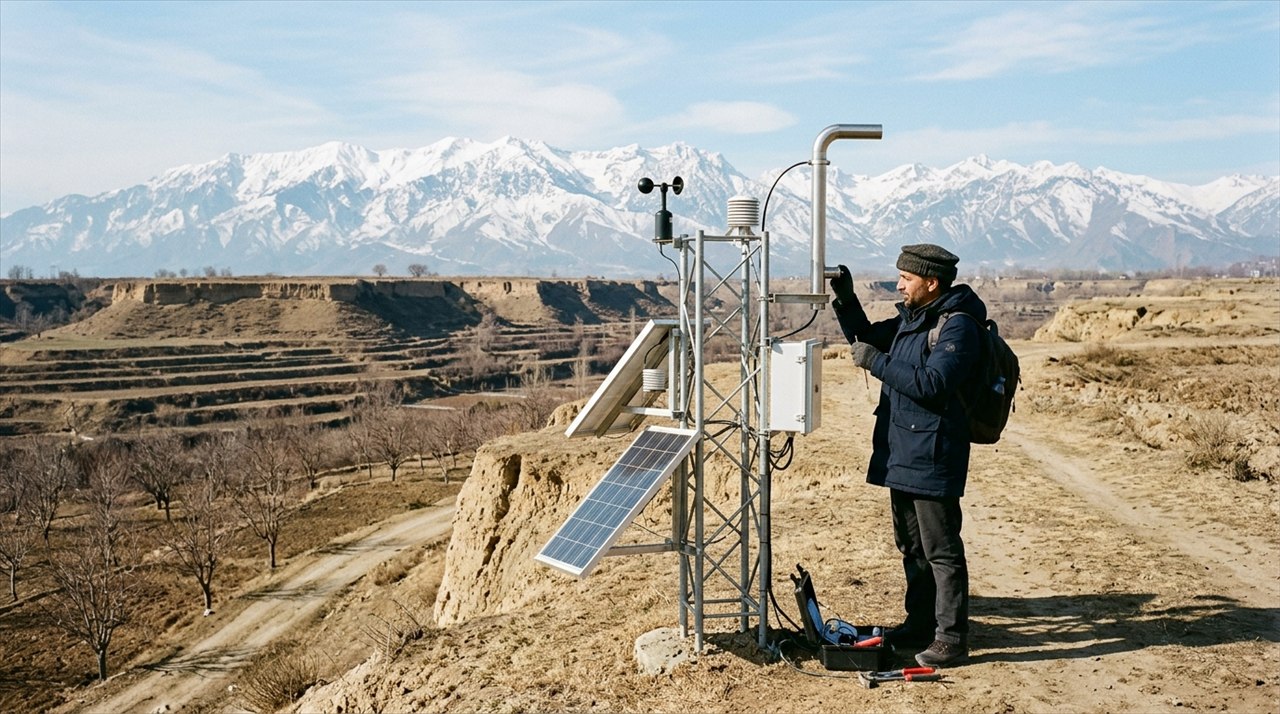
Three Hundred Metres from Gandhi Bhawan
Where the lectern falls silent at Hazratbal, the physical basin begins its unanswered cross-examination.
Step outside the stone portico of Gandhi Bhawan on the Hazratbal campus of the University of Kashmir after a three-day national conference adjourns, walk three hundred metres past the chinar-lined avenues toward the western embankment of Dal Lake, and the distance between Himalayan diagnosis and Himalayan governance ceases to be an abstraction. Behind you, inside darkened seminar rooms, slides have mapped glacial mass deficits to hundredths of a metre of water equivalent, partitioned winter fine particulate matter into receptor source profiles, and quantified pesticide and trace-metal residues across valley wetlands. Ahead of you, across the shallow Hazratbal basin, storm drains still deliver untreated urban runoff into macrophytic mats, mechanical dredgers redistribute legacy phosphorus across disturbed sediment beds, and an autumn haze lifted from brick kilns, highway corridors, and orchard-pruning fires begins its evening descent beneath the Zabarwan spur.
Between September 15 and September 17, 2026, the University of Kashmir hosted ECSSPP 2026—the three-day National Conference on “Environment, Climate and Sustainability: Science, Policy and Pathways,” jointly convened by the Department of Environmental Science under Convener Dr. Sami Ullah Bhat and the Department of Geoinformatics under Convener Dr. Irfan Rashid, with Dr. Mohd. Muslim serving as Organizing Secretary under the patronage of Vice-Chancellor Prof. Nilofer Khan. Across ten oral technical sessions, six poster sessions, invited expert lectures, and a dedicated brainstorming forum on the Science–Policy–Society interface and the Sustainable Development Goals, researchers assembled an impressive cross-section of contemporary earth-system inquiry.
To treat such a gathering either as a ceremonial triumph or as an easy target for dismissal would betray serious public thought. Convening environmental chemists, remote-sensing analysts, hydrologists, and ecologists inside a public mountain university requires sustained institutional labour, and the scholars who measure Kashmir’s shrinking cryosphere and degraded waters have built an indispensable empirical archive under difficult field conditions. This essay is neither a conference report nor a summary of abstracts. It begins precisely where the conference ends.
For the central question confronting the Western Himalayas in late 2026 is no longer whether regional science possesses the instruments to diagnose ecological unravelling. Science has diagnosed the Kashmir Valley with disturbing precision for more than two decades. The unresolved crisis—intellectual, statutory, fiscal, and constitutional—is why an ever-thickening shelf of peer-reviewed diagnoses exerts almost zero compulsory force upon the administrative machinery licensed to alter the landscape.
Publicly documented deliverables of ECSSPP 2026 (Sept 15–17, 2026, University of Kashmir) comprise its 10 oral and 6 poster session architecture, inaugural release of the official Abstract Book, a dedicated Science–Policy–Society and SDG brainstorming session, and paper selection for the Journal of Himalayan Ecology and Sustainable Development. Full verbatim session transcripts and any unpublished internal correspondence with UT departments are not publicly posted; this inquiry therefore critiques structural deliverable architecture and statutory law rather than assuming what individual speakers did or did not say.
The Linear Myth of the Science–Policy Interface
Why piling higher-resolution diagnostics onto an disconnected regulatory apparatus no longer produces governance.
Every academic conference organized around the triad of “Science, Policy and Pathways” inherits an unspoken intellectual foundation: the linear deficit model of public action. According to that inherited Enlightenment premise, states fail to protect watersheds, air-sheds, and mountain slopes primarily because decision-makers lack sufficiently accurate, localized, or timely empirical knowledge. Supply sharper satellite classifications, tighter uncertainty bounds, and clearer policy briefs—so the premise runs—and rational administrative agencies will translate findings into protective rules.
Tested against thirty years of environmental history in the Kashmir Valley, the linear deficit model collapses. Consider what regional earth scientists have already placed in the peer-reviewed record. Glaciological observations on Hoksar Glacier in the Upper Indus system demonstrate continuously negative mass balances—averaging roughly −0.35 to −0.39 metres water equivalent per year—outpacing several neighbouring Himalayan ice bodies (Romshoo et al., 2022), while multi-site gauging across Kashmir Himalayan catchments links glacier retreat directly to statistically significant streamflow depletion and downstream land-system conversion from irrigated paddy toward rain-fed horticulture (Rashid et al., 2020).
Over the valley floor, multi-temporal Earth observation analyses have repeatedly documented the areal contraction and fragmentation of Hokersar, Shallabugh, Wular, and urban Srinagar marshes under siltation and encroachment (Alam et al., 2023; Bashir et al., 2022). Limnological syntheses in Dal Lake attribute rampant macrophytic proliferation to sustained organic and inorganic nutrient loading (Sultan et al., 2024), while atmospheric receptor studies in the Western Himalaya quantify winter carbonaceous aerosol stagnation and identify hexavalent chromium in fine particulate matter as an inhalation cancer hazard (Bawari et al., 2026; Najar et al., 2026).
No senior administrator in Srinagar or Jammu can plausibly claim in 2026 that the state awaits one more Normalized Difference Water Index map before knowing that Hokersar is silting, or one more inductively coupled plasma mass spectrometry run before knowing that heavy metals are entering lacustrine food chains. When pathology persists alongside abundant diagnosis, the failure lies not in the resolution of the microscope, but in the absence of a legal nervous system connecting the optic nerve of the university to the motor cortex of the state.
“When ecological pathology deepens alongside an expanding shelf of peer-reviewed diagnoses, the bottleneck is no longer the resolution of the university’s instruments; it is the absence of a statutory wire connecting discovery to enforcement.”
What Conference Deliverables Can—and Structurally Cannot—Compel
Distinguishing incomplete public post-conference records from the built-in legal impotence of academic outputs.
Rigorous institutional criticism begins with scrupulous fairness toward evidence. In assessing ECSSPP 2026, two distinct analytical planes must never be conflated. The first is the boundary of publicly accessible post-conference documentation. Institutional summaries confirm the release of an official Abstract Book at the inaugural ceremony, the convening of a brainstorming session dedicated to the Science–Policy–Society interface and Sustainable Development Goals, and an editorial pathway routing selected manuscripts toward the University’s Journal of Himalayan Ecology and Sustainable Development. Full proceedings volumes, audio transcripts of floor exchanges, and any informal advisory notes that conveners may subsequently transmit to government secretariats are not posted in an open public repository. An honest observer never infers that substantive policy debates were absent inside Gandhi Bhawan merely because post-conference public documentation is abbreviated.
The second plane, however, is structural rather than archival, and it is fully visible in plain daylight: no conventional deliverable produced by Indian national academic conferences possesses statutory cognizability. An Abstract Book summarizes methods and findings in three hundred words for scholarly peers. A special issue or regular volume of an academic journal enters university library catalogues and advances faculty assessment metrics under National Assessment and Accreditation Council (NAAC) and Academic Performance Indicator (API) frameworks. Even a conference resolution or brainstorming communique, if circulated to administrative secretaries, arrives on an officer’s desk as an unsolicited advisory courtesy—legally indistinguishable from an op-ed.
Nowhere in Jammu and Kashmir’s administrative procedure is the Pollution Control Committee (J&K PCC), the Lake Conservation and Management Authority (LCMA), the Wular Conservation and Management Authority (WUCMA), or the Srinagar Municipal Corporation (SMC) required to log a conference abstract book into a statutory register, verify a reported contaminant exceedance within thirty days, or publish a reasoned explanation for inaction. Academic reward systems and bureaucratic compliance systems run on wholly incompatible currencies: universities count citations, impact factors, and conferences hosted; line departments respond only to budget sanctions, statutory show-cause notices, legislative questions, and judicial writs.
So long as the Science–Policy–Society interface is imagined as an occasional afternoon roundtable at the close of a three-day symposium—rather than a codified administrative procedure with mandatory response clocks—scholars and officials can meet cordially every autumn while the Jhelum’s dissolved oxygen sags further each winter.
DIAGNOSTIC LEDGER · DELIVERABLES VS. ENFORCEABILITY
Structural comparison between conventional academic conference outputs documented at forums such as ECSSPP 2026 and legally cognizable environmental governance instruments.
| Conventional Academic Deliverable | Statutory & Institutional Reality in J&K |
|---|---|
| Inaugural Abstract Book (300–500 word summaries across oral and poster tracks) | Zero legal standing under Water Act 1974 or Air Act 1981; creates no evidentiary docket, chain-of-custody sample record, or agency obligation to inspect. |
| Peer-Reviewed Journal Pathway (e.g., Journal of Himalayan Ecology and Sustainable Development) | Advances academic career credit and scholarly archives 6–18 months post-conference, but triggers no automatic review of industrial or municipal Consents to Operate. |
| Science–Policy–Society & SDG Brainstorming Session | Valuable deliberative dialogue, yet produces no publicly tracked statutory action matrix, named departmental assignee, budget line, or compliance deadline. |
| Project-Specific Doctoral or Extramural Grant Datasets | Typically retained on individual laboratory drives rather than ingested into an open, NABL-harmonized basin telemetry registry accessible to regulators and citizens. |
| General Calls for "Stakeholder Synergy" & "SDG Alignment" | Diffuse responsibility across eight overlapping UT agencies without establishing basin-wide Total Maximum Daily Loads (TMDLs) or air-shed emission caps. |
Cross-Compartmental Blindness: One Molecule’s Journey Across Four Silos
How atmosphere, cryosphere, orchard soil, and Ramsar sediment form a single conveyor that fragmented departments split apart.
Why does university science itself sometimes struggle to hand regulators an actionable basin prescription? Part of the answer lies in how disciplinary architecture slices an indivisible intermontane continuum into departmental turfs. Follow the physical trajectory of combustion aerosols, agrochemicals, and trace metals across the Kashmir Valley over twelve months, and the artificiality of separating atmospheric physics, glaciology, agronomy, and limnology becomes unmistakable.
In December and January, radiative cooling beneath snow-clad Pir Panjal and Greater Himalayan ridges traps a shallow, stagnant atmospheric boundary layer over the valley floor. Emissions from bull’s-trench brick kilns, unseasoned biomass heating, orchard twig burning, diesel transport, and cement clusters accumulate until winter black-carbon concentrations exceed 4 micrograms per cubic metre, punctuated in pre-monsoon months by wildfire- and traffic-driven spikes approaching 14 micrograms per cubic metre (Bawari et al., 2026), alongside fine particulate matter enriched in hexavalent chromium and crustal-industrial trace elements (Najar et al., 2026). Windborne upslope transport deposits those light-absorbing carbonaceous particles onto seasonal snowpacks and alpine glaciers. Once aged black carbon acquires non-absorbing or weakly absorbing atmospheric coatings in snow, snow-albedo reduction is amplified by factors of 1.1 to 1.8 (Pu et al., 2021), accelerating spring melt onset and reshaping nival hydrographs.
That darkened, accelerated meltwater does not vanish at the glacier snout. Descending lithogenic valleys into terraced karewa orchards and intensive agricultural plains (Khanday et al., 2021; Yaseen et al., 2026), spring runoff flushes organophosphate insecticides, systemic fungicides, synthetic nitrogen-phosphorus fertilizers, and weathered fragments of horticultural plastic mulch (Tantray et al., 2026) into tributary streams feeding Hokersar, Wular, Anchar, and Dal. In Hokersar—a designated Ramsar wetland essential to Central Asian Flyway waterfowl—recent monitoring confirms persistent emerging pesticide residues across aquatic matrices (Irshad et al., 2026), while land-cover studies around Wular link agricultural and horticultural catchment dominance directly to dissolved-oxygen depression (Hassan et al., 2015).
Downstream in Dal Lake and four major valley waterbodies, heavy metals—iron exceeding 1,610 milligrams per kilogram, manganese, chromium, and lead—accumulate in benthic sediments and translocate into edible tissues of lotus rhizomes (Nelumbo nucifera) and water chestnuts (Trapa natans) harvested for local markets (Elbagory et al., 2025; Elbagory et al., 2026). When management agencies deploy mechanical clam-shell dredgers to clear shallow basins without sediment containment curtains, benthic macrozoobenthic communities are disrupted (Mushtaq et al., 2013) and anoxic pore-water nutrients and sorbed contaminants resuspend back into the water column. It is one continuous biogeochemical conveyor—yet in conference programmes and university faculties, one team measures aerosol optical depth, a second maps glacier polygons, a third assays wetland water, and none closes the coupled mass-flux budget.
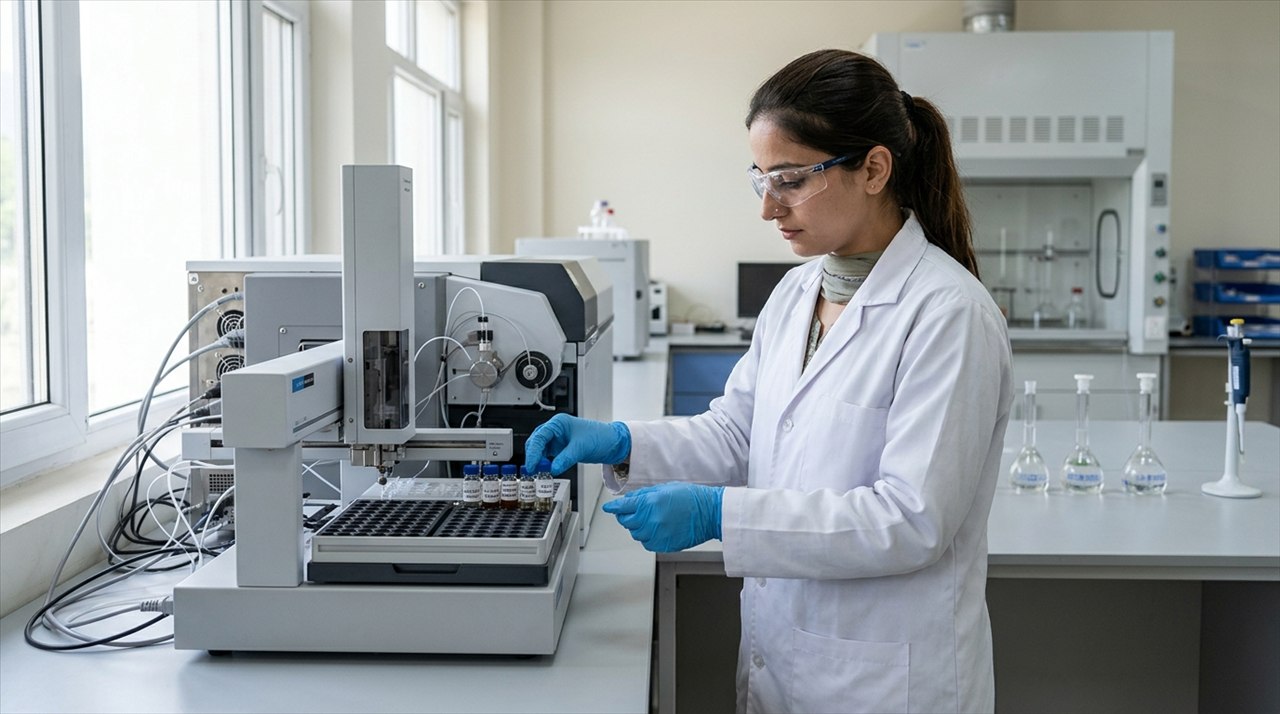
Methodological Habits of Snapshot Science
Fair-weather grab sampling, repetitive land-cover maps, and the unanswered empirical questions beneath the Valley’s floor.
Intellectual honesty requires turning the lens inward upon scientific methodology itself. While the volume of Western Himalayan environmental publications has grown rapidly over the past fifteen years, structural incentives within Indian higher education—three-year doctoral timelines, modest analytical consumables budgets, and promotion rules rewarding paper count over multi-decadal observatory stewardship—have entrenched methodological habits that weaken regulatory utility.
The first limitation is temporal bias. Across dozens of limnological and hydrochemical studies on the Jhelum, Lidder, Vishav, Dal, and Wular, water quality is still predominantly characterized through monthly or seasonal daytime grab samples collected in fair weather from accessible bridge piers and boat ghats. Yet mountain contaminant transport is overwhelmingly episodic: eighty percent of annual suspended sediment, particulate phosphorus, and orchard pesticide flux can move during seventy-two hours of convective cloudburst or rapid April rain-on-snow melt. Similarly, surface PM2.5 filter campaigns rarely pair ground-level chemical speciation with continuous vertical lidar or radiosonde profiling of nocturnal winter temperature inversions across the Srinagar–Pampore–Awantipora bowl.
The second limitation is descriptive repetition in geospatial science. Because Landsat and Sentinel archives are freely downloadable, scores of manuscripts re-classify land-use and land-cover (LULC) polygons across the same Kashmir wetlands and sub-basins every two years, re-announcing built-up expansion and marsh shrinkage while rarely coupling satellite pixels to mechanistic field instrumentation—such as stable-isotope hydrograph separation quantifying elevation-dependent groundwater baseflow (Arora et al., 2026), benthic chamber diffusive flux measurements, or calibrated sediment-transport rating curves.
Consequently, critical scientific questions remain unresolved even after ECSSPP 2026: What are the exact vertical mixing heights and secondary organic aerosol formation rates during multi-week January fog-smog episodes in Srinagar? What fraction of sediment-bound heavy metals and fungicide metabolites becomes bioavailable during seasonal anoxia or dredging in Dal and Hokersar? How rapidly are antibiotic resistance genes disseminating across the fish gut–water interface in sewage-impacted Himalayan streams (Dolkar et al., 2026), and how do agrochemical and trace-metal ingestion pathways interact spatially with Kashmir’s elevated burden of esophageal squamous cell carcinoma (Sheikh et al., 2026)? Answering these requires long-term coupled observatories, not isolated dissertation snapshots.
Concentration measurements (mg/L or µg/m³) taken without simultaneous discharge (m³/s) or boundary-layer ventilation rates cannot establish total pollutant mass loads (kg/day)—the exact quantitative metric required to write legally defensible discharge permits and basin load allocations.
The Statutory Disconnect: Why Peer-Reviewed Evidence Bounces Off Indian Law
Inside the evidentiary firewall separating university laboratories from the Water Act, Air Act, and Environment (Protection) Act.
Suppose tomorrow morning a team of chemists and geoinformaticians at Hazratbal publishes an impeccable, multi-season, mass-balanced study proving that organophosphate runoff and untreated municipal outfalls have pushed a Ramsar wetland past an ecological tipping point. What happens automatically under Indian statutory law? Nothing at all. Understanding why requires reading the exact procedural architecture of the Water (Prevention and Control of Pollution) Act, 1974, the Air (Prevention and Control of Pollution) Act, 1981, and the Environment (Protection) Act, 1986.
Under Sections 21 and 22 of the Water Act and Section 26 of the Air Act, no water or air measurement is admissible as legal evidence in an enforcement proceeding—or mandatory for revoking Consent to Establish or Consent to Operate under Water Act Section 25/33A and Air Act Section 21/31A—unless the sample is collected by an empowered Board officer following strict statutory notice, divided immediately in the presence of the occupier into sealed tripartite containers, signed across official seals, and analyzed inside a recognized State Board or Environment (Protection) Act Section 12 gazetted laboratory.
That chain-of-custody rule was originally drafted to protect regulated industries against arbitrary prosecution. In practice, however, because Indian statutes contain no companion “Mandatory Investigative Trigger” clause, regulatory boards treat every peer-reviewed university finding—even those published in Tier-1 international journals using superior mass-spectrometry protocols—as legally non-existent hearsay. J&K PCC is under zero statutory obligation to dispatch a gazetted sampling officer to Hokersar within fifteen days of Irshad et al. (2026) reporting wetland pesticide contamination, or to audit industrial hexavalent chromium sources around the valley background air-shed following Najar et al. (2026).
Into that executive vacuum steps judicial improvisation. Environmental governance in Jammu and Kashmir increasingly moves only when a citizen petitioner or legal scholar carries published academic papers before the National Green Tribunal (NGT) or the High Court via Public Interest Litigation (Sharma & Saxena, 2026; Jafri et al., 2025). While judicial intervention has repeatedly rescued wetlands and riverbeds from total neglect, governing an entire mountain biosphere through episodic courtroom litigation is neither scalable nor preventative; courts can issue interim penalties after damage is done, whereas only statutory executive triggers can prevent contamination continuously.
Cumulative Impact Blindness in a Closed Intermontane Bowl
Why parcel-by-parcel environmental clearances fail catastrophically inside a topographically trapped valley.
Nowhere is the divorce between earth-system science and regulatory law more destructive than in how the Environmental Impact Assessment (EIA) Notification, 2006 operates inside a closed intermontane basin. Geomorphologically, the Kashmir Valley is an elliptical tectonic trough roughly 135 kilometres long and 35 kilometres wide, walled in by the Pir Panjal range to the southwest and the Greater Himalaya to the northeast. Unlike open coastal plains or windswept peninsular plateaus where atmospheric plumes disperse horizontally and large rivers dilute effluent across hundreds of kilometres, the Valley acts in winter as a lidded atmospheric cauldron and hydrologically as a low-gradient series of interconnected detention basins draining through a single narrow rock gorge below Baramulla.
Yet environmental clearances and pollution consents in Jammu and Kashmir are granted parcel by parcel, project by project, as though each enterprise existed on a limitless, ventilated plain. An individual cement plant in the Khrew–Wuyan limestone amphitheatre demonstrates through Gaussian plume modelling—often parameterized using plains meteorological defaults—that its stack increment alone stays marginally below National Ambient Air Quality Standards. Three kilometres away, clusters of brick kilns in Budgam or Pulwama secure individual consents. Along the Rambiara, Vishav, and Jhelum, dozens of minor-mineral riverbed blocks are auctioned separately (Jafri et al., 2025), while urban housing colonies and highway widening packages obtain standalone exemptions or clearances.
Every individual dossier claims negligible incremental impact; their arithmetic sum saturates the winter air-shed, strips riverbed cobble armour, severs endemic fish connectivity for Critically Endangered species such as the Kashmir catfish Glyptothorax kashmirensis (Gilani et al., 2026), and overwhelms wetland assimilation capacity. Because neither the EIA Notification, 2006 nor UT pollution rules establish a legally binding Air-Shed Carrying Ceiling for the Srinagar–Pampore–Pulwama bowl or a Watershed Total Maximum Daily Load (TMDL) for the Jhelum, regulators never ask whether the basin’s total ecological budget is already overdrawn before signing permit number one hundred and one.
Compounding cumulative blindness is a structural conflict of interest at the heart of Indian EIA practice: the accredited environmental consultant who collects baseline data and authors the impact report is selected and paid directly by the project proponent seeking clearance. Until scientific baseline certification is severed financially from proponent patronage, academic integrity at Hazratbal will remain systematically sidelined by commercial consultancy paperwork at the clearance table.
“Approving cement stacks, brick kilns, sand blocks, and municipal outfalls one file at a time inside a ringed mountain bowl is ecological accounting without addition: every file claims a negligible margin while their sum bankrupts the basin.”
Administrative Fragmentation, Fiscal Starvation, and the Illusion of Soft Pathways
Why calls for "convergence" and "SDG awareness" founder against fractured mandates and hollowed-out inspectorates.
When academic symposia pivot on their final afternoon toward “Policy and Pathways,” recommendations routinely cluster around soft institutional verbs: sensitize stakeholders, align departmental plans with Sustainable Development Goals 6, 11, 13, and 15, promote eco-friendly agriculture, and foster inter-agency convergence. Tested against administrative and financial realities on the ground in Jammu and Kashmir, such prescriptions underestimate how deeply institutional fragmentation and fiscal asymmetry reward ecological inertia.
Trace who governs a single cubic metre of water travelling from an alpine snowfield above Dachigam or Pir Panjal to the Sopore outflow. Forested upper catchments fall under Territorial Forest Divisions and Wildlife Wardens; agricultural chemical licensing and orchard spray advisories sit with the Departments of Agriculture and Horticulture; minor irrigation canals and mainstem flood embankments belong to Irrigation and Flood Control (I&FC); municipal storm drains and septage belong to the Srinagar Municipal Corporation, Urban Local Bodies, and the Urban Environmental Engineering Department (UEED); Dal and Nigeen lakes report to LCMA; Wular reports to WUCMA; Hokersar and Shallabugh report to the Department of Wildlife Protection; and statutory effluent enforcement rests with J&K PCC. Eight vertical hierarchies guard separate budgets, engineering cadres, and annual reports—none legally accountable for whole-basin mass balance.
Meanwhile, the statutory regulator expected to police all of them—J&K PCC—operates under chronic staffing, instrumentation, and fiscal constraints. Routine regulatory laboratories have historically measured basic bulk indicators (pH, total suspended solids, five-day biochemical oxygen demand, chemical oxygen demand), lacking high-throughput NABL-accredited liquid and gas chromatography–tandem mass spectrometry workflows capable of routine statutory enforcement on synthetic pyrethroids, neonicotinoids, organophosphates, pharmaceutical residues, or speciated hexavalent chromium.
Even more corrosive is the substitution of expenditure metrics for environmental outcome metrics. Official conservation reviews routinely celebrate inputs: crores of rupees disbursed under lake rejuvenation packages, cubic metres of weed harvested, numbers of deodar saplings distributed, or conferences co-sponsored. Meanwhile, empirical field measurements in Srinagar’s Brari Nambal lagoon and urban Jhelum reaches continue to document severe dissolved-oxygen depletion and sewage-driven deterioration (Shah, 2026). Without legally mandated environmental outcome accounting, public money can circulate endlessly around a dying lake while every biological indicator worsens.
Unresolved Ecological and Public-Health Risks Across the Valley Continuum
The compounding human cost of leaving cryospheric loss, toxic bioaccumulation, and winter smog in an advisory limbo.
Governance delay in a fragile mountain basin is never neutral; physical and biological risks compound non-linearly while institutions deliberate. Across the Western Himalayas, four converging risk horizons now link ecological degradation directly to household survival, public health, and regional economic stability.
First is trophic and dietary contamination. Unlike industrial waterways whose waters are avoided by residents, Dal, Wular, and Anchar remain productive foodscapes harvesting thousands of tonnes of lotus stems (nadru), water chestnuts (singhara), fodder macrophytes, and snowtrout (Schizothorax species; Qadri et al., 2016; Shafi et al., 2021). Peer-reviewed assays confirming significant sediment enrichment of iron, manganese, chromium, and eight heavy metals accumulating in Trapa natans and Nelumbo nucifera tissues (Elbagory et al., 2025; Elbagory et al., 2026), alongside emerging orchard-belt studies examining heavy-metal and agrochemical footprints in relation to Kashmir’s high incidence of esophageal squamous cell carcinoma (Sheikh et al., 2026), mean that unpoliced watershed contamination enters Valley kitchens daily.
Second is chronic winter respiratory and carcinogenic exposure. For four months each year, more than two million residents of the Valley floor inhale stagnant boundary-layer air in which carbonaceous aerosols from incomplete solid-fuel combustion mix with industrial condensables and trace metals including Cr(VI), driving acute lower respiratory infections and cumulative lifetime cancer risks (Wani et al., 2021; Najar et al., 2026).
Third is hydroclimatic whiplash across an agricultural economy employing the majority of rural households. Shortened snow persistence and rising seasonal temperatures are shifting Western Himalayan basins from buffered nival snowmelt toward erratic rainfall-driven runoff extremes (Gaddam et al., 2026; Abdullah et al., 2025), pairing spring flash-flood hazards with late-summer irrigation deficits across Kupwara, Pulwama, and Anantnag (Fatima et al., 2025; Akhtar et al., 2025). Fourth is irreversible biodiversity truncation: once endemic rheophilic fauna like Glyptothorax kashmirensis lose cold, oxygenated gravel riffles to sand mining and sewage outfalls, no future conference resolution can resurrect extinct genetic lineages.
How Comparable Mountain and Basin Jurisdictions Wire Science into Law
Lessons from the EU Water Framework Directive, US Clean Water Act TMDLs, Swiss NABEL, and the Aarhus Convention.
Is an automatic, legally binding bridge between environmental science and regulatory enforcement administratively realistic? Four established international governance architectures demonstrate that advanced jurisdictions solved the exact pathology afflicting Kashmir not by exhorting bureaucrats to read more journals, but by redesigning statutory triggers.
First, the European Union Water Framework Directive (Directive 2000/60/EC) abolished municipal turf fragmentation by reorganizing water governance strictly around hydrographic River Basin Districts. Crucially, the Directive replaced narrow chemical grab-sampling with legally binding “Good Ecological Status” and “Good Chemical Status” targets anchored in living biological quality elements—benthic invertebrates, macrophytes, phytoplankton, and native fish age-structures—alongside priority hazardous substances. Whenever monitoring shows a waterbody slipping downward by even one status class, member authorities are statutorily compelled to adopt a costed, enforceable Programme of Measures.
Second, Section 303(d) of the United States Clean Water Act solved the cumulative-permitting fallacy through Total Maximum Daily Loads (TMDLs). Any lake or river reach failing water-quality standards must be placed on a public impaired-waters list and assigned a quantitative daily pollution ceiling—partitioned strictly across point-source Wasteload Allocations, non-point agricultural Load Allocations, and an explicit statutory Margin of Safety for scientific uncertainty. Once a basin’s phosphorus or sediment TMDL is full, no agency may legally permit an uncompensated new discharge.
Third, Switzerland—managing steep, densely settled Alpine valleys subject to severe winter temperature inversions—couples its National Air Pollution Monitoring Network (NABEL) directly to the federal Ordinance on Air Pollution Control (LRV). When continuous valley-floor and high-alpine stations record statutory exceedances in fine particulates or nitrogen oxides, cantonal authorities are legally required to execute binding action plans tightening combustion appliance standards, industrial stack filters, and winter freight/heating controls. Fourth, the UNECE Aarhus Convention (1998) guarantees citizens statutory access to raw environmental telemetry, written explanations of how scientific evidence informed permitting decisions, and direct standing to enforce environmental law—preventing agencies from burying uncomfortable diagnostics in filing cabinets.
The Himalayan Dispatch Proposal: A Scientific Evidence-to-Governance Protocol (SEGP-WH)
Seven statutory pillars to convert Western Himalayan diagnostics into automatic, auditable public action.
Importing European or North American institutions wholesale without adapting to Indian constitutional law and Himalayan fiscal realities would fail. Fortunately, Parliament has already enacted the enabling statutory umbrella needed to wire science into governance: Section 3(2)(v) and Section 5 of the Environment (Protection) Act, 1986 empower the notification of region-specific Ecologically Sensitive Basin Rules and binding regulatory directions, while Section 17 of the Water and Air Acts empowers joint statutory laboratory accreditation with public universities. Building upon those existing legal hooks, Himalayan Dispatch proposes the Scientific Evidence-to-Governance Protocol for the Western Himalayas (SEGP-WH)—a seven-pillar institutional architecture.
First, SEGP-WH replaces isolated dissertation grab-sampling with three permanent Coupled Multi-Compartment Flux Observatories spanning the Jhelum–Sindh–Lidder–Wular continuum, jointly operated by University of Kashmir / regional research laboratories and J&K PCC under unified NABL chain-of-custody protocols—so that university trace-contaminant and aerosol measurements are legally cognizable from the moment of collection. Second, it establishes Statutory Threshold-Triggered Regulatory Mandates: verified breach of specified ecological, toxicological, or cryospheric-runoff thresholds automatically opens an enforceable 30-day J&K PCC / DMA compliance docket without waiting for courtroom litigation.
Third, SEGP-WH creates a Mandatory Public Regulatory Response Docket: whenever a peer-reviewed regional study documents a Priority Tier-1 public-health or ecosystem hazard (such as wetland pesticide accumulation, edible macrophyte heavy-metal exceedance, or Cr(VI) inhalation risk), the cognizant department must publish a reasoned, evidence-backed written response and split-sample verification plan within ninety days. Fourth, it institutes Basin-Scale Cumulative EIA and Load Ceilings—capping winter air-shed emissions across the Srinagar–Pampore–Pulwama bowl and establishing statutory phosphorus, nitrogen, and sediment TMDLs for Dal, Wular, Hokersar, and the Jhelum.
Financially, SEGP-WH requires no unrealistic treasury windfall: dedicating a statutory 1.5 percent telemetry-and-verification earmark from capital lake-conservation, Smart City, and highway DPR budgets, pooled with Polluter-Pays Environmental Compensation escrows, fully funds continuous NABL-grade university–regulator joint laboratories and an independent Proponent-Blind EIA Escrow Fund. Success is judged solely by measurable five-year physical outcomes—winter 24-hour PM2.5 and black-carbon mass reductions, sustained dissolved oxygen above 6 mg/L across urban Jhelum/wetland outflows, zero net loss of Ramsar open-water bathymetry, and declining heavy-metal burdens in harvested aquatic foods.
ORIGINAL POLICY FRAMEWORK · SEGP-WH ARCHITECTURE
The 7 Pillars of the Scientific Evidence-to-Governance Protocol for the Western Himalayas (SEGP-WH) proposed by Himalayan Dispatch.
| SEGP-WH Pillar & Institutional Mechanism | Statutory Hook, Fiscal Source & Measurable Accountability Trigger |
|---|---|
| 1. Coupled Multi-Compartment Flux Observatories (Atmosphere–Cryosphere–Soil–Water mass-balance stations) | Joint J&K PCC–University accreditation under EPA 1986 §12 & Water Act §17; funded via 1.5% capital DPR earmark; continuous discharge-weighted contaminant load reporting (kg/day). |
| 2. Statutory Threshold-Triggered Regulatory Mandates (Automatic 30-Day Executive Intervention) | Notified under EPA 1986 §3 & §5; verified exceedance of DO, NH4-N, Cr(VI), BC, or pesticide thresholds automatically triggers mandatory Consent-to-Operate audit within 30 days. |
| 3. Mandatory Public Regulatory Response Dockets (90-Day Reasoned Reply to Peer-Reviewed Studies) | Requires J&K PCC, LCMA, WUCMA, SMC, and Agriculture/Forestry to publish formal split-sample verification and remedial schedules within 90 days of accredited regional hazard publications. |
| 4. Basin-Scale Cumulative EIA & Air-Shed / Watershed Load Ceilings (Valley Cap & Jhelum TMDLs) | Supersedes parcel-by-parcel EIA clearance in enclosed >1,500 m basins; bars uncompensated new kiln, cement, mining, or outfall permits once air-shed or sub-basin TMDL ceiling is reached. |
| 5. Open-Data Telemetry, Split-Sample Verification & Public Chain-of-Custody Registry | Real-time public API release of raw CEMS, CAAQMS, and wetland sensor streams with immutable calibration logs, ending proprietary data hoarding across departments and grants. |
| 6. Proponent-Blind Escrow Firewalls for Environmental Impact Consultants | Project proponents deposit EIA fees into a blind public regulatory escrow; accredited consultants are assigned by rotation and face license forfeiture for baseline falsification. |
| 7. Annual Legislative & Public Environmental Outcome Audits | Replaces input expenditure reporting with an annual audited State of the Basin Ledger laid before the Legislative Assembly and public, tracking biological status, DO, PM2.5/BC, and glacier-fed baseflow. |
Beyond the Auditorium, Toward an Enforceable Covenant
History will not ask how many conferences Kashmir convened, but whether its laws answered what its laboratories proved.
Evening comes early in autumn to the western shore of Dal Lake. As the sun drops behind the Pir Panjal crest, shadows lengthen across the Hazratbal campus, across the quiet brick halls of Environmental Science and Geoinformatics, and across the reed fringes where migratory pochards and mallards descend after crossing the high passes of Central Asia. In that fading light, the water surface briefly mirrors the Zabarwan ridges with deceptive serenity—hiding the chromium in the silt, the organophosphates in the marsh inflow, and the thinned ice fields forty kilometres upslope.
The scholars who gathered at Gandhi Bhawan in September 2026 did their foundational part by keeping empirical witness alive in a region where sustained fieldwork is rarely comfortable. Nothing in this response diminishes the value of rigorous measurement, scholarly fellowship, or university teaching. Yet reverence for science requires refusing to let science be domesticated into a harmless ritual—applauded at inaugural ceremonies, bound neatly into abstract books, cited in promotion dossiers, and quietly ignored at the secretariat gate.
A mountain valley enclosed by thrust faults and fed by vanishing snow cannot survive another quarter-century in which knowledge accumulates in one room while power signs clearances in another. Diagnosis without prescription is clinical voyeurism; prescription without statutory enforcement is polite theatre.
The next true milestone for Western Himalayan sustainability will not be measured by the size of the next conference banner hung at Hazratbal. It will arrive on the morning a peer-reviewed finding of contaminated water, toxic winter air, or cumulative watershed overload legally compels a regulator’s pen to move within thirty days—turning scientific truth from an academic archive into a binding public covenant.
“Diagnosis without prescription is clinical observation; prescription without statutory enforcement is polite theatre. A closed mountain valley can afford neither.”
DOCUMENTARY SOURCES & FURTHER READING
| Source | Documentary relevance |
|---|---|
| Pu et al. (2021), The Cryosphere — Coated Black Carbon & Snow Albedo Radiative Forcing | Quantifies 1.1–1.8x enhancement in snow-albedo reduction and radiative forcing caused by coated black carbon in snowpacks. |
| Bawari et al. (2026), Environmental Monitoring and Assessment — Western Himalayan Fire & Winter BC Aerosols | Documents winter black carbon (>4 µg/m³) under stagnant mountain inversions and pre-monsoon fire/traffic spikes (~14 µg/m³). |
| Najar et al. (2026), Environmental Science and Pollution Research — Western Himalayan PM2.5 Trace Elements | Receptor source apportionment of atmospheric trace elements in PM2.5 and Cr(VI) inhalation carcinogenic risk assessment. |
| Romshoo, Murtaza & Abdullah (2022), Scientific Reports — Hoksar Glacier Mass Balance | Field mass-balance observations demonstrating sustained negative glacier mass balance (−0.35 to −0.39 m w.e.) in the Upper Indus Basin. |
| Rashid, Majeed, Aneaus & Pelto (2020), Water — Glacier Retreat, Streamflow Depletion & Land-System Change | Links Kashmir Himalayan glacier retreat to statistically significant streamflow depletion across five sites and downstream land-use shifts. |
| Sultan et al. (2024), Water Science & Technology — Dal Lake Water Dynamics & Macrophytic Proliferation | Multi-season physiological and hydrochemical analysis linking organic and inorganic nutrient loads to Dal Lake deterioration. |
| Irshad et al. (2026), Wetlands Ecology and Management — Emerging Pesticide Contaminants in Hokersar | Empirical assessment of agricultural pesticide residues entering Hokersar Ramsar wetland in the Kashmir Valley. |
| Alam et al. (2023), Environmental Monitoring and Assessment — Kashmir Himalayan Wetland Dynamics | Earth-observation assessment of decadal spatial contraction and hydroperiod shifts across Kashmir Valley wetlands. |
| Elbagory et al. (2025), Toxics & Elbagory et al. (2026), Scientific Reports — Heavy Metals in Dal & J&K Macrophytes | Documents heavy-metal accumulation in Trapa natans across four J&K lakes and potentially toxic elements in floating garden lotus. |
| Khanday, Bhat, Islam & Sabha (2021), CATENA — Jhelum Snowmelt Hydrochemistry | Separates lithogenic and anthropogenic drivers across snowmelt waters of the River Jhelum Basin. |
| Shah (2026) — Water Quality Deterioration in Brari Nambal & River Jhelum, Srinagar | Field hydrochemical evidence of dissolved-oxygen sag and sewage-driven degradation in urban Srinagar waterbodies. |
| Sheikh et al. (2026) — Agrochemical Footprints, Heavy Metals & Esophageal Cancer Risk in Kashmir | Investigates environmental heavy-metal and agrochemical exposure pathways alongside esophageal squamous cell carcinoma burden. |
| Gilani et al. (2026), iScience — Conservation Genetics of Critically Endangered Glyptothorax kashmirensis | Demonstrates how habitat degradation and river fragmentation imperil endemic Western Himalayan rheophilic fish lineages. |
| Jafri, Jafri & Beg (2025), Central University of Kashmir Law Review — Jhelum Sand Mining & Governance | Examines statutory enforcement gaps and cumulative riverbed extraction governance failures across the Jhelum basin. |
| KEW Environmental Monitoring & Multi-Compartment Contamination Observatory | Kashmir EcoWatch air-shed, water-quality, solid-waste, and basin synthesis baselines paired with this editorial response. |
EDITORIAL PUBLICATION METADATA & 10-STAGE GATE LEDGER
| Gate | Status | Record / Scope |
|---|---|---|
| 01 · Commissioned | completed | Himalayan Dispatch Founding Masthead |
| 02 · Research in progress | completed | Himalayan Dispatch Research & Observatory Desk |
| 03 · Manuscript draft | completed | Assigned Author / Editorial Desk |
| 04 · Evidence verification | completed | Cross-checked against publicly documented University of Kashmir ECSSPP 2026 conference records (Sept 15–17, 2026), statutory provisions of the Water Act (1974), Air Act (1981), Environment (Protection) Act (1986), and EIA Notification (2006), international legal instruments (EU Directive 2000/60/EC, US CWA §303(d), Swiss OAPC/NABEL, UNECE Aarhus Convention), and 17 peer-reviewed Western Himalayan studies with verified DOIs. |
| 05 · Scientific review (where applicable) | pending | Cross-compartmental biogeochemical pathways, cryospheric mass-balance metrics, aerosol radiative forcing factors, and wetland contaminant concentrations verified internally against published peer-reviewed literature; independent external Stage 05 science-policy specialist certification pending prior to post-pre-release sign-off. |
| 06 · Editorial review | completed | Founding Editor-in-Chief Desk Review |
| 07 · Copyright and ethics review | completed | Evidentiary boundaries between publicly accessible conference summaries and unavailable post-conference internal records are stated explicitly. Decorative archival plates carry institutional Kashmir EcoWatch Visual Archive credits without synthetic photographer personas or fabricated camera metadata. |
| 08 · Administrator approval | in progress | Stage 08 Pre-Release Edition Folio staged on localhost for Founding Administrator review prior to production release. |
| 09 · Published | pending | — |
| 10 · Post-publication corrections | not applicable | — |
| Attribute | Final assignment |
|---|---|
| Publication | Himalayan Dispatch |
| Volume / Issue | Vol. 01 / No. 01 · The Inaugural Issue |
| Series Rubric | Beyond the Conference: What Himalayan Science Has Yet to Resolve (Part I) |
| Conference Examined | ECSSPP 2026 ("Environment, Climate and Sustainability: Science, Policy and Pathways", University of Kashmir, Sept 15–17, 2026) |
| Byline | The Editorial Board & Himalayan Dispatch Science-Policy Desk |
| Primary Department | Editorials |
| Associated Departments | Investigative Journalism · Data Journalism |
| Original Policy Framework | Scientific Evidence-to-Governance Protocol for the Western Himalayas (SEGP-WH · 7 Statutory Pillars) |
| Publication Gate Status | Stage 08 · Pre-Release Edition Folio Awaiting Administrator Approval |

Founding Editor-in-Chief
Dr. Fayaz Ahmad Khan
Founder of Kashmir EcoWatch and Founding Editor-in-Chief of Himalayan Dispatch; writes on alpine hydrology, cryospheric thresholds, disaster resilience, and mountain commons across the Western Himalayas.
View Portfolio & Approved Commissions →NEXT IN THIS EDITION · BEYOND THE CONFERENCE · II · MOUNTAIN ENGINEERING
When the Mountain Rejects the Engineer
By The Editorial Board & Himalayan Dispatch Investigations & Urban Water Desk · 23 min read