When the Mountain Rejects the Engineer
An independent response to RECLAIM 2026, NIT Srinagar.
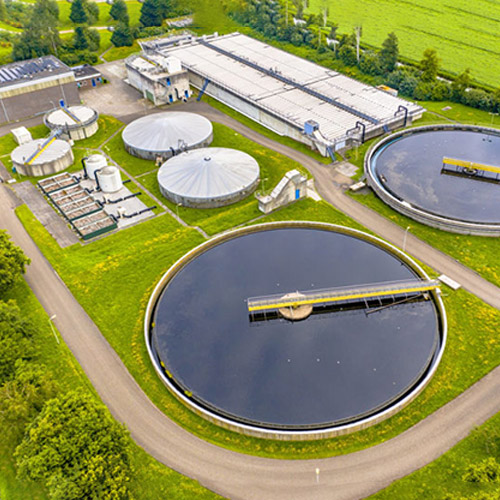
The Dormant Tank and the Sheared Retaining Wall
Two winter failures—one biochemical on Dal’s shore, one geotechnical in the Chenab gorge—written by the same plains rulebook.
Stand beside an open concrete aeration tank on the perimeter of Srinagar’s lacustrine bowl at dawn in mid-January, when night air drops below minus five degrees Celsius and snowmelt trickles through uninsulated municipal drains into a Fluidized Aerobic Bed or Sequencing Batch Reactor. Mechanically, the plant appears operational: blowers churn froth across the surface, motors draw kilowatts from a strained winter grid, and on an official municipal ledger the facility counts as commissioned treatment capacity. Biochemically, inside six-degree water, the autotrophic nitrifying bacteria relied upon to strip toxic ammonia before discharge into Dal Lake, Brari Nambal, or the Jhelum have slipped toward metabolic stupor. One hundred kilometres south along National Highway 44 between Ramban and Banihal, after forty-eight hours of winter rain, a freshly cast vertical concrete retaining wall—poured to textbook plains cross-sections against saturated phyllite colluvium—bulges, shears across its toe, and carries half a carriageway into the Chenab.
To conventional bureaucracy, a sluggish sewage reactor in Srinagar and a collapsed highway wall in Ramban belong to unrelated ministries, separate engineering cadres, and disconnected inquiry files. To mountain physics, they are twin verdicts delivered by the same landscape against the same institutional error: attempting to engineer a tectonically active, cryospheric, high-relief mountain belt using design manuals written for warm, low-gradient, alluvial plains.
On August 27 and August 28, 2026, the National Institute of Technology (NIT) Srinagar took an important and overdue step toward confronting half of that reality by hosting RECLAIM 2026—its maiden two-day International Conference on Water, Wastewater and Waste Management, organized jointly by the Department of Civil Engineering and the Water Resources Management Centre (WRMC), coordinated by Dr. Khalid Muzamil Gani alongside Prof. A.Q. Dar and Prof. J.A. Bhat, and addressed by NIT Director Prof. Anurag Misra, Registrar Prof. Atikur Rehman, and Srinagar Municipal Corporation Commissioner Faz Lul Haseeb, IAS, with Urban Environmental Engineering Department (UEED) field engineers in attendance.
Most notably, RECLAIM 2026 convened a flagship technical workshop—“Challenges and Solutions for Efficient Sewage Treatment in Hilly and Cold Regions of India”—placing cold-temperature biological inhibition squarely on the public agenda. That candour deserves genuine credit. Yet an independent response must follow the diagnosis to its structural root: why did plains-derived reactors, combined storm drains, unlined marshland landfills, vertical slope cuts, and constricted boulder-bed bridges get built across Kashmir in the first place—and what binding mountain engineering code will prevent the next billion rupees of concrete from meeting the same rejection?
Publicly documented records of RECLAIM 2026 (Aug 27–28, 2026, NIT Srinagar) verify its 7 technical sessions, participation by NIT leadership, SMC administration, and UEED engineers, and its flagship workshop on cold-region sewage treatment kinetics. Full paper proceedings and any internal post-workshop municipal circulars are not publicly archived; accordingly, this essay critiques national codal orthodoxy and procurement law rather than presuming omissions by individual workshop speakers.
Intellectual Foundations of Plains-Derived Engineering Orthodoxy
How national manuals turned 25°C Gangetic alluvium into the silent default for 1,600-to-4,500-metre mountain basins.
Every engineering blueprint rests upon boundary assumptions so deeply embedded in national codes that practising engineers eventually stop recognizing them as assumptions at all. Across India, municipal sewerage, solid-waste containment, storm drainage, bridge hydraulics, and road-cut retention are governed by a canonical hierarchy of manuals: Bureau of Indian Standards (IS) specifications, Central Public Health and Environmental Engineering Organisation (CPHEEO) Manuals on Sewerage and Sewage Treatment Systems, Indian Roads Congress (IRC) guidelines, and Ministry of Road Transport and Highways (MoRTH) standard data books.
Inspect the physical world presupposed inside the core equations of those manuals. Ambient wastewater design defaults revolve around warm tropical and subtropical temperatures of 20 to 30 degrees Celsius, where microbial growth kinetics are rapid, sludge drying beds evaporate moisture year-round, and open concrete tanks lose minimal sensible heat. Hydrological drainage charts assume broad alluvial catchments with gentle bed slopes, fine sand-silt sediment loads rather than metre-scale glacial boulders, and stationary monsoon rainfall distributions unimpaired by snowpack storage or rapid rain-on-snow melt. Geotechnical retaining templates assume comparatively homogeneous soil wedges rather than steeply dipping, water-charged Himalayan thrust sheets, evaporitic shear zones, or dispersive Plio-Pleistocene karewa silt-loess beds underlain by active high-angle faults (Kaila et al., 1984; Bukhari, 2016).
When those manuals travel north across the Pir Panjal into the Kashmir Valley (1,580–2,800 metres) or climb toward Sonamarg, Gurez, Warwan, and Zojila (2,700–4,500 metres), mountain reality is routinely accommodated only through cosmetic “hill correction factors”—a slightly steeper roof pitch, an extra ten percent contingency for snow clearance, or a generic clause advising “adequate drainage.”
A mountain range is not a plain tilted at thirty degrees. Elevation alters air density, freeze–thaw rock fatigue, solar radiation geometry, soil porosity stability (Hussain et al., 2025), microbial thermodynamics, and extreme-event hydrographs simultaneously. Treating the Western Himalayas as an anomalous footnote inside plains engineering codes guarantees that infrastructure complies faithfully with paper specifications on the day of audit—and fails physically in its first severe winter or cloudburst.
“A rising thrust belt fed by glaciers and locked in winter frost is not an alluvial plain tilted at thirty degrees. Engineering codes that treat mountain physics as a footnote script their own structural failure.”
What RECLAIM 2026 Opened—and Where Workshop Candour Meets Codal Inertia
Why bringing scholars and utility engineers into one room is necessary, yet powerless without statutory code reform.
In evaluating RECLAIM 2026, evidentiary discipline requires separating what an academic-practitioner conference can accomplish from what only statutory codification can enforce. By seating NIT Srinagar’s civil and environmental engineering researchers beside the Commissioner of the Srinagar Municipal Corporation and working engineers of UEED, RECLAIM 2026 broke a longstanding habit in which academics critique municipal utilities from afar while utility engineers dismiss university research as detached from operational constraints. Equally important, public summaries of the conference’s seven technical sessions and cold-climate STP workshop cannot be treated as an exhaustive transcript of every technical nuance discussed inside those halls; unpublished slide decks, floor questions from field engineers, or ongoing technical consultations between WRMC and municipal agencies may well extend beyond published synopses.
Yet even the finest technical workshop encounters an immediate institutional wall once participants return to their offices on Monday morning. Suppose a UEED executive engineer leaves NIT Srinagar thoroughly persuaded that conventional Fluidized Aerobic Bed (FAB) parameters fail at five degrees Celsius and wishes to specify a buried, thermally insulated, heated-headworks biofilm system with separated snowmelt detention in next month’s tender. The moment that Detailed Project Report (DPR) reaches financial concurrence and technical sanction, finance auditors check every line item against existing Jammu and Kashmir Schedules of Rates (SoR) and standard CPHEEO cost norms.
Any cold-climate thermal enclosure, triple-sized winter biological reactor volume, or redundant dual-feeder power heat-recovery loop not mandated by a binding mountain code looks to an L1 procurement auditor like gold-plated over-design. Conversely, an out-of-state consultant who pastes warm-weather reactor volumes straight out of a plains DPR secures rapid administrative approval because the numbers match familiar national benchmarks.
At the same time, engineering education and conference structures remain partitioned along disciplinary lines that mirror departmental silos: wastewater biochemists debate reactor media in one track, structural highway engineers model concrete cantilevers in another, fluvial hydrologists calibrate storm hydrographs in a third, and solid-waste planners examine landfill cells in a fourth—even though on the saturated floor of the Srinagar bowl and along Pir Panjal valleys, groundwater, stormwater, slope stability, and sewage operate as a single coupled hydraulic system.
Arrhenius Physics in Winter Water: Why Plains STP Kinetics Collapse Below Eight Degrees
Inside the thermodynamic and hydraulic trap crippling biological sewage plants around Dal, Brari Nambal, and the Jhelum.
To understand why biological sewage treatment plants across Srinagar and Himalayan towns chronically underperform between November and March—contributing to the severe dissolved-oxygen sags, ammoniacal nitrogen loads, and eutrophication documented in Dal Lake, Brari Nambal, and urban Jhelum reaches (Sultan et al., 2024; Shah, 2026)—one need only follow van ’t Hoff–Arrhenius reaction kinetics into cold water. Biological nutrient removal depends upon distinct microbial guilds whose metabolic rates contract exponentially as water temperature falls, governed approximately by μT = μ20 · θ^(T−20).
While heterotrophic bacteria oxidizing bulk carbonaceous biochemical oxygen demand (BOD5) slow markedly below 12 degrees Celsius, autotrophic nitrifiers—ammonia-oxidizing Nitrosomonas and nitrite-oxidizing Nitrobacter—exhibit acute thermal sensitivity, with temperature coefficients (Q10) steepening sharply below 10 degrees Celsius. At winter influent temperatures of 5 to 7 degrees Celsius—routine when melting snow and cold shallow groundwater infiltrate Srinagar’s fractured sewer joints—specific nitrifier growth rates drop by 65 to 80 percent relative to 20-degree CPHEEO baseline assumptions. Unless Solids Retention Time (SRT) is extended two-to-threefold and Hydraulic Retention Time (HRT) is expanded proportionally, slow-growing nitrifiers wash out of suspended-growth SBRs and shear off overloaded FAB/MBBR carriers faster than they can divide.
Laboratory wastewater studies in Indian universities frequently underestimate this winter collapse due to three methodological blind spots. First, bench-scale reactors are routinely fed synthetic glucose–peptone–ammonium solutions at steady room or incubator temperatures rather than real municipal sewage diluted by near-zero snowmelt to low carbon-to-nitrogen (C:N) ratios that starve denitrifiers of electron donors. Second, open outdoor concrete aeration basins exposed to sub-zero Himalayan night winds and forced ambient-air blowers act as giant evaporative heat exchangers, chilling mixed liquor even further below incoming sewer temperatures.
Third, real plants endure intermittent winter grid outages, grease blinding of fine-bubble diffusers in viscous cold water, and unscheduled shock dumps of concentrated anaerobic septage vacuumed from unsewered wards—for large swathes of greater Srinagar still rely on on-site septic tanks disconnected from trunk sewers. Designing an uninsulated above-ground biological reactor in Kashmir to 20-degree kinetic tables is not an operational hiccup; it is a thermodynamic impossibility.
Below 8°C liquid temperature, autotrophic nitrification specific growth rates fall below 25–35% of 20°C reference design values, requiring 2.5–3.5× longer Solids Retention Time, thermal enclosure to prevent blower wind-chill heat loss, and attached-growth biofilm protection against snowmelt hydraulic washout.
Combined Hydraulics and Unlined Waste: Stormwater Surges and the Achan Leachate Plume
Why reactor retrofits fail if storm drains flush out biomass and unlined marsh landfills bleed into shallow aquifers.
Even a thermally insulated sewage reactor cannot rescue a city whose collection network violates basic mountain hydraulics. Across Srinagar and expanding towns in Anantnag, Baramulla, and Sopore, legacy roadside drains, culverted historic canals, and newer trunk sewers operate in practice as combined or semi-combined conduits. Whenever a winter Western Disturbance drops heavy wet snow followed by rain, or a spring convective storm strikes the Zabarwan foothills, sediment-laden stormwater surges into sewage pumping stations at five to ten times dry-weather peak flow. Operators face a binary choice: bypass raw sewage–stormwater mixtures straight into Dal Lake, Brari Nambal, or the Jhelum via emergency flood pumps, or route the surge through STP tanks and hydraulically wash weeks of cold-acclimated microbial biofilm out the effluent weir.
Conversely, during dry mid-winter freezes when household water use dips, oversized combined pipes laid across Srinagar’s nearly flat lacustrine floor (gradients often below 1 in 1,000) fail to maintain self-cleansing velocities of 0.6 to 0.75 metres per second. Grit, plastic packaging, and organic solids settle into septic banks inside sewers, generating hydrogen sulfide corrosion and delivering anaerobic shock slugs during the next thaw.
Follow solid waste along the northern edge of the city to the Achan (Saidapora) dumping site, and the same plains-derived disregard for valley hydrogeology reappears in concentrated chemical form. Sited across low-lying Quaternary lacustrine clays and former marshland within the historic Anchar–Khushalsar wetland drainage trough, early waste cells accumulated hundreds of thousands of tonnes of unsegregated, high-moisture municipal refuse, slaughterhouse offal, and commercial waste without modern composite double-HDPE geomembrane and geosynthetic clay bottom liners.
In an arid plain with a water table forty metres deep, vadose attenuation slows leachate migration. In Srinagar’s wetland trough, the phreatic water table sits within one to three metres of the surface—rising seasonally to intersect waste toes. Winter snowmelt and rain percolating through decomposing waste generate high-strength ammonia, dissolved organic carbon, heavy-metal, and recalcitrant organic leachate while biological leachate treatment ponds stall in winter cold—degrading adjacent wetland soil chemistry (Mir et al., 2025) and threatening Anchar Lake and shallow domestic wells.
Concrete Against Colluvium: Slope Cuts, Karewa Tables, and the Ramban–Banihal Lesson
Why vertical excavator cuts and cosmetic weep-holes turn mountain highways into recurring landslide corridors.
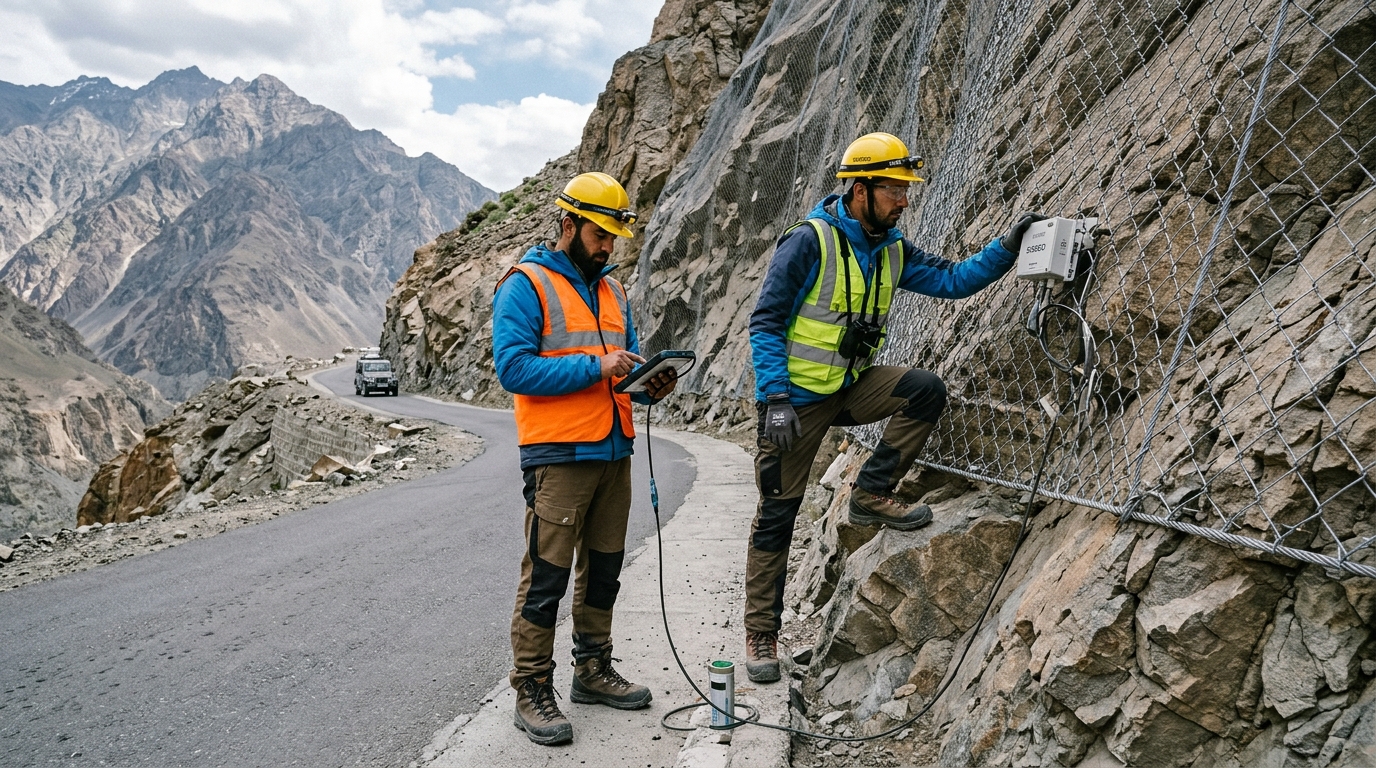
Leave the valley floor for the mountain corridors that connect Kashmir to the outside world—the Pir Panjal escarpments along NH-44 from Chenani and Ramban to Banihal, the Mughal Road across Pir Ki Gali, the Sindh gorge toward Zojila, and the terraced Plio-Pleistocene karewa tablelands of Budgam, Pulwama, and Shopian—and the mountain’s rejection of plains engineering turns visibly violent. Multi-criteria geospatial landslide susceptibility mapping across the Northwestern Himalaya in Jammu and Kashmir confirms that 87 percent of field-validated landslides occur inside identifiable high and very-high susceptibility zones (Jasrotia et al., 2026)—the exact foliated phyllites, crushed slates, Murree claystones, and unconsolidated colluvial aprons sliced open for four-lane highway widening and hydropower access roads.
Standard road-widening practice across Himalayan packages relies upon rapid mechanical excavation using heavy hydraulic backhoes to carve 70-to-85-degree bench cuts into the toe of ancient, meta-stable talus cones and dip-slope rock masses, removing passive toe support in days. To “stabilize” the exposed face, contractors pour rigid, vertical or near-vertical mass-concrete or plum-concrete breast walls punctuated every two metres by 75-millimetre PVC weep-holes backed by a thin handful of ungraded river cobbles.
Within a single monsoon–winter cycle, fine micaceous silt and dispersive karewa loess—whose fragile structural porosity degrades rapidly under mechanical disturbance (Hussain et al., 2025)—clog those un-filtered weep-holes solid. Once plugged, a concrete retaining wall ceases to be a drainage-relieved support structure and becomes an unintended dam. Behind the concrete skin, autumn rain and spring snowmelt saturate the slip plane, pore-water pressure rises, effective normal stress drops toward zero, and nocturnal freeze–thaw ice lenses heave the saturated wedge outward until thousands of tonnes of rock and mud shear the rigid wall cleanly off its shallow footing.
What highway bulletins routinely describe to stranded commuters as an “unforeseen natural shooting-stone or mudslide event” is, in nine cases out of ten, a deterministic geotechnical failure engineered by cutting saturated mountain colluvium without deep sub-horizontal perforated drains, nonwoven geotextile filter envelopes, tensioned rock bolts, flexible wire-rope netting, and deep-rooted native bio-engineering.
Boulder-Bed Torrents, Stationary IDF Curves, and the Cryospheric Design-Storm Fallacy
Why historical 50-year rainfall tables and constricted bridge piers collapse under rain-on-snow floods and GLOF cascades.
Cross any steep gravel- and boulder-bed tributary descending the Pir Panjal or Greater Himalaya—the Vishav, Rambiara, Romshi, Dudhganga, Lidder, Sindh, or Warwan—and a third codal blind spot stands poured into every multi-pier concrete bridge and box culvert: the assumption of hydrological stationarity. Standard IRC and CWC hydraulic sizing derives design peak discharge from historical Intensity–Duration–Frequency (IDF) rainfall curves fitted to sparse, low-elevation valley rain gauges, paired with clear-water rational or unit-hydrograph formulas calibrated for sand-bed plains rivers.
Recent Himalayan hydrological modelling exposes how dangerously obsolete stationary return periods have become. Across Western Himalayan basins, rising seasonal temperatures and shortened snow persistence are shifting runoff regimes toward amplified rainfall-driven extremes and rapid rain-on-snow melt events (Gaddam et al., 2026; Attar et al., 2025; Romshoo & Yousuf, 2022). When warm convective rain falls onto a ripe spring snowpack at 3,000 metres, latent heat condensation melts snow simultaneously with rainfall runoff, generating unit-area flood peaks far exceeding rainfall-only IDF predictions—the physical mechanism that overwhelmed Jhelum floodways in September 2014 (Parvaze et al., 2021; Siddiqui et al., 2018). Higher still, in glaciated headwaters such as the Warwan sub-basin of Jammu and Kashmir and adjacent Ladakh catchments, expanding moraine-dammed lakes and unreported rock-ice mass-movement cascades pose compounding Glacial Lake Outburst Flood (GLOF) hazards capable of mobilizing hyper-concentrated debris flows carrying 30 to 50 percent solid boulder volume by weight (Sattar et al., 2026; Upadhyaya & Rai, 2025).
Against torrents carrying two-metre granodiorite boulders and uprooted conifers, engineers continue to build low-clearance bridges supported by closely spaced circular river piers encroaching across active alluvial fans, while unpoliced mechanical riverbed mining strips protective cobble armour downstream (Jafri et al., 2025; Arafat et al., 2022). Stripped of bed armour, the river incises its thalweg through headcut migration, exposing shallow pier footings just as floating woody debris jams between narrow spans—turning bridges into temporary dams until local vortex scour topples the deck (Hamidi et al., 2026).
A fifty-year clear-water return period calculated from twentieth-century valley rain gauges is not a safety factor in a twenty-first-century cryosphere; it is a mathematical fiction.
ENGINEERING DIAGNOSTIC · PLAINS ORTHODOXY VS. MOUNTAIN PHYSICS
Why standard plains-derived design assumptions systematically fail across Western Himalayan wastewater, waste, slope, and river infrastructure.
| Plains-Derived Design Assumption (CPHEEO / IS / IRC) | Western Himalayan Physical Reality (1,580–4,500 m) |
|---|---|
| Biological STP kinetics sized at 20–25°C in open concrete basins with steady C:N domestic sewage | Winter sewage drops to 4–8°C via snowmelt infiltration; autotrophic nitrification falls 65–80%, blower air chills mixed liquor, and grid cuts stall aeration. |
| Combined or semi-combined surface drains sized to valley-floor stationary rainfall tables | Western Disturbance snowmelt + cloudburst surges wash out STP biofilms at 5–10× peak flow, while flat winter gradients (<1:1,000) silt septic solids. |
| Landfill siting assuming deep vadose zones and warm evaporative leachate ponds | Srinagar marshland water tables sit 1–3 m below ground (Achan/Anchar trough); freeze–thaw precipitation drives unlined leachate into shallow aquifers. |
| 70–85° mechanical slope cuts retained by rigid vertical concrete walls with shallow PVC weep-holes | Foliated phyllites, slates, and dispersive karewa silts clog un-filtered weep-holes; trapped snowmelt pore pressure and frost heave shear walls into gorges. |
| Multi-pier river bridges & culverts sized to clear-water 25/50-year stationary IDF hydrographs | Rain-on-snow surges, GLOF debris flows (30–50% solids), woody jams, and sand-mining bed incision scour closely spaced piers on active fans. |
| L1 capital tendering with summer commissioning sign-off and 12-month defect liability | Plants pass warm August trial runs on paper, then fail in their first January freeze or second spring thaw after contractor retention money is released. |
Procurement Pathology: How L1 Tendering Rewards Concrete Volume Over Winter Performance
Following a Detailed Project Report from copy-paste consultancy to warm-weather commissioning and operational abandonment.
If physics and biochemistry explain how mountain infrastructure fails, public procurement rules explain why identical failures are re-tendered decade after decade. Follow the institutional lifecycle of a typical urban sewerage, lake-interceptor, or slope-protection package in Jammu and Kashmir—from Detailed Project Report (DPR) preparation through Lowest-Evaluated-Bidder (L1) award to municipal handover.
Under pressure to meet central mission deadlines under AMRUT, Smart City, or river-pollution abatement windows, executing agencies outsource DPR drafting to empanelled consultancy firms paid a small percentage of estimated project cost. Maximizing margin requires speed: soil borehole logs are spaced too widely to detect localized shear zones or perched karewa water tables; winter 24-hour influent composite temperature-and-load campaigns are skipped in favour of textbook per-capita BOD multipliers; and bill-of-quantities schedules heavily weight bulk civil concrete and mild steel—items easily measured by junior engineers with a tape—over specialized cold-climate instrumentation, thermal cladding, or deep subsurface drainage.
Next enters L1 tendering. When contracts are awarded strictly to the lowest upfront capital bid among technically pre-qualified civil contractors, any bidder proposing durable duplex stainless-steel winter aerators, insulated reactor covers, automated dissolved-oxygen/ammonia Supervisory Control and Data Acquisition (SCADA) loops, or polymer-modified geosynthetic slope drains prices itself out of contention. Winning L1 contractors economize on electromechanical metallurgy, blower Variable Frequency Drives, and geotextile filter grades.
Most perverse of all is the commissioning calendar. Physical completion and 72-hour “trial run” certificates are routinely scheduled between May and September, when Kashmir water temperatures sit comfortably between 18 and 24 degrees Celsius and dry slopes stand temporarily drained. Effluent grab samples pass; ribbons are cut; eighty-five to ninety percent of capital payments are disbursed; and after a brief twelve-month defect-liability window, the plant or road bench is handed over to an understaffed UEED division or Urban Local Body lacking ring-fenced winter electricity tariffs, spare parts, or biological process engineers.
“Commissioning a Himalayan sewage plant in August and releasing the contractor’s bond after one mild cycle is like certifying an Arctic ship inside a tropical drydock.”
Financial, Administrative, and Legal Realities of Reforming Mountain Infrastructure
Why upfront plains "savings" bankrupt public treasuries across a ten-year lifecycle—and why codal immunity shields failure.
Whenever engineers propose cold-climate thermal enclosures, separated stormwater networks, composite double-lined waste cells, single-span clear-waterway bridges, or deep rock-bolted drainage galleries, treasury officers raise an immediate fiscal objection: mountain-grade specifications increase initial capital expenditure (CAPEX) by roughly 20 to 35 percent per asset. In a Union Territory reliant on central plan transfers and constrained own-tax municipal revenues, can Jammu and Kashmir afford Alpine-grade engineering?
Lifecycle public-finance accounting proves the exact opposite: Jammu and Kashmir is far too fiscally constrained to keep paying for cheap plains engineering. When a vertical concrete breast wall along NH-44 collapses twice within six years—severing Kashmir’s sole all-weather horticulture and essential-supply artery for days at a time—emergency debris clearance, gabion patching, re-tendering, and horticultural spoilage cost the regional economy four to six times the incremental CAPEX of installing sub-horizontal drains and rock anchors once. When hundreds of crores are sunk into open-basin STPs around Dal and Jhelum that discharge poorly nitrified winter effluent, the treasury pays twice: first for dormant concrete tanks, and second for perpetual lake weed-harvesting, chemical dosing, and dredging contracts that treat symptoms of failed sewage capture.
Administratively, reform also requires ending the artificial divorce between capital construction agencies and operating utilities. When a special-purpose vehicle or external project-management unit builds an STP or storm-pump station without joint sign-off and O&M escrow provisioning for UEED or SMC, operational failure is baked into handover.
Legally, the deepest vacuum is professional and statutory accountability. Today, if a private house collapses due to negligent structural calculation, liability attaches; yet if a consultant designs a 1,600-metre STP using 25-degree plains kinetics or specifies an undrained 80-degree cut in saturated phyllite, both consultant and approving engineer claim legal immunity behind compliance with generic national manuals. Until a mountain-specific engineering standard carries binding statutory force under municipal building bylaws, J&K PCC Consent-to-Establish conditions, and public-works tender law, negligence will remain indistinguishable from “following the code.”
How Cold and Alpine Nations Engineer With—Rather Than Against—Mountain Physics
Proven cold-region wastewater, hazard-zone, and geotechnical regimes from Norway, Sweden, Canada, and Alpine Switzerland.
None of the thermodynamic, hydrological, or geotechnical challenges confronting Srinagar, Gulmarg, Sonamarg, or Ramban are unsolved mysteries to global engineering science. Cold-temperate and high-mountain jurisdictions across Scandinavia, Alpine Europe, and North America confronted identical winter STP collapses, marshland leachate plumes, and highway slope failures between the 1970s and 1990s—and solved them through mandatory mountain design codes and lifecycle contracting.
In Norway, Sweden, and cold-climate Canadian provinces, municipal wastewater plants operating at winter influent temperatures of 3 to 6 degrees Celsius are never poured as open concrete wind-tunnels. Reactors are earth-bermed, partially buried below frost lines, or housed inside insulated galleries where sensible heat from incoming sewage and air-compressor motors is conserved via heat exchangers. Biochemically, cold-region Nordic standards mandate conservative winter nitrification sizing paired with high-surface-area Integrated Fixed-Film Activated Sludge (IFAS) or cold-acclimated moving-bed biofilms—shielding slow-growing nitrifiers and psychrotolerant anammox consortia against snowmelt washout—backed by dedicated chemical iron/alum phosphorus co-precipitation stages that remain 100 percent effective even at two degrees Celsius, plus mandatory snowmelt equalization basins.
In Switzerland and Austria, mountain corridor and municipal siting law begins before a single backhoe starts its engine. Under Swiss SIA 260/261 structural norms and federal Natural Hazard Zone Maps (Planungshilfen Naturgefahren), every alpine valley is legally mapped into Red (construction prohibited), Blue (permitted only with certified debris-flow/avalanche/pore-pressure reinforcement), and Yellow hazard zones. Coupled with Eurocode 7 (geotechnical limit-state design) and Eurocode 8 (seismic-topographic amplification), engineers are barred from pouring blind vertical concrete walls against saturated colluvium; slope stabilization combines deep sub-horizontal drainage bores, tensioned soil nails, flexible ring-net rockfall barriers, and live fascines of deep-rooting alpine willow and alder.
Crucially, Alpine utilities pair physical codes with 10-to-15-year Design–Build–Operate (DBO) performance contracts: the firm that designs and builds an STP must operate it through ten consecutive winters, with escrowed performance bonds released only upon continuous automated winter effluent compliance.
The Himalayan Dispatch Proposal: A Western Himalayan Environmental Engineering Standard (WHEES)
Eight binding codal domains to replace plains orthodoxy across Jammu & Kashmir and Western Himalayan infrastructure.
To carry the conversation opened at NIT Srinagar’s RECLAIM 2026 from an insightful academic workshop to permanent infrastructural transformation, Himalayan Dispatch proposes the statutory enactment of a Western Himalayan Environmental Engineering Standard (WHEES)—an eight-domain regional engineering code notified jointly under the Environment (Protection) Act, 1986, J&K Public Works / Jal Shakti / Housing & Urban Development Schedule of Rates, and J&K PCC Consent-to-Establish rules for every public and private project above 1,000 metres elevation.
WHEES establishes non-negotiable physical design baselines across eight interconnected domains. Domain 1 mandates that all biological STPs in the Kashmir Valley and mountain towns be biochemically sized and thermally enclosed for verified continuous compliance at T_design ≤ 4°C winter liquid influent—incorporating biofilm retention, chemical phosphorus polishing backstops, biogas/heat recovery, and 48-hour winter power resilience. Domain 2 prohibits new combined sewer connections, requiring separated snowmelt/stormwater conveyance and restored amphibious wetland detention basins prior to trunk sewers. Domain 3 replaces stationary twentieth-century IDF curves with Non-Stationary Cryospheric Amplification Factors (+30 to +45 percent peak discharge margins accounting for rain-on-snow melt and upstream GLOF/debris-flow bulking).
Domain 4 bans undrained >60-degree mechanical cuts in saturated phyllites, slates, and karewa tablelands, mandating pore-pressure modelling, geotextile-wrapped sub-horizontal drains, and native root bio-engineering. Domain 5 enforces Zero-Exfiltration High-Water-Table Landfill Containment—requiring composite double-HDPE + geosynthetic clay liners above seasonal high groundwater and enclosed, thermally maintained leachate treatment, paired with urgent hydraulic cut-off remediation at Achan. Domain 6 requires single-span or clear-waterway bridges across boulder-bed torrents with deep scour foundations set below post-mining equilibrium thalwegs.
Domains 7 and 8 supply the institutional teeth: every DPR above twenty-five crore rupees must pass independent Mountain Geomorphic & Cold-Process Peer Review (drawing upon accredited specialists at institutions such as NIT Srinagar, University of Kashmir, and national Himalayan institutes) before tender; and L1 capital-only EPC contracts are replaced by 10-Year Multi-Winter Performance-Bonded DBO contracts tied to live public SCADA effluent and slope-inclinometer telemetry.
ORIGINAL ENGINEERING CODE · WHEES 8-DOMAIN ARCHITECTURE
The 8 Mandatory Domains of the Western Himalayan Environmental Engineering Standard (WHEES) proposed by Himalayan Dispatch for statutory adoption above 1,000 m.
| WHEES Codal Domain | Mandatory Technical Standard & Legal / Procurement Enforcement |
|---|---|
| 1. Cold-Region Biochemical & Thermal Wastewater Code | Mandatory kinetic sizing at T_design ≤ 4°C; insulated/earth-bermed reactors, heat-retained aeration, attached-growth IFAS/MBBR biofilm retention, chemical P-polishing backstop, and dual-source winter power. |
| 2. Separated Snowmelt & Cloudburst Urban Hydraulics | Bans combined storm-sewage hookups; mandates grit-trapped snowmelt diversion channels, wet-weather equalization basins, and minimum 0.75 m/s dry-winter self-cleansing sewer slopes. |
| 3. Non-Stationary Cryospheric & GLOF Return-Period Code | Supersedes historical 25/50-yr clear-water IDF tables; mandates rain-on-snow latent-heat melt factors, debris-flow solid bulking (1.35–1.50×), and GLOF runout routing for headwater corridors. |
| 4. Karewa, Phyllite & Colluvial Slope-Stability Code | Prohibits undrained vertical mechanical toe-cuts; requires coupled seismic-pore-pressure limit-state checks, geotextile-filtered sub-horizontal drains, rock bolting, and native alpine bio-engineering. |
| 5. High-Water-Table Landfill Zero-Exfiltration Code | Bans unlined marsh/lacustrine waste cells; mandates ≥2 m separation above peak water table, double-HDPE + GCL composite liners, insulated leachate reactors, and Achan perimeter hydraulic cut-off walls. |
| 6. Boulder-Bed Torrent & Floodplain Bridge Clearance Code | Bars multi-pier constriction on active alluvial fans; requires clear-span or debris-deflected piers founded below unarmoured scour depth plus 1 km upstream/downstream riverbed mining exclusion zones. |
| 7. Mountain Engineering Certification & Independent DPR Audit | Requires licensed Mountain Environmental/Geotechnical accreditation and independent third-party DPR peer review before administrative sanction or J&K PCC Consent to Establish. |
| 8. 10-Year Multi-Winter Performance Bonds & Public SCADA | Replaces summer commissioning sign-offs with 10-winter DBO escrowed bonds; bond release contingent on continuous public online telemetry for winter NH4-N, BOD, DO, and slope inclinometers. |
Humility Before Gradient, Frost, and Fault Line
A young mountain range never negotiates with copy-pasted drawings; engineering maturity begins where plains arrogance ends.
For centuries before reinforced Portland cement or copy-pasted tender documents entered the Kashmir Valley, vernacular Himalayan builders practiced a quiet, empirical treaty with cold water, saturated silt, and seismic ground. They raised flexible timber-laced taq and dhajji-dewari walls that flexed rather than shattered when Pir Panjal faults slipped; they stepped Devri limestone yarbal riverfronts to rise and fall three metres with spring snowmelt; and they kept Srinagar’s marshy backwaters—Brari Nambal, Khushalsar, Anchar, Hokersar—open as breathing flood-detention rooms rather than dumping grounds or real-estate plots. They did not romanticize the mountain; they respected its physics because they lived inside the consequences of every miscalculation.
Modern environmental and civil engineering possesses analytical tools vastly more powerful than anything available to pre-modern builders—finite-element pore-pressure solvers, psychrotolerant biofilm metagenomics, synthetic-aperture radar interferometry, and hydrodynamic GLOF cascade models. What contemporary infrastructure governance in the Western Himalayas has lacked is not technical capability, but institutional humility: the willingness to admit that an equation calibrated along the Yamuna or Sabarmati cannot be legislated onto the Jhelum, the Sindh, or the Chenab gorge.
By convening RECLAIM 2026 at Hazratbal and naming the winter failure of cold-region sewage plants openly before scholars and municipal administrators alike, NIT Srinagar cracked open a door that officialdom long kept shut. Stepping through that door now requires courage from ministries, chief engineers, procurement auditors, and lawmakers.
The mountain has no malice toward the engineer. Frost heaves concrete, six-degree snowmelt slows Nitrosomonas, saturated phyllite slides along its foliation plane, and boulder torrents scour constricted bridge piers with complete impartiality. The mountain rejects only designs that refuse to recognize where they stand. The day Jammu and Kashmir writes frost, gradient, cryosphere, and fault line into binding engineering law, the mountain will finally allow what we build to endure.
“The mountain bears no malice toward the engineer; it rejects only blueprints that pretend Hazratbal and Ramban sit on a warm, motionless plain.”
DOCUMENTARY SOURCES & FURTHER READING
| Source | Documentary relevance |
|---|---|
| Attar et al. (2025), Scientific Reports — Design Storm Estimation & Flood Risk in Temperate Himalayan Basins | Demonstrates calibrated hydrological design-storm modelling requirements for flood risk assessment in temperate Kashmir Himalayan catchments. |
| Jasrotia et al. (2026), Scientific Reports — Landslide Susceptibility in the Northwestern Himalaya, J&K | Field-validated multi-criteria assessment showing 87% of landslides clustering in high and very-high susceptibility zones intersected by corridor cuts. |
| Gaddam et al. (2026), Scientific Reports — Precipitation Extremes & Shortened Snow Persistence in Himalayan Basins | Establishes non-stationary shift toward rainfall-driven runoff extremes and hydroclimatic risk invalidating stationary historical IDF tables. |
| Sattar et al. (2026), Natural Hazards and Earth System Sciences — Mass-Movement Cascades & GLOF Hazard in J&K | Documents unreported mass-movement cascades and future GLOF hazards threatening expanding infrastructure in the Warwan sub-basin, J&K. |
| Upadhyaya & Rai (2025), Environmental Science and Pollution Research — Northwest Himalayan GLOF Susceptibility | Multi-criteria GLOF susceptibility assessment across high-elevation (5,000–6,000 m) Northwest Himalayan lakes under seasonal warming. |
| Shah (2026) — Sewage & Solid-Waste Water Quality Impacts in Brari Nambal & River Jhelum, Srinagar | Empirical evidence of urban freshwater deterioration from inadequate sewage treatment and solid-waste management in Srinagar. |
| Sultan et al. (2024), Water Science & Technology — Organic & Inorganic Nutrient Dynamics in Dal Lake | Seasonal hydrochemical analysis of Dal Lake demonstrating persistent nutrient loading across surrounding urban sub-catchments. |
| Mir et al. (2025), Scientific Reports — Anthropogenic Impacts on Physicochemical Wetland Soils in Kashmir | Quantifies soil physicochemical degradation across disturbed vs. undisturbed Kashmir Valley wetlands. |
| Hussain et al. (2025) — Soil Density–Porosity Structural Stability Across Pir Panjal Land-Use Gradients | Demonstrates how land-use disturbance degrades soil structural porosity across depth profiles (0–60 cm) in Pir Panjal mountain terrain. |
| Jafri, Jafri & Beg (2025), Central University of Kashmir Law Review — Riverbed Sand Mining & Governance | Analyzes illegal riverbed sand/gravel extraction and statutory governance failures destabilizing Jhelum channel morphology. |
| Arafat et al. (2022), Environmental Monitoring and Assessment — Vishav Tributary Boulder-Bed Dynamics | Baseline physicochemical and seasonal characterization of the steep-gradient Pir Panjal Vishav stream. |
| Hamidi et al. (2026), Journal of Disaster Science and Management — Systemic Flood Risk in the Himalayan-Indus Region | Examines systemic flood vulnerability produced by governance failures, land-use encroachment, and infrastructure exposure. |
| Romshoo & Yousuf (2022) — Land-System Change, Extreme Precipitation & Peak Flood Yield in Upper Jhelum | Quantifies how catchment land-use conversion and extreme rainfall amplify peak flood discharge and sediment yield. |
| Bukhari (2016) & Kaila et al. (1984) — Pir Panjal Tectonic Faulting & Mountain Tunneling Geomechanics | Documents complex faulted geology along the Katra–Banihal corridor and high-angle fault systems beneath the Srinagar–Pir Panjal profile. |
| KEW Sewage, Wastewater & Utility Resilience Observatory | Kashmir EcoWatch ward-level sewage, STP treatment gap, landslide susceptibility, and flood-infrastructure baselines. |
EDITORIAL PUBLICATION METADATA & 10-STAGE GATE LEDGER
| Gate | Status | Record / Scope |
|---|---|---|
| 01 · Commissioned | completed | Himalayan Dispatch Founding Masthead |
| 02 · Research in progress | completed | Himalayan Dispatch Research & Observatory Desk |
| 03 · Manuscript draft | completed | Assigned Author / Editorial Desk |
| 04 · Evidence verification | completed | Cross-checked against publicly documented NIT Srinagar RECLAIM 2026 records (Aug 27–28, 2026), Indian design standards (CPHEEO Sewerage Manual, IS codes, IRC/MoRTH hill-road specifications), international mountain/cold-region standards (Swiss SIA 260/261 & federal hazard-zone codes, Eurocode 7/8, Nordic/Canadian cold-climate wastewater practice), and 15 peer-reviewed Himalayan hydrology, landslide, GLOF, and water-quality studies with verified DOIs. |
| 05 · Scientific review (where applicable) | pending | Arrhenius/Q10 nitrification kinetics, non-stationary IDF and rain-on-snow hydroclimatology, karewa/phyllite pore-pressure mechanics, and high-water-table leachate pathways verified internally; independent external Stage 05 cold-region environmental engineering certification pending. |
| 06 · Editorial review | completed | Founding Editor-in-Chief Desk Review |
| 07 · Copyright and ethics review | completed | Strict separation maintained between documented public workshop summaries and unavailable post-conference engineering files. Archival visual plates carry institutional Kashmir EcoWatch Visual Archive credits without fabricated camera metadata or synthetic contributor identities. |
| 08 · Administrator approval | in progress | Stage 08 Pre-Release Edition Folio staged on localhost for Founding Administrator review prior to production release. |
| 09 · Published | pending | — |
| 10 · Post-publication corrections | not applicable | — |
| Attribute | Final assignment |
|---|---|
| Publication | Himalayan Dispatch |
| Volume / Issue | Vol. 01 / No. 01 · The Inaugural Issue |
| Series Rubric | Beyond the Conference: What Himalayan Science Has Yet to Resolve (Part II) |
| Conference Examined | RECLAIM 2026 (2-Day International Conference on Water, Wastewater & Waste Management, NIT Srinagar, Aug 27–28, 2026) |
| Byline | The Editorial Board & Himalayan Dispatch Investigations & Urban Water Desk |
| Primary Department | Editorials |
| Associated Departments | Investigative Journalism · Longform Features |
| Original Engineering Standard | Western Himalayan Environmental Engineering Standard (WHEES · 8 Mandatory Mountain Domains) |
| Publication Gate Status | Stage 08 · Pre-Release Edition Folio Awaiting Administrator Approval |
Institutional Investigative & Urban Hydrology Desk
Himalayan Dispatch · Investigations & Urban Water Desk
Institutional investigative desk synthesizing statutory environmental filings, judicial orders, archival water history, and fluvial geomorphology across the Jhelum and Chenab basins.
View Portfolio & Approved Commissions →NEXT IN THIS EDITION · BEYOND THE CONFERENCE · III · ECOLOGICAL LIMITS
Who Gave Development the Right to Exceed the Mountain?
By Dr. Fayaz Ahmad Khan & The Editorial Board · 24 min read