Return to Kashmir EcoWatch

EST. 2026  ·  KEW WESTERN HIMALAYAS

HIMALAYANDISPATCH

LANDSCAPE.  PEOPLE.  SCIENCE.  TRUTH.

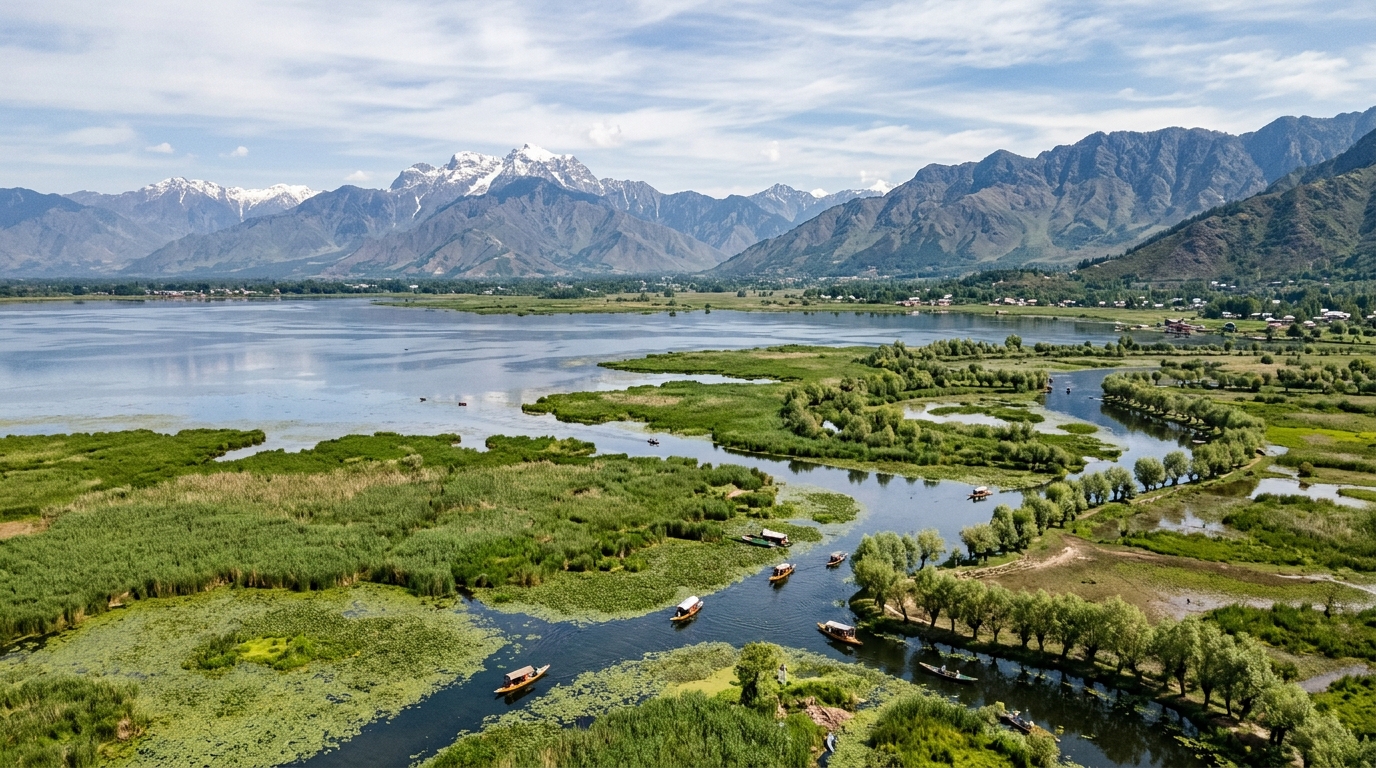
Open-water floodplain storage and peripheral willow marshes across the Wular detention basin (Illustrative archival plate — Kashmir EcoWatch Visual Archive).

Open-water floodplain storage and peripheral willow marshes across the Wular detention basin (Illustrative archival plate — Kashmir EcoWatch Visual Archive). — Kashmir EcoWatch Visual Archive

FOUNDATIONAL WATERSHED MONOGRAPH  ·  MONOGRAPH 00 · WATERSHED VOICES

Watershed Voices: Notes from the Upper Jhelum

From the hidden aquifers of Verinag to the diminishing floodwater sanctuary of Wular, tracing the ecological systems that sustain Kashmir and the institutional decisions that increasingly threaten them.

Published 2026-07-15  ·  COVER PLATE: Wular Floodplain & Erin Catchment · Bandipora

Read MonographAll Editions →

LETTER FROM THE MASTHEAD

Can We Protect the River Without Protecting Its Landscape?

When Folio No. 00 first appeared on July 15, 2026, it carried only a brief two-paragraph charter prologue looking downstream from Verinag’s limestone spring toward Wular. That opening cadence was an invitation rather than a completed inquiry.

Expanded on November 27, 2026 into this sixteen-part foundational watershed monograph, Where the River First Learns Its Name confronts the full scientific and institutional reality of the Upper Jhelum—uniting karst hydrogeology, cryospheric recession, twenty-eight tributary sub-basins, karewa stratigraphy, agrarian water demand, urban drainage, wetland connectivity, riverbed mining, and our proposed Upper Jhelum Integrated Watershed Intelligence and Governance Framework.

Dr. Fayaz Ahmad Khan

Founding Editor-in-Chief

Himalayan Dispatch

Kashmir EcoWatch  ·  Western Himalayan

ARTICLES IN THIS EDITION (1)PERMANENT ISSUE URLS
Open-water floodplain storage and peripheral willow marshes across the Wular detention basin in the Kashmir Valley—terminal natural regulator of the Upper Jhelum continuum (Illustrative archival plate — Kashmir EcoWatch Visual Archive).

Where the River First Learns Its Name

The Jhelum is not merely a channel between embankments. From snowfields and fractured Upper Triassic limestone conduits above Verinag to twenty-eight tributary sub-basins, incised gravel beds, forgotten urban canals, and the shrinking floodwater sanctuary of Wular, Kashmir’s axial river is a single living watershed confronting fragmented governance and non-stationary climate extremes.