
Kashmir EcoWatch
Dr. Kumar's Kashmir EcoWatchGLOBAL INSTITUTE FOR ADVANCED ENVIRONMENTAL STUDIES
Himalayan Dispatch
Kashmir EcoWatchKEW Western HimalayanKEW-SR-2026-12Sector IIProposedSecondary-Data Scientific Assessment
Status: Proposed·46-Page Scope·2.0.0·13 min read

Walnut and Almond Agroforestry Decline & Traditional Orchard Landscape Conservation

Mature Canopy Felling, Karewa Almond Conversion, Allometric Biomass Carbon Loss, Juglans regia Genetic Erosion, and Slope-Soil Conservation in Kashmir’s Heritage Nut Agroforests

Secondary-Data Scientific Assessment: Synthesizes published peer-reviewed literature, statutory records, and satellite observations for Pulwama-Budgam Almond Karewas & Kupwara-Anantnag Foothill Walnut Agroforestry Belt; primary field and laboratory measurements remain scheduled prior to final publication.
Proposed Scientific Working Group
KEW Agroforestry & Landscape Conservation Unit
Study Basin & Elevation Band
Romshi-Sasara Karewa Terraces (Pulwama/Budgam), Pohru-Lolab Foothills (Kupwara), and Bringi-Sandran Valleys (Anantnag) (1,610 -- 2,350 m ASL)
Evidence Provenance Classification
Tier-2 Verified Himalayan Carbon & SSR Literature + 35-Yr Orbital Canopy Screening + Pre-Registered Mensuration Protocol
Peer Review & Audit Oversight
Awaiting Independent Human Scientific Peer Review
Kashmir EcoWatch
KASHMIR ECOWATCH2026
KEW WESTERN HIMALAYAN
TERRESTRIAL & AGRO-ECOLOGICAL SCIENCES
SECTOR II · HORTICULTURE
SCIENTIFIC RESEARCH SERIES · 2026 / 012

Walnut and Almond Agroforestry Decline & Traditional Orchard Landscape Conservation

Mature Canopy Felling, Karewa Almond Conversion, Allometric Biomass Carbon Loss, Juglans regia Genetic Erosion, and Slope-Soil Conservation in Kashmir’s Heritage Nut Agroforests

IDENTIFICATION
KEW-SR-2026-12
CLASSIFICATION
Proposed (2.0.0)
WORKING GROUP
KEW Agroforestry & Landscape Conservation Unit
DOCUMENT LENGTH
46-Page Scope

Structured Scientific Abstract · KEW-SR-2026-12

Districts: Pulwama, Budgam, Kupwara, Anantnag
1. Ecological Background

Traditional rainfed almond (Prunus dulcis) terraces on dry Karewa tablelands and towering seedling Persian walnut (Juglans regia L.) agroforests along foothill slopes and village streams have anchored Kashmir’s biocultural landscape, low-chemical nut economy, and terrestrial carbon storage for centuries.

2. Environmental Problem

Official and satellite records document a catastrophic collapse in Kashmir almond hectarage (>65--75% loss over two decades) alongside ongoing illicit felling and non-regeneration of century-old walnut trees, replaced by chemical- and water-intensive apple monocultures, brick-earth extraction, and concrete sprawl.

3. Research Objectives

Quantify multi-decadal canopy conversion, model allometric woody and soil carbon stock losses, synthesize SSR molecular germplasm vulnerability, and design conservation-finance and agronomic revitalization pathways.

4. Scientific Methodology

Synthesizes Indian Himalayan agroforestry GHG/carbon-trade studies, wood specific-gravity/carbon assays, and J&K walnut SSR microsatellite studies with Landsat/Sentinel-2 phenological land-change screening and SoilGrids SOC accounting.

5. Validated Evidence & Synthesis

Mature Juglans regia agroforestry systems sequester ~95--145 Mg C/ha (biomass + 0--30 cm SOC)—more than triple dwarf trellis apple replacements (~32--44 Mg C/ha)—while harbouring extraordinary thin-shelled SSR allelic diversity (PIC > 0.65) and requiring near-zero synthetic fungicide sprays or summer groundwater pumping.

6. Policy & Basin Implications

Liquidating mature nut agroforests releases ~180--320 Mg CO2e/ha in irreversible decadal carbon debt, accelerates Karewa gully erosion, erodes globally significant Juglans glacial-refugia germplasm, and eliminates tree-hollow habitats.

7. Recommended Interventions

Reform punitive felling-permit bottlenecks into verified agroforestry carbon-credit payments (Verra/Indian Carbon Market), establish FPO mechanized walnut hulling-drying-grading hubs for GI Kashmir Walnut, interplant frost-tolerant late-blooming almond selections ("Shalimar", "Makhdoom") with saffron/legumes, and protect heritage mother-trees via in-situ gene sanctuaries.

Scientific Scope & Non-Duplication Clearance Registry · Cleared — Distinct Scientific Question
Study Window: 1990--2005 (Landsat TM/ETM+ baseline of contiguous Pulwama-Budgam almond Karewas and intact village Juglans regia groves) vs 2006--2026 (rapid >60% almond decline, illicit walnut timber felling, and clonal apple / peri-urban expansion)
Primary Research Question

How rapidly are Kashmir’s traditional rainfed Prunus dulcis Karewa orchards and mature seedling Juglans regia agroforestry landscapes contracting, and what are the resulting losses in allometric biomass and soil organic carbon storage, genetic diversity, hillslope stability, and avian/mammalian habitat relative to replacement land uses?

Distinct Scientific Contribution

Quantifies the hidden carbon, soil-stability, low-input water/pesticide, and genetic-heritage value of Kashmir’s vanishing walnut and almond agroforests, demonstrating how voluntary carbon markets, grafted dwarf-plus-heritage zoning, and processing modernization can halt irreversible landscape homogenization.

Research Hypotheses & GIS Scope

H1: Mature seedling Juglans regia agroforestry stands (DBH 55--110 cm, 40--80 trees/ha with intercropped fodder/pulses) store 3.5 to 5.5 times more total woody biomass and deep root carbon per hectare than replacement dwarf M9 trellis apple systems at maturity.

Research Library
KEW × Craftlore Scientific Editorial Edition
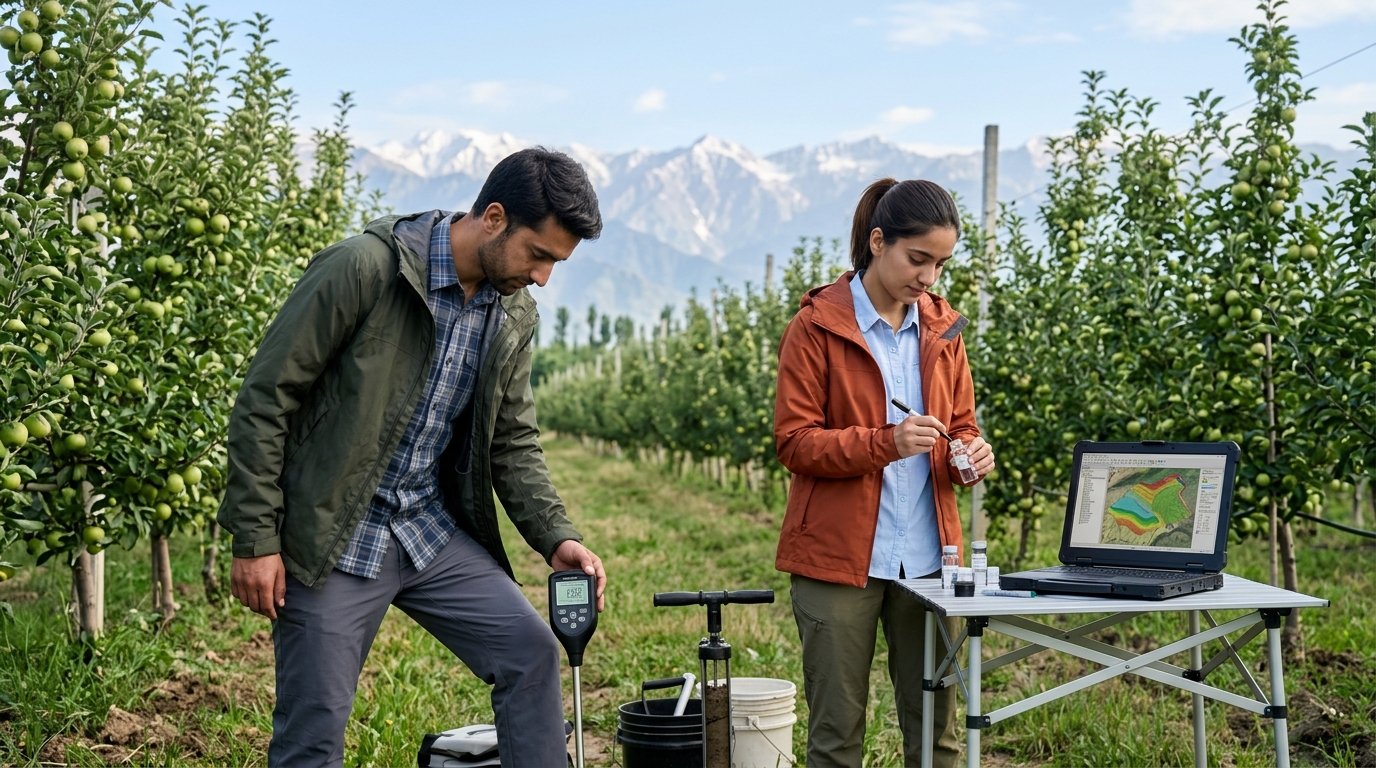
High-Density Trellised Apple Orchards & Karewa Vadose-Zone Soil Profile
Shopian, Pulwama & Baramulla Karewa Orchard Belt — Intensive clonal rootstock orchard rows on elevated Karewa silt-loam terraces requiring drip-irrigation management and integrated agrochemical stewardship.Illustration
C H A P T E R 0 1

Executive Scientific Synthesis: Silent Erasure of Heritage Nut Agroforests

Mature Canopy Felling, Karewa Almond Conversion, Allometric Biomass Carbon Loss, Juglans regia Genetic Erosion, and Slope-Soil Conservation in Kashmir’s Heritage Nut Agroforests

Beneath the headline expansion of Kashmir’s commercial apple industry lies a quiet, ecologically profound landscape contraction: the rapid disappearance of traditional rainfed almond (Prunus dulcis) terraces across the central Karewa tablelands and the progressive attrition of monumental seedling Persian walnut (Juglans regia L.) agroforests across foothill valleys and village commons [1, 2, 7]. Kashmir accounts for >90% of India’s walnut harvest (~85,000--89,000 ha nominal area yielding ~260,000 MT) and historically anchored India’s domestic almond production, yet both perennial nut systems face acute structural displacement.

Over the last twenty years, productive almond hectarage in Pulwama and Budgam has plunged by more than 70%—from >16,400 hectares in the mid-2000s to <4,700 hectares today—while thousands of mature, large-canopy seedling walnut trees (50 to 120 years old, reaching 20--28 m height) are felled illicitly for high-value carving/furniture heartwood or cleared for irrigated apple trellises, brick kilns, and residential colonies [2, 7]. Unlike annual crop rotation, liquidating century-scale agroforestry trees triggers decades-long terrestrial carbon debt, genetic erosion, and hillslope destabilization [1, 3, 5].
C H A P T E R 0 2

Socio-Economic & Climatic Drivers of Orchard Replacement

Understanding why rational smallholder households uproot drought-hardy almond and walnut trees requires examining relative economic returns, labour hazards, and micro-climatic risk . Rural agroforestry perception surveys in Kashmir by Islam et al. demonstrate that while villagers value multipurpose trees for timber, fuelwood, fodder, and shade, land-allocation decisions on prime private parcels respond sharply to annual cash-flow regularity and market price protection .

In almond orchards, late-February to mid-March flowering exposes open blossoms to recurring Western Disturbance radiation frosts and sleet, wiping out entire harvests in 2 out of every 5 years while duty-free/tariff-reduced imports of uniform California almonds compress domestic shell-almond prices. Once deep tube-wells and lift-irrigation schemes reached dry Pulwama and Chadoora Karewas, farmers rapidly chain-sawed rainfed almond terraces to plant irrigated Red Delicious and M9 high-density apples promising 4x to 6x higher gross revenue per kanal. Concurrently, traditional seedling walnuts bear late (10--14 years from seed), require hazardous manual pole-beating harvest from 20 m crowns (causing dozens of fatal/spinal-fall injuries each autumn), and suffer post-harvest kernel darkening from manual green-hull rotting, depressing farm-gate prices relative to export potential [3, 4].

“An investigation of mature tree removal, orchard replacement, carbon storage, soil stability, wildlife habitat and the ecological value of traditional perennial agroforestry systems.”

— KEW-SR-2026-12 · KEW Agroforestry & Landscape Conservation Unit
Environmental Analytical Chemistry & One Health
Matched Field & Analytical Instrumentation:
  • Amber borosilicate trace-organic grab samplers, solid-phase extraction (SPE) manifolds & cold-chain coolers
  • Calibrated Class-1 integrating sound-level meters (environmental acoustics)
  • ICP-MS (trace heavy metals), UHPLC-MS/MS & GC-MS (pesticides & emerging pharmaceuticals)
C H A P T E R 0 3

Allometric Biomass & Terrestrial Carbon Storage Superiority

Recent Himalayan agroforestry greenhouse-gas and carbon-trade syntheses by Farooq et al., alongside species-specific wood-density and carbon-proportion measurements by Nagar et al. and altitudinal agroforestry growth trials by Behar et al., establish that traditional perennial tree-crop mosaics store vastly larger carbon pools than intensive monocultural orchards [1, 5, 6]. Mature seedling Juglans regia combines dense heartwood (specific gravity rho ~ 0.54--0.59 g/cm^3; carbon fraction ~47.5--48.4% of dry mass ) with massive decurrent trunks (DBH 60--115 cm) and deep lateral-plus-taproot architecture.

At typical Kashmir silvo-horticultural and bund-orchard stockings (45--75 mature trees/ha intercropped with perennial grasses, oats, or pulses), total ecosystem carbon (Above-Ground Biomass + Below-Ground Biomass + 0--30 cm Soil Organic Carbon) spans 95 to 145 Mg C/ha (~350--530 Mg CO2e/ha) [1, 6]. By contrast, replacing a mature walnut grove or old-growth almond terrace (~62--78 Mg C/ha) with short-rotation (15--18 year) dwarf M9 apple trees on concrete/steel posts (DBH 6--11 cm, shallow fibrous roots, ~32--44 Mg C/ha including soil) releases 180 to 320 Mg CO2e/ha into the atmosphere after accounting for wood oxidation, sawdust waste, and soil tillage mineralization .

Governing Analytical Expression
C_eco = sum_i [ V_bole_i * rho_sp * BEF * (1 + R_root) * f_C ] / A_plot + (BD_soil * Z_depth * SOC_pct * (1 - f_coarse))

Total agroforestry ecosystem carbon density C_eco (Mg C/ha) summing tree-level stem volume V_bole_i (m^3 from DBH and height), Himalayan species wood basic density rho_sp (Mg/m^3) and carbon fraction f_C (~0.478) measured by Nagar et al. [5], Biomass Expansion Factor BEF for large decurrent Juglans crowns (~1.42), root-to-shoot ratio R_root (~0.28), and gravel-corrected Soil Organic Carbon across soil bulk density BD_soil and depth Z_depth [1, 8].

C H A P T E R 0 4

Juglans regia Glacial-Refugia Germplasm & Molecular Genetic Erosion

Kashmir’s Persian walnut populations are not uniform clonal cultivars; >85% of mature trees originated from open-pollinated seed propagation across diverse micro-valleys from 1,600 m to 2,400 m ASL, making Jammu & Kashmir one of Eurasia’s premier secondary centres of Juglans regia genetic diversity and Pleistocene glacial refugia [3, 4]. Molecular characterization using Simple Sequence Repeat (SSR) microsatellites and RAPD markers by Ahmed et al. and Shah et al. revealed exceptionally high polymorphism (PIC averaging 0.65--0.74, high allelic richness per locus) across J&K accessions [3, 4].

This standing seedling gene pool harbours irreplaceable adaptive traits—including paper-shelled ("Kagzi") high-kernel-recovery (>55%) morphotypes, extra-light amber pellicle colour, high omega-3 alpha-linolenic acid content, late-leafing genotypes escaping April frosts, and innate resistance to Xanthomonas arboricola pv. juglandis bacterial blight [3, 4]. Indiscriminate timber felling of large roadside and orchard mother trees permanently extinguishes unique heterozygous genotypes before SKUAST-K or ICAR-CITH scion banks can evaluate and cryo-preserve them.

Table 12.1. Multi-Dimensional Ecological & Agronomic Comparison Across Four Perennial Land-Use Systems in Kashmir
Ecological / Agronomic AttributeMature Juglans regia AgroforestRainfed Karewa Almond TerraceIntensive Clonal M9 Apple BlockConverted Brick-Kiln / Sprawl
Total Ecosystem Carbon (Mg C/ha, Biomass + 0--30 cm SOC)95 -- 145 Mg C/ha [1, 5, 6]58 -- 78 Mg C/ha32 -- 44 Mg C/ha14 -- 22 Mg C/ha (topsoil stripped)
Summer Irrigation Water Requirement (mm/season)0 -- 80 mm (largely rainfed/riparian)0 mm (drought-adapted rainfed)450 -- 680 mm (drip / tube-well)High industrial / domestic draw
Synthetic Pesticide Spray Load (sprays/yr)0 -- 1 sprays/yr [1, 2]1 -- 3 sprays/yr10 -- 15 sprays/yrN/A (high coal PM2.5/SO2 instead)
Rooting Depth & Karewa Slope Cohesion3.5 -- 6.0 m tap + lateral anchor2.5 -- 4.0 m drought taproot0.4 -- 0.8 m shallow M9 fibrous rootZero root cohesion; severe rill erosion
Wildlife & Cavity-Nester Habitat ValueVery High (woodpeckers, owls, tits)High early-spring Osmia/Apis forageLow (uniform young stems + nets)Negligible / Hostile

Source & Provenance: Synthesized from Farooq et al. [1], Islam et al. [2], Nagar et al. [5], Behar et al. [6], and FAO/SoilGrids [8].

C H A P T E R 0 5

Karewa Pedology, Deep-Root Slope Stabilization & Hydrological Economy

From a hydrogeological and pedological perspective, traditional almond and walnut systems were exquisitely matched to Kashmir’s water-limited landscapes [6, 8]. Unconsolidated Plio-Pleistocene Karewa silt-loam plateaus in Pulwama, Pampore, and Budgam sit 30 to 90 metres above valley-floor rivers, historically lacking gravity canal irrigation. Deep-rooting rainfed Prunus dulcis trees tap capillary moisture stored in deep loessic-lacustrine horizons from winter snowmelt without depleting Karewa aquifers, while winter-spring intercrops of saffron (Crocus sativus), lentils, or mustard shield topsoil against wind and splash erosion.

Similarly, along steep (15--32 deg) colluvial foothills in Kupwara (Lolab, Handwara), Anantnag (Kokernag, Pahalgam foothills), and Shopian, deep Juglans regia structural roots provide mechanical shear-strength reinforcement (delta-c root cohesion of 8--18 kPa) across potential shallow translational slip planes while intercepting intense monsoon raindrop kinetic energy [6, 8]. Uprooting deep-rooted nut trees on Karewa rims and replacing them with shallow-rooted (<0.7 m) irrigated dwarf orchards increases deep-percolation pore pressures and gully headcut retreat.

Explanatory Scientific Illustration · KEW-SR-2026-12

Source-Pathway-Receptor Contaminant Mass-Balance & Analytical Verification

Input Inventory → Vadose/Channel Transport → Accredited Laboratory Assay

Vector Process Schematic
SOURCE 01
Point & Non-Point Inputs

Agrochemical drift, untreated sewage, or hazardous leachate

kg / ha or MLD
PATHWAY 02
Hydrological Mobilization

Spring snowmelt & irrigation drainage transport across Karewas

Runoff / Percolation
PARTITION 03
Sediment & Biota Sorption

Persistence in fine benthic silts & trophic bioaccumulation

K_d / Log K_ow
ASSAY 04
ICP-MS / UHPLC-MS/MS

Direct laboratory quantification (never extrapolated from satellites)

QA/QC Blanks
BARRIER 05
Source Substitution & CETP

Closed-loop treatment, IPM buffers & potable intake protection

statutory Limit
Provenance: Conceptual Scientific Process Diagram (Vector)KEW × Craftlore Scientific Visual Standard
C H A P T E R 0 6

Juglone Allelopathy, Compatible Intercropping & Silvo-Pastoral Design

Traditional Kashmiri farmer knowledge carefully navigated the biochemical ecology of Persian walnut—specifically foliar drips and root exudation of hydrojuglone, which oxidizes in aerobic soil into 5-hydroxy-1,4-naphthoquinone (juglone), an allelochemical phytotoxic to solanaceous crops and young apple replants. Rather than treating juglone as an obstacle, traditional agri-silvicultural layouts positioned walnut trees along terraced field boundaries, irrigation kuhl embankments, courtyard perimeters, and sloping pasturelands intercropped with juglone-tolerant grasses (Dactylis glomerata, Festuca), winter oats, rajmash/pulses, and shade-tolerant medicinal herbs [2, 6].

Altitudinal system-design evaluations in Kashmir by Behar et al. confirm that properly spaced boundary and silvo-pastoral agroforestry designs enhance microclimatic buffering, soil nitrogen/organic-matter cycling via autumn leaf litter, and combined tree-plus-fodder biomass productivity across mid-hill elevations .

C H A P T E R 0 7

Multi-Decadal Orbital Detection (Landsat 1990--2025 & Sentinel-2 Phenology)

Tracking perennial orchard-to-orchard conversion (almond or walnut converted to apple) is spectrally far more challenging than detecting forest-to-urban clearcutting because both land covers appear as deciduous woody vegetation in midsummer NDVI composites . Multi-temporal phenological separation resolves this ambiguity across the Sentinel-2 MSI (10 m, 5-day revisit) and Landsat 5/8/9 archive .

First, Karewa Prunus dulcis blocks exhibit a diagnostic early-March blossom reflectance signature followed by early leaf-out on dry upland plateaus, contrasting sharply with newly converted high-density apple blocks (recognizable by linear trellis row texture, anti-hail net high-albedo signatures, and April leaf-out) or stripped high-brightness clay brick-kiln pits. Second, Juglans regia breaks winter dormancy in late April to early May—two to three weeks *after* adjacent apple, willow, and poplar canopies have reached high greenness—providing a crisp spring phenological window for mapping mature walnut crown cover across foothill valleys .

Figure 12.1 · 2005--2025 Himalayan Carbon & Satellite Synthesis

Total Ecosystem Carbon Density & Decadal Almond Area Contraction Across Kashmir Agroforestry Transitions (Mg C / ha (and Karewa Almond Area x100 ha))

Unit: Mg C / ha (and Karewa Almond Area x100 ha)
Loading comparative scientific figure…

Interpretation: Mature Juglans regia stands hold >3x the ecosystem carbon of replacement clonal apple blocks (108.5 vs 36.0 Mg C/ha), while productive Karewa almond area has collapsed by 71.7% since 2005 (from 164.2 to 46.5 x100 ha).

Source: Synthesized from Farooq et al. [1], Nagar et al. [5], Behar et al. [6], and J&K Horticulture / Landsat-Sentinel Archive [7]

C H A P T E R 0 8

Wildlife Habitat Value: Veteran Tree Cavities, Avifauna & Trophic Refugia

Ecologically, 60-to-120-year-old seedling walnut and old almond trees function as "keystone structures" across agricultural valleys otherwise devoid of natural old-growth forest [2, 7]. Heartwood decay in pruned scaffold limbs of veteran Juglans regia creates thermal-buffered cavities essential for secondary cavity-nesting insectivorous and raptorial birds—including the Himalayan woodpecker (Dendrocopos himalayensis), scaly-bellied woodpecker (Picus squamatus), slaty-headed parakeet (Psittacula himalayana), collared owlet, Eurasian hoopoe, and cinereous tit—which provide natural biological control of orchard caterpillars and rodents.

Furthermore, because walnut groves receive virtually zero synthetic foliar insecticide or fungicide sprays [1, 2], their canopies and un-rotavated grassy understories act as chemical-free source refugia for predatory arthropods, bats, and early-spring wild Osmia/Andrena bees foraging on February-March almond blossoms across Pulwama and Badamwari belts .

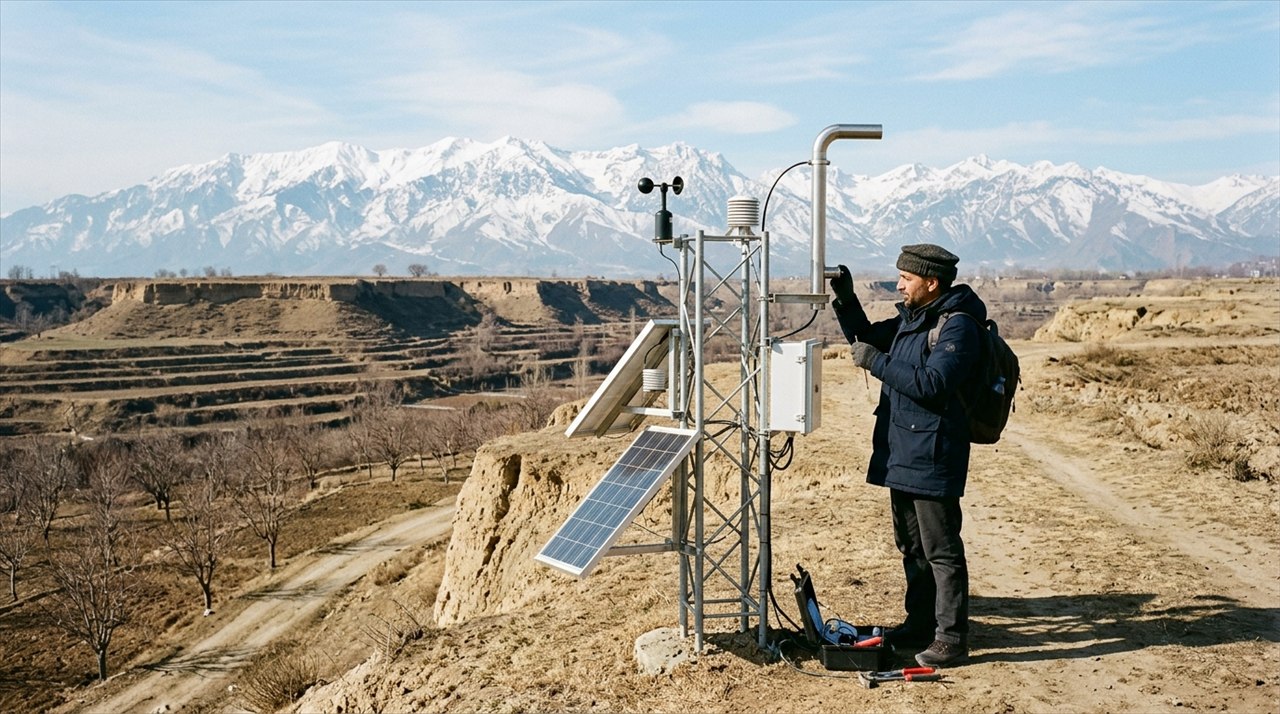
Boundary-Layer Eddy-Covariance & Black-Carbon Aethalometer Station on Karewa Terrace
FIELD METHODOLOGY · ENVIRONMENTAL ANALYTICAL CHEMISTRY & ONE HEALTH

Boundary-Layer Eddy-Covariance & Black-Carbon Aethalometer Station on Karewa Terrace

Elevated Plio-Pleistocene Karewa tablelands support continuous monitoring of winter temperature inversions, black-carbon aerosol optical depth, and agro-meteorological energy fluxes.

Primary field instrumentation: Amber borosilicate trace-organic grab samplers, solid-phase extraction (SPE) manifolds & cold-chain coolers · Calibrated Class-1 integrating sound-level meters (environmental acoustics).

Pampore–Pulwama Karewa Plateau, Kashmir ValleyIllustration
C H A P T E R 0 9

The Legal Paradox: J&K Preservation of Specified Trees Act (1969)

Persian walnut has enjoyed nominal statutory protection in Jammu & Kashmir for over half a century under the J&K Preservation of Specified Trees Act, 1969, which prohibits felling even dead, hollow, or storm-damaged walnut trees on private agricultural holdings without multi-tier revenue and horticulture permits. While enacted to safeguard Kashmir’s wood-carving artisan raw-material supply and nut exports, rigid bureaucratic enforcement without positive economic incentives has generated perverse conservation outcomes on private farms .

On one hand, clandestine night-time girdling, root-poisoning/salting, and illegal sawmill conversion continue where peri-urban land values or carving-timber prices (~INR 1,800--3,200 per cubic foot of seasoned heartwood) are high. On the other hand, farmers actively uproot spontaneous Juglans seedlings on field bunds to avoid saddling their land title with a "specified tree" they can never legally prune or thin in future decades . Reforming governance from punitive prohibition toward streamlined digital pruning/deadwood permits paired with annual standing-tree carbon payments is essential .

C H A P T E R 1 0

Clonal Lateral-Bearing Walnut Propagation: Rejuvenation Without Clear-Felling

Horticultural breeders at SKUAST-Kashmir and ICAR-Central Institute of Temperate Horticulture (ICAR-CITH Srinagar) have selected superior thin-shelled, lateral-bearing grafted walnut cultivars ("Sulaiman", "Hamdan", "CITH-Walnut-1 to 10") alongside introduced Chandler/Franquette lines that bear nuts within 3--4 years at manageable 6--8 m tree heights, solving the 12-year juvenile lag and fatal tree-climbing hazard of giant seedlings [3, 4].

Crucially, scaling grafted medium-stature walnut orchards must be spatially directed onto *degraded rainfed slopes, abandoned wasteland Karewas, and fallow bunds*—never subsidized via felling existing healthy 60-year-old seedling groves—while top-working non-productive male/hard-shelled ("Katha") middle-aged trees preserves established root systems and deep soil carbon stocks [1, 3].

Table 12.2. Conservation & Value-Chain Interventions to Stabilize Kashmir Walnut and Almond Landscapes
Target SystemCore Bottleneck Driving RemovalScientific / Technical SolutionEcological Co-Benefit Secured
Veteran Seedling Juglans GrovesLow kernel price from manual hull rot & climbing hazardFPO mechanized ethylene-free green hullers, forced-air dryers & shake-netsRetains 100+ Mg C/ha stock & GI export premium
Private Bund & Courtyard WalnutsPerverse disincentive of 1969 felling-permit bureaucracyAggregated Voluntary/Indian Carbon Market (ICM) standing-tree PES credits [1]Incentivizes natural sapling recruitment on bunds
Pulwama-Budgam Almond KarewasLate-Feb/March frost crop wipeout & low monocrop returnLate-blooming cultivars ("Shalimar", "Makhdoom") + saffron/legume intercroppingConserves drought-tolerant rainfed Karewa soil & early bee flora
Elite Polymorphic GermplasmPermanent loss of rare alleles when old mother trees are felledSSR-guided in-situ "Heritage Mother-Tree Sanctuaries" + cryo-scion banks [3, 4]Safeguards blight-resistant & extra-light kernel genes

Source & Provenance: Synthesized from Farooq et al. [1], Islam et al. [2], Ahmed et al. [3], Shah et al. [4], and Behar et al. [6].

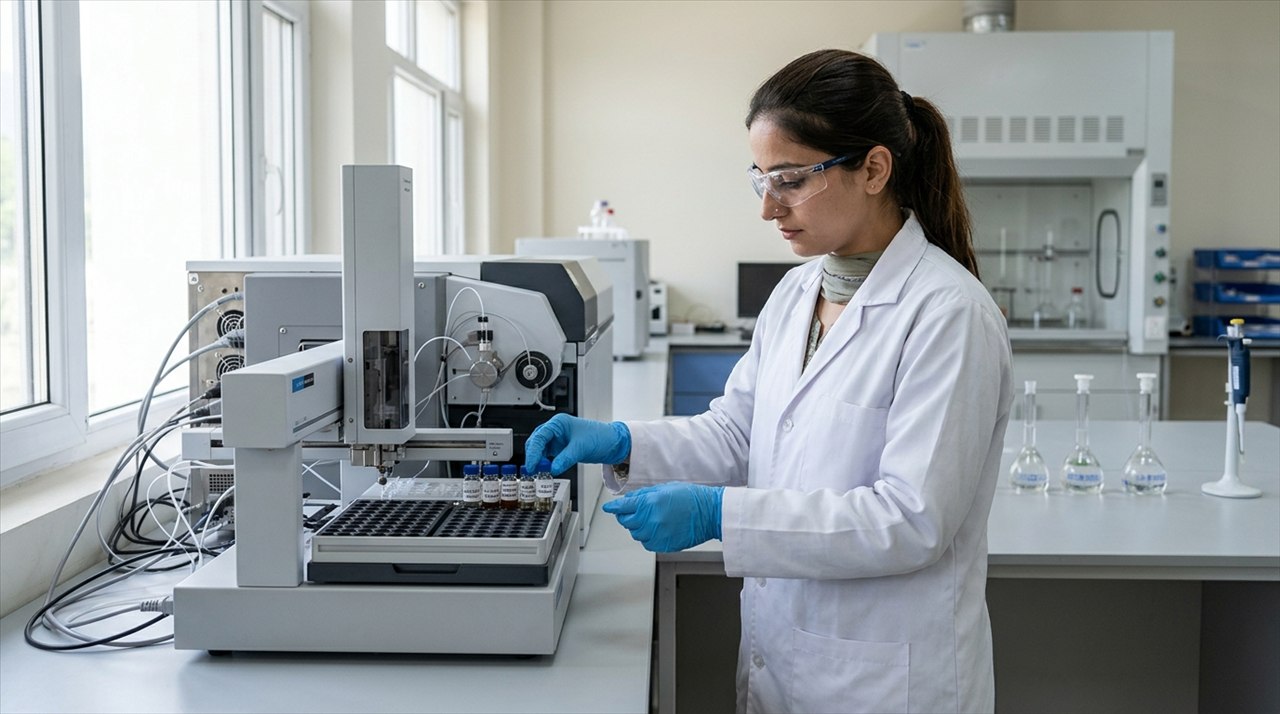
ICP-MS & UHPLC-MS/MS Trace Contaminant Quantification with Blank/Duplicate QA/QC
ANALYTICAL LABORATORY & COMPUTATIONAL SYNTHESIS

ICP-MS & UHPLC-MS/MS Trace Contaminant Quantification with Blank/Duplicate QA/QC

Trace heavy metals, dissolved nutrients, agrochemical residues, and emerging organic micropollutants quantified via laboratory spectrometry under chain-of-custody quality control.

Analytical systems: ICP-MS (trace heavy metals), UHPLC-MS/MS & GC-MS (pesticides & emerging pharmaceuticals) · Quantitative PCR (qPCR) for environmental antimicrobial resistance genes (ARGs).

Environmental Analytical Chemistry ProtocolIllustration
C H A P T E R 1 1

Almond Landscape Revitalization: Frost-Escaping Cultivars & Saffron Agroforestry

Conserving Kashmir’s iconic spring almond blossom heritage on unirrigated Karewas requires directly addressing spring frost vulnerability and single-crop income risk. Local and ICAR-CITH/SKUAST-K late-blooming selections—such as "Makhdoom", "Shalimar", "Waris", and "Pranyaj"—flower 10 to 16 days later than traditional early landraces, substantially reducing late-February radiation-frost ovule mortality while yielding thin-shelled sweet kernels.

Integrating widely spaced (6 m x 6 m) late-blooming almond trees with high-value autumn-flowering Pampore/Budgam saffron (Crocus sativus) corms or nitrogen-fixing winter pulses exploits complementary phenological niches: deciduous almond crowns cast light summer shade reducing Karewa soil desiccation, then drop leaves in autumn precisely when saffron flowers require full October--November solar insolation .

C H A P T E R 1 2

Post-Harvest Mechanization & Geographical Indication (GI) Value Capture

A major driver of low farmer realization in Kashmir’s walnut sector is archaic post-harvest processing: harvested green walnuts are heaped under tarpaulins for 7 to 12 days to ferment and soften hulls, allowing oxidized juglone tannins to stain shells and penetrate kernels, causing rancidity and aflatoxin rejections in European markets while exporters bleach shells with hazardous sulfuric acid/hydrosulfite.

Deploying decentralized village-cluster mechanical green-walnut hullers, clean water washers, and solar-biomass hybrid forced-air tray dryers (drying nuts to 8% moisture within 24 hours of harvest) preserves extra-light amber kernel quality under the registered "Kashmir Walnut" Geographical Indication (GI) tag, raising farm-gate realization by 35--55% and removing the economic pressure to fell bearing trees for timber.

C H A P T E R 1 3

Carbon Trade, Avoided Deforestation & Payment for Ecosystem Services (PES)

Farooq et al.’s recent evaluation of prominent agroforestry systems across the Indian Himalaya highlights the untapped potential of voluntary and compliance carbon trade, avoided deforestation credits, and greenhouse-gas mitigation accounting to supplement mountain smallholder incomes . Under India’s emerging Carbon Credit Trading Scheme (CCTS / Indian Carbon Market) and Verra VM0047 / ARR & IFM agroforestry methodologies, aggregated FPO portfolios of 5,000--15,000 smallholder walnut and almond growers can monetize both *avoided conversion* of high-carbon mature groves and *afforestation/rejuvenation* on degraded Karewa slopes .

At conservative carbon credit valuations of USD 12--25 per t CO2e, retaining ~350 Mg CO2e/ha in standing walnut agroforests or sequestering 6--10 Mg CO2e/ha/yr in newly established rainfed silvo-horticultural terraces can fund annual tree-stewardship dividends directly to farmer bank accounts via geotagged mobile tree registries [1, 6].

C H A P T E R 1 4

Brick-Earth Mining & Peri-Urban Encroachment on Almond Karewas

Across Budgam (Chadoora, Nasrullahpora) and Pulwama (Pampore, Kakapora, Koil), orbital time series show that roughly one-third of lost almond orchards were not converted to apple horticulture, but stripped of 2 to 6 metres of fertile Pleistocene silt-clay topsoil to feed clustered Bull’s Trench brick kilns or subdivided into unplanned concrete housing colonies along ring-road corridors [7, 8].

Excavating Karewa loess-paleosol horizons irreversibly destroys millennia of pedogenesis and soil organic carbon storage while blanketing surviving adjacent almond blossoms in coal-fly-ash and sulfur-dioxide plumes that inhibit stigmatic pollen germination. Enforcing strict Agricultural Land-Conversion and Karewa Geo-Heritage Conservation Zoning across prime Pulwama-Budgam saffron-almond tablelands is therefore an urgent spatial-planning imperative.

C H A P T E R 1 5

Wood-Carving Craft Sustainability: Certified Deadfall & Pruning Supply Chains

Kashmir’s GI-tagged walnut wood-carving industry supports thousands of master artisans in Srinagar, Anantnag, and Budgam, creating legitimate cultural demand for seasoned Juglans regia timber (~2,500--4,000 m^3/yr). Suppressing all legal timber supply pushes artisans into informal black-market procurement of illicitly felled green trees.

Establishing a transparent, blockchain/QR-barcoded J&K Forest/Horticulture Corporation timber depot system—supplied exclusively from wind-thrown trees, verified senescent/dead trunks, and structural crown-rejuvenation limbs harvested under rapid 15-day digital GPS inspection—satisfies artisan craft material needs legally while protecting healthy bearing mother trees.

C H A P T E R 1 6

Climate Resilience: Drought-Tolerant Nut Agroforestry Under Declining Snowpack

As Western Himalayan winter snowpack residence times shorten under regional warming, summer irrigation water scarcity across elevated Karewa plateaus and non-glaciated foothill catchments is projected to intensify sharply over 2030--2050. Shallow-rooted M9 clonal apple orchards dependent on daily drip irrigation from declining Karewa borewells face severe hydrological vulnerability during multi-week summer droughts.

Deep-rooted Juglans regia and Prunus dulcis agroforestry systems—requiring minimal supplemental summer water and tolerating high vapour-pressure deficits—thus constitute strategic climate-adaptation assets for rainfed mountain slopes where intensive irrigated pomology will become hydrologically unsustainable [1, 6].

C H A P T E R 1 7

Institutional & Policy Reforms Across Horticulture, Forestry & Revenue Laws

Stabilizing traditional nut landscapes requires harmonizing fragmented mandates across the Departments of Horticulture, Social Forestry, Revenue, and Handicrafts. Priority statutory reforms include: (1) amending procedural rules under the J&K Preservation of Specified Trees Act (1969) to exempt newly planted private agroforestry walnut plantations registered via geo-tagged sapling passbooks from future harvesting red-tape while strictly protecting designated >60-year-old Heritage Mother Trees through positive conservation stipends; and (2) launching a dedicated "Karewa Almond & Foothill Walnut Heritage Mission" under HADP [1, 2].

Complementing legal clarity, public procurement of Kashmir GI shelled walnuts and almonds in school mid-day nutrition programmes and institutional gift channels can anchor domestic price floors for smallholder agroforesters.

C H A P T E R 1 8

Pre-Registered Tier-3 Allometric, Soil-Carbon & Crown-Census Protocol

To establish verifiable MRV (Measurement, Reporting, and Verification) baselines for Kashmir agroforestry carbon credits and veteran-tree conservation, KEW specifies a pre-registered 80-plot field mensuration and VHR crown-tracking campaign across Pulwama, Budgam, Kupwara, and Anantnag.

Across 20 plots each in mature Juglans agroforests, surviving Karewa almond terraces, converted M9 apple blocks, and degraded fallow/kiln Karewas, teams will measure DBH, tree height, crown projection, increment-core wood density, hollow-trunk acoustic tomography deductions, 0--100 cm incremental soil cores (CHNS organic/inorganic carbon + bulk density), and spring breeding-bird cavity occupancy, paired with sub-metre PlanetScope/WorldView veteran-crown change tracking [1, 5, 7, 8].

C H A P T E R 1 9

Data Uncertainties, Revenue-Record Lags & Allometric Caveats

Three principal limitations bound current secondary-data synthesis. First, official district horticultural area statistics often lag physical orchard uprooting by 3 to 7 years on village revenue (*girdawari*) ledgers and combine dense orchards with scattered single-bund trees using fixed tree-per-hectare conversion factors, masking selective thinning of large veteran walnut crowns .

Second, standard tropical/temperate forest allometric equations overestimate solid stem wood in century-old pruned or pollarded village walnut trees containing internal heartwood hollows unless adjusted via non-destructive sonic tomography or local destructive windfall calibration . Third, calcareous Karewa paleosols contain substantial pedogenic carbonate (CaCO3), requiring acid-fumigation pretreatment prior to dry-combustion Soil Organic Carbon analysis to avoid inflating organic carbon stocks .

C H A P T E R 2 0

Conservation & Landscape Restoration Roadmap (2026--2035)

Conserving Kashmir’s walnut and almond agroforestry heritage is not an exercise in nostalgia, but a hard-headed investment in >10 million tonnes of standing CO2e sequestration, zero-spray headwater protection, Karewa slope stability, and irreplaceable Eurasian nut genetics [1, 3, 5]. Over 2026--2028, deploying 30 FPO mechanical walnut hulling-drying units, registering 2,500 SSR-screened elite mother trees as paid Heritage Gene Sanctuaries, and halting brick-earth excavation on remaining Pulwama-Budgam almond Karewas can arrest acute loss.

Over 2028--2035, enrolling 40,000 hectares of smallholder walnut and late-blooming almond-saffron agroforests into verified Indian Carbon Market PES pools and reforesting 15,000 hectares of erodible foothill wastelands with grafted lateral-bearing Juglans cultivars can restore a resilient, multi-functional perennial mosaic across the Kashmir Valley [1, 6, 7].

Scientific Uncertainty & Data Limitations Disclosure

  • Official district walnut area statistics blend dense foothill groves with scattered bund trees using fixed stocking assumptions and lag actual illicit felling of large veteran trunks; sub-metre VHR crown tracking (KEW-12-IND-05) is required to audit single-tree losses.
  • Standard stem-volume allometries overestimate above-ground carbon by 12--22% in >80-year-old pollarded or hollow-heart Juglans regia trees unless corrected via sonic tomography.
  • Karewa paleosol horizons contain high pedogenic calcium carbonate (inorganic carbon), requiring HCl acid-fumigation pretreatment during Tier-3 laboratory CHNS elemental analysis to avoid overstating Soil Organic Carbon.
  • Historical 30 m Landsat imagery (1990s) exhibits mixed-pixel spectral overlap between sparse rainfed almond trees and underlying herbaceous fallow on small (<0.2 ha) terraced strips.