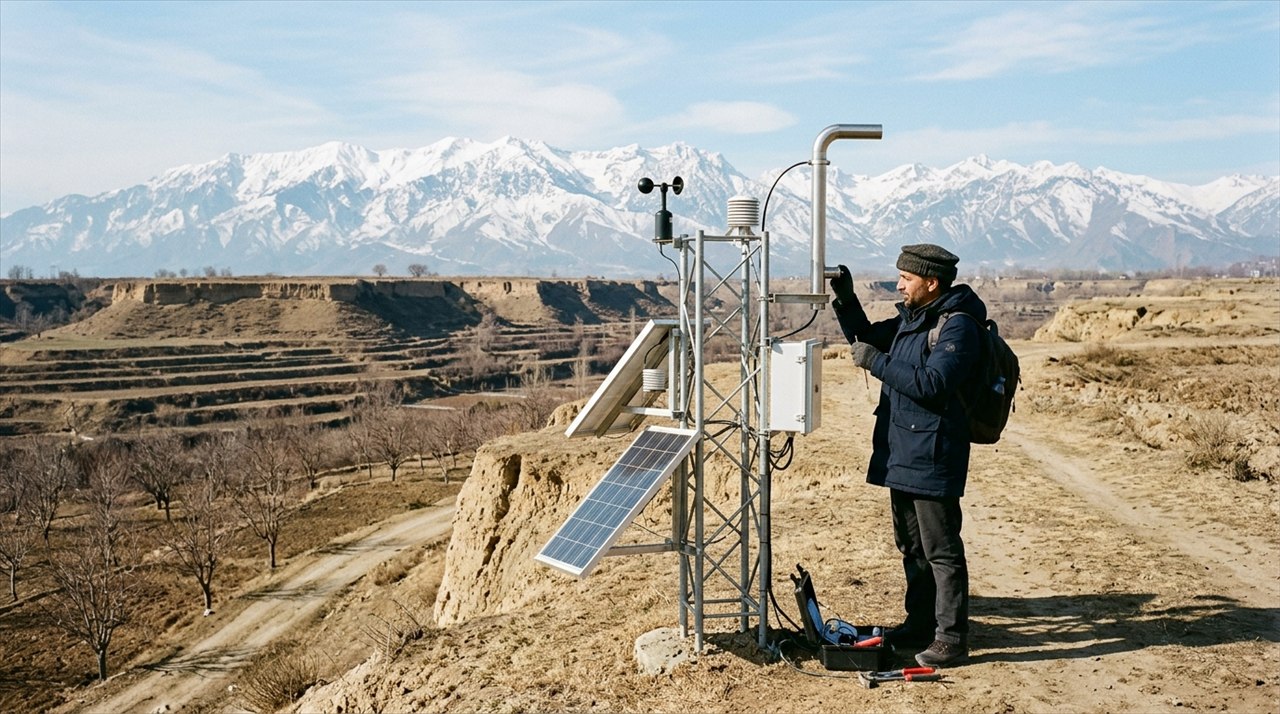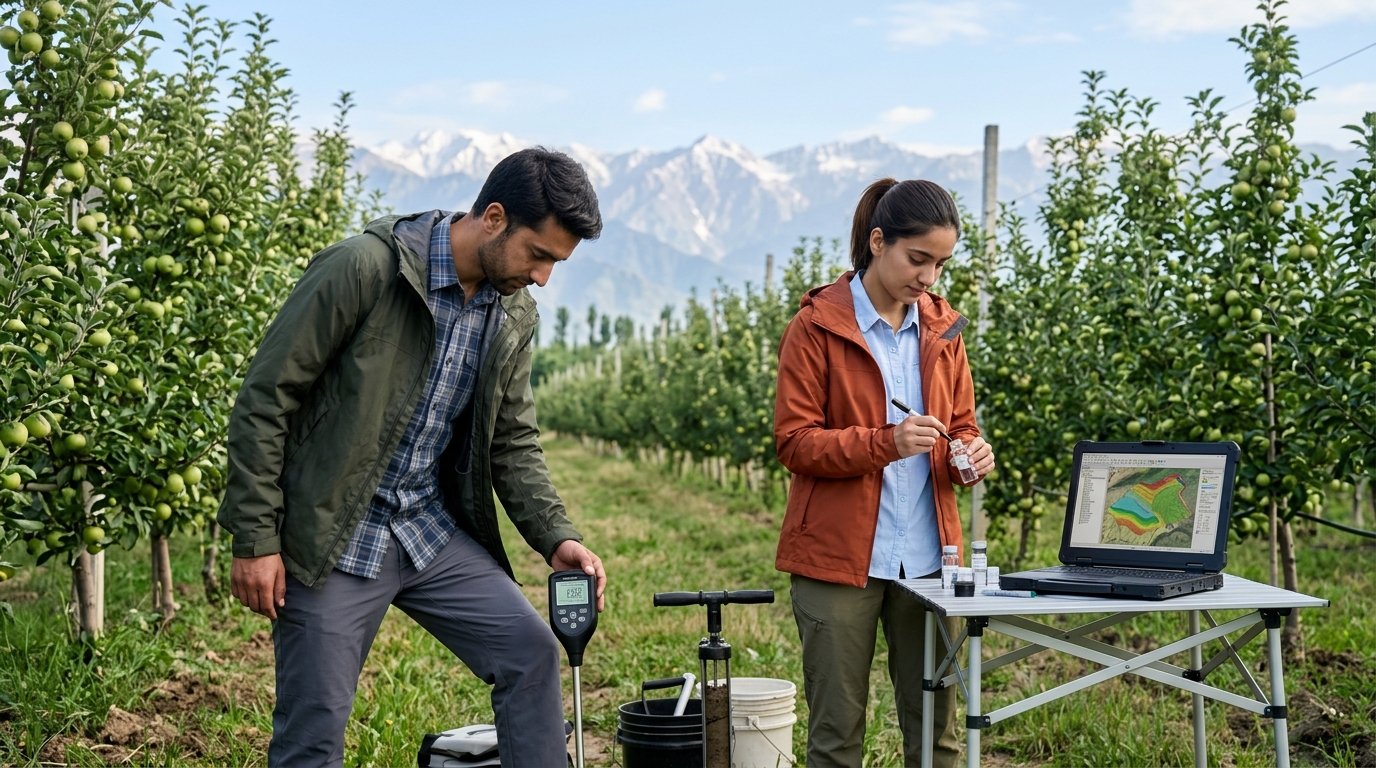
Executive Scientific Synthesis: The Pollination Paradox of Kashmir Horticulture
Landscape Simplification, Pollinizer Ratio Deficits, Wild Bee Functional Diversity, Agrochemical Sub-Lethal Stress, and Crop Pollination Resilience in Kashmir Orchards
Kashmir’s temperate fruit sector exhibits a profound agro-ecological paradox: over 90% of commercial apple, almond, sweet cherry, and pear revenue depends on insect-mediated cross-pollination, yet three decades of orchard intensification have systematically dismantled both the agronomic pollen-donor architecture and the landscape habitats sustaining wild insect pollinators [1, 2]. Across Shopian, Pulwama, Kulgam, and Baramulla, mixed village orchards once bordered by hawthorn-rose hedges, fallow grazing strips, and mud-brick Apis cerana walls have coalesced into uninterrupted expanses of single-cultivar Red Delicious .
When erratic Western Disturbances bring cool, overcast skies (9--13 deg C) during the fleeting 8 to 12 day April anthesis window, commercial honeybee flight drops sharply, exposing the vulnerability of monocultures stripped of cold-adapted wild Himalayan bumblebees (Bombus spp.), mining bees (Andrena spp.), sweat bees (Lasioglossum spp.), mason bees (Osmia spp.), and hoverflies [2, 3, 4]. Resulting pollination failure manifests not merely as June fruitlet drop, but as lopsided, low-seed (<4 seeds/fruit), calcium-deficient apples prone to bitter pit and rapid storage breakdown .