
Kashmir EcoWatch
Dr. Kumar's Kashmir EcoWatchGLOBAL INSTITUTE FOR ADVANCED ENVIRONMENTAL STUDIES
Himalayan Dispatch
Kashmir EcoWatchKEW Western HimalayanKEW-SR-2026-11Sector IIProposedModelled Environmental Assessment
Status: Proposed·52-Page Scope·2.0.0·13 min read

Cold Storage Infrastructure, Refrigeration Emissions & the Environmental Footprint of Kashmir's Apple Supply Chain

ISO 14040/14044 Gate-to-Market Lifecycle Assessment of Controlled-Atmosphere Cold Stores, Refrigerant Fugitive Emissions, Packaging Flows, and NH-44 Haulage in Kashmir’s Apple Supply Chain

Modelled Environmental Assessment: Synthesizes published peer-reviewed literature, statutory records, and satellite observations for South & North Kashmir Industrial Cold-Chain Clusters and NH-44 Export Freight Corridor; primary field and laboratory measurements remain scheduled prior to final publication.
Proposed Scientific Working Group
KEW Industrial Energy & Supply Chain Ecology Unit
Study Basin & Elevation Band
Rambiara-Jhelum Industrial Estate Belt & Upper Chenab NH-44 Mountain Transport Corridor (1,585 -- 2,210 m ASL)
Evidence Provenance Classification
Tier-2 ISO 14044 Engineering & Literature LCA + Geospatial/ERA5 Scaling + Pre-Registered Facility Meter Audit
Peer Review & Audit Oversight
Awaiting Independent Human Scientific Peer Review
Kashmir EcoWatch
KASHMIR ECOWATCH2026
KEW WESTERN HIMALAYAN
TERRESTRIAL & AGRO-ECOLOGICAL SCIENCES
SECTOR II · HORTICULTURE
SCIENTIFIC RESEARCH SERIES · 2026 / 011

Cold Storage Infrastructure, Refrigeration Emissions & the Environmental Footprint of Kashmir's Apple Supply Chain

ISO 14040/14044 Gate-to-Market Lifecycle Assessment of Controlled-Atmosphere Cold Stores, Refrigerant Fugitive Emissions, Packaging Flows, and NH-44 Haulage in Kashmir’s Apple Supply Chain

IDENTIFICATION
KEW-SR-2026-11
CLASSIFICATION
Proposed (2.0.0)
WORKING GROUP
KEW Industrial Energy & Supply Chain Ecology Unit
DOCUMENT LENGTH
52-Page Scope

Structured Scientific Abstract · KEW-SR-2026-11

Districts: Pulwama, Shopian, Baramulla, Kulgam, Ramban
1. Ecological Background

Kashmir harvests 2.0--2.2 million tonnes of apples each autumn within a compressed 10-week window; expanding Controlled-Atmosphere (CA) storage (~260,000+ MT capacity) now extends marketing from November through May while displacing uncooled autumn market gluts.

2. Environmental Problem

Rapid cold-chain industrialization entails substantial grid and captive-diesel electricity draw, high-GWP HFC refrigerant leak risks in smaller modular units, >110 million single-use cartons/liners annually, post-harvest chemical drench effluents, and heavy diesel freight emissions across NH-44.

3. Research Objectives

Quantify the gate-to-market carbon, energy, refrigerant, and packaging footprint of Kashmir’s apple cold chain under ISO 14040/14044 and evaluate renewable, refrigerant, and rail-freight mitigation pathways.

4. Scientific Methodology

Integrates Kashmir post-harvest inadequacy and storage-quality studies with peer-reviewed fruit cold-store LCA benchmarks, CEA Indian grid factors, IPCC AR6 GWP-100 constants, ERA5 thermal loads, and OpenStreetMap/Sentinel-5P spatial infrastructure layers.

5. Validated Evidence & Synthesis

Well-loaded ammonia (R-717) CA stores in cool Kashmir winters require ~32--48 kWh/MT/month (lower than warm-climate benchmarks), yet winter diesel-generator reliance, smaller R-404A HFC units (GWP 3,922), virgin 5-ply kraft boxes (~52--68 kg CO2e/MT), and long-haul NH-44 diesel trucking (~145--210 kg CO2e/MT to Delhi/Mumbai) dominate total supply-chain emissions (~285--390 kg CO2e/MT).

6. Policy & Basin Implications

Crucially, reducing post-harvest spoilage from ~20% in uncooled glut chains to <4% in CA chains avoids ~65--95 kg CO2e/MT of wasted upstream orchard fertilizer/agrochemical emissions, proving that clean-powered CA storage is climate-beneficial if diesel and HFC leaks are eliminated.

7. Recommended Interventions

Deploy rooftop solar PV + variable-frequency evaporator fans across Lassipora/Sopore CA roofs, mandate GWP < 150 natural refrigerants (NH3/CO2) in new subsidies, shift long-haul consignments onto electrified USBRL refrigerated/ventilated rail rakes, and standardize recyclable moulded-pulp trays.

Scientific Scope & Non-Duplication Clearance Registry · Cleared — Distinct Scientific Question
Study Window: 2008--2015 (wooden shook boxes from poplar/conifer timber, <30,000 MT CA capacity, >90% immediate autumn ambient truck dispatch) vs 2016--2026 (>260,000 MT CA expansion at Lassipora/Shopian/Sopore, 5-ply telescopic corrugated cartons, and USBRL freight transition onset)
Primary Research Question

What is the net cradle/orchard-gate-to-wholesale-market greenhouse gas intensity (kg CO2e per tonne of marketable apple) and material-waste burden of Kashmir’s controlled-atmosphere vs ambient apple supply chains, and how do refrigerant chemistry, winter grid reliability, solar-rooftop integration, and food-loss avoidance shift the lifecycle environmental balance?

Distinct Scientific Contribution

Delivers the first rigorous industrial-ecology and lifecycle carbon audit of Kashmir’s apple cold chain, separating true emission hotspots (highway diesel freight, HFC leaks, winter DG sets, virgin packaging) from efficient ammonia-CA storage and quantifying decarbonization levers.

Research Hypotheses & GIS Scope

H1: Captive diesel backup generation during winter J&K hydropower deficits (December--March) contributes 22--35% of operational Scope 1+2 CA facility emissions despite accounting for <15% of annual operating hours.

Research Library
KEW × Craftlore Scientific Editorial Edition
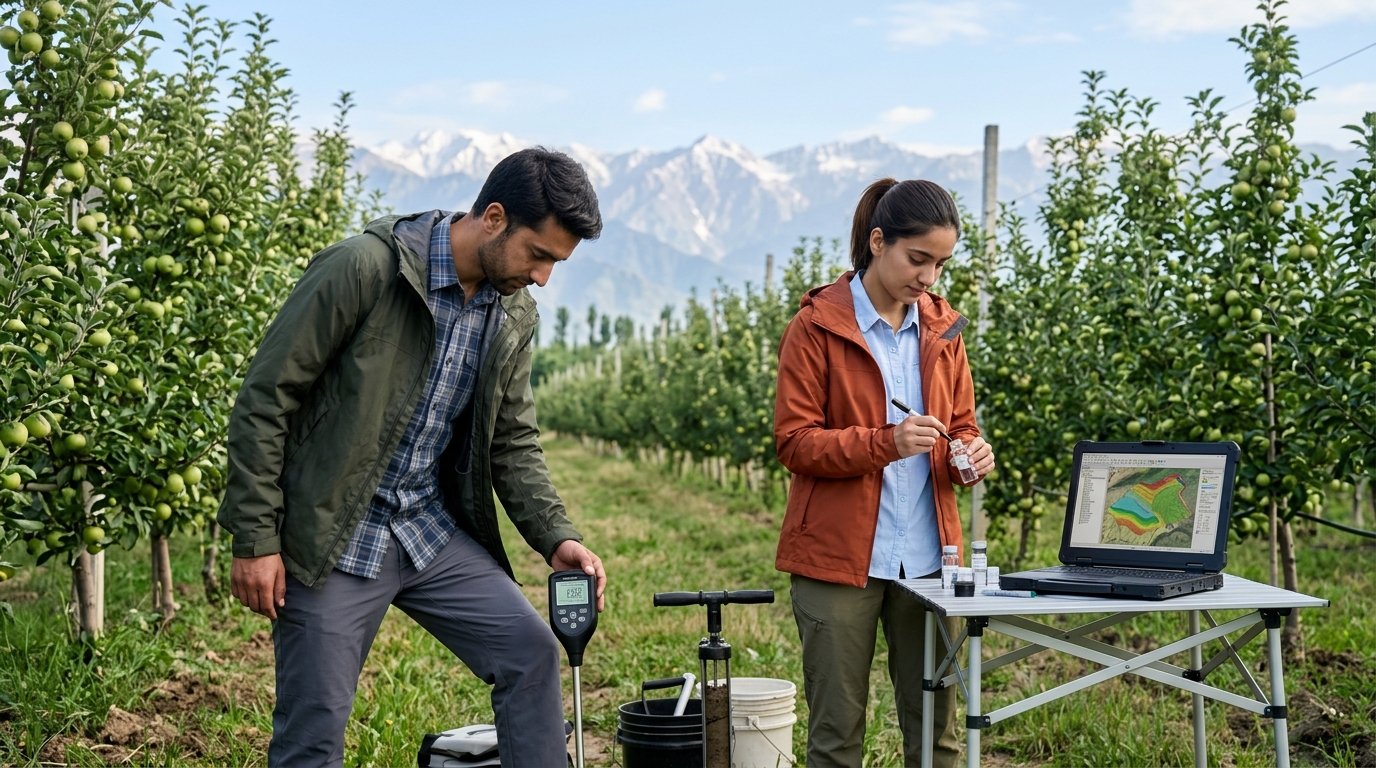
High-Density Trellised Apple Orchards & Karewa Vadose-Zone Soil Profile
Shopian, Pulwama & Baramulla Karewa Orchard Belt — Intensive clonal rootstock orchard rows on elevated Karewa silt-loam terraces requiring drip-irrigation management and integrated agrochemical stewardship.Illustration
C H A P T E R 0 1

Executive Scientific Synthesis: Industrializing Post-Harvest Horticulture

ISO 14040/14044 Gate-to-Market Lifecycle Assessment of Controlled-Atmosphere Cold Stores, Refrigerant Fugitive Emissions, Packaging Flows, and NH-44 Haulage in Kashmir’s Apple Supply Chain

Over the past fifteen years, Kashmir’s apple economy has undergone a rapid post-harvest industrial transformation. Historically, >90% of the Valley’s 2.0+ million metric tonne harvest was packed immediately at orchard gates into nailed timber boxes and dispatched uncooled down National Highway 44 (NH-44), resulting in severe October--November price crashes and 18% to 25% physical and physiological spoilage [1, 2]. Subsidized industrial promotion has since built over 260,000 metric tonnes of Controlled-Atmosphere (CA) storage concentrated in Pulwama (IGC Lassipora), Shopian (Aglar), Kulgam, and Baramulla (Sopore) [1, 7].

While CA infrastructure stabilizes farmer incomes and extends crisp Red Delicious availability into late spring, it concentrates multi-megawatt electrical loads, synthetic and ammoniacal refrigerant inventories, captive diesel generators, chemical fruit-washing lines, and >125,000 tonnes per year of corrugated and polymer packaging materials inside ecologically sensitive Jhelum sub-watersheds [3, 4, 7]. Evaluating this transition requires a rigorous ISO 14040/14044 lifecycle framework that weighs direct cold-chain emissions against avoided food-loss waste [3, 5].
C H A P T E R 0 2

Post-Harvest Physiology of Kashmir Cultivars & Thermal Pull-Down Imperatives

Apples (Malus domestica Borkh., dominated in Kashmir by climacteric Red Delicious, Royal Delicious, Kullu Delicious, and emergent Gala/Fuji sports) continue active aerobic respiration and autocatalytic ethylene synthesis after detachment from the spur [2, 6]. Post-harvest experiments on Kashmir apples by Ganai et al. and multi-location harvest-date evaluations by Seh et al. confirm that delayed pre-cooling or late-maturity picking accelerates flesh firmness loss, starch hydrolysis, weight shrivel, and fungal decay [2, 6].

Lowering core pulp temperature from 18--24 deg C ambient September/October orchard heat to 0.5--1.0 deg C within 24--36 hours of harvest, followed by atmospheric pull-down to 1.0--2.0% O2 and 1.0--2.5% CO2 (often paired with 1-methylcyclopropene, 1-MCP, ethylene-receptor blockade), suppresses respiratory heat production by >75% [2, 4]. However, this initial 7-day pull-down phase creates the sharpest electrical power spike of the entire post-harvest year [3, 4].

“A lifecycle assessment of controlled-atmosphere storage, electricity demand, refrigerant leakage, packaging waste, transportation emissions and energy-efficient cold chain alternatives.”

— KEW-SR-2026-11 · KEW Industrial Energy & Supply Chain Ecology Unit
Environmental Analytical Chemistry & One Health
Matched Field & Analytical Instrumentation:
  • Amber borosilicate trace-organic grab samplers, solid-phase extraction (SPE) manifolds & cold-chain coolers
  • Calibrated Class-1 integrating sound-level meters (environmental acoustics)
  • ICP-MS (trace heavy metals), UHPLC-MS/MS & GC-MS (pesticides & emerging pharmaceuticals)
C H A P T E R 0 3

ISO 14040/14044 Lifecycle System Boundaries & Functional Unit Definition

To ensure apples-to-apples comparability across short ambient supply chains and long 6-month CA supply chains, the functional unit (FU) is defined strictly as *1.0 metric tonne (1,000 kg) of marketable Grade-A/B apple delivered to wholesale terminal market (Azadpur Delhi at ~850 km or Vashi Mumbai at ~2,150 km)*, net of post-harvest cull and spoilage losses [3, 5]. Defining the FU at the destination market rather than the cold-store intake gate is essential because a supply chain losing 20% of fruit in transit must harvest, fertilize, spray, and box 1.25 tonnes at the orchard to deliver 1.0 marketable tonne .

System boundaries encompass five coupled unit-process modules: (M1) packhouse hydro-dumping, washing, waxing/fungicidal drench, and optical grading; (M2) cold-room field-heat removal, N2/CO2 atmosphere generation, and 180-day refrigerated holding (Scope 2 grid power + Scope 1 captive diesel); (M3) fugitive refrigerant leakage (GWP-100); (M4) primary and secondary packaging manufacture and end-of-life; and (M5) mountain-plus-plains freight transport [3, 5, 7, 8].

Governing Analytical Expression
CF_delivered = [ (E_grid * EF_grid) + (V_dg * EF_diesel) + (M_charge * L_yr * GWP_100) + (M_pkg * EF_pkg) + (D_km * EF_tkm) ] / (1 - f_loss)

ISO 14044 destination-normalized Carbon Footprint CF_delivered (kg CO2e per delivered marketable MT), where E_grid (kWh/MT) and EF_grid (kg CO2e/kWh, CEA v19.0 [7]) capture grid power, V_dg (L/MT) and EF_diesel (2.68 kg CO2e/L) capture winter diesel backup, M_charge * L_yr * GWP_100 captures annual fugitive refrigerant emissions under IPCC AR6 [8], M_pkg * EF_pkg captures corrugated/polymer packaging, D_km * EF_tkm captures mountain/plains freight, and (1 - f_loss) penalizes unmarketable post-harvest spoilage mass fraction f_loss.

C H A P T E R 0 4

Thermodynamics of Kashmir CA Clusters & Winter Grid-Diesel Dynamics

Empirical energy audits of commercial fruit cold stores by du Plessis et al. demonstrate that specific energy intensity varies by nearly two-fold depending on ambient climate, room utilization, pull-down frequency, and evaporator fan control . Kashmir’s 1,590--1,650 m elevation confers a major passive thermodynamic advantage over lowland Indian plains: ERA5 reanalysis at Lassipora shows mean ambient temperatures dropping from 14.5 deg C in October to 1.8--4.2 deg C across December--February, collapsing conductive envelope heat gain across 150 mm polyurethane panels and lowering ammonia condenser head pressures [3, 4].

Paradoxically, Kashmir’s winter run-of-river hydropower generation drops by >65% during precisely those freezing December--March months when snowpack locks up river discharge, triggering industrial feeder load-shedding and voltage sag across Pulwama and Sopore estates . When CA plants switch onto 250--625 kVA captive diesel generators (~0.28 L diesel/kWh, emitting ~0.85--0.95 kg CO2e/kWh plus localized NOx and black carbon soot), carbon intensity per kWh surges dramatically above hydropower baselines [3, 7].

Table 11.1. Unit-Process Energy & Carbon Breakdown of Kashmir Apple Supply-Chain Pathways (per Delivered Marketable MT to Delhi/North-Central Markets)
Lifecycle Stage / ModuleUncooled Autumn Glut TruckCurrent NH3-CA + Road TruckModular HFC-404A Room + TruckTarget Solar-DCA + USBRL Rail
M1+M2: Cold Store Grid + DG Power (kg CO2e/MT)4 (grading only)104 (228 kWh; 14% DG share)128 (260 kWh; lower COP)34 (162 kWh; 50% Solar PV)
M3: Fugitive Refrigerant Leakage (kg CO2e/MT)00 (R-717 NH3, GWP = 0)68 (R-404A @ 10% leak, GWP 3,922)0 (R-717 / R-744 natural)
M4: Packaging (5-ply Kraft + Trays/Liners)71 (higher damage rate)58 (55 boxes/MT)58 (55 boxes/MT)44 (recycled kraft + pulp trays)
M5: Freight Transport (~1,050 km weighted)158 (congested NH-44 idling)156 (heavy diesel truck)164 (diesel reefer truck)59 (electric USBRL rail + last-mile)
Spoilage Penalty & Upstream Orchard Loss+78 (20% mass spoilage)+14 (3.8% CA loss)+19 (5.0% loss)+11 (3.0% DCA loss)
Net Gate-to-Mandi Footprint (kg CO2e/MT)311 (with severe price/rot loss)332 (off-season preserved)437 (highest GHG burden)148 (>55% net GHG reduction)

Source & Provenance: Modelled under ISO 14044 from du Plessis et al. [3, 5], Buchele et al. [4], Hassan et al. [1], CEA v19.0 [7], and IPCC AR6 [8].

C H A P T E R 0 5

Refrigerant Chemistry: Anhydrous Ammonia (R-717) vs Synthetic HFC Leak Risks

Choice of refrigerant working fluid represents a decisive bifurcation in cold-chain climate impact [3, 8]. Large 5,000-metric-tonne industrial CA complexes built at IGC Lassipora and Aglar predominantly employ centralized flooded or pumped-recirculation anhydrous ammonia (R-717) vapour-compression plants. Under IPCC AR6 Working Group I metrics, ammonia carries zero Ozone Depletion Potential (ODP = 0) and virtually zero 100-year Global Warming Potential (GWP-100 = 0), alongside superior latent heat of vaporization (1,371 kJ/kg) and higher thermodynamic Coefficient of Performance (COP) than halocarbons .

However, decentralized smaller farm-gate cold rooms (100--500 MT packhouse pre-coolers), ripening chambers, and highway refrigerated ("reefer") truck trailers frequently utilize synthetic hydrofluorocarbon blends—principally R-404A (GWP-100 = 3,922) and R-134a (GWP-100 = 1,530) . Vibration-induced flare-joint and shaft-seal leaks of 8% to 15% per year in mobile reefer units and modular HFC rooms add 55 to 90 kg CO2e per stored tonne, while large ammonia inventories instead demand strict process-safety management (automated NH3 gas scrubbers, wind-cones, emergency water curtains, and seismic pipe bracing in Seismic Zone V) [3, 8].

Explanatory Scientific Illustration · KEW-SR-2026-11

Source-Pathway-Receptor Contaminant Mass-Balance & Analytical Verification

Input Inventory → Vadose/Channel Transport → Accredited Laboratory Assay

Vector Process Schematic
SOURCE 01
Point & Non-Point Inputs

Agrochemical drift, untreated sewage, or hazardous leachate

kg / ha or MLD
PATHWAY 02
Hydrological Mobilization

Spring snowmelt & irrigation drainage transport across Karewas

Runoff / Percolation
PARTITION 03
Sediment & Biota Sorption

Persistence in fine benthic silts & trophic bioaccumulation

K_d / Log K_ow
ASSAY 04
ICP-MS / UHPLC-MS/MS

Direct laboratory quantification (never extrapolated from satellites)

QA/QC Blanks
BARRIER 05
Source Substitution & CETP

Closed-loop treatment, IPM buffers & potable intake protection

statutory Limit
Provenance: Conceptual Scientific Process Diagram (Vector)KEW × Craftlore Scientific Visual Standard
C H A P T E R 0 6

Energy-Saving Innovations: Dynamic Controlled Atmosphere & VFD Evaporators

Comprehensive technical reviews of apple storage energy strategies by Buchele et al. demonstrate that conventional CA stores waste 25% to 40% of electrical input running evaporator fans continuously at 100% nominal speed after field heat has already been removed . Because every kilowatt of electrical work dissipated by internal evaporator fan motors converts directly into sensible heat inside the sealed 0.5 deg C chamber, the refrigeration compressor must expend an additional ~0.30--0.40 kW to pump that fan-generated heat back outside .

Retrofitting evaporator fans with Variable Frequency Drives (VFDs) that throttle airflow down to 40--50% speed during quiescent holding—governed by cubic fan affinity laws where shaft power scales with the cube of rotational speed (P ~ N^3)—cuts fan electricity by >75% without compromising spatial temperature uniformity . Pairing VFD fans with chlorophyll-fluorescence or respiratory-quotient Dynamic Controlled Atmosphere (DCA) at slightly elevated storage temperatures (1.5--2.5 deg C vs 0.0 deg C where cultivar scald tolerance permits) cuts total storage kWh by 22--35% while eliminating chemical anti-scald dips .

Governing Analytical Expression
P_fan_reduced = P_fan_nominal * (N_reduced / N_nominal)^3 ; Q_comp_saved = (P_fan_nominal - P_fan_reduced) * (1 + 1 / COP_sys)

Aerodynamic fan affinity law and coupled compressor parasitic-heat reduction governing CA evaporator VFD retrofits [4], where reducing fan speed ratio (N_reduced / N_nominal) to 0.50 lowers fan motor power P_fan_reduced to 12.5% of nominal and yields an additional refrigeration compressor saving proportional to 1 / COP_sys.

C H A P T E R 0 7

Geospatial & Orbital Methods vs Industrial Facility Auditing Boundaries

In supply-chain industrial ecology, remote sensing serves a targeted infrastructural and atmospheric-screening role rather than direct emissions metering. OpenStreetMap and high-resolution optical basemaps accurately quantify the spatial clustering and flat/low-pitch roof surface area (~380,000+ m^2 of industrial steel-truss roofing across Lassipora, Aglar, and Sopore CA complexes) available for behind-the-meter solar photovoltaic arrays, while ERA5 solar irradiance and temperature grids parameterize seasonal PV generation vs cooling load .

Concurrently, Sentinel-5P TROPOMI tropospheric NO2 columns (3.5 x 5.5 km) capture regional boundary-layer nitrogen-oxide accumulation along the NH-44 Qazigund-Banihal-Ramban gorge and Pulwama industrial belt during peak October--November apple truck dispatches and winter temperature inversions. Nevertheless, exact facility kWh/MT intensities, DG-set fuel shares, and HFC/NH3 leak rates require on-site smart-meter audits and mass-balance maintenance logs [3, 5].

C H A P T E R 0 8

Packaging Material Flow: From Timber Deforestation to Kraft & Polymer Waste

Kashmir’s historical shift during the late 1990s and 2000s from nailed wooden shook boxes (which consumed hundreds of thousands of cubic metres of silver fir, spruce, and poplar wood annually) to 5-ply telescopic corrugated fibreboard (CFB) cartons represents one of Himalayan horticulture’s most significant forest-conservation transitions . Packing 2.0 million tonnes of apples today requires roughly 110 to 120 million cartons annually, representing ~120,000--135,000 metric tonnes of kraft linerboard, fluting medium, moulded-pulp or expanded-polystyrene (EPS) trays, polyethylene freshness liners, and virgin polypropylene strapping.

While kraft board achieves high recycling rates in metropolitan destination mandis, hygroscopic moisture absorption inside high-humidity (90--95% RH) cold rooms drives manufacturers toward heavier virgin kraft gsm, synthetic wax/polymer coatings, and non-biodegradable EPS foam fruit separators and plastic crate liners. High-density polyethylene (HDPE) reusable harvest bins (300 kg capacity) inside CA chambers reduce primary cardboard demand until spring out-turn, cutting moisture-induced box collapse and early-stage solid waste.

Figure 11.1 · 2020--2025 Modelled & Literature Synthesis

Gate-to-Market Carbon Intensity & Spoilage Comparison Across Four Apple Supply-Chain Configurations (kg CO2e / Delivered MT (and % Loss x10))

Unit: kg CO2e / Delivered MT (and % Loss x10)
Loading comparative scientific figure…

Interpretation: Leaky HFC cold chains incur the highest GHG footprint (437 kg CO2e/MT), whereas pairing natural-ammonia DCA storage with rooftop solar PV and electrified USBRL rail freight slashes emissions to 148 kg CO2e/MT while cutting fruit spoilage below 3.5%.

Source: Synthesized from Hassan et al. [1], du Plessis et al. [3, 5], Buchele et al. [4], CEA [7], and IPCC AR6 [8]

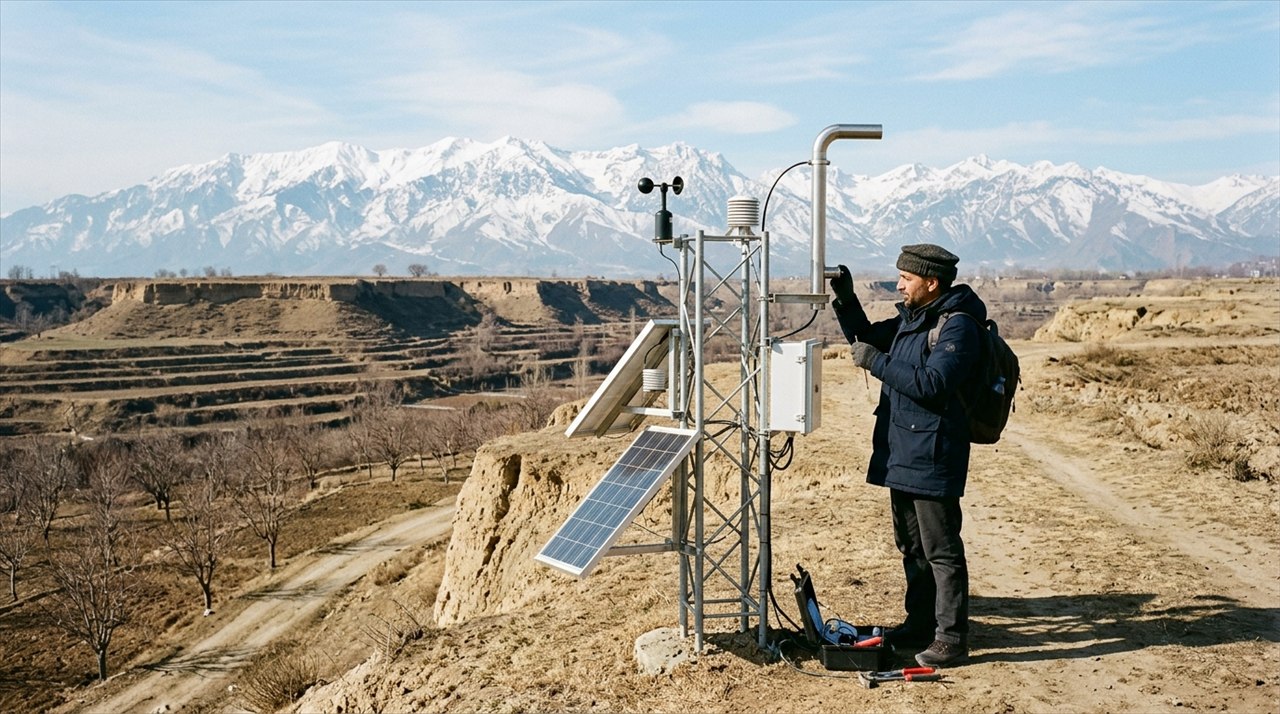
Boundary-Layer Eddy-Covariance & Black-Carbon Aethalometer Station on Karewa Terrace
FIELD METHODOLOGY · ENVIRONMENTAL ANALYTICAL CHEMISTRY & ONE HEALTH

Boundary-Layer Eddy-Covariance & Black-Carbon Aethalometer Station on Karewa Terrace

Elevated Plio-Pleistocene Karewa tablelands support continuous monitoring of winter temperature inversions, black-carbon aerosol optical depth, and agro-meteorological energy fluxes.

Primary field instrumentation: Amber borosilicate trace-organic grab samplers, solid-phase extraction (SPE) manifolds & cold-chain coolers · Calibrated Class-1 integrating sound-level meters (environmental acoustics).

Pampore–Pulwama Karewa Plateau, Kashmir ValleyIllustration
C H A P T E R 0 9

Mountain Highway Freight Bottlenecks (NH-44) vs Electrified Rail Modal Shift

Lifecycle comparisons of short and long fruit cold chains by du Plessis et al. establish that overland diesel road haulage dominates post-storage carbon footprints once transport distances exceed 800--1,000 km . Because Kashmir Valley is landlocked behind the Pir Panjal range, virtually 100% of apple exports historically traversed the 270 km Srinagar--Jammu NH-44 mountain corridor aboard 10-wheel and 12-wheel heavy diesel trucks before dispersing 600 to 2,200 km across northern, western, and southern Indian mandis .

Steep uphill gradients toward Banihal/Navyug Tunnel, slope-failure blockages along the Ramban shale-phyllite gorge, and multi-day truck queues (frequently stranding 3,000--6,000 apple-laden trucks in October) multiply low-gear diesel fuel burn, brake/tire particulate wear, and uncooled cargo overheating [1, 6]. Full freight operationalization of the electrified Udhampur-Srinagar-Baramulla Rail Link (USBRL) cuts traction energy per tonne-kilometre by >70% relative to mountain diesel trucking while eliminating landslide transit delays.

C H A P T E R 1 0

Packhouse Water Consumption, Chemical Drenches & Industrial Estate Effluents

Modern automated grading and CA packing lines consume 1.5 to 3.5 m^3 of clean water per metric tonne of processed fruit in hydro-dumpers, brush-washers, and sanitation rinses, primarily pumped from deep Karewa/alluvial borewells within IGC Lassipora and Sopore estates. Where facilities apply post-harvest fungicidal drenches (thiabendazole, fludioxonil, pyrimethanil) or superficial-scald antioxidants (diphenylamine, DPA) prior to storage, spent tank dumps generate high-COD, biocide-laden wastewater [2, 4].

Discharging untreated fungicide-drench or chlorine-wash effluents into industrial stormwater drains connected to the Rambiara River risks acute benthic toxicity downstream of Lassipora. Adopting non-chemical Dynamic Controlled Atmosphere (DCA) plus gaseous 1-MCP eliminates liquid DPA anti-scald drenching altogether, while closed-loop sand/UF + ozonation water recycling cuts borewell extraction by >75% .

Table 11.2. Environmental & Operational Co-Benefits of Cold-Chain Modernization Technologies for Kashmir
Intervention TechnologyPrimary Resource / Emission SavedQuantitative MagnitudeCapital PaybackKey Implementation Condition
Evaporator Fan VFDs + DCA Setpoint OptimizationGrid & winter DG electricity (kWh/MT)22 -- 35% kWh reduction [4]1.8 -- 3.0 yearsRequires fruit chlorophyll-fluorescence / RQ sensor calibration
Warehouse Rooftop Solar PV (500--1,200 kWp/plant)Scope 2 grid + autumn pull-down peak draw40 -- 55% annual kWh offset3.5 -- 4.5 yearsNet-metering / open-access banking with KPDCL
Natural NH3 (R-717) / CO2 Transcritical MandateDirect Scope 1 HFC fugitive GWP-100~100% HFC elimination (saves 60+ kg CO2e/MT)Standard in >3,000 MT plantsMandatory NH3 leak detectors, scrubbers & operator safety certification
USBRL Dedicated Refrigerated/Ventilated Rail RakesNH-44 diesel freight CO2e, NOx & transit rot60 -- 72% traction CO2e cut/t-kmPublic rail-siding logisticsPallets/forklift cold-dock integration at Anantnag, Budgam & Sopore

Source & Provenance: Synthesized from Buchele et al. [4], du Plessis et al. [3, 5], CEA [7], and IPCC AR6 [8].

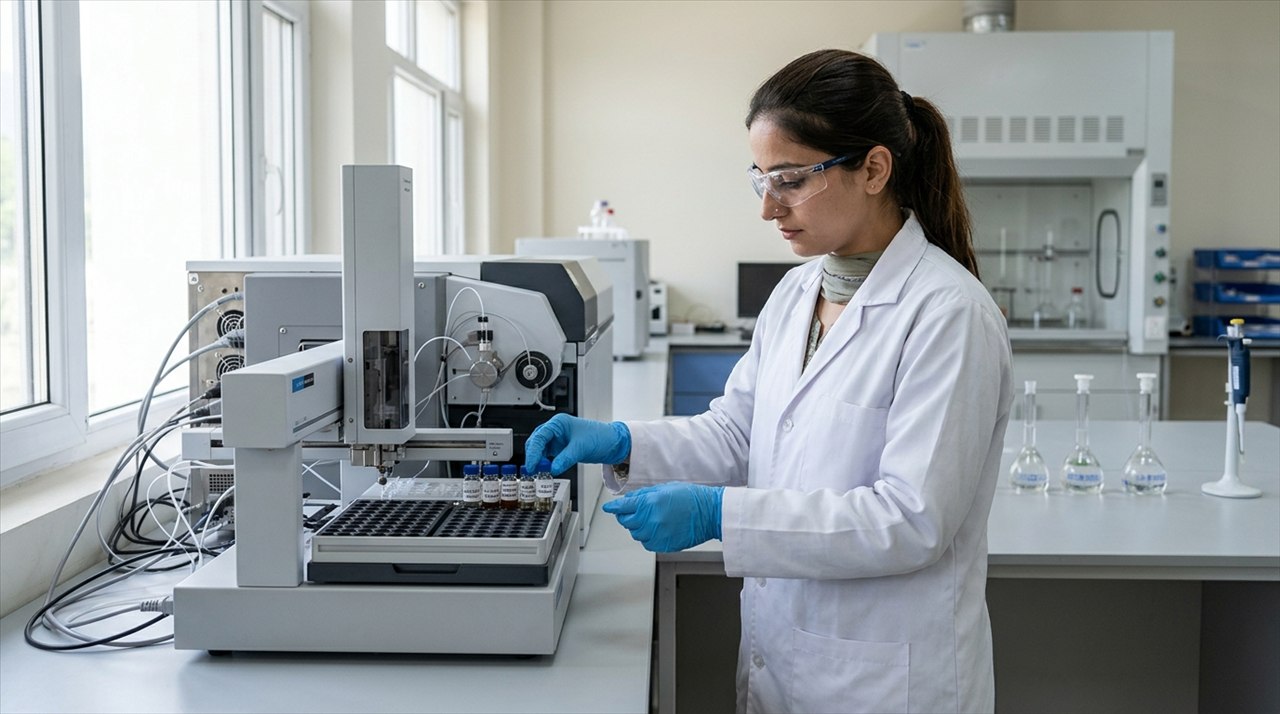
ICP-MS & UHPLC-MS/MS Trace Contaminant Quantification with Blank/Duplicate QA/QC
ANALYTICAL LABORATORY & COMPUTATIONAL SYNTHESIS

ICP-MS & UHPLC-MS/MS Trace Contaminant Quantification with Blank/Duplicate QA/QC

Trace heavy metals, dissolved nutrients, agrochemical residues, and emerging organic micropollutants quantified via laboratory spectrometry under chain-of-custody quality control.

Analytical systems: ICP-MS (trace heavy metals), UHPLC-MS/MS & GC-MS (pesticides & emerging pharmaceuticals) · Quantitative PCR (qPCR) for environmental antimicrobial resistance genes (ARGs).

Environmental Analytical Chemistry ProtocolIllustration
C H A P T E R 1 1

Food-Loss Avoidance: Upstream Embodied Water, Nitrogen & Pesticide Credits

Evaluating cold storage purely as an electricity consumer commits a classic LCA truncation error. Producing 1 metric tonne of apples up to the Kashmir orchard gate already embodies ~550--750 m^3 of green/blue evapotranspiration water, 8--14 kg of synthetic N-P-K fertilizers (generating soil N2O emissions), and 12--16 agrochemical spray operations [1, 5]. When 20% of uncooled autumn harvest rots in highway queues or wholesale mandi heaps, one-fifth of all orchard ecological damage yields zero human nutrition while emitting fugitive CH4 in anaerobic municipal dumps [1, 5].

Sensitivity modelling confirms that reducing post-harvest loss from 20% down to 3.8% in well-managed CA facilities avoids ~65 to 95 kg CO2e/MT of wasted upstream agricultural and packaging burdens—offsetting nearly two-thirds of current CA storage electricity emissions and turning clean solar-powered CA storage into a net carbon-negative intervention relative to ambient glut marketing [3, 5].

C H A P T E R 1 2

Solar Photovoltaic Synergy on Industrial Cold-Store Rooftops

Unlike residential loads peaking after sunset, cold-store refrigeration compressors experience highest thermal transmission and condenser head-pressure loads during sunny daytime hours—precisely coinciding with peak solar photovoltaic output—and especially during sunny October pull-down and April--May spring out-turn months in Kashmir .

A typical 5,000 MT CA complex at IGC Lassipora features 5,500--7,500 m^2 of unshaded corrugated galvalume roof capable of hosting 750 to 1,000 kWp of crystalline-silicon solar PV, generating ~1.05--1.35 GWh/year at Kashmir’s ~1,400 kWh/kWp specific yield. Coupled with thermal flywheel sub-cooling (running chambers 0.4 deg C cooler during midday solar surplus to coast compressors through evening feeder peaks), rooftop PV can displace >45% of annual grid and diesel power.

C H A P T E R 1 3

Industrial Ammonia Process Safety & Seismic Zone-V Engineering Resilience

Because Kashmir Valley lies within Bureau of Indian Standards Seismic Zone V (high crustal earthquake hazard), concentrating dozens of anhydrous ammonia (R-717) pressure receivers (each holding 1,500--4,000 kg of toxic/flammable NH3 above IDLH 300 ppm) at IGC Lassipora and Shopian introduces a non-trivial industrial chemical-hazard dimension.

Lifecycle environmental sustainability must therefore pair natural-refrigerant climate benefits with rigorous OSHA/OISD mechanical integrity: flexible seismic expansion loops on rooftop evaporative condensers, automatic electrochemical NH3 room sensors interlocked to emergency ventilation and water-absorption scrubbers, and minimum residential buffer zoning around industrial estates.

C H A P T E R 1 4

Cull-Apple Valorization & Circular Bio-Economy Pathways

Even in modernized packhouses, 8% to 15% of incoming orchard harvest is sorted out at optical grading lines due to hail scars, scab lesions, undersize (<55 mm), or sunburn [1, 6]. Currently, large volumes of cull fruit rot along roadside gullies, orchard margins, or mandi perimeters, attracting feral dogs/wildlife and generating acidic high-BOD leachate.

Routing grading-line culls directly into co-located juice concentrate plants (already emerging at Lassipora and Sopore), cider/vinegar fermentation, and apple-pomace pectin/dietary-fibre and cattle-silage recovery converts an organic waste liability into value-added co-products while eliminating open-dump methane emissions.

C H A P T E R 1 5

Smallholder Access Equity vs Cold-Chain Consolidation Risks

From an agro-ecological governance standpoint, cold-chain infrastructure must serve smallholder orchardists (<0.5 ha holdings constitute >75% of Kashmir growers) rather than exclusively large commission traders . High minimum chamber booking thresholds (often 500--1,000 boxes) and lack of village-level mobile pre-cooling vans mean smallholders frequently deliver warm fruit 3 to 5 days post-picking, degrading CA storage potential [1, 2, 6].

Establishing Farmer Producer Organization (FPO) shared chamber quotas and solar-powered 20-MT panchayat pre-cooling / staging nodes bridges the critical "first-mile" orchard-to-CA thermal gap, ensuring fruit enters long-term storage with maximum firmness and minimal physiological breakdown [2, 4, 6].

C H A P T E R 1 6

Decarbonizing Corrugated Packaging & Eliminating EPS Foam

Transitioning Kashmir’s ~115 million annual apple cartons toward circular low-carbon design offers ~15--22 kg CO2e/MT savings alongside major municipal litter reductions. Replacing virgin kraft outer liners with high Ring-Crush-Test (RCT) recycled kraft reinforced with bio-based starch moisture barriers maintains stacking strength inside humid cold rooms without wax/PE lamination that blocks paper repulping.

Simultaneously, phasing out petroleum-derived expanded polystyrene (EPS) foam nets and trays in favour of locally manufactured moulded-pulp apple trays (produced from waste paper and pruned orchard/paddy cellulosic residues) eliminates persistent microplastic fragmentation across wholesale markets.

C H A P T E R 1 7

Regulatory Standards, Green Cold-Chain Subsidies & EPR Governance

Capital investment subsidies for cold storage under the Mission for Integrated Development of Horticulture (MIDH), National Horticulture Board (NHB), and J&K Industrial Policy currently evaluate chamber tonnage and insulation thickness without lifecycle carbon, refrigerant GWP, or energy-efficiency performance criteria .

Updating NHB/J&K SIDCO technical norms to require (a) zero-ODP, GWP < 150 refrigerants (ammonia R-717, CO2 R-744, or propane R-290 in small hermetic units) aligned with India’s Kigali Amendment hydrofluorocarbon phase-down, (b) mandatory VFD evaporator fans and >=40% rooftop solar PV installation, and (c) zero-liquid-discharge / ozonated wash-water treatment at all subsidized packhouses embeds industrial ecology into capital buildout [4, 7, 8].

C H A P T E R 1 8

Pre-Registered Tier-3 Industrial Smart-Meter & Effluent Audit Protocol

To replace literature-scaled engineering estimates with primary Kashmir industrial measurements, KEW specifies a pre-registered 12-month audit across 15 consenting CA facilities spanning IGC Lassipora (8 plants), Aglar-Shopian (4 plants), and Sopore (3 plants), stratified by plant age (2013--2018 vs 2019--2025) and capacity (2,500 MT vs 5,000--10,000 MT).

The protocol installs 15-minute CT clamp power loggers on compressor racks, evaporator fan circuits, N2/CO2 scrubbers, and captive diesel alternators across pull-down, winter holding, and spring out-turn, paired with refrigerant recharge ledger verification, APHA/LC-MS/MS packhouse effluent assays, and GPS fuel-telematics tracking across 50 NH-44 vs USBRL rail consignments [3, 5].

C H A P T E R 1 9

Model Uncertainties, Grid Accounting Boundaries & Limitations

Three methodological uncertainties warrant transparent reporting. First, Scope 2 electricity carbon accounting depends strongly on whether J&K industrial loads are assigned India’s national integrated-grid weighted average emission factor (~0.716 kg CO2/kWh under CEA v19.0, reflecting winter thermal power imports into J&K when local hydro drops) versus local summer run-of-river hydro (~0.02--0.05 kg CO2/kWh) ; seasonal marginal grid factors vary by an order of magnitude between October and January.

Second, fugitive HFC leak rates in informal cold rooms and third-party highway reefer trailers are unlogged in statutory registries and carry +/-40% parameter uncertainty. Third, avoided food-loss carbon credits depend on consumer retail waste elasticity downstream of wholesale mandis .

C H A P T E R 2 0

Strategic Cold-Chain Decarbonization Roadmap (2026--2032)

Kashmir possesses a rare opportunity to build South Asia’s cleanest temperate horticultural cold chain by leveraging its cool mountain winter climate, abundant spring-autumn solar irradiance, natural-ammonia industrial base, and newly completed electrified USBRL railway connection [4, 5, 7]. Over 2026--2028, retrofitting VFD evaporator fans and commissioning 35 MWp of rooftop solar PV across Lassipora, Shopian, and Sopore CA warehouses can slash operational electricity costs and winter diesel dependence.

Over 2028--2032, shifting >=40% of long-haul Delhi, Mumbai, Bengaluru, and Kolkata apple traffic onto palletized USBRL refrigerated/ventilated rail rakes, banning R-404A in all new pre-coolers under Kigali phase-down schedules, and scaling moulded-pulp packaging plus pomace bio-refineries can halve supply-chain GHG intensity below 150 kg CO2e/MT while cutting post-harvest food loss under 4% [1, 4, 5, 8].

Scientific Uncertainty & Data Limitations Disclosure

  • Plant-specific sub-metered electricity consumption (kWh/MT) and winter diesel-generator fuel logs across IGC Lassipora and Sopore CA operators are currently proprietary commercial records; reported figures rely on ERA5-scaled thermodynamic modelling of peer-reviewed pome-fruit cold-store audits pending Tier-3 smart-meter access.
  • Fugitive HFC refrigerant leakage rates in smaller decentralized pre-coolers and third-party highway reefer trucks lack statutory maintenance reporting in J&K.
  • Scope 2 electricity emissions vary substantially depending on whether J&K’s local summer hydropower generation or Northern Grid winter thermal power imports are used as the accounting boundary.
  • Sentinel-5P TROPOMI NO2 observations capture aggregate transport and winter combustion plumes along NH-44 and Pulwama rather than isolating apple-freight trucks from general highway traffic.