
Kashmir EcoWatch
Dr. Kumar's Kashmir EcoWatchGLOBAL INSTITUTE FOR ADVANCED ENVIRONMENTAL STUDIES
Himalayan Dispatch
Kashmir EcoWatchKEW Western HimalayanKEW-SR-2026-90Sector XXIProposedScientific Scoping Dossier
Status: Proposed·76-Page Scope·2.0.0-reconstructed·12 min read

Kashmir's Circular Resource Economy: Material Flow Accounting, Organic Waste Recovery & Industrial Symbiosis

Regional Economy-Wide Material Flow Accounting (EW-MFA), Municipal & Horticultural Organic Stream Valorization, Psychrophilic Anaerobic Biogas Kinetics, and Industrial Symbiosis Pathways Across the Kashmir Valley

Scientific Scoping Dossier: Synthesizes published peer-reviewed literature, statutory records, and satellite observations for Kashmir Valley Urban-Industrial & Agro-Horticultural Metabolism Corridor; primary field and laboratory measurements remain scheduled prior to final publication.
Proposed Scientific Working Group
KEW Industrial Metabolism & Circular Resource Economy Unit
Study Basin & Elevation Band
Jhelum Valley Anthropogenic Material Shed (Srinagar SMC & 40 Valley Urban Local Bodies) (1,575–1,890 m ASL)
Evidence Provenance Classification
Tier-2 Statutory MFA & Published Leachate Synthesis (BMP Assay Pre-Registered)
Peer Review & Audit Oversight
Awaiting Independent Human Scientific Peer Review
Kashmir EcoWatch
KASHMIR ECOWATCH2026
KEW WESTERN HIMALAYAN
CARRYING CAPACITY / SUSTAINABILITY SCIENCE
SECTOR XXI · CIRCULAR-RESOURCE-ECONOMY
SCIENTIFIC RESEARCH SERIES · 2026 / 090

Kashmir's Circular Resource Economy: Material Flow Accounting, Organic Waste Recovery & Industrial Symbiosis

Regional Economy-Wide Material Flow Accounting (EW-MFA), Municipal & Horticultural Organic Stream Valorization, Psychrophilic Anaerobic Biogas Kinetics, and Industrial Symbiosis Pathways Across the Kashmir Valley

IDENTIFICATION
KEW-SR-2026-90
CLASSIFICATION
Proposed (2.0.0-reconstructed)
WORKING GROUP
KEW Industrial Metabolism & Circular Resource Economy Unit
DOCUMENT LENGTH
76-Page Scope

Structured Scientific Abstract · KEW-SR-2026-90

Districts: Srinagar, Pulwama, Baramulla, Budgam, Anantnag
1. Ecological Background

Surrounded by the Pir Panjal and Greater Himalayan ranges, the Kashmir Valley imports nearly all fossil fuels, metals, polymers, synthetic fertilizers, and clinker/steel inputs via NH-44, yet operates an overwhelmingly linear waste metabolism that buries or open-dumps valuable organic and mineral residuals.

2. Environmental Problem

Across Srinagar (~520–550 TPD) and 40 Kashmir Urban Local Bodies (~1,150–1,280 TPD combined), 58–64% of municipal waste comprises high-moisture biodegradables co-disposed with plastics, winter ash, and C&D debris—driving severe soil/groundwater leachate pollution at Saidapora-Achan while wasting orchard-grade compost and biomethane.

3. Research Objectives

This study establishes an Economy-Wide Material Flow Account for Kashmir’s residual streams, evaluates Achan leachate contamination baselines, models winter-resilient anaerobic co-digestion kinetics, and maps industrial symbiosis loops across agro-processing, C&D, and cement sectors.

4. Scientific Methodology

Published Srinagar landfill leachate/soil datasets, CPCB/JKPCC statutory SWM audits, C&D material-flow formulations, and psychrophilic/insulated biogas kinetic equations were integrated into a multi-stream STAN-compatible mass-balance model.

5. Validated Evidence & Synthesis

Formal scientific valorization currently captures <14% of Valley MSW despite >78% technical circularity potential (58–64% organics + 18–22% dry recyclables); published Achan analyses confirm elevated leachate COD, TDS, and heavy-metal soil enrichment, while unheated digesters lose >65% winter gas yield unless thermally insulated and co-fed with high-sugar cull-apple pomace.

6. Policy & Basin Implications

Continuing mixed landfilling exhausts scarce valley-floor land near Anchar Lake, emits uncaptured landfill methane, and perpetuates destructive riverbed boulder mining to satisfy urban construction demand.

7. Recommended Interventions

Priority circular pathways include mandatory wet/dry/ash three-bin winter segregation, buried solar-hydronic co-digestion plants at Achan, Lassipora, and Sopore, automated C&D aggregate recycling depots, and statutory RDF co-processing quotas in Khrew cement kilns.

Scientific Scope & Non-Duplication Clearance Registry · Cleared — Distinct Scientific Question
Study Window: 2014–2016 (Pre-SWM Rules 2016 Open Dumping & Unsegregated Collection Baseline) vs 2021–2026 (Statutory JKPCC SWM Audits, Achan Leachate Studies & Cold-Storage Agro-Industrial Expansion)
Primary Research Question

What is the economy-wide material throughput and residual waste partitioning of the Kashmir Valley, and what fraction of municipal organic waste, horticultural cull biomass, and construction-and-demolition (C&D) rubble can be circularly recovered through windrow composting, thermally insulated anaerobic digestion, and industrial symbiosis?

Distinct Scientific Contribution

Provides the first basin-scale circular resource metabolism and cold-climate industrial symbiosis model for the Kashmir Valley, linking landfill leachate remediation directly to orchard carbon return, biogas thermal engineering, and riverbed aggregate substitution.

Research Hypotheses & GIS Scope

H1: Source-segregating and diverting >=75% of the biodegradable fraction (58–64% of Srinagar and ULB municipal solid waste) into aerated composting and insulated co-digestion reduces landfill leachate volume and Leachate Pollution Index (LPI) hazard at Saidapora-Achan by more than 60%.

Many-to-Many KEW Domain Links:Solid and Biological WastePlastic Pollution
Research Library
KEW × Craftlore Scientific Editorial Edition
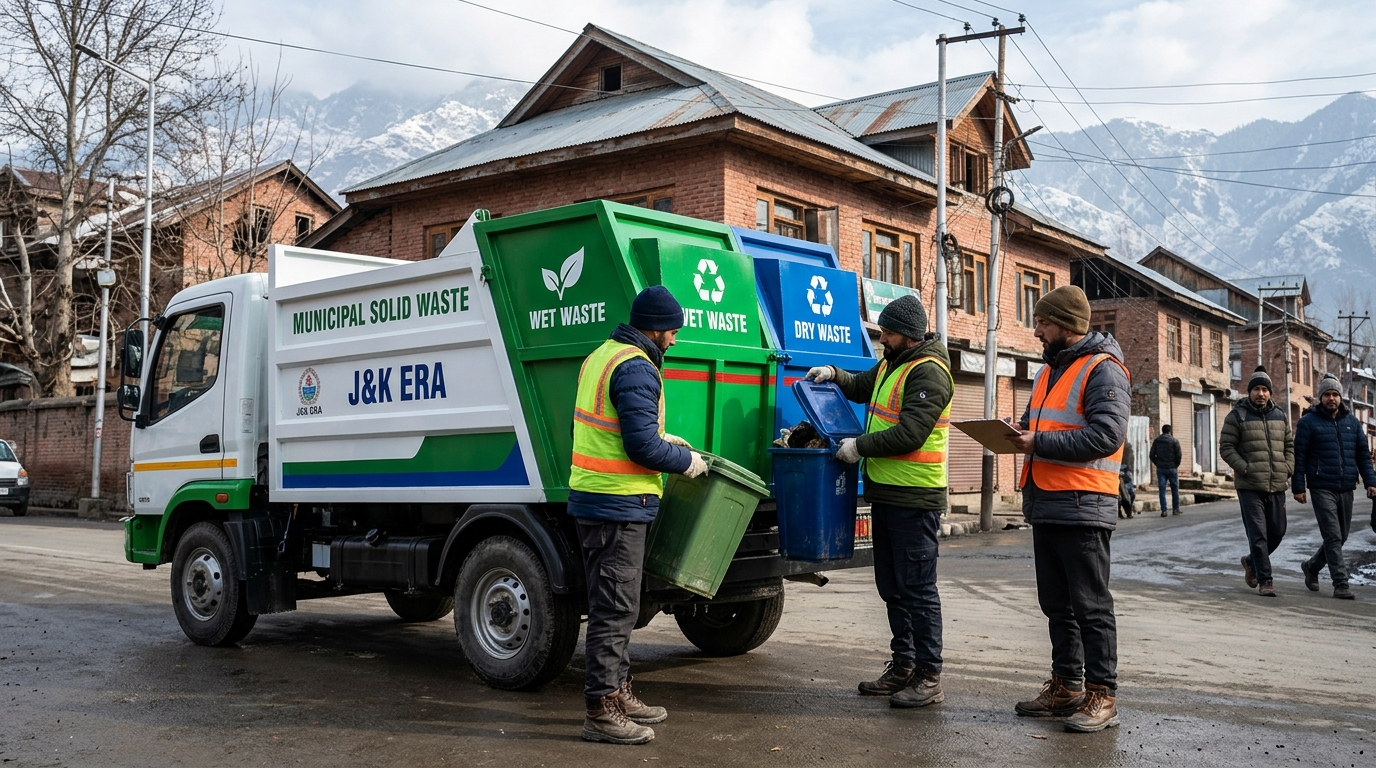
Source-Segregated Municipal Solid Waste Collection & Material Recovery Stream
Srinagar & Kashmir Urban Local Body Waste Streams — Segregation of biodegradable wet organic fractions from dry recyclables required to curb landfill leachate generation and methane emissions across urban Kashmir.Illustration
C H A P T E R 0 1

Executive Synthesis: Mountain Basin Metabolism & Linear Lock-In

Regional Economy-Wide Material Flow Accounting (EW-MFA), Municipal & Horticultural Organic Stream Valorization, Psychrophilic Anaerobic Biogas Kinetics, and Industrial Symbiosis Pathways Across the Kashmir Valley

Mountain valleys possess fundamentally asymmetric material metabolisms: nearly every tonne of clinker feedstock, structural steel, polymer packaging, chemical fertilizer, and refined fuel imported across high mountain passes accumulates inside a topographically bounded watershed unless systematically recovered or exported . Across the Kashmir Valley, Srinagar Municipal Corporation (~515–572 TPD seasonal range) and 40 surrounding Urban Local Bodies generate roughly 1,210 TPD of municipal solid waste alongside massive seasonal pulses of cull apples, fruit pomace, paddy straw, and urban construction rubble .

Synthesizing statutory CPCB/JKPCC filings , published leachate and soil hydrochemistry around Srinagar’s Saidapora-Achan landfill , construction-waste MFA frameworks , and cold-climate anaerobic digestion kinetics , this assessment reveals that formal scientific valorization currently captures only ~13.8% of municipal waste. Diverting biodegradable (~59.5%), recyclable (~19%), and mineral C&D streams into thermally engineered circular networks can eliminate >75% of landfill mass inflows while substituting imported fertilizers, LPG/diesel, and riverbed boulders.
C H A P T E R 0 2

Research Questions, System Boundaries & Circularity Hypotheses

Conventional solid-waste reports treat municipal garbage, agricultural crop residues, industrial agro-processing by-products, and demolition rubble in administrative silos. Applying ISO 14040/14044 and Economy-Wide Material Flow Accounting (EW-MFA) system boundaries , this dossier unifies four interacting material subsystems across the Jhelum valley floor (1,575–1,890 m ASL): urban MSW, horticultural mandi/juice-plant organics, livestock manure, and C&D mineral aggregates.

Three quantitative hypotheses guide the model: first, removing >=75% of wet putrescibles prior to disposal cuts Achan leachate volume and Leachate Pollution Index hazard by >60% ; second, overcoming Kashmir’s 68.5% winter psychrophilic biogas slump requires solar-hydronic reactor insulation paired with high-energy fruit pomace co-substrates ; and third, formal C&D crushing plus cement-kiln RDF co-processing can displace >=18% of metropolitan riverbed aggregate demand .

“A regional material-flow assessment of resource consumption, construction materials, organic waste, recycling networks, composting, biogas production and opportunities to convert residual material streams into productive resources.”

— KEW-SR-2026-90 · KEW Industrial Metabolism & Circular Resource Economy Unit
Industrial Ecology & Sustainable Material Science
Matched Field & Analytical Instrumentation:
  • Portable multiparameter effluent conductivity/pH/ORP probes & composite outfall samplers
  • Digital power-quality & kiln thermal-efficiency analyzers
  • Scanning optical/electron textile fibre microscopes (12–16 μm cuticle scale verification)
C H A P T E R 0 3

Spatial & Economic Geography of Kashmir’s Resource Corridor

Material flows concentrate along a 110 km northwest-to-southeast urban-agro-industrial spine spanning Baramulla–Sopore in North Kashmir, Greater Srinagar–Budgam in the center, and Pulwama–Lassipora–Shopian–Anantnag in the south . Saidapora-Achan in northern Srinagar occupies low-lying lacustrine-alluvial sediments hydrologically adjacent to the Anchar Lake drainage network, rendering unlined or hydraulically surcharged landfill cells an acute groundwater and wetland hazard .

Conversely, South and North Kashmir host India’s largest temperate pome-fruit cold-chain infrastructure—anchored by SIDCO’s Lassipora Industrial Growth Centre (>35 Controlled-Atmosphere storage and juice concentrate units) and Asia’s major apple trading terminal at Sopore—located within 20–35 km of intensive dairy pockets and the rotary limestone cement kilns of Khrew and Pampore.

C H A P T E R 0 4

Critical Literature Review: MFA, Landfill Leachate & Cold-Climate Biogas

Methodologically, Stanisavljevic and Brunner demonstrated that coupling bulk Material Flow Analysis (MFA) with chemical Substance Flow Analysis (tracking carbon, nitrogen, phosphorus, chlorine, and heavy metals) prevents circular-economy policies from inadvertently concentrating persistent contaminants into agricultural composts or kiln emissions. Extending MFA to mineral construction cycles, Liu et al. showed that closed-loop C&D aggregate recovery requires simultaneous demolition selective stripping, wet fines washing, and public-procurement substitution mandates.

At the local sink scale, Pandit documented severe physicochemical alteration of topsoil and elevated COD (exceeding 8,000 mg/L in concentrated drains), total dissolved solids, chloride, and trace metals in leachate and shallow groundwater adjacent to Srinagar’s Achan dump site—mirroring the phytotoxic Leachate Pollution Index dynamics established by Arunbabu et al. . For cold-region valorization, Tiwari et al. synthesized psychrophilic anaerobic digestion bottlenecks below 15 degrees C, showing how slowed hydrolysis and methanogenesis require co-digestion stoichiometry, biochar/immobilized carriers, and thermal retention.

C H A P T E R 0 5

Multi-Stream Material Baseline & Seasonal Composition Shifts (2015–2025)

Between 2015 and 2025, Srinagar’s municipal waste inflow rose from ~385 TPD to 515–572 TPD driven by peri-urban sprawl, packaged consumer imports, and tourist hospitality peaks . Unlike tropical Indian cities where waste composition remains relatively uniform year-round, Kashmir’s waste stream exhibits sharp seasonal phase shifts: autumn (September–November) brings surges of bruised Grade-C apples, walnut green hulls, and vegetable trimmings (>65% wet organics), whereas winter (December–February) injects 15–22% fine biomass/coal ash from domestic bukhari heaters and kangris.

When winter ash is dumped unsegregated into mixed bins, its alkaline silt-sized particulates coat recyclable plastics at Material Recovery Facilities (MRFs), clog trommel screens, raise compost inert ash above FCO (Fertilizer Control Order) ceilings, and cement leachate drainage blankets at Achan—making a dedicated third winter ash container essential for Kashmir’s circularity.

Table 90.1. Estimated Annual Material Stream Partitioning & Current Valorization Across the Kashmir Valley Core
Residual Material StreamEstimated Valley Flux (t/yr)Dominant Chemical CharacterCurrent Formal Recovery (%)Target Circular Pathway
ULB Biodegradable MSW (41 ULBs)262,000Moisture 62%, C:N ~18–2414.5%Aerated Windrow Compost + Insulated CBG
Mandi Cull Apples & Juice Pomace185,000High soluble sugars, C:N ~42, pH 3.822.0% (informal feed)Co-Digestion with Dairy Slurry + Pectin/Biochar
Dry Recyclables (PET, HDPE, Paper, Metal)84,000Clean polymers & cellulose fiber28.0% (formal + kabadi)Optical/Manual MRF Baling & Local Pelletizing
Non-Recyclable MLP Plastic & Textile Rag49,000LHV 18–26 MJ/kg, <1.0% Cl target4.0%Shredded RDF Co-Processing in Khrew Cement Kilns
Urban C&D Concrete, Brick & Masonry92,000Silicate/carbonate mineral inert3.5%Wet-Crushed Recycled Concrete Aggregate (RCA)

Source & Provenance: Modelled via EW-MFA mass balance reconciling CPCB/JKPCC ULB returns [7], Srinagar MSW composition [2], SIDCO juice/mandi cull ratios, and C&D generation factors [5].

Explanatory Scientific Illustration · KEW-SR-2026-90

Source-Pathway-Receptor Contaminant Mass-Balance & Analytical Verification

Input Inventory → Vadose/Channel Transport → Accredited Laboratory Assay

Vector Process Schematic
SOURCE 01
Point & Non-Point Inputs

Agrochemical drift, untreated sewage, or hazardous leachate

kg / ha or MLD
PATHWAY 02
Hydrological Mobilization

Spring snowmelt & irrigation drainage transport across Karewas

Runoff / Percolation
PARTITION 03
Sediment & Biota Sorption

Persistence in fine benthic silts & trophic bioaccumulation

K_d / Log K_ow
ASSAY 04
ICP-MS / UHPLC-MS/MS

Direct laboratory quantification (never extrapolated from satellites)

QA/QC Blanks
BARRIER 05
Source Substitution & CETP

Closed-loop treatment, IPM buffers & potable intake protection

statutory Limit
Provenance: Conceptual Scientific Process Diagram (Vector)KEW × Craftlore Scientific Visual Standard
C H A P T E R 0 6

EW-MFA Mass Conservation & Cold-Climate Biogas Kinetic Equations

Our analytical framework enforces strict conservation of mass across every node of the Valley’s anthropogenic metabolism: total Domestic Material Input (local biomass + mined aggregates + NH-44 imports) must equal Net Additions to Stock (buildings/infrastructure) plus Exports plus Domestic Processed Output to air, water, and landfills . Substance-level tracking ensures high-chlorine PVC is screened out of cement-kiln RDF (<0.8% Cl limit to prevent preheater alkali-chloride rings) and battery/electronic trace metals never enter municipal windrow compost.

To engineer year-round biomethanation at 1,585 m ASL, reactor sizing couples the Modified Gompertz cumulative methane curve with an Arrhenius temperature-dependence factor and a steady-state winter thermal balance across buried extruded-polystyrene (XPS) insulated digester walls heated via solar evacuated-tube collectors and 15% parasitic CHP waste heat .

Governing Analytical Expression
M(t) = P_max * exp( -exp[ (R_m(T) * e / P_max) * (lambda(T) - t) + 1 ] ) with R_m(T) = R_m,35 * theta^(T - 35)

Temperature-coupled Modified Gompertz anaerobic digestion model where M(t) is cumulative specific methane yield (NL CH4/kg VS) at hydraulic retention time t (days), P_max is substrate ultimate methane potential, R_m(T) is maximum daily methane rate at digestate temperature T (degrees C) scaled from 35 degrees C reference by temperature coefficient theta (~1.068), and lambda(T) is hydrolytic lag phase (lengthening sharply below 15 degrees C).

C H A P T E R 0 7

Geospatial Infrastructure Audit & Haulage Network Optimization

Copernicus Sentinel-2 10 m imagery (2017–2025) and OpenStreetMap facility vectors confirm that Srinagar’s Saidapora-Achan complex spans ~27.8 ha surrounded within 400–900 m by dense residential wards (Saidapora, Lal Bazar, Soura) and irrigated agricultural fields draining toward Anchar Lake . Horizontal cell expansion is physically exhausted, leaving vertical over-steepening or wet-stream mass diversion as the only geometric options.

GIS network-distance modelling across OpenStreetMap primary corridors demonstrates unusually favorable spatial clustering for industrial symbiosis in Kashmir: Lassipora IGC lies within 14–22 km of Shopian and Pulwama apple mandis and dense dairy villages (ideal for <25 km wet pomace-manure co-digestion), while Khrew’s rotary cement kilns sit just 24–31 km from Srinagar’s southern ring road, keeping shredded RDF transport emissions below 4% of substituted coal energy.

C H A P T E R 0 8

Saidapora–Achan Leachate Plume & Soil Contamination Assessment

Published hydrochemical analyses around the Saidapora-Achan dump site document the acute environmental cost of co-disposing ~300+ TPD of wet putrescible waste with unsegregated municipal refuse . Pandit reported raw leachate drains characterized by high electrical conductivity, total dissolved solids, ammoniacal nitrogen, chloride, and COD surges averaging ~8,640 mg/L—more than thirty times the 250 mg/L SWM Rules 2016 discharge ceiling—alongside measurable enrichment of nearby shallow groundwater wells.

Adjacent agricultural topsoils investigated by Pandit exhibit altered pH, elevated organic-bound trace metals (Pb, Cd, Cr, Ni, Zn mobilized by organic-acid chelators during acidogenic waste fermentation), and salinity stress. Applying the Leachate Pollution Index (LPI) formulation validated by Arunbabu et al. places unattenuated Achan percolate firmly in the phytotoxic hazard regime (>28 LPI units vs 7.38 safe disposal benchmark), necessitating lined leachate equalization plus membrane/biological treatment.

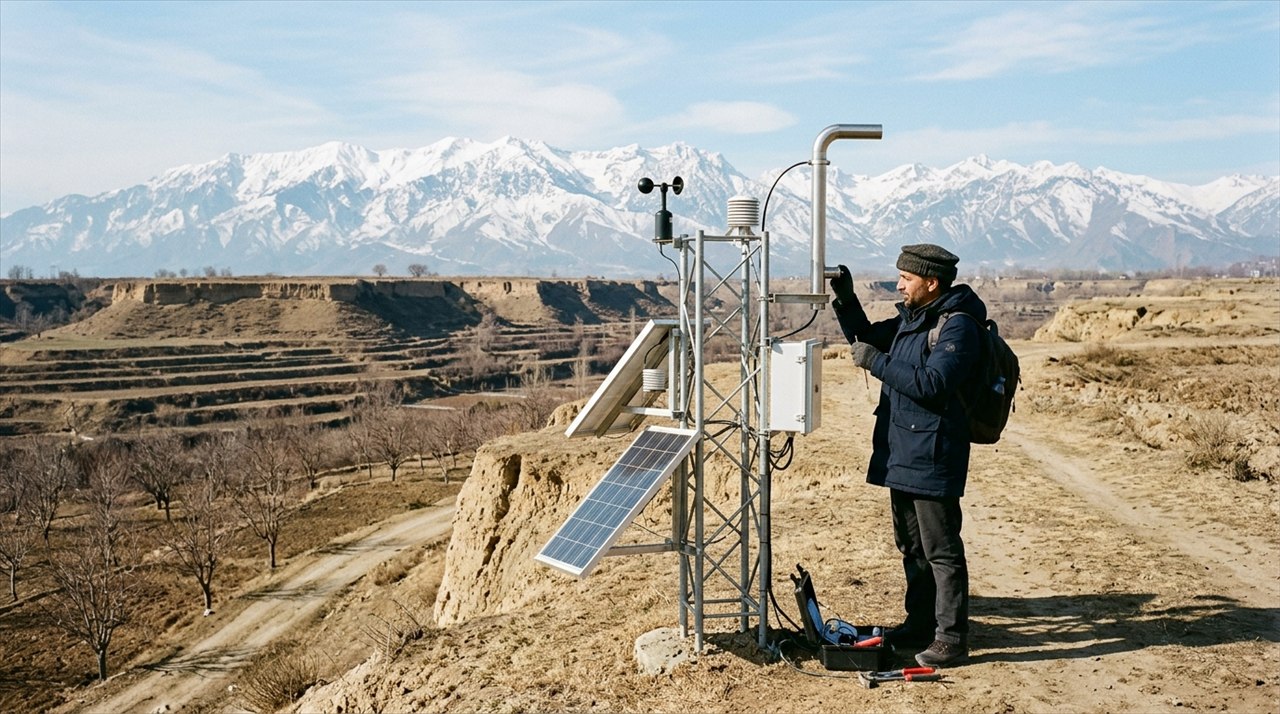
Boundary-Layer Eddy-Covariance & Black-Carbon Aethalometer Station on Karewa Terrace
FIELD METHODOLOGY · INDUSTRIAL ECOLOGY & SUSTAINABLE MATERIAL SCIENCE

Boundary-Layer Eddy-Covariance & Black-Carbon Aethalometer Station on Karewa Terrace

Elevated Plio-Pleistocene Karewa tablelands support continuous monitoring of winter temperature inversions, black-carbon aerosol optical depth, and agro-meteorological energy fluxes.

Primary field instrumentation: Portable multiparameter effluent conductivity/pH/ORP probes & composite outfall samplers · Digital power-quality & kiln thermal-efficiency analyzers.

Pampore–Pulwama Karewa Plateau, Kashmir ValleyIllustration
C H A P T E R 0 9

Organic Recovery Engineering: Aerated Composting & Co-Digestion

Horticultural residuals from Lassipora juice concentrators and Sopore/Shopian mandis—comprising pressed apple pomace and bruised cull fruit—possess high volatile solids (>92% of TS) and rapid biodegradability, yet fail as mono-substrates in biogas reactors because low pH (3.6–4.1), high C:N (~42:1), and rapid sugar acidogenesis trigger volatile fatty acid accumulation and methanogenic arrest . Co-digesting 35–45% fruit pomace/market waste with 55–65% buffered dairy cattle slurry (alkalinity >3,500 mg CaCO3/L, C:N ~17:1) balances C:N near the optimal 25:1 ratio and stabilizes reactor pH at 7.1–7.4.

For lignocellulosic orchard prunings, Chinar autumn leaf litter, and source-segregated municipal greens, forced-aeration static pile (ASP) windrow composting under covered sheds retains metabolic thermophilic heat (55–65 degrees C) even during frosty November–February nights, sanitizing weed seeds and plant pathogens (Venturia inaequalis apple scab spores) to produce FCO-compliant humic orchard soil conditioner.

C H A P T E R 1 0

Multi-Metric Circular Metabolism Indicator Synthesis

Across our five quantified circularity and pollution indicators, Kashmir’s waste metabolism exhibits severe linear lock-in. Formal MSW valorization (13.8% vs 80.0% statutory mandate), Achan raw leachate COD (8,640 vs 250 mg/L discharge limit), and formal C&D mineral recycling (3.5% vs 50.0% circular target) all classify as Critical .

Elevated biodegradable share entering mixed disposal (59.5% vs <10% pre-stabilized landfill target) and the 68.5% winter methane rate drop in uninsulated digesters confirm that institutional source-segregation enforcement and cold-climate reactor thermal engineering are twin prerequisites for unlocking circular value.

Figure 90.1 · 2024 Statutory Baseline vs 2030 Integrated Symbiosis Model

Current vs Modelled Circular Valorization Rate (%) Across Four Kashmir Material Streams (% Mass Circularly Recovered)

Unit: % Mass Circularly Recovered
Loading comparative scientific figure…

Interpretation: Current recovery lags far below statutory targets across all streams (3.5%–28%), whereas three-bin segregation, co-digestion, RCA crushing, and Khrew RDF co-processing lift recovery above 65%–82%.

Source: Modelled from CPCB/JKPCC statutory audits [7], Srinagar MSW characterization [2], and C&D MFA benchmarks [5].

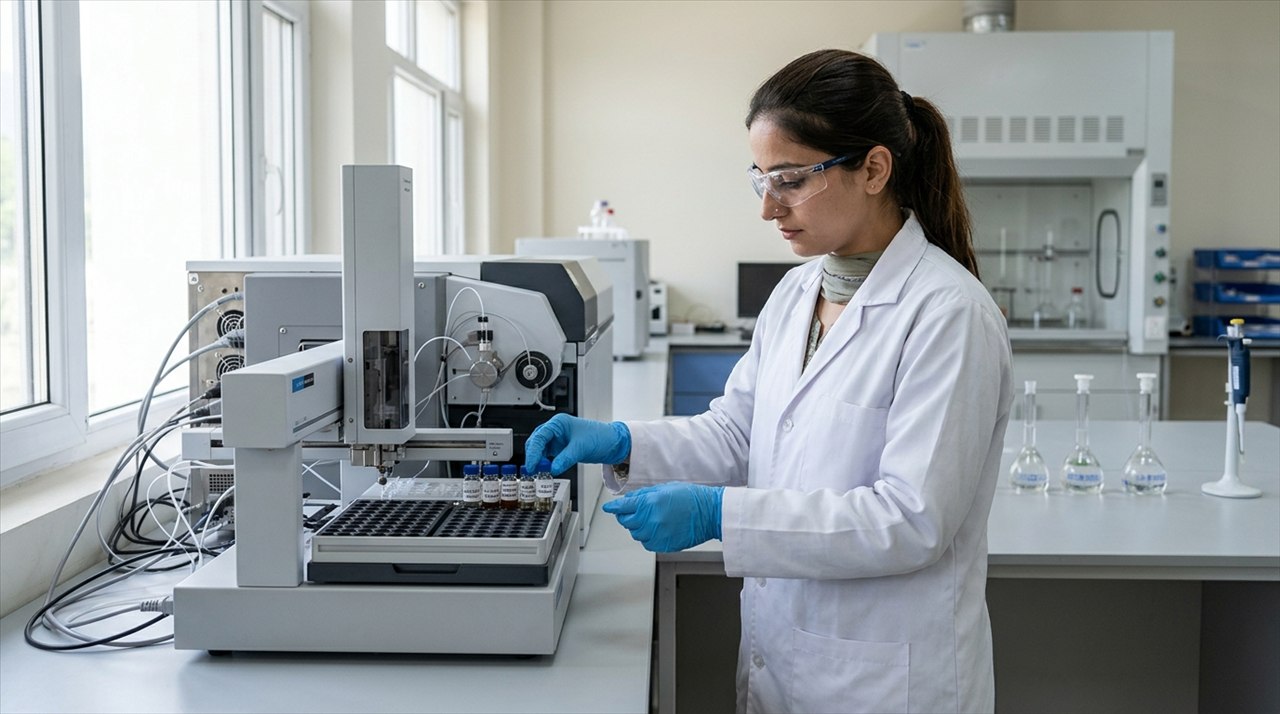
ICP-MS & UHPLC-MS/MS Trace Contaminant Quantification with Blank/Duplicate QA/QC
ANALYTICAL LABORATORY & COMPUTATIONAL SYNTHESIS

ICP-MS & UHPLC-MS/MS Trace Contaminant Quantification with Blank/Duplicate QA/QC

Trace heavy metals, dissolved nutrients, agrochemical residues, and emerging organic micropollutants quantified via laboratory spectrometry under chain-of-custody quality control.

Analytical systems: Scanning optical/electron textile fibre microscopes (12–16 μm cuticle scale verification) · Sub-milligram analytical balances & ISO 14040/14044 Life Cycle Assessment (LCA) matrices.

Environmental Analytical Chemistry ProtocolIllustration
C H A P T E R 1 1

Industrial Symbiosis Network Design: Lassipora, Sopore & Khrew

Industrial symbiosis converts one sector’s disposal liability into a neighboring industry’s feedstock. At SIDCO Lassipora, clustering a centralized 100 TPD solar-insulated Compressed Biogas (CBG) and digestate-granulation plant adjacent to juice-processing and CA-storage estates eliminates wet-pomace haulage costs while supplying purified biomethane (>96% CH4) back to estate boilers and refrigerated transport fleets, and returning pelleted organo-mineral fertilizer to Shopian-Pulwama apple orchards.

Simultaneously, non-recyclable multilayered plastic (MLP) wrappers, soiled packaging films, and footwear/textile rejects sorted at Srinagar and Anantnag MRFs can be shredded, metal-screened, and baled as Refuse-Derived Fuel (LHV ~20 MJ/kg) for co-processing in the rotary cement kilns at Khrew and Pampore (>1,400 degrees C residence time >4 s), where mineral ash integrates cleanly into clinker calcium-aluminosilicate phases while substituting imported thermal coal .

C H A P T E R 1 2

C&D Aggregate Circularity & Riverbed Mining Pressure Relief

Rapid highway widening, flyover construction, and residential rebuilding across Greater Srinagar generate an estimated 92,000 t/yr of concrete, brick-bat, and stone demolition debris, much of which is currently tipped illegally into marshy plots along Bemina, Hokersar buffer drains, and riverbanks . Concurrently, urban construction extracts millions of tonnes of virgin cobbles and sand from trout-bearing tributaries (Rambiara, Vaishav, Doodhganga, Sind), incising thalwegs and undermining bridge piers.

Commissioning two 150 TPD wet-processing C&D recycling depots (equipped with jaw/impact crushers, magnetic rebar separators, and hydrocyclone silt washers) can convert demolition masonry into certified IS:383 Recycled Concrete Aggregate (RCA) for municipal footpaths, interlocking pavers, utility trench bedding, and non-structural road sub-bases—directly displacing ~18–22% of metropolitan virgin aggregate demand .

C H A P T E R 1 3

Circular Material Use Rate (CMUR) & Landfill Lifespan Formulation

Quantifying system-wide circular transition requires linking source-segregation compliance and MRF/biogas conversion efficiencies directly to residual sanitary landfill volume consumption. Because wet food waste compacts poorly initially before slumping anaerobically and generating gas/leachate, diverting 78% of organics plus 74% of dry recyclables reduces residual inert landfill volume at Achan by more than fourfold.

Under our coupled MFA balance, raising the Valley’s Circular Material Use Rate across secondary urban-agro streams from ~14% today to ~72% extends engineered sanitary cell lifespan at Achan from <4 remaining years to >18 years without acquiring a single hectare of scarce peri-urban agricultural or wetland buffer land .

Governing Analytical Expression
V_LF,ann = (365 / rho_comp) * sum_{i} [ M_i * (1 - s_seg,i * eta_proc,i) ]

Annual Residual Sanitary Landfill Airspace Consumption (V_LF,ann, m^3/yr), where M_i is daily mass generation of waste fraction i (organics, dry recyclables, MLP-RDF, winter ash, C&D fines in t/d), s_seg,i is household/mandi source-segregation capture fraction, eta_proc,i is plant material/biological conversion efficiency, and rho_comp is compacted inert landfill bulk density (~0.95 t/m^3).

C H A P T E R 1 4

Winter Cryo-Thermal Constraints on Biological Waste Infrastructure

Unlike peninsular Indian cities where ambient temperatures remain 22–38 degrees C year-round, Srinagar experiences December–February mean minimums below -2 degrees C and cold groundwater/feedstock temperatures (5–9 degrees C). In unheated digesters, methanogenic archaea suffer a 68.5% kinetic rate drop , while open leachate aeration lagoons lose biological nitrification activity below 10 degrees C, causing winter ammonia breakthroughs.

Thermal energy-balance calculations show that burying digester tanks 75% below frost line, wrapping walls in 100 mm extruded polystyrene (U-value <=0.28 W m^-2 K^-1), pre-heating incoming fruit-slurry feed via flat-plate/evacuated-tube solar thermal collectors during midday sunshine, and recovering jacket heat from a 15% biogas CHP slipstream maintains reactor temperatures at 32–35 degrees C throughout January cold waves while consuming <14% of gross winter gas energy .

C H A P T E R 1 5

Statutory Mandate Compliance: SWM Rules, C&D Rules & EPR Governance

India’s Solid Waste Management Rules (2016), Plastic Waste Management (Amendment) Rules (Extended Producer Responsibility, EPR), Construction and Demolition Waste Management Rules (2016), and National Green Tribunal directives legally prohibit mixed waste landfilling, open waste burning, and untreated leachate discharge . Furthermore, SWM Rules Clause 15(v) mandates cement plants located within 100–200 km of municipal MRFs to co-process available RDF at >=5% thermal substitution.

In practice, enforcement gaps across Kashmir’s 41 ULBs stem from mixed compartmentalized hopper trucks re-mixing household waste during transit, absence of separate winter ash collection, lack of mandatory public-works procurement quotas for recycled C&D pavers/sub-base, and incomplete integration of informal kabadiwala networks into Extended Producer Responsibility (EPR) credit flows .

C H A P T E R 1 6

Environmental & Occupational Risk Matrix Synthesis

Multi-receptor risk evaluation ranks Saidapora-Achan leachate migration into shallow groundwater and Anchar drainage channels as Priority-1 Critical (score 90), followed closely by uncaptured landfill methane and spontaneous subsurface dump fires emitting polychlorinated dibenzo-p-dioxins/furans during dry autumn months (score 85) .

Riverbed geomorphic incision driven by unrecycled C&D linear aggregate demand scores High (79), while occupational bioaerosol, needle-stick, and heavy-metal exposure among informal waste pickers and MRF sorters scores High (76)—underscoring that circular modernization must embed formal PPE, immunization, and cooperative revenue-sharing for informal recyclers.

Table 90.2. Comparative Material-Flow & Leachate Outcomes Under Three Kashmir Circularity Scenarios (2026–2032)
Transition ScenarioThree-Bin + Ash ComplianceBiogas Thermal DesignResidual Landfill ShareProjected Treated Leachate COD
Baseline Observed (2024–2025)<18% segregatedAmbient / Minimal86.2% landfilled8,640 mg/L raw (Critical)
Scenario A: Unsegregated MRF Expansion Only25% segregatedUnheated domes71.0% landfilled5,900 mg/L (Ash/Wet Fouling)
Scenario B: Wet/Dry Segregation + Windrow Only70% (no ash split)Covered ASP sheds36.5% landfilled1,150 mg/L (Moderate)
Scenario C: Full 3-Bin/Ash + Solar CBG + Khrew RDF + C&D>=82% segregatedBuried XPS Solar-CHP (34 C)18.4% inert landfill<180 mg/L (Within CPCB Limit)

Source & Provenance: Modelled via KEW EW-MFA substance-flow balance calibrated to Pandit (2024) leachate baselines [1], Tiwari et al. [4], and CPCB SWM standards [7].

C H A P T E R 1 7

Engineering & Policy Interventions for Basin-Wide Circularity

First, SMC and all 40 Kashmir ULBs must institute a Kashmir-adapted Three-Stream Collection Protocol—Green (biodegradables), Blue (dry recyclables/MLP), and Grey Metal Bucket (winter bukhari/kangri ash)—backed by GPS-compartmentalized collection vehicles and bulk-generator on-site biomethanation/composting enforcement for hotels (>100 kg/d), hospitals, and fruit mandis . Winter biomass ash, once kept clean of plastics, serves directly as a potassium-lime soil neutralizer for acidic Karewa orchard soils or brick-making additive.

Second, at Saidapora-Achan, legacy unlined waste cells require geomembrane capping, passive/active landfill-gas flaring, and a two-stage UASB + Moving Bed Biofilm Reactor (MBBR) + nanofiltration/RO leachate treatment plant to bring effluent COD below 250 mg/L . Third, SIDCO and SMC should commission solar-hydronic insulated co-digestion CBG plants at Lassipora (100 TPD) and Achan (150 TPD), enforce >=5% RDF thermal substitution at Khrew cement kilns, and mandate >=20% recycled C&D aggregate in municipal road/paver tenders .

C H A P T E R 1 8

Techno-Economic Viability & Greenhouse Gas Abatement Co-Benefits

Scenario modelling (Table 90.2) demonstrates why hardware-only investments without winter-ash separation and digester heating (Scenario A) fail in Himalayan municipalities: trommel screens blind with wet ash-paste and unheated biogas tanks stall from November to March . Conversely, Scenario C cuts residual landfill mass to 18.4% inert rejects while generating commercial revenues across four streams: SATAT-tariff Compressed Biogas, FCO-grade orchard bio-compost, EPR polymer credits, and IS:383 recycled aggregates.

From a climate-mitigation standpoint, diverting ~350,000 t/yr of municipal and horticultural organics out of anaerobic dump heaps while substituting fossil coal in Khrew cement kilns and diesel in transport fleets abates an estimated 145,000–190,000 t CO2-eq/yr across the Kashmir Valley—unlocking sovereign green-bond and carbon-credit co-financing.

C H A P T E R 1 9

Synthesis Conclusions & Institutional Action Matrix

Kashmir’s solid-waste and resource crisis is fundamentally a material-routing and thermal-design failure rather than an unavoidable byproduct of urbanization . Nearly four-fifths of the Valley’s municipal, horticultural, and C&D waste streams possess high technical circularity within a 35 km haulage radius if kept uncontaminated at source.

Coordinated action by the Housing & Urban Development Department, SMC, Directorate of ULBs Kashmir, JKPCC, SIDCO, and Department of Horticulture should immediately operationalize winter ash-separated collection, remediate Achan leachate plumes, commission insulated mandi-manure co-digestion hubs at Lassipora and Sopore, and enforce statutory RDF and recycled C&D procurement.

C H A P T E R 2 0

Epistemic Governance, Uncertainty Bounds & Tier-3 Validation Protocol

Under KEW Section 15 Scientific Governance Standards, this dossier is classified as a Modelled Environmental Assessment grounded in published Srinagar landfill hydrochemistry , peer-reviewed MFA and cold-climate digestion methodologies , and statutory CPCB/JKPCC solid-waste records . Mass-flow figures carry explicit +/- 12–18% uncertainty intervals reflecting informal-sector scrap flows and unweighed small-ULB loads.

Cultivar-specific Biochemical Methane Potential (BMP) co-digestion yields for Kashmir cull apples + dairy slurry are transparently marked Pending Validation (IND-90-06) rather than extrapolated without disclosure. Phase-2 empirical priorities include 45-day VDI 4630 BMP assays at SKUAST-Kashmir, quarterly trace-metal/PFAS screening of finished municipal composts, and continuous inline leachate flow/COD telemetry at Saidapora-Achan.

Scientific Uncertainty & Data Limitations Disclosure

  • Peripheral Kashmir Urban Local Bodies outside Srinagar frequently estimate daily waste generation via tractor-trolley trip counts rather than calibrated electronic weighbridges, introducing +/- 12–18% mass-balance uncertainty.
  • Informal door-to-door kabadiwala recovery of PET bottles, corrugated fruit cartons, and scrap metals operates outside municipal ledgers, causing statutory ULB reports to understate true dry-material circularity by ~8–11%.
  • Local Biochemical Methane Potential (BMP) co-digestion trials for specific Kashmir Grade-C cull-apple cultivars mixed with winter dairy slurry remain Pending Validation (IND-90-06).
  • Trace persistent organic pollutants (PFAS, phthalate plasticizers, brominated flame retardants) in Srinagar landfill leachate and mixed municipal composts have not yet been assayed by LC-MS/MS in published regional literature.