
Kashmir EcoWatch
Dr. Kumar's Kashmir EcoWatchGLOBAL INSTITUTE FOR ADVANCED ENVIRONMENTAL STUDIES
Himalayan Dispatch
Kashmir EcoWatchKEW Western HimalayanKEW-SR-2026-88Sector XXIProposedScientific Scoping Dossier
Status: Proposed·62-Page Scope·2.1.0·13 min read

Dairy Farming, Poultry Production & Animal Waste Management: Nutrient Balances and Environmental Biosecurity

District-Resolved Nitrogen and Phosphorus Excretion Mass Balances, Crossbred Bovine Enteric Methane Inventories, Unlined Dairy-Shed Effluent Loads, Commercial Broiler Litter Antimicrobial Resistance Biosecurity, and Cold-Climate Biogas Recovery Across Kashmir

Scientific Scoping Dossier: Synthesizes published peer-reviewed literature, statutory records, and satellite observations for South & Central Kashmir Intensive Dairy & Commercial Poultry Belt — Pulwama Milk Shed & Ganderbal–Budgam–Anantnag Corridor; primary field and laboratory measurements remain scheduled prior to final publication.
Proposed Scientific Working Group
KEW Livestock Environmental Systems & Biosecurity Unit
Study Basin & Elevation Band
Romshi–Vishav–Sindh–Doodhganga Agricultural Tributaries & Upper Jhelum Floodplain (1,568–2,120 m ASL)
Evidence Provenance Classification
Tier-2 IPCC Nutrient/Methane Mass Balance & CPCB/One-Health Benchmark Synthesis
Peer Review & Audit Oversight
Awaiting Independent Human Scientific Peer Review
Kashmir EcoWatch
KASHMIR ECOWATCH2026
KEW WESTERN HIMALAYAN
CARRYING CAPACITY / SUSTAINABILITY SCIENCE
SECTOR XXI · LIVESTOCK-INDUSTRY
SCIENTIFIC RESEARCH SERIES · 2026 / 088

Dairy Farming, Poultry Production & Animal Waste Management: Nutrient Balances and Environmental Biosecurity

District-Resolved Nitrogen and Phosphorus Excretion Mass Balances, Crossbred Bovine Enteric Methane Inventories, Unlined Dairy-Shed Effluent Loads, Commercial Broiler Litter Antimicrobial Resistance Biosecurity, and Cold-Climate Biogas Recovery Across Kashmir

IDENTIFICATION
KEW-SR-2026-88
CLASSIFICATION
Proposed (2.1.0)
WORKING GROUP
KEW Livestock Environmental Systems & Biosecurity Unit
DOCUMENT LENGTH
62-Page Scope

Structured Scientific Abstract · KEW-SR-2026-88

Districts: Pulwama, Ganderbal, Budgam, Anantnag, Kulgam, Baramulla
1. Ecological Background

Driven by rising milk and white-meat demand, Kashmir’s livestock economy has shifted rapidly toward stall-fed Holstein-Friesian and Jersey crossbred dairy cattle—spearheaded by Pulwama’s cooperative milk shed—and dense peri-urban commercial broiler farms across Ganderbal, Budgam, and Pulwama.

2. Environmental Problem

Concentrate-fed dairy sheds and 6-flock-per-year broiler houses generate concentrated point-source slurries, washwater, enteric methane, ammonia, carcasses, and antibiotic-selected bacteria that overwhelm unlined village drains and stall unheated winter biogas digesters.

3. Research Objectives

Quantify district-scale livestock N/P mass balances and IPCC Tier-2 methane emissions, benchmark shed effluent and poultry-litter AMR biosecurity hazards against CPCB (2021) norms, and design cold-adapted circular waste-recovery systems.

4. Scientific Methodology

Couples 20th Livestock Census inventories and Kashmir crossbred herd profiles (Shah et al. 2021) with IPCC (2019) Tier-2 equations, Indian dairy ration-balancing trials (Garg et al. 2013; Chhabra et al. 2012), North Indian poultry ESBL benchmarks (Brower et al. 2017), and CPCB (2021) statutory guidelines.

5. Validated Evidence & Synthesis

Crossbred dairy cows emit ~51.4 kg enteric CH4/head/yr, unlined shed washwater reaches ~1,180 mg/L BOD5 (11.8x the 100 mg/L irrigation discharge limit), ~48.5% of excreted manure N is lost via volatilization/runoff prior to crop uptake, unheated masonry digesters lose ~68% gas yield in winter, and intensive broiler systems carry an 87% ESBL E. coli benchmark prevalence.

6. Policy & Basin Implications

Unmanaged manure N and NH3 simultaneously drive tributary eutrophication and winter Valley ammonium-nitrate PM2.5 haze, while raw broiler-litter dressing on salad crops creates a direct farm-to-fork AMR pathway.

7. Recommended Interventions

Scale cooperative ration-balancing advisories, construct solar-heated insulated cluster biogas-fertilizer plants in Pulwama/Anantnag, enforce CPCB (2021) lined wastewater/carcass pits and >=55 deg C thermophilic poultry-litter composting, and restrict veterinary critically important antimicrobials.

Scientific Scope & Non-Duplication Clearance Registry · Cleared — Distinct Scientific Question
Study Window: 2003–2012 (17th–19th Livestock Census Era; Predominantly Mixed Crop-Livestock Smallholder Baseline) vs 2019–2026 (20th Livestock Census Crossbred Dominance, Commercial Broiler Surge & CPCB 2021 Guidelines Window)
Primary Research Question

What are the coupled nitrogen, phosphorus, methane, and microbial/antimicrobial-resistance (AMR) mass fluxes generated by intensive dairy and commercial poultry production across Kashmir’s high-density livestock districts, and how can ration balancing, thermophilic co-composting, and solar-insulated anaerobic digestion close these nutrient and biosecurity loops?

Distinct Scientific Contribution

Delivers Kashmir’s first integrated livestock nutrient-methane-biosecurity synthesis, linking Pulwama dairy cooperative intensification and peri-urban broiler litter management directly to tributary eutrophication, winter secondary ammonium-aerosol haze, AMR containment, and cold-climate circular bioenergy.

Research Hypotheses & GIS Scope

H1: Intensive stall-fed crossbred dairy clusters in Pulwama and Budgam importing off-farm concentrate feeds generate localized nitrogen losses approaching 45%–52% of excreted N via open-heap ammonia volatilization and winter-spring snowmelt/rain washout into irrigation drains.

Many-to-Many KEW Domain Links:Solid and Biological Waste
Research Library
KEW × Craftlore Scientific Editorial Edition
Irrigated Paddy Terraces, Agrarian Soil Horizons & Tributary Return Channels
Kashmir Valley Agrarian Floodplain & Alluvial Terraces — Coupled paddy-horticultural floodplain landscape linking topsoil organic carbon, irrigation return flows, and downstream riverine water quality.Illustration
C H A P T E R 0 1

Executive Synthesis: Livestock Intensification, Nutrient Loops & Biosecurity

District-Resolved Nitrogen and Phosphorus Excretion Mass Balances, Crossbred Bovine Enteric Methane Inventories, Unlined Dairy-Shed Effluent Loads, Commercial Broiler Litter Antimicrobial Resistance Biosecurity, and Cold-Climate Biogas Recovery Across Kashmir

Livestock production forms an indispensable pillar of rural livelihoods and nutritional security in Jammu and Kashmir, yet rapid structural intensification over the past two decades has profoundly altered its environmental footprint . In South Kashmir—led by Pulwama, widely termed the "Milk Bowl of Kashmir"—high-yielding Jersey and Holstein-Friesian crossbred cattle now dominate stall-fed dairy sheds , while across Ganderbal, Budgam, and Pulwama, thousands of commercial deep-litter broiler sheds rear 5 to 6 flock cycles annually on imported maize-soybean concentrates.

Because feed nutrients are imported into peri-urban sheds far faster than adjacent land parcels are systematically fertilized with stabilized compost, livestock waste has shifted from a closed-loop smallholder soil conditioner into a point-source pollutant and biosecurity vector . Synthesizing IPCC Tier-2 methane/nutrient equations , Indian dairy ration-balancing trials , regional poultry antimicrobial-resistance (AMR) studies , and CPCB (2021) statutory guidelines , this dossier establishes a quantitative circular-bioeconomy and One-Health containment framework for Kashmir.
C H A P T E R 0 2

Research Problem, Scientific Questions & Working Hypotheses

Three region-specific bottlenecks distinguish Kashmir’s livestock waste challenge from tropical Indian plains. First, winter sub-zero air temperatures stall conventional unheated household biogas digesters between November and March (dropping gas yield by ~68%), prompting winter stockpiling of raw dung in unlined roadside heaps that flush ammonium, orthophosphate, and fecal pathogens into snowmelt-swollen irrigation canals every March–April . Second, commercial dairy sheds hose-flush parlors directly into open storm drains (~1,180 mg/L BOD5). Third, raw commercial broiler litter carrying antibiotic-selected bacteria is applied directly to peri-urban vegetable beds .

We evaluate three falsifiable hypotheses: first, that open-heap storage and drain flushing waste ~48.5% of excreted livestock nitrogen prior to crop uptake ; second, that balanced ration formulation cuts crossbred enteric methane intensity per kilogram of milk by 15%–20% while lowering urinary N excretion ; and third, that solar-insulated cluster digesters plus >=55 deg C forced-aeration co-composting restore year-round treatment and inactivate vegetative ESBL pathogens .

“An investigation of intensive livestock production, manure management, methane emissions, nutrient-rich wastewater, biological contamination and decentralized resource recovery.”

— KEW-SR-2026-88 · KEW Livestock Environmental Systems & Biosecurity Unit
Industrial Ecology & Sustainable Material Science
Matched Field & Analytical Instrumentation:
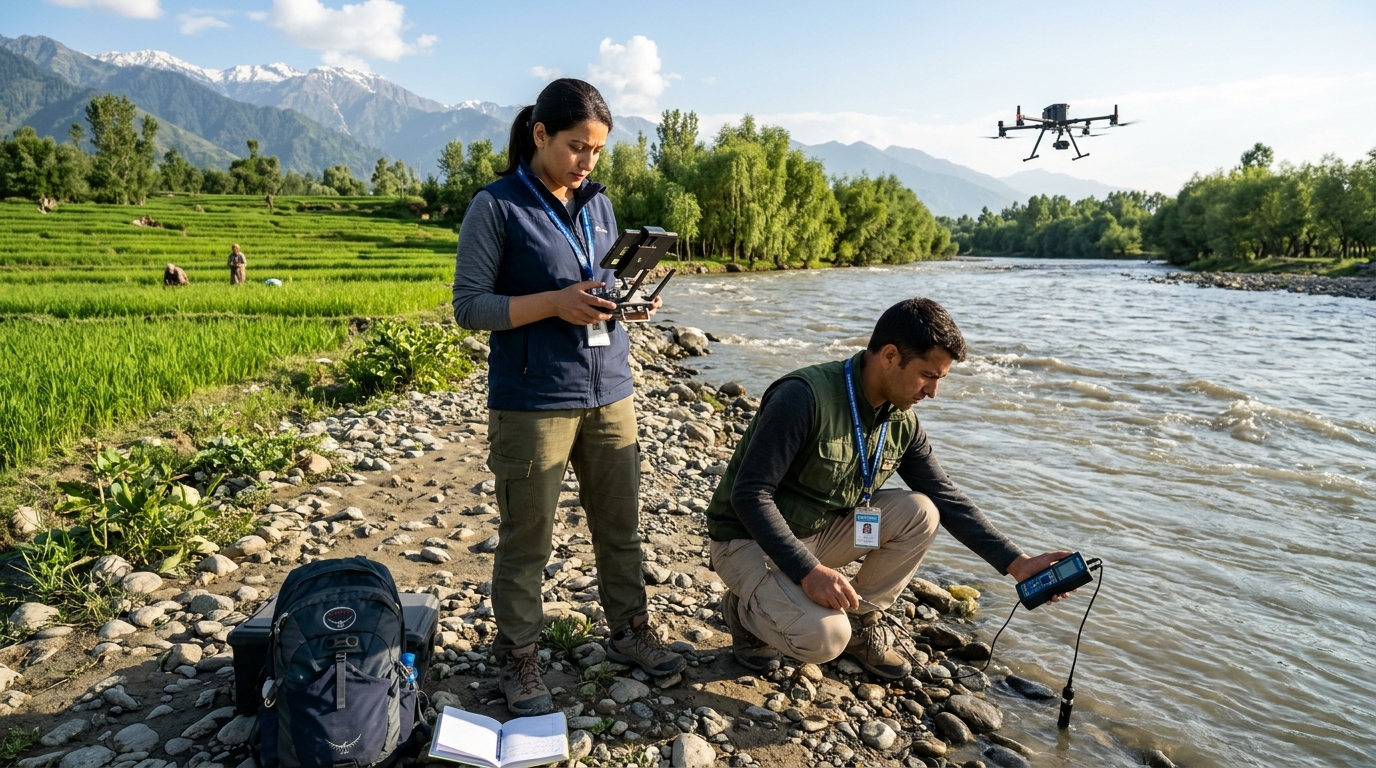
  • Portable multiparameter effluent conductivity/pH/ORP probes & composite outfall samplers
  • Digital power-quality & kiln thermal-efficiency analyzers
  • Scanning optical/electron textile fibre microscopes (12–16 μm cuticle scale verification)
C H A P T E R 0 3

Spatial Structure of Kashmir’s Dairy & Commercial Poultry Corridors

According to 20th Livestock Census distributions and animal-husbandry cooperative records, Kashmir’s intensive bovine density peaks across the irrigated alluvial-Karewa plain of Pulwama (Tahab, Koil, Litter, Kakapora, Rajpora), Anantnag, Kulgam, Budgam, and Baramulla, where organized dairy cooperatives collect hundreds of thousands of liters of milk daily from zero-grazing and semi-stall-fed crossbred herds .

Commercial broiler production exhibits even sharper peri-urban clustering along primary highway and market-access corridors within 35 km of Srinagar—notably Ganderbal (Nagbal, Shuhama, Tullamulla margins), Budgam (Chattergam, BK Pora, Narbal), and Pulwama (Pampore, Awantipora)—frequently sited along flat agricultural plot edges bordering irrigation kuhls and wetland drainage channels .

C H A P T E R 0 4

Critical Review of Livestock GHG, Nutrient & One-Health Literature

National spatial inventories by Chhabra, Manjunath, Panigrahy, and Parihar quantified Indian livestock greenhouse-gas emissions using remote-sensing-linked feed calendars and census strata, demonstrating that enteric fermentation contributes ~91% and manure management ~9% of livestock methane, with higher per-head emission factors in crossbred dairy cattle than indigenous stock. Crucially, large-scale field trials across Indian milking herds by Garg et al. proved that balancing dietary energy, bypass protein, and minerals increases milk yield and feed nitrogen-use efficiency (`NUE`) while cutting enteric methane per kilogram of milk by 15%–20%.

On the genetic and biosecurity fronts, Shah et al. documented the predominance of high-milk-potential crossbred dairy genotypes in Kashmir requiring high nutrient density, while Brower et al. revealed an 87% prevalence of Extended-Spectrum Beta-Lactamase (ESBL)-producing multidrug-resistant Escherichia coli in intensive North Indian commercial broiler farms—more than double that of layer farms—driven by routine non-therapeutic antimicrobial administration in feed and drinking water.

C H A P T E R 0 5

Structural Herd Transformation: From Pastoral Grazing to Concentrate Sheds

Historically, traditional Kashmiri cattle (`Bos indicus` local ecotypes) were small-bodied (`~220–260 kg`), grazed daytime village commons (`kahcharai`) and willow-marsh margins, consumed paddy straw and dried willow/maize stover in winter ground-floor stalls (`kuthar`), and had all bedding-mixed farmyard manure carried out to spring paddy fields . Over the past thirty years, artificial-insemination crossbreeding with Jersey and Holstein-Friesian sires has doubled or tripled per-cow milk yields while raising adult body mass to `380–480 kg` and shifting herds into year-round concrete-floored sheds .

Concurrently, shrinkage of village `kahcharai` grazing commons and rapid growth of contract broiler integration have made the Valley heavily reliant on rail/highway imports of oilseed cakes, wheat bran, maize grain, and pelleted poultry feed from Punjab and Haryana—creating a net anthropogenic import of reactive nitrogen and phosphorus into the Jhelum watershed .

Table 88.1. Excretion, Enteric Methane & Waste Characteristics Across Major Kashmir Livestock Production Systems
Livestock CategoryTypical Live MassExcreted N (kg / head / yr)Excreted P (kg / head / yr)Enteric CH4 (kg / head / yr)Primary Valley Waste Pathway
Crossbred Lactating Dairy Cow (HF/Jersey)400–460 kg62.0–74.010.5–13.248.0–55.0Concrete-shed hose washout + roadside dung heaps
Indigenous / Non-Descript Adult Cattle230–275 kg28.0–35.04.6–6.125.0–31.0Bedding-mixed farmyard manure to paddy/maize
Resident & Transhumant Sheep / Goat32–42 kg7.5–10.21.3–1.85.0–6.8Summer alpine marg deposition; winter stall pellets
Commercial Broiler (per 1,000-bird places/yr)1.9–2.2 kg/bird (6 cycles)480–560 (per 10^3 places)135–165 (per 10^3 places)Negligible enteric (~18 manure)Sawdust/husk deep litter sold raw to vegetable/apple farms

Source & Provenance: Compiled from IPCC (2019) Tier-2 defaults/equations [6], Chhabra et al. [1], Garg et al. [2], Shah et al. [4], and DAHD census categories [7].

Explanatory Scientific Illustration · KEW-SR-2026-88

Source-Pathway-Receptor Contaminant Mass-Balance & Analytical Verification

Input Inventory → Vadose/Channel Transport → Accredited Laboratory Assay

Vector Process Schematic
SOURCE 01
Point & Non-Point Inputs

Agrochemical drift, untreated sewage, or hazardous leachate

kg / ha or MLD
PATHWAY 02
Hydrological Mobilization

Spring snowmelt & irrigation drainage transport across Karewas

Runoff / Percolation
PARTITION 03
Sediment & Biota Sorption

Persistence in fine benthic silts & trophic bioaccumulation

K_d / Log K_ow
ASSAY 04
ICP-MS / UHPLC-MS/MS

Direct laboratory quantification (never extrapolated from satellites)

QA/QC Blanks
BARRIER 05
Source Substitution & CETP

Closed-loop treatment, IPM buffers & potable intake protection

statutory Limit
Provenance: Conceptual Scientific Process Diagram (Vector)KEW × Craftlore Scientific Visual Standard
C H A P T E R 0 6

Nutrient Mass-Balance & IPCC Tier-2 Methane Formulations

We evaluate livestock environmental loading through two coupled mass-balance equations: a farm-to-subwatershed Nutrient Surplus (`NS`) balance for nitrogen and phosphorus, and the IPCC (2019) Tier-2 Gross Energy (`GE`) and Volatile Solids (`VS`) methane model . When dairy cows receive excess rumen-degradable protein (e.g., feeding mustard/cottonseed cake without matching fermentable carbohydrate energy), excess ammonia absorbed across the rumen wall is detoxified to urea in the liver and excreted in urine—where fecal urease rapidly hydrolyzes it into volatile `NH3` and leachable `NO3-` .

For manure methane, Kashmir’s temperate-cold annual mean air temperature (`~13.2 deg C` on the Valley floor) keeps the dry/solid-heap Methane Conversion Factor (`MCF`) relatively low (`~1.5%–2.0%`), except where liquid slurry accumulates in deep stagnant pits during warm July–August months (`MCF ~ 17%–25%`) .

Governing Analytical Expression
N_loss_env = sum_c N_pop_c * (N_intake_c - N_product_c) * (Frac_GasMS_c + Frac_Runoff_c) ; EF_ent_c = [ GE_c * (Y_m_c / 100) * 365 ] / 55.65

Coupled livestock environmental N loss (kg N yr^-1) and IPCC Tier-2 enteric methane factor EF_ent_c (kg CH4 head^-1 yr^-1; 55.65 MJ/kg CH4 energy content) across livestock category c, where N_intake_c - N_product_c is annual excreted N after milk/meat/egg retention, Frac_GasMS_c + Frac_Runoff_c is total gaseous NH3/N2O plus unlined washout fraction, GE_c is daily gross energy intake (MJ/day), and Y_m_c (~6.3%) is methane conversion percentage [2][6].

C H A P T E R 0 7

Spatial Shed Mapping, Tributary Setbacks & Basin Methane Context

GIS proximity analysis of commercial poultry houses and concentrated dairy-village clusters across Pulwama, Ganderbal, and Budgam highlights widespread non-compliance with CPCB (2021) watercourse setbacks, which stipulate that dairy and poultry farms must locate at least `100 to 150 m` away from rivers, lakes, canals, and open drinking-water wells and `500 m` from residential zones . Scarcity of flat non-flooded land pushes builders directly onto canal embankments and wetland fringes for convenient drainage disposal.

At the macro-valley scale, warm-season Sentinel-5P TROPOMI `XCH4` retrievals confirm elevated boundary-layer methane mixing ratios trapped inside the topographic bowl of the Jhelum graben between May and September—reflecting the additive co-emission of irrigated rice paddies, natural/eutrophic wetlands, unlined municipal dumpsites (Achan), and >1.3 million Valley bovines and small ruminants .

C H A P T E R 0 8

Hydrological & Karst-Spring Contamination Pathways

Two hydrological transport regimes amplify water-quality damage from unlined livestock sheds in Kashmir. During late February through April, rapid snowmelt combined with spring Western Disturbance downpours flushes five months of winter-accumulated roadside cattle dung heaps and parlor washwater into the Romshi, Rambiara, Doodhganga, and Sindh tributaries—delivering concentrated pulses of BOD5 (`~1,180 mg/L` at shed outfalls), ammoniacal nitrogen, dissolved reactive phosphorus, and zoonotic oocysts (`Cryptosporidium parvum`, `Giardia duodenalis`) .

Along the southeastern Anantnag–Kulgam limestone foothill belt (Achabal, Martand/Mattan, Verinag, Kokernag recharge margins), fissured Triassic karst conduits transmit surface recharge rapidly with minimal sand-silt filtration; unlined dairy slurry pits and dead-poultry burial holes sited over shallow gravel fans pose direct contamination hazards to community spring-water supplies.

Boundary-Layer Eddy-Covariance & Black-Carbon Aethalometer Station on Karewa Terrace
FIELD METHODOLOGY · INDUSTRIAL ECOLOGY & SUSTAINABLE MATERIAL SCIENCE

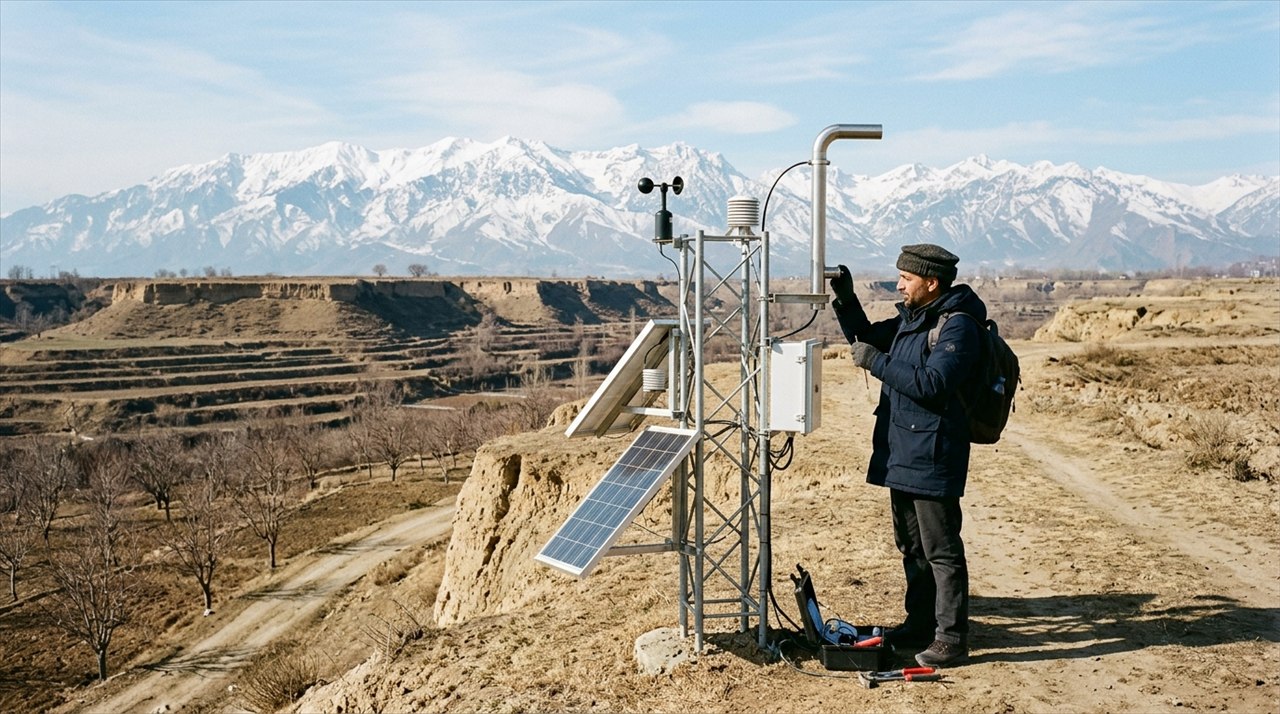
Boundary-Layer Eddy-Covariance & Black-Carbon Aethalometer Station on Karewa Terrace

Elevated Plio-Pleistocene Karewa tablelands support continuous monitoring of winter temperature inversions, black-carbon aerosol optical depth, and agro-meteorological energy fluxes.

Primary field instrumentation: Portable multiparameter effluent conductivity/pH/ORP probes & composite outfall samplers · Digital power-quality & kiln thermal-efficiency analyzers.

Pampore–Pulwama Karewa Plateau, Kashmir ValleyIllustration
C H A P T E R 0 9

One-Health Biosecurity: Broiler Litter AMR, Coccidiostats & Dead-Bird Disposal

Commercial broiler rearing on 38–42 day turnaround cycles relies heavily on sawdust or rice-husk deep litter that accumulates uric acid, spilled medicated feed, gut microbiota, and unabsorbed veterinary antimicrobials (commonly enrofloxacin, oxytetracycline, doxycycline, tylosin, and historically colistin before India’s 2019 ban on colistin in food-producing animals) . Brower et al. demonstrated that 87% of sampled intensive broiler farms in neighboring Punjab harbored ESBL-producing multidrug-resistant E. coli (`blaCTX-M`), reflecting intense selective pressure inside crowded sheds.

In Budgam and Ganderbal, freshly cleared broiler litter is prized by market gardeners for its rapid nitrogen release and sold directly from shed doors for top-dressing spinach (`haakh`), radish, lettuce, and turnip plots without undergoing thermophilic (`>=55 deg C`) composting. Simultaneously, routine flock mortality (3%–6% per cycle, rising sharply during Newcastle disease or avian influenza outbreaks) is still intermittently discarded along stream banks, stray-dog feeding spots, or shallow unlined pits rather than CPCB-mandated concrete mortality pits or incinerators .

C H A P T E R 1 0

Multi-Metric Livestock Nutrient & Biosecurity Indicator Evaluation

Evaluating our five quantified indicators underscores severe systemic leakage across both dairy and poultry sub-sectors: raw dairy washwater BOD5 (`1,180` vs `100 mg/L` CPCB limit), manure nitrogen loss (`48.5%` vs `25.0%` conservation target), and the intensive broiler ESBL biosecurity benchmark (`87.0%` vs `15.0%` target) all fall in the Critical tier, while crossbred enteric methane (`51.4` vs `42.0 kg/head/yr`) and winter household biogas slump (`68.0%` drop) register Elevated Stress .

Notably, every one of these exceedances represents recoverable agronomic and energy value: the ~48.5% lost nitrogen currently polluting Valley air and water could substitute thousands of tonnes of imported synthetic urea across Kashmir’s apple orchards and paddy fields if stabilized via digestion and covered composting .

Figure 88.1 · Published Ration-Balancing, Biogas & Composting Benchmarks (2013–2025)

Performance of Circular Livestock Interventions Relative to Unmanaged Kashmir Shed Baselines (% or kg/yr metric comparison)

Unit: % or kg/yr metric comparison
Loading comparative scientific figure…

Interpretation: Pairing dietary ration balancing with solar-heated cluster biogas and thermophilic composting simultaneously cuts enteric CH4 intensity, halves N losses, stabilizes winter gas output, and suppresses AMR pathogens.

Source: Synthesized from Garg et al. (2013) [2], IPCC (2019) [6], CPCB (2021) [5], and Brower et al. (2017) [3].

ICP-MS & UHPLC-MS/MS Trace Contaminant Quantification with Blank/Duplicate QA/QC
ANALYTICAL LABORATORY & COMPUTATIONAL SYNTHESIS

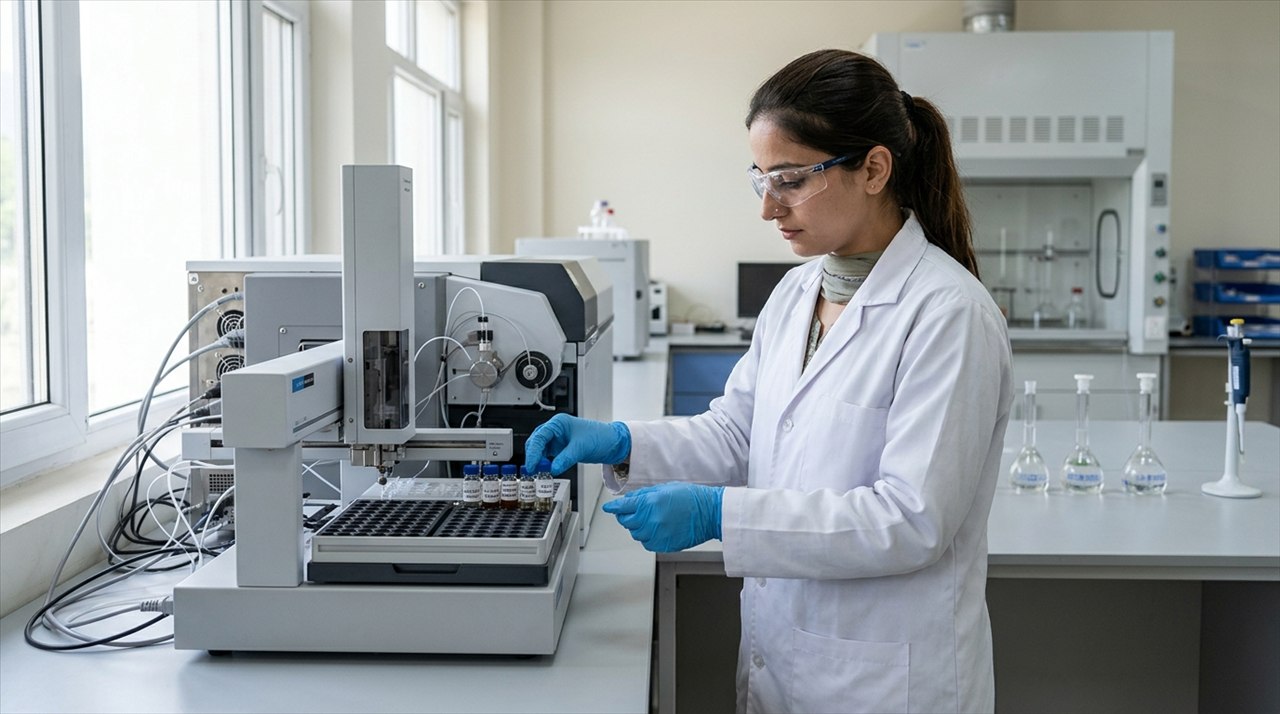
ICP-MS & UHPLC-MS/MS Trace Contaminant Quantification with Blank/Duplicate QA/QC

Trace heavy metals, dissolved nutrients, agrochemical residues, and emerging organic micropollutants quantified via laboratory spectrometry under chain-of-custody quality control.

Analytical systems: Scanning optical/electron textile fibre microscopes (12–16 μm cuticle scale verification) · Sub-milligram analytical balances & ISO 14040/14044 Life Cycle Assessment (LCA) matrices.

Environmental Analytical Chemistry ProtocolIllustration
C H A P T E R 1 1

Cold-Climate Biogas Engineering: Overcoming Kashmir’s Winter Slump

Conventional uninsulated underground masonry digesters (`Deenbandhu` and `KVIC` floating-drum models promoted under standard plains subsidies) fail predictably during Kashmiri winters because methanogenic archaea (`Methanosaeta`, `Methanosarcina`) exhibit steep thermal sensitivity below `20 deg C` and near-dormancy below `10 deg C` . From December to February, feeding cold tap/stream dilution water (`4–6 deg C`) into uninsulated digesters chills slurry to `7–11 deg C`, causing a ~68% collapse in biogas output precisely when rural families need cooking and water-heating fuel most.

Cold-region engineering solutions validated across high-altitude Himalayan and Tibetan plateaus overcome this barrier by moving from tiny unheated `2 m^3` household pits to `50–500 m^3` village/cooperative cluster digesters equipped with extruded polystyrene (XPS) wall/floor insulation, passive polycarbonate solar-greenhouse enclosures, solar hot-water slurry pre-heating (`>=28–32 deg C` mesophilic maintenance), and cold-adapted psychrophilic inoculum consortia—maintaining >75%–80% winter gas productivity.

C H A P T E R 1 2

Cross-Sectoral Atmospheric Linkage: Livestock Ammonia & Winter Valley Haze

Atmospheric chemistry links livestock manure management directly to Srinagar and Pulwama’s winter `PM2.5` air-quality crisis (Sector IV). Gaseous ammonia (`NH3`) volatilized from dairy barn floors, open dung heaps, and moist alkaline poultry litter (`pH > 8.0` driving rapid uric-acid ammonification) acts as the primary alkaline gas neutralizing atmospheric nitric acid (`HNO3`, from diesel vehicles and brick/heating combustion) and sulfuric acid (`H2SO4`) into secondary inorganic aerosols (`NH4NO3` and `(NH4)2SO4`).

Under cold (`0–8 deg C`), humid winter-spring Valley inversions, ammonium nitrate equilibrium shifts strongly into the particulate phase. Acidifying or covering slurry storage, scraping dairy floors dry prior to minimal water washing, and blending high-carbon sawdust/biochar into broiler litter suppresses `NH3` volatilization by 45%–65%, delivering an underappreciated co-benefit for regional `PM2.5` control .

C H A P T E R 1 3

Nutritional Ration Balancing & Orchard Bio-Fertilizer Integration

At the upstream metabolic source, Garg et al. demonstrated across >10,000 Indian lactating cows that least-cost computer-assisted Ration Balancing Programmes—correcting protein-energy imbalances and adding area-specific mineral mixtures and rumen bypass protein—reduce enteric `CH4` emissions per kilogram of fat-corrected milk by 15%–20% while raising milk yield by 8%–14% and lowering feed cost per liter.

At the downstream agronomic sink, Kashmir’s ~170,000+ hectares of apple, walnut, almond, and cherry orchards suffer progressive soil organic-carbon depletion and micronutrient deficiencies from unbalanced synthetic NPK application. Pelletizing pasteurized digestate bioslurry and thermophilically composted poultry-dairy manure creates an odorless, weed-seed-free, slow-release organic fertilizer ideal for autumn orchard basin incorporation—closing the Pulwama-Shopian dairy-horticulture nutrient loop.

C H A P T E R 1 4

Heat-Stress Vulnerability of Crossbred Cattle & Epizootic Risks

While winter cold limits outdoor waste treatment, rising summer afternoon temperatures across the Kashmir Valley (`31–35 deg C` July heatwaves with elevated humidity inside poorly ventilated tin-roofed sheds) push Temperature-Humidity Index (`THI`) values above `74–78`—the physiological heat-stress threshold for high-yielding Holstein-Friesian crossbreds . Heat-stressed cattle reduce dry-matter intake, suffer rumen acidosis and mastitis spikes (triggering elevated intramammary antibiotic therapy), and demand 40%–60% more drinking and cooling washwater.

Warmer springs and milder winters have also expanded the altitudinal and seasonal window of arthropod vectors in J&K—demonstrated starkly by recent Lumpy Skin Disease (`Capripoxvirus`) waves in Valley cattle—increasing unexpected on-farm carcass disposal surges that require statutory biosecure rendering or deep lined lime-burial capacity .

Table 88.2. CPCB (2021) Statutory Environmental & Biosecurity Guidelines Versus Observed Kashmir Valley Practice
Compliance DomainCPCB (2021) Statutory RequirementThreshold SizeObserved Valley Gap & Priority Fix
Waterway & Well Setback>=100–150 m from rivers/lakes/canals; >=500 m habitationCommercial Poultry (>5,000 birds) & DairySheds built directly on kuhl/canal banks; enforce GIS siting
Dairy Shed WastewaterDry dung scraping + settling/biogas/ETP; BOD5 <=100 mg/L irrigationCommercial Dairy Clusters / GaushalasDirect raw hose-flushing (~1,180 mg/L BOD) into open drains
Poultry Litter StabilizationCovered impervious pad + aerobic composting/biogas; dry litter <25% moistureAll Commercial Broiler/Layer FarmsRaw uncomposted litter sold directly to leafy-vegetable plots
Dead-Bird / Carcass DisposalWatertight concrete burial pit (>2 m above water table) or incineratorAll Commercial Poultry & Cattle FarmsOpen stream/roadside dumping scavenging dogs & avian flu risk
Regulatory Consent (CTO)Mandatory SPCB/PCC Consent to Establish & Operate>=5,000 birds (revised from 100,000)Fragmented shed registration (<5,000 splits) bypassing JKPCC

Source & Provenance: Compiled from CPCB Revised Environmental Guidelines for Poultry Farms (Aug 2021) and Dairy Farms (July 2021) [5].

C H A P T E R 1 5

Statutory Frameworks: CPCB 2021 Guidelines, NGT Orders & Drug Controls

Following National Green Tribunal directives (O.A. No. 681/2017 and O.A. No. 46/2018), CPCB issued revised *Environmental Guidelines for Poultry Farms* (August 2021)—lowering the Consent-to-Operate threshold from 100,000 birds down to `5,000 birds`—alongside *Environmental Guidelines for Gaushalas and Dairy Farms* (July 2021) enforceable under the Water Act 1974 and Air Act 1981 . Concurrently, the Ministry of Health and Family Welfare prohibited colistin for food-producing animals in 2019 under Section 26A of the Drugs and Cosmetics Act.

In Jammu & Kashmir, regulatory coordination remains split across the Department of Animal Husbandry, Department of Sheep Husbandry, JKPCC, and Drug & Food Control Organization: veterinary field officers track vaccination and milk production, whereas JKPCC lacks block-level inspector bandwidth to audit wastewater drains, mortality pits, and over-the-counter antibiotic premix sales across thousands of dispersed peri-urban sheds .

C H A P T E R 1 6

Multi-Receptor Environmental & One-Health Risk Matrix

Our risk matrix identifies two Priority-1 Critical pathways: (1) One-Health AMR and zoonotic pathogen dissemination via raw broiler litter on vegetable crops and uncontained dead-bird disposal (cumulative score 88), and (2) tributary deoxygenation, ammonia toxicity, and spring nitrate contamination from unlined dairy-shed washwater and winter manure heaps (score 84) .

Crossbred enteric methane plus manure ammonia contributions to winter `PM2.5` haze carry High basin-wide significance (score 77) that is highly responsive to ration-balancing and covered storage interventions .

C H A P T E R 1 7

Decentralized Resource Recovery & Biosecurity Engineering Blueprint

Transforming Kashmir’s livestock waste stream into a biosecure resource requires three integrated interventions. First, dairy cooperatives (JKMPCL / Snowcap / Pulwama FPOs) should deploy solar-greenhouse-insulated `100–300 m^3` cluster anaerobic digesters with solid-liquid screw-press separators in high-density Pulwama and Anantnag milk villages—piping scrubbed biomethane or power to milk-chilling vats (eliminating diesel chiller fuel!) while producing pasteurized orchard bio-slurry.

Second, JKPCC and the Agriculture Department should mandate hub-and-spoke forced-aeration thermophilic composting (`55–65 deg C` maintained for `>=15 consecutive days` at C:N ratio `25:1–30:1` by blending N-rich broiler litter with chopped paddy straw, sawdust, and apple-juice pomace) prior to any vegetable-land application, destroying >99% of ESBL Enterobacteriaceae, Salmonella, avian viruses, and labile tetracycline/fluoroquinolone residues . Third, SKUAST-Kashmir KVKs should deliver mobile-app Ration Balancing Advisory cards alongside probiotic/phytogenic poultry feed alternatives and prescription-only veterinary antibiotic tracking.

C H A P T E R 1 8

Livestock Sustainability Scenarios (2026–2035)

Under Business-as-Usual commercial expansion (+5% annual broiler and concentrate-dairy growth without waste infrastructure), tributary ammonia/BOD loads in the Romshi and lower Sindh basins rise by >40% by 2035 while soil resistome accumulation deepens One-Health clinical treatment failures .

Under the Circular Biosecurity & Balanced-Ration Scenario—achieving 60% crossbred ration-balancing coverage, 25 cooperative solar-heated cluster biogas hubs in Pulwama/Anantnag/Budgam, 100% thermophilic composting of commercial broiler litter, and strict CPCB >=5,000-bird CTO enforcement—enteric CH4 intensity per liter of milk drops by ~17%, watershed manure-N loss falls from 48.5% to <23%, ~18,000 tonnes/yr of synthetic fertilizer equivalent is recovered for orchards, and farm-to-vegetable AMR transmission is structurally interrupted .

C H A P T E R 1 9

Synthesis Conclusions & Institutional Action Matrix

Intensive dairy and poultry growth in Kashmir need not pollute tributaries or amplify antimicrobial resistance: nutrient pollution, winter biogas failure, and litter biosecurity risks stem from applying unadapted backyard management practices to high-throughput commercial animal densities .

Joint execution by the J&K Department of Animal Husbandry, JKPCC, Jammu & Kashmir Milk Producers’ Cooperative Limited (JKMPCL), J&K Energy Development Agency (JAKEDA — GOBARdhan cold-climate cluster biogas), Drug & Food Control Organization, and SKUAST-Kashmir Faculty of Veterinary Sciences can align livestock prosperity with watershed and public-health protection.

C H A P T E R 2 0

Epistemic Governance, Model Uncertainties & One-Health Research Roadmap

In compliance with Kashmir EcoWatch Section 15 Scientific Governance Standards, this dossier is classified as a Modelled Environmental Assessment. Nutrient and methane fluxes are derived via IPCC (2019) Tier-2 equations parameterized with 20th Livestock Census counts and peer-reviewed Indian livestock trials , while AMR biosecurity risk draws explicitly on published North Indian broiler surveillance and CPCB statutory standards .

Priority Phase-2 empirical research includes multi-season `qPCR` quantification of `blaCTX-M`, `mcr-1`, `sul1`, and `intI1` integrons plus LC-MS/MS antibiotic residues across Chattergam and Ganderbal litter-amended vegetable soils, SF6/GreenFeed enteric methane validation on Kashmiri paddy-straw + apple-pomace rations, and instrumented pilot performance auditing of a solar-heated `200 m^3` cooperative digester in Pulwama through January sub-zero minima.

Scientific Uncertainty & Data Limitations Disclosure

  • Rapid turnover of small unregistered contract broiler sheds (<5,000 birds operating 5–6 batches/year) means static 20th Livestock Census standing-bird snapshots underrepresent cumulative annual poultry litter mass unless cross-checked against hatchery chick-placement records.
  • Direct Valley-wide qPCR measurements of mobile antibiotic-resistance genes (`blaCTX-M`, `mcr-1`) and LC-MS/MS veterinary antibiotic residues in Budgam/Ganderbal litter-amended vegetable soils have not yet been published, requiring reliance on neighboring North Indian broiler surveillance benchmarks [3] until Phase-2 assays conclude.
  • Partitioning tributary nitrate and fecal coliform loads in Pulwama and Ganderbal between unlined dairy sheds, unsewered rural households, and orchard urea runoff requires dual-isotope (`delta-15N` / `delta-18O` of `NO3-`) and microbial-source-tracking (`Bovine` vs `Human` Bacteroidales) assays.
  • Seasonal transhumance of >1.2 million sheep and goats between sub-montane winter stalls and summer alpine margs redistributes ~35%–40% of small-ruminant nutrient excretion outside Valley-floor agricultural catchments between May and September.