Executive Synthesis & Source-to-Tap Security Paradox
Multi-Barrier Assessment of Raw-Water Intake Turbidity Surges, Rapid-Sand Filtration & Chlorination Reliability, Intermittent Distribution Intrusion Risk, and Household Quantitative Microbial Exposure Across Kashmir Valley Water Supply Systems
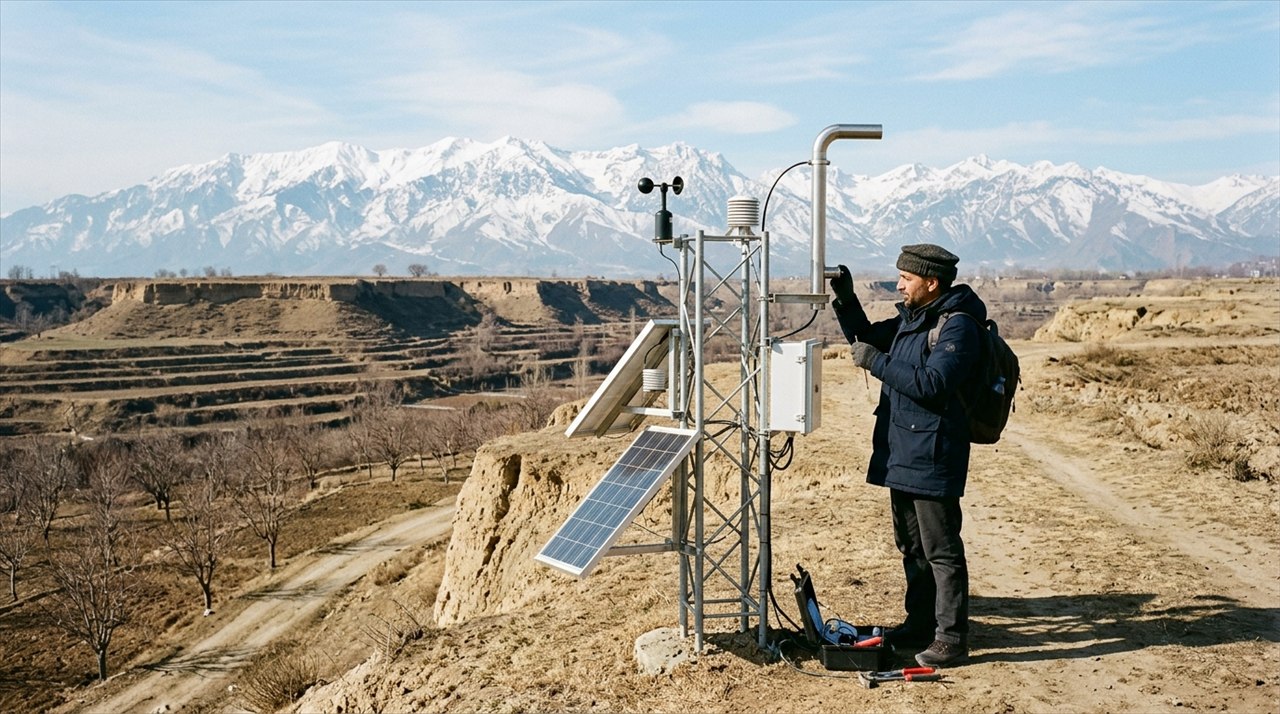
Expanding household pipe connectivity across Jammu and Kashmir under urban renewal and the Jal Jeevan Mission has markedly improved physical access to domestic water infrastructure, yet physical tap presence has not guaranteed microbiological safety at the point of human consumption . Across Srinagar, Budgam, Ganderbal, and South Kashmir, drinking-water security is governed by a fragile chain of mountain river intakes, conventional rapid-sand filtration plants, karstic/alluvial springs, and intermittently pressurized distribution networks .
Synthesizing peer-reviewed bacteriological investigations , fluvial intake studies , groundwater assessments , and statutory BIS IS 10500 / CAG audit benchmarks , this review identifies a two-stage failure regime. First, convective storms and riverbed boulder mining trigger raw-water turbidity surges (>120 NTU) that overwhelm manual alum and chlorine dosing at plants such as Kralpora and Sukhnag ; second, 18–20 hour daily supply shutoffs create negative pressures in corroded distribution laterals, drawing fecal contamination into tap supplies where residual chlorine has decayed below 0.10 mg/L .