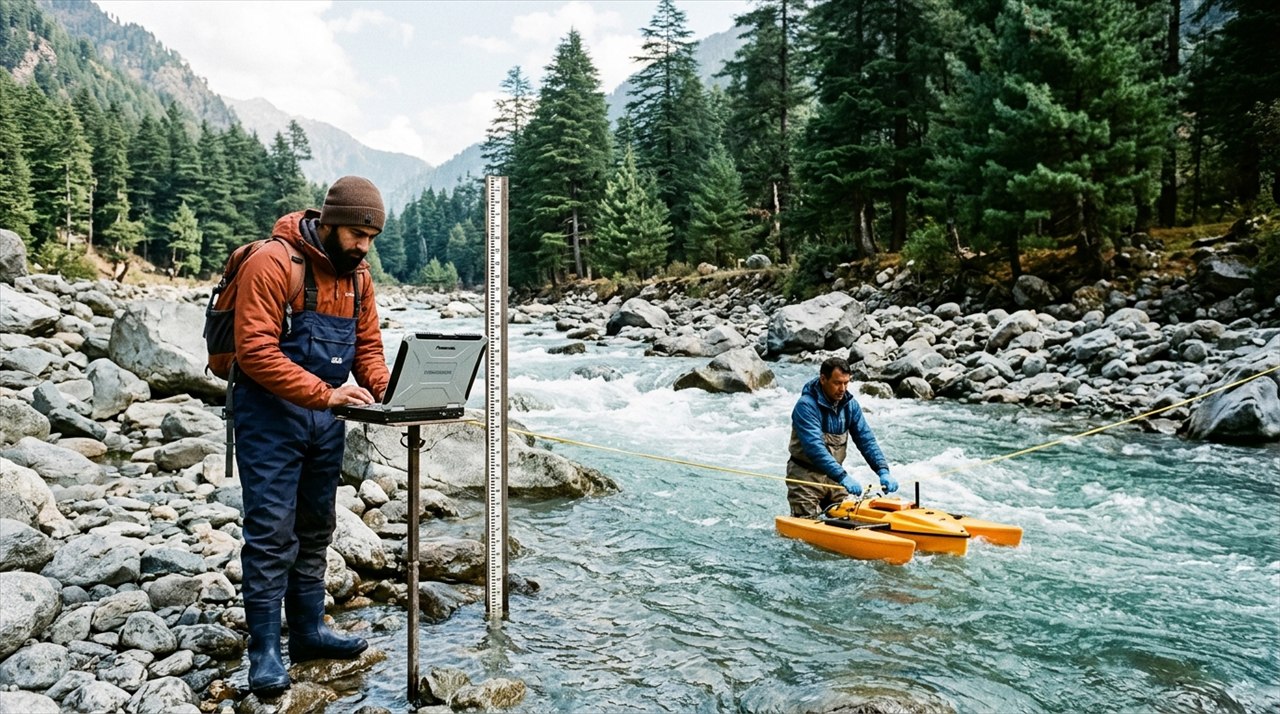
Executive Synthesis: Benthic Bioindicators & Aquatic Food-Web Integrity
Longitudinal EPT (Ephemeroptera–Plecoptera–Trichoptera) Assemblage Turnover, Functional Feeding Group Energetics, Cobble Substrate Embeddedness, and Multi-Metric Saprobic Biomonitoring Across Kashmir’s Rivers and Wetlands
Benthic macroinvertebrates—sedentary bottom-dwelling aquatic insects, crustaceans, molluscs, and annelid worms—provide a continuous, time-integrated biological record of water quality and physical habitat integrity that instantaneous chemical grab samples cannot replicate . When a midnight septic discharge, storm-drain overflow, orchard pesticide wash-off, or excavator silt plume sweeps down a Kashmir stream, dissolved chemical concentrations dilute within hours, yet the resident benthic community retains the ecological scar for months across larval life cycles .
Synthesizing published quantitative longitudinal surveys across snowmelt tributaries and the Jhelum River mainstem , tributary hydrochemical investigations , Ramsar odonate inventories , and trace-metal insect toxicity studies , this dossier documents a stark ecological bifurcation. High-elevation cobble-boulder reference reaches (>1,800–2,560 m ASL) still sustain rich, clean-water Ephemeroptera–Plecoptera–Trichoptera (EPT) assemblages (71%–77% EPT; BMWP–ASPT ~7.6; CPCB Class A), whereas gravel-mined piedmont corridors and sewage-impacted urban Jhelum glides collapse to 14%–35% EPT (ASPT ~3.45; HFBI ~7.12; CPCB Classes C–D), dominated by haemoglobin-rich Chironomus midges and Tubifex worms .