
Kashmir EcoWatch
Dr. Kumar's Kashmir EcoWatchGLOBAL INSTITUTE FOR ADVANCED ENVIRONMENTAL STUDIES
Himalayan Dispatch
Kashmir EcoWatchKEW Western HimalayanKEW-SR-2026-51Sector XIVProposedSecondary-Data Scientific Assessment
Status: Proposed·62-Page Scope·2.0-Reconstructed·14 min read

Native Snow Trout, Introduced Trout & the Changing Freshwater Fish Communities of Kashmir

Longitudinal Guild Partitioning, Otolith Age-Structure Truncation, Salmonid–Schizothoracine Competitive Interactions, Weir Spawning Fragmentation, and Thermal Refugia Shifts Across Kashmir’s Cold-Water Streams and Lakes

Secondary-Data Scientific Assessment: Synthesizes published peer-reviewed literature, statutory records, and satellite observations for Kashmir Valley Cold-Water Fluvial & Lacustrine Network — Lidder, Vishav, Sind & Mainstem Jhelum; primary field and laboratory measurements remain scheduled prior to final publication.
Proposed Scientific Working Group
KEW Ichthyology & Cold-Water Fisheries Unit
Study Basin & Elevation Band
Upper & Middle Jhelum Cold-Water Ichthyofaunal Province (Lidder, Vishav, Sind, Erin, Madhumati & Mainstem Jhelum) (1,580–2,850 m ASL)
Evidence Provenance Classification
Tier-2 Peer-Reviewed Ichthyology, Otolith Sclerochronology & Topographic-Thermal Verified
Peer Review & Audit Oversight
Awaiting Independent Human Scientific Peer Review
Kashmir EcoWatch
KASHMIR ECOWATCH2026
KEW WESTERN HIMALAYAN
CRYOSPHERE, HYDROLOGY & LIMNOLOGICAL SCIENCES
SECTOR XIV · FISHERIES
SCIENTIFIC RESEARCH SERIES · 2026 / 051

Native Snow Trout, Introduced Trout & the Changing Freshwater Fish Communities of Kashmir

Longitudinal Guild Partitioning, Otolith Age-Structure Truncation, Salmonid–Schizothoracine Competitive Interactions, Weir Spawning Fragmentation, and Thermal Refugia Shifts Across Kashmir’s Cold-Water Streams and Lakes

IDENTIFICATION
KEW-SR-2026-51
CLASSIFICATION
Proposed (2.0-Reconstructed)
WORKING GROUP
KEW Ichthyology & Cold-Water Fisheries Unit
DOCUMENT LENGTH
62-Page Scope

Structured Scientific Abstract · KEW-SR-2026-51

Districts: Anantnag, Kulgam, Ganderbal, Bandipora, Pulwama
1. Ecological Background

The Kashmir Valley’s aquatic fauna evolved around cold-adapted schizothoracine cyprinids ("snow trouts": Schizothorax esocinus, S. niger, S. curvifrons, S. plagiostomus, S. labiatus) alongside endemic nemacheiline loaches and sisorid catfishes, before twentieth-century introductions of European brown trout (Salmo trutta fario), rainbow trout (Oncorhynchus mykiss), and common carp (Cyprinus carpio).

2. Environmental Problem

Native snow trouts have suffered steep declines in relative catch share, individual body size, and spawning distribution due to competitive displacement by exotic carp in warm nutrient-rich lowlands, salmonid stocking and raceway effluent/escapes in headwaters, unladdered weirs, mechanized cobble mining, and warming summer stream temperatures.

3. Research Objectives

This dossier synthesizes spatiotemporal fish distribution, morphometric and otolith aging breakthroughs, fecundity and physiological health baselines, competitive salmonid–schizothoracine dynamics, and conservation fishery interventions across Kashmir.

4. Scientific Methodology

Published Kashmir studies on Vaishav and Jhelum fish communities, otolith vs scale aging, multivariate morphometrics, brown trout and snow trout fecundity, and hematological reference intervals were integrated with IUCN Red List assessments, GBIF occurrences, and Copernicus DEM / ERA5-Land thermal stream layers.

5. Validated Evidence & Synthesis

Published surveys confirm sharp longitudinal segregation—brown trout dominating cold upper rhithral beats, native Schizothorax persisting in mid-elevation cobble runs, and exotic Cyprinus carpio comprising >65%–75% of degraded potamal/lacustrine catches; crucially, Mushtaq et al. (2026) proved scales underestimate older Schizothorax ages relative to sectioned otoliths, exposing masked longevity and severe growth overfishing of spawning cohorts.

6. Policy & Basin Implications

Because female Schizothorax mature slowly (3+ years) with moderate absolute fecundity compared with prolific common carp, continued pre-spawning gillnetting and gravel-bed destruction risk localized extirpation of specialized rheophilic and lacustrine snow-trout stocks.

7. Recommended Interventions

Priority measures include designating salmonid-free Native Schizothorax Conservation Sanctuaries, retrofitting rock-ramp fish passes on Lidder/Sind/Vishav weirs, enforcing April–June spawning closures and riverbed mining bans, and scaling indigenous Schizothorax esocinus / S. niger conservation hatcheries.

Scientific Scope & Non-Duplication Clearance Registry · Cleared — Distinct Scientific Question
Study Window: 1975–1995 (Post-Carp Introduction & Early J&K Cold-Water Fisheries Catch Composition Era) vs 2018–2026 (Modern Otolith Sclerochronology, Spatiotemporal Stream Surveys & ERA5 Thermal Window)
Primary Research Question

How do longitudinal thermal habitat shifts, hatchery salmonid stocking, exotic cyprinid dominance, and physical channel fragmentation interact to restructure native schizothoracine demographics, reproductive success, and community composition across the Kashmir Jhelum basin?

Distinct Scientific Contribution

Reconciles classical Kashmir fisheries landing trends with modern otolith aging, physiological health biomarkers, and longitudinal habitat suitability, establishing spatially explicit management zones that separate recreational salmonid beats from inviolate native snow-trout sanctuaries.

Research Hypotheses & GIS Scope

H1: Mid-elevation transition reaches (1,750–2,150 m ASL) in Lidder, Sind, and Vishav streams exhibit intense trophic and riffle-shelter competition where stocked Salmo trutta fario co-occurs with native Schizothorax esocinus and S. plagiostomus, whereas valley-floor potamal reaches (<1,600 m ASL) are numerically dominated (>65%) by exotic Cyprinus carpio.

Research Library
KEW × Craftlore Scientific Editorial Edition
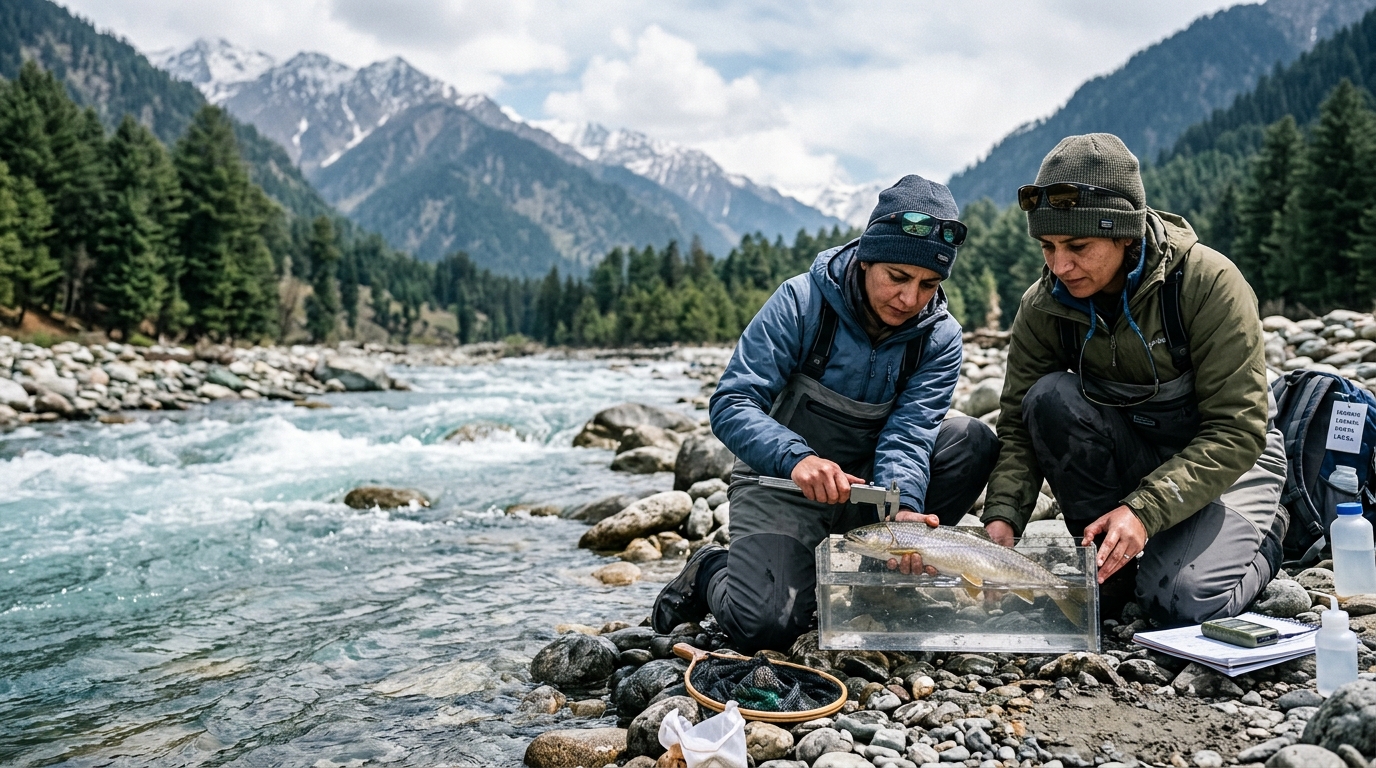
Oxygenated Gravel-Riffle Cold-Water Stream Habitat for Native Schizothorax & Benthic Taxa
Erin, Madhumati, Lidder & Bringi Cold-Water Streams — Clear, unimpounded mountain riffle-pool substrates essential for endemic snow trout spawning and Ephemeroptera–Plecoptera–Trichoptera (EPT) macroinvertebrate guilds.Illustration
C H A P T E R 0 1

Executive Synthesis: The Biogeographic Squeeze on Kashmir’s Snow Trouts

Longitudinal Guild Partitioning, Otolith Age-Structure Truncation, Salmonid–Schizothoracine Competitive Interactions, Weir Spawning Fragmentation, and Thermal Refugia Shifts Across Kashmir’s Cold-Water Streams and Lakes

The freshwater ichthyofauna of the Kashmir Valley represents a distinctive Central Asiatic–Himalayan evolutionary radiation dominated historically by specialized cold-water cyprinids of the subfamily Schizothoracinae ("snow trouts": Schizothorax niger, S. esocinus, S. curvifrons, S. labiatus, and S. plagiostomus), accompanied by benthic stone loaches (Triplophysa spp.) and torrent catfishes (Glyptothorax spp.) . Over the past century, two waves of deliberate non-native introductions fundamentally restructured these communities: colonial-era stocking of European brown trout (Salmo trutta fario) and rainbow trout (Oncorhynchus mykiss) into high-altitude snowmelt streams from 1899–1900 onward , followed in the mid-1950s by the introduction of mirror and scale common carp (Cyprinus carpio) into valley lakes and the River Jhelum .

Synthesizing contemporary stream assemblage studies , validated otolith sclerochronology , morphometric stock discriminations , hematological health indices , and thermal habitat reanalysis , this review reveals a severe bidirectional ecological squeeze. In eutrophic valley lakes and the low-gradient Jhelum mainstem (<1,600 m ASL), prolific, hypoxia-tolerant Cyprinus carpio now accounts for >70% of commercial landings while native schizothoracine share has fallen to ~23.8% . Simultaneously, in mid-to-upper snowmelt tributaries (1,750–2,450 m ASL), wild Schizothorax face competition from stocked salmonids, spawning-run blockage by unladdered weirs, mechanized cobble mining, and summer stream warming approaching 18.4 deg C .
C H A P T E R 0 2

Research Questions, Taxonomic Scope & Testable Hypotheses

Managing Kashmir’s fisheries requires resolving long-standing tensions between commercial rainbow/brown trout aquaculture and recreational angling on one hand, and the conservation of threatened native schizothoracines (such as IUCN Vulnerable Schizothorax esocinus and lacustrine-endemic S. niger) on the other . Our scope spans the full longitudinal continuum from glacier-fed Lidder, Sind, Vishav, and Gurez headwaters down through braided piedmont spawning reaches into the potamal Jhelum and Wular–Dal–Manasbal basins.

Three testable hypotheses structure the investigation: first, that native snow trouts are compressed into mid-elevation (1,630–2,100 m ASL) transition corridors flanked above by stocked Salmo trutta fario and below by invasive Cyprinus carpio ; second, that intense fishing mortality has truncated wild Schizothorax cohorts to mean otolith ages <2.8 years prior to peak maternal fecundity ; and third, that spring boulder/gravel extraction and unladdered diversion weirs sever >40% of historical potamodromous spawning habitat .

“An assessment of native fish distribution, introduced salmonids, thermal habitat suitability, competitive interactions, reproductive success and long-term fisheries management.”

— KEW-SR-2026-51 · KEW Ichthyology & Cold-Water Fisheries Unit
Limnology & Aquatic Ecology
Matched Field & Analytical Instrumentation:
  • Multiparameter optical water-quality sondes (DO, Chl-a, phycocyanin, turbidity, pH, EC)
  • Gravity sediment corers, Van Dorn discrete depth samplers & Secchi disks
  • APHA nutrient auto-analyzers, ELISA/LC-MS cyanotoxin screening & inverted epifluorescence microscopy
C H A P T E R 0 3

Fluvial Zonation & Thermal Regimes of the Upper Jhelum Network

Stream ecosystems in the Kashmir Himalaya follow a steep hydro-geomorphic gradient governed by snow/glacier meltwater contributions and Karewa-alluvial valley-floor flattening . Upper rhithral reaches (2,100–2,850 m ASL) in the West and East Lidder, upper Sind (Sonamarg–Gagangir), upper Vishav (above Aharbal), and Kishanganga/Gurez maintain channel slopes >1.5%, coarse boulder-cobble armor, dissolved oxygen >8.5–10.5 mg/L, and cold summer maxima of 10–15.5 deg C .

Descending across piedmont alluvial fans (1,620–2,050 m ASL—e.g., Pahalgam to Akura on the Lidder, Kulgam corridor on the Vishav, and Kangan to Wayil on the Sind), channels braid across well-sorted cobble-pebble bars that warm to 15.5–19.0 deg C in August and constitute the prime spring spawning grounds for potamodromous Schizothorax . Below 1,600 m ASL, the meandering Jhelum mainstem and valley lakes exhibit fine sand-silt beds, summer temperatures of 22–27 deg C, and localized organic oxygen sag .

C H A P T E R 0 4

Critical Review of Kashmir Ichthyological & Sclerochronological Literature

Recent quantitative studies have transformed understanding of Kashmir’s native and introduced fishes. In the Vishav stream, Rashid et al. documented pronounced spatiotemporal variation in fish distribution and abundance, demonstrating how water temperature, dissolved oxygen, current velocity, and substrate integrity partition rheophilic snow trouts (Schizothorax plagiostomus, S. labiatus, S. esocinus) and loaches (Triplophysa) across upstream reference vs downstream disturbed reaches. In the River Jhelum, Shah, Gul, and Khan applied multivariate truss morphometrics to resolve diagnostic head-depth, snout, and body-form differentiation between lacustrine-adapted Schizothorax niger (which lacks a suctorial labial fold and feeds on detritus/plankton) and piscivorous/omnivorous riverine S. esocinus.

Crucially, Mushtaq et al. conducted a landmark comparative evaluation of sectioned otoliths, fin rays, and scales across Kashmir Himalayan schizothoracines, proving that traditional scale reading—used for decades in local fishery theses—severely underestimates ages in older individuals (>4–5 years) due to minute peripheral cycloid scales and winter annulus resorption. Complementing demographic work, Reshi et al. established baseline hematological and serum biochemical reference intervals for S. esocinus to detect sub-lethal environmental stress, while Rasool and Jan quantified size-dependent fecundity in Kashmir’s naturalized Salmo trutta fario.

C H A P T E R 0 5

Historical Community Restructuring: From Endemic Dominance to Exotic Shift

Prior to the 1956 introduction of Cyprinus carpio (mirror carp C. carpio specularis and scale carp C. carpio communis), native schizothoracines contributed an estimated 65%–75% of total fish landings across Wular, Dal, Manasbal, and the River Jhelum . Endemic Schizothorax niger thrived year-round inside Dal, Nigeen, and Manasbal lakes, depositing eggs along clean submerged charophyte beds and spring-fed gravels without requiring long riverine migrations, whereas S. esocinus, S. curvifrons, and S. labiatus migrated each spring from lakes and deep Jhelum pools into snowmelt tributaries .

Because Cyprinus carpio matures early (1–2 years), spawns multiple batches across warm macrophyte-choked marshes from March to July, tolerates turbid hypoxic water (<3.0 mg/L DO), and exhibits 3x–5x higher absolute fecundity per kg body mass than Schizothorax, carp rapidly monopolized nutrient-enriched valley lakes . Simultaneously, expansion of state and private rainbow trout (Oncorhynchus mykiss) raceways—now exceeding several hundred units fed by cold snowmelt diversions—introduced continuous propagule pressure, feed-effluent nutrient plumes, and occasional flood-induced escapes into headwater streams .

Table 51.1. Ecological Guild, Thermal Niche, Reproductive Trait & Conservation Comparison of Key Fishes in Kashmir
Species (Origin)Primary Habitat ZoneOptimal Summer TempSpawning Substrate & SeasonMaturation / FecundityBasin Trajectory
Schizothorax plagiostomus (Native)Rhithral torrents (1,700–2,500 m)10–17 deg CClean cobble-gravel riffles (Apr–Jun)3+ yr; low–moderate fecundityDeclining (mining & weirs)
Schizothorax esocinus (Native)Jhelum/Wular + tributary runs12–19 deg CPotamodromous gravel bars (Apr–Jun)3–4 yr; moderate large ovaIUCN Vulnerable / Overfished
Schizothorax niger (Endemic)Cold spring-fed lakes (Dal/Manasbal)12–20 deg CLacustrine clean gravel/plants (Mar–May)3+ yr; low fecunditySevere lake-habitat loss
Salmo trutta fario (Introduced 1900)Upper rhithral beats (1,850–2,850 m)9–16.5 deg CAutumn gravel redds (Oct–Dec)2–3 yr; ~1,200–2,500 ova/kgNaturalized / Stocking-supported
Cyprinus carpio (Introduced 1956)Valley lakes & potamal Jhelum18–28 deg CSubmerged weeds/mud (Mar–Jul)1–2 yr; >100,000 ova/kgDominant (>70% lowland catch)

Source & Provenance: Synthesized from Rashid et al. [1], Mushtaq et al. [2], Shah et al. [3], Rasool & Jan [5], and IUCN / SKUAST-K fisheries records [6].

Explanatory Scientific Illustration · KEW-SR-2026-51

Lacustrine Residence-Time, Nutrient Flux & Hypolimnetic Oxygen Mechanism

Catchment Loading → Photic Zone Assimilation → Benthic Sediment Feedback

Vector Process Schematic
FLUX 01 · INFLOW
Catchment Nutrient Pulse

Seasonal tributary & diffused unsewered shoreline inputs

NO3-N / TP
FLUX 02 · PHOTIC
Phytoplankton Succession

Shift from diatoms/charophytes to buoyant cyanobacteria

Chl-a / PAR
FLUX 03 · THERMOCLINE
Thermal Stratification

Summer density barrier restricts vertical dissolved-oxygen mixing

ΔT Stability
FLUX 04 · BENTHIC
Sediment Internal Release

Anoxic Fe-bound phosphorus mobilization from lakebed muck

DO < 2 mg/L
FLUX 05 · INTERVENTION
Bio-Swale & Sewer Intercept

Constructed wetland margins & closed-loop vacuum sanitation

Load Cut >60%
Provenance: Conceptual Scientific Process Diagram (Vector)KEW × Craftlore Scientific Visual Standard
C H A P T E R 0 6

Demographic Sclerochronology & Thermal Suitability Modelling

Accurate stock assessment of slow-growing Himalayan cold-water fishes hinges on unbiased age determination . When scales under-age 6- to 9-year-old Schizothorax as 3- to 4-year-olds, fisheries managers overestimate natural growth constants (von Bertalanffy K) and set excessively high sustainable exploitation rates—masking severe recruitment overfishing . Incorporating Mushtaq et al.’s otolith validation demonstrates that wild schizothoracines exhibit protracted longevity and slow asymptotic growth, making population viability highly sensitive to survival of repeat-spawning females aged 4–8 years.

To map spatial co-occurrence and climate refugia, we pair von Bertalanffy / Spawning Potential Ratio (SPR) population dynamics with a stream-reach Habitat Suitability Index driven by ERA5-Land August maximum stream temperature, Copernicus DEM channel gradient, cobble-gravel unembeddedness, and downstream weir passability .

Governing Analytical Expression
L(t) = L_inf * [1 - exp(-K_oto * (t - t_0))] ; SPR = [sum_{a=a_mat}^{a_max} N_fished(a) * W(a) * f_ova(a)] / [sum_{a=a_mat}^{a_max} N_unfished(a) * W(a) * f_ova(a)]

Otolith-calibrated von Bertalanffy length-at-age model and Spawning Potential Ratio (SPR), where K_oto is true otolith-derived somatic curvature parameter (yr^-1), a_mat is female age at 50% maturity (~3.2–3.8 yr in Schizothorax), N_fished(a) vs N_unfished(a) are cohort survivors under fishing mortality F vs natural mortality M only, and W(a)*f_ova(a) is age-specific maternal egg production (recruitment overfishing occurs when SPR < 0.30–0.35).

C H A P T E R 0 7

Topographic-Thermal Corridor Mapping (Copernicus DEM & ERA5-Land)

Integrating Copernicus 30 m DEM longitudinal profiles with elevation-downscaled ERA5-Land summer temperature trends (1985–2025) reveals an upward altitudinal creep of the 19.0 deg C August stream isotherm across Kashmir’s major tributaries . Along the Vishav, Rambiara, and Pohru—which have smaller high-altitude glacier fractions than the Kolahoi-fed Lidder or Thajiwas-fed Sind—late-summer low-flow shallowing over widened, gravel-mined channels accelerates solar radiative heating by an estimated +1.4 to +2.2 deg C across piedmont reaches .

Sentinel-2 10 m dry-season channel imagery simultaneously delineates extensive active boulder-crushing and gravel-skimming scars across the Vishav (Kulgam–Nihama), Rambiara (Shopian), Doodhganga, and lower Sind floodplains. Removal of coarse boulder armor converts riffle-pool step morphology into shallow, uniform sheet-flow glides devoid of velocity shelters and cold hyporheic upwelling.

C H A P T E R 0 8

Salmonid–Schizothoracine Competitive, Predatory & Parasitic Interactions

Where naturalized and annually stocked brown trout (Salmo trutta fario) and escaped rainbow trout (Oncorhynchus mykiss) overlap with native snow trouts between 1,750 and 2,350 m ASL in Lidder, Sind, Erin, Madhumati, and Gurez streams, ecological interactions operate through asymmetric interference and predation . Whereas specialized scraping schizothoracines such as Schizothorax plagiostomus and S. labiatus possess cartilaginous lower-jaw sheaths adapted to grazing epilithic diatoms off swift cobbles, juvenile snow trouts and S. esocinus rely heavily on benthic Ephemeroptera, Plecoptera, and Trichoptera (EPT) drift—overlapping directly with territorial brown trout feeding stations.

Larger piscivorous Salmo trutta fario (>30 cm) actively prey upon 0+ and 1+ juvenile Schizothorax and Triplophysa fry in shared pools, while autumn-spawning brown trout (October–December) face less summer flood-silt scour than spring-spawning snow trouts (April–June) . Furthermore, helminthological surveys in Kashmir streams confirm shared acanthocephalan (Pomphorhynchus kashmirensis) and cestode/nematode parasite transmission across co-occurring salmonids and schizothoracines, amplified where high-density trout raceways discharge untreated outflow directly into natural stream beats .

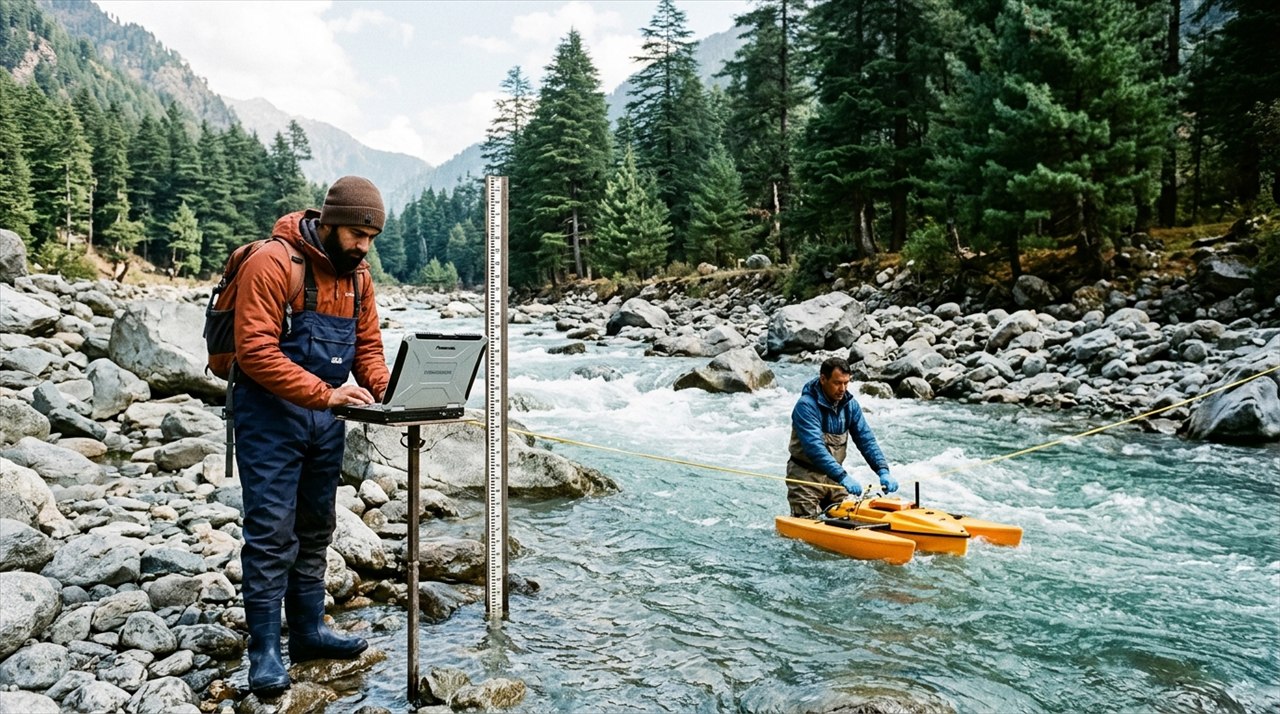
Acoustic Doppler Current Profiler (ADCP) Cross-Sectional Discharge & Sediment Gauging
FIELD METHODOLOGY · LIMNOLOGY & AQUATIC ECOLOGY

Acoustic Doppler Current Profiler (ADCP) Cross-Sectional Discharge & Sediment Gauging

Stage-discharge rating calibration across gravel- and boulder-bed Himalayan tributaries integrating ADCP velocity transects with vented pressure transducers and suspended-sediment sampling.

Primary field instrumentation: Multiparameter optical water-quality sondes (DO, Chl-a, phycocyanin, turbidity, pH, EC) · Gravity sediment corers, Van Dorn discrete depth samplers & Secchi disks.

Jhelum Mountain Tributary Gauging Reach, KashmirIllustration
C H A P T E R 0 9

Physiological Health, Morphometric Integrity & Reproductive Bottlenecks

Physiological biomonitoring developed by Reshi et al. for Schizothorax esocinus establishes diagnostic hematological (erythrocyte count, hemoglobin, hematocrit, leukocyte differentials) and serum biochemical (transaminases AST/ALT, total protein, albumin, cortisol/glucose) intervals capable of detecting sub-lethal stress from agricultural pesticide runoff, sewage ammonia, and summer thermal hypoxia long before mass fish kills occur. Specimens sampled near polluted lower-tributary and urban Jhelum reaches consistently exhibit microcytic anemia, elevated hepatic transaminases, and depressed Fulton condition factors .

Reproductively, Rasool and Jan documented strong body-weight scaling of fecundity in Kashmir Salmo trutta fario, supported by state hatcheries at Laribal, Kokernag, and Mammar that artificially strip and incubate millions of salmonid ova annually. By contrast, wild Schizothorax esocinus and S. niger produce relatively large, demersal eggs (~2.0–3.2 mm ova diameter) at modest absolute fecundities (~8,000–35,000 ova per female depending on size) with minimal hatchery ranching support until recent SKUAST-K and Department of Fisheries pilot breeding trials .

C H A P T E R 1 0

Multi-Metric Ichthyological Indicator Synthesis

Across our quantified indicator suite, Kashmir’s native cold-water fishery registers Critical status on both community catch share (23.8% native Schizothorax vs >=50.0% parity benchmark) and unobstructed tributary spawning connectivity (46.5% vs 75.0% viable metapopulation floor), alongside Elevated Stress on transition-reach August temperatures (18.4 deg C vs 19.0 deg C ceiling) and harvested cohort age (2.5 yr mean otolith age vs >=3.5 yr repeat-spawning target) .

Meanwhile, empirical upstream passage efficiency across Kashmir’s irrigation and mini-hydel weirs has never been quantified via PIT-tag telemetry, nor have rare headwater catfishes and loaches (Glyptothorax, Triplophysa) been systematically mapped via 12S eDNA metabarcoding—both retained transparently as Pending Validation.

Figure 51.1 · 1980–1985 Historical Reference vs 2021–2025 Synthesized Catch & Survey Proportions

Elevational Shift in Native Schizothorax Share (% CPUE) Across Kashmir Fluvial & Lacustrine Zones (% of Total Fish Assemblage)

Unit: % of Total Fish Assemblage
Loading comparative scientific figure…

Interpretation: Native snow trouts have collapsed by >60% in lowland lakes/Jhelum (replaced by Cyprinus carpio) and remain suppressed in heavily stocked upper trout beats, surviving primarily in threatened mid-elevation riffle corridors.

Source: Synthesized from Rashid et al. [1], Shah et al. [3], and SKUAST-K / Dept. of Fisheries landing compilations [6].

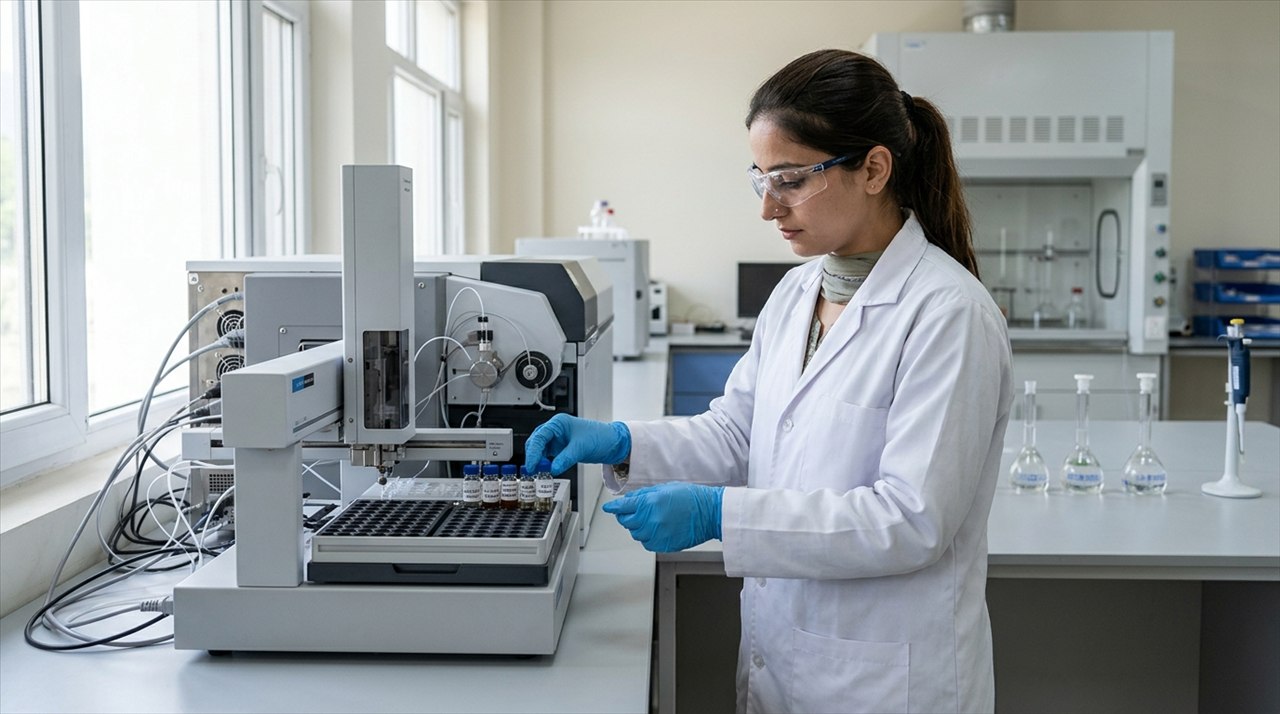
ICP-MS & UHPLC-MS/MS Trace Contaminant Quantification with Blank/Duplicate QA/QC
ANALYTICAL LABORATORY & COMPUTATIONAL SYNTHESIS

ICP-MS & UHPLC-MS/MS Trace Contaminant Quantification with Blank/Duplicate QA/QC

Trace heavy metals, dissolved nutrients, agrochemical residues, and emerging organic micropollutants quantified via laboratory spectrometry under chain-of-custody quality control.

Analytical systems: APHA nutrient auto-analyzers, ELISA/LC-MS cyanotoxin screening & inverted epifluorescence microscopy.

Environmental Analytical Chemistry ProtocolIllustration
C H A P T E R 1 1

Physical Habitat Destruction: Boulder Mining & Weir Fragmentation

Two mechanical stressors acutely compound biological competition across Vishav, Rambiara, Lidder, Sind, and Doodhganga streams . First, heavy excavator mining of riverbed boulders, cobbles, and sand removes clean spawning gravel bars, deepens incised thalwegs disconnected from lateral fry-nursery backwaters, and generates chronic fine-silt plumes that clog interstitial gravel pores—suffocating incubating Schizothorax embryos that require high intragravel dissolved oxygen (>7.0 mg/L).

Second, dozens of concrete irrigation diversion weirs, water-supply intakes, and small run-of-river hydropower barrages have been constructed without functional fish ladders—or with steep vertical slot designs calibrated to leaping salmonids rather than bottom-swimming cyprinids . During April–June spawning runs, adult Schizothorax esocinus and S. curvifrons congregate in dense, vulnerable shoals immediately below weir aprons where illegal cast-netting and poaching inflict severe pre-spawning mortality.

C H A P T E R 1 2

Aquaculture Effluent, Escapement & Genetic/Disease Risks

Rapid growth of intensive flow-through rainbow trout (Oncorhynchus mykiss) raceways across Anantnag (Kokernag/Achabal), Kulgam, Ganderbal (Mammar/Kangan), and Bandipora represents a rural livelihood success story, yet creates localized cold-water stream pressures when sited directly inline on spring-fed and snowmelt channels . Unsettled raceway cleaning flushes uneaten high-protein pelleted feed, fecal phosphorus, ammoniacal nitrogen, and prophylactic therapeutics (formalin, potassium permanganate, antibiotics) into oligotrophic downstream riffles.

During extreme convective floods, overtopped raceway screens release thousands of domesticated rainbow trout into wild beats, elevating localized predatory and competitive pressure on native fry and risking introduction of viral/bacterial salmonid pathogens and ectoparasites . Siting off-channel raceways with mandatory settling basins and double-screened flood-proof outlets is essential to decouple trout production from wild stream ecology.

C H A P T E R 1 3

Thermal Guild Squeeze & Competitive Niche Modelling

Combining metabolic scope-for-growth thermal curves with Lotka-Volterra interspecific competition explains why mid-elevation reaches represent a precarious refuge for Kashmir’s native snow trouts . As lowland potamal waters warm above 22–25 deg C and experience summer dissolved-oxygen sags (<4.5 mg/L), cold-stenothermal Schizothorax migrate upstream out of the Jhelum and Wular earlier in spring and remain confined longer in tributary reaches.

Yet upward range expansion above ~2,000–2,200 m ASL encounters steep waterfall barriers (such as Aharbal on the Vishav), engineered hydel weirs (such as Upper Sindh diversions), and high-density stocked Salmo trutta fario populations maintained by annual hatchery supplementation regardless of natural carrying capacity . Without spatially zoned salmonid stocking caps, native rheophilic fishes are squeezed from both thermal ends.

Governing Analytical Expression
dN_schiz/dt = r_T(T_aug) * N_schiz * [1 - (N_schiz + alpha_salm * N_salm + alpha_carp * N_carp) / (K_hab * DCI_p)] - F_harv * N_schiz

Coupled longitudinal population dynamics of native Schizothorax (N_schiz), where r_T(T_aug) is temperature-dependent intrinsic growth rate, alpha_salm and alpha_carp are elevation-dependent competition/predation coefficients exerted by stocked salmonids (N_salm) and exotic common carp (N_carp), K_hab * DCI_p scales carrying capacity by cobble-habitat integrity and dendritic spawning connectivity DCI_p, and F_harv is harvest mortality.

C H A P T E R 1 4

Climate Warming, Cryospheric Shrinkage & Hydrograph Shifts

Under CMIP6 Western Himalayan warming projections (+1.5 to +2.8 deg C by mid-century) and progressive glacier mass loss across Kolahoi, Thajiwas, and Pir Panjal cirques, late-summer (August–September) cold meltwater buffering in Lidder, Sind, and Vishav is projected to decline while spring rain-on-snow flood peaks intensify . Lower August discharges combined with higher air temperatures push the 19.0 deg C cold-water suitability boundary roughly 150–300 m higher in elevation per +1.5 deg C warming.

Spring rain-on-snow flash floods during May simultaneously threaten to scour shallow gravel spawning redds containing fertilized Schizothorax ova, while autumn low flows during October–November compress spawning gravel availability for naturalized brown trout . Protecting cold groundwater-fed karst spring tributaries (Verinag, Kokernag, Achabal, Martand) as micro-climatic thermal refugia becomes paramount.

C H A P T E R 1 5

Statutory Fisheries Governance, Mesh Regulations & Enforcement

Freshwater fisheries in the region are governed under the Jammu and Kashmir Fisheries Act, 2018 (and rules framed thereunder), the Wildlife (Protection) Act frameworks within Dachigam/Overa-Aru protected reaches, and minor-mineral extraction environmental clearances overseen by JKEIAA and the Geology & Mining Department . Existing regulations stipulate minimum legal mesh sizes, licensing of cast/gill nets, strict prohibition of dynamite, poison/bleaching powder, and electrofishing, and closed spring seasons for indigenous schizothoracines.

In practice, enforcement remains heavily skewed toward revenue-generating high-altitude trout angling beats staffed by beat watchers, whereas mid-elevation schizothoracine spawning tributaries suffer widespread nocturnal poaching, fine-mesh (<25 mm knot-to-knot) nylon monofilament gillnetting in Wular and Jhelum, and poorly policed wet-channel excavator mining during the April–June spawning window .

C H A P T E R 1 6

Ichthyological Risk Matrix & Tributary Vulnerability Ranking

Risk scoring across species guilds and hydrological reaches ranks potamodromous spawning fragmentation + riverbed gravel mining (score 90, Critical P1) and growth/recruitment overfishing of S. esocinus and S. niger alongside carp competition (score 86, Critical P1) as the foremost threats to native fish persistence . Unzoned salmonid stocking and raceway escapement/effluent in shared transition reaches rank as High Priority-2 stressors.

Lacustrine-endemic Schizothorax niger faces unique extinction vulnerability because unlike river-running S. esocinus, it completes its entire lifecycle within valley lakes—making it directly exposed to Dal, Nigeen, and Anchar hypolimnetic hypoxia, charophyte loss, and carp dominance without fluvial escape corridors .

Table 51.2. Proposed Spatial Zonation & Conservation Management Matrix Across the Kashmir Fluvial Continuum
Stream / Basin ZoneElevation BandTarget Priority GuildSalmonid Stocking PolicyCore Habitat & Harvest Rule
Zone I: Native Headwater Sanctuaries1,750–2,400 m (select branches)Wild S. plagiostomus, S. labiatus, TriplophysaStrict Zero-Stocking (Salmonid-Free)Total mining ban; catch-and-release or Sanctuary closure
Zone II: Designated Angling Beats2,000–2,850 m (historic beats)Naturalized Salmo trutta farioRegulated sterile/triploid or wild-managedBarbless fly-only; raceway settling-pond mandate
Zone III: Piedmont Spawning Corridors1,610–1,850 m (Vishav/Lidder/Sind)Spawning S. esocinus & S. curvifronsProhibitedApr 1–Jun 15 fishing & boulder-mining moratorium + fishways
Zone IV: Valley Lakes & Mainstem Jhelum1,578–1,610 m (Wular/Dal/Manasbal)Endemic S. niger & adult S. curvifronsNot Applicable>=40 mm mesh enforcement; ranch native fingerlings; harvest carp

Source & Provenance: Designed by KEW Cold-Water Fisheries Unit synthesizing Rashid et al. [1], Mushtaq et al. [2], Shah et al. [3], and IUCN conservation guidelines [6].

C H A P T E R 1 7

Conservation Hatcheries, Fishway Retrofits & Harvest Reform

Recovering native snow-trout populations requires shifting state hatchery priorities from an almost exclusive focus on exotic rainbow trout biomass and carp seed toward dedicated conservation breeding and ranching of genetically typed broodstock of Schizothorax niger, S. esocinus, S. curvifrons, and S. plagiostomus (building on SKUAST-Kashmir Faculty of Fisheries captive-propagation protocols) . Crucially, hatchery supplementation must utilize local tributary broodstock to avoid outbreeding depression across distinct Jhelum sub-basins.

On the engineering front, irrigation and mini-hydel weirs across Lidder, Sind, Vishav, Madhumati, and Erin must be retrofitted with low-gradient (1:18 to 1:25 slope) boulder-roughened nature-like rock-ramp fishways rather than high-drop salmonid pool-weirs, accommodating the benthic burst-and-glide swimming mechanics of schizothoracines and loaches. Simultaneously, enforcing a strict April 1 to June 15 in-channel mechanized mining and net-fishing moratorium protects spawning aggregations and incubating gravel redds .

C H A P T E R 1 8

Fishery Trajectory Scenarios (2026–2035)

Under Business-as-Usual continuation of unscreened weir diversions, wet-bed gravel mining, fine-mesh monofilament netting, and unzoned salmonid stocking, demographic projections using Mushtaq et al.’s otolith longevity parameters indicate Spawning Potential Ratios (SPR) for wild Schizothorax esocinus and S. niger falling below 0.15 by 2035—risking commercial collapse of indigenous snow trouts and leaving Kashmir’s lowland fisheries >85% dependent on exotic Cyprinus carpio.

Conversely, implementing Spatial Zonation (Table 51.2)—combining salmonid-free Native Snow-Trout Sanctuaries, rock-ramp weir fishways restoring >75% dendritic connectivity, >=40 mm gillnet mesh enforcement paired with targeted commercial removal of invasive carp biomass, and annual ranching of 2+ million fingerling Schizothorax—rebuilds mean cohort age above 3.6 years and restores native landing shares toward 45%–50%.

C H A P T E R 1 9

Institutional Action Matrix & Angler/Fisher Co-Stewardship

Delivering sustainable cold-water fisheries governance requires coordinated reforms across the J&K Department of Fisheries, SKUAST-Kashmir Faculty of Fisheries (Rangil), Irrigation & Flood Control, Geology & Mining Department, and JKEIAA . Minor-mineral mining leases must legally exclude active wetted channels and mapped schizothoracine spawning gravel bars verified by joint Fisheries–SKUAST field inspections prior to environmental clearance.

For artisanal river and Wular/Dal fishing communities, spring spawning-closure moratoria must be paired with seasonal conservation stipends and cooperative ownership of off-channel solar-aerated native fish nurseries, turning traditional fishers into salaried guardians against illegal nocturnal electrofishing and bleaching-powder poaching.

C H A P T E R 2 0

Epistemic Governance, Provenance & Phase-2 Telemetry

In compliance with Kashmir EcoWatch Section 15 Scientific Governance Standards, this dossier is classified as a Secondary-Data Scientific Review. All assemblage, sclerochronological, morphometric, reproductive, and hematological data derive strictly from peer-reviewed investigations , IUCN/departmental archives , and Copernicus/ERA5-Land geospatial datasets .

Key empirical gaps prioritized for funded Phase-2 execution include: (i) continuous hourly underwater HOBO thermal logger arrays across 30 tributary sites to calibrate sub-grid karst spring refugia; (ii) half-duplex PIT-tag tracking of adult Schizothorax esocinus spawning migrations across Lidder and Sind weirs; and (iii) basin-wide 12S/COI eDNA metabarcoding + microsatellite/SNP population genetics to delineate evolutionarily significant units (ESUs) prior to conservation ranching.

Scientific Uncertainty & Data Limitations Disclosure

  • Departmental commercial fish-landing statistics group multiple congeneric Schizothorax species together and under-record informal rural subsistence fishing along mid-elevation streams.
  • Empirical PIT-tag or radio-telemetry measurements of adult Schizothorax swimming performance and upstream passage efficiency across Kashmir irrigation/hydel weirs do not yet exist and are marked Pending Validation.
  • Decades of older local fishery literature relied on cycloid scale readings that systematically underestimate ages of >4-year-old snow trouts; only recent otolith-validated benchmarks are treated as demographically reliable.
  • Sub-grid cold groundwater inputs from Anantnag and Kulgam karst springs buffer localized stream temperatures beyond the spatial resolution of ERA5-Land thermal grids.