Executive Scientific Synthesis: Trans-Himalayan Fibre Ecology & Heritage Craft LCA
ISO 14040/14044 Cradle-to-Grave Material Flow, Changthang Alpine Pastoral Stocking & Shehr-e-Khas Artisanal Processing Sustainability
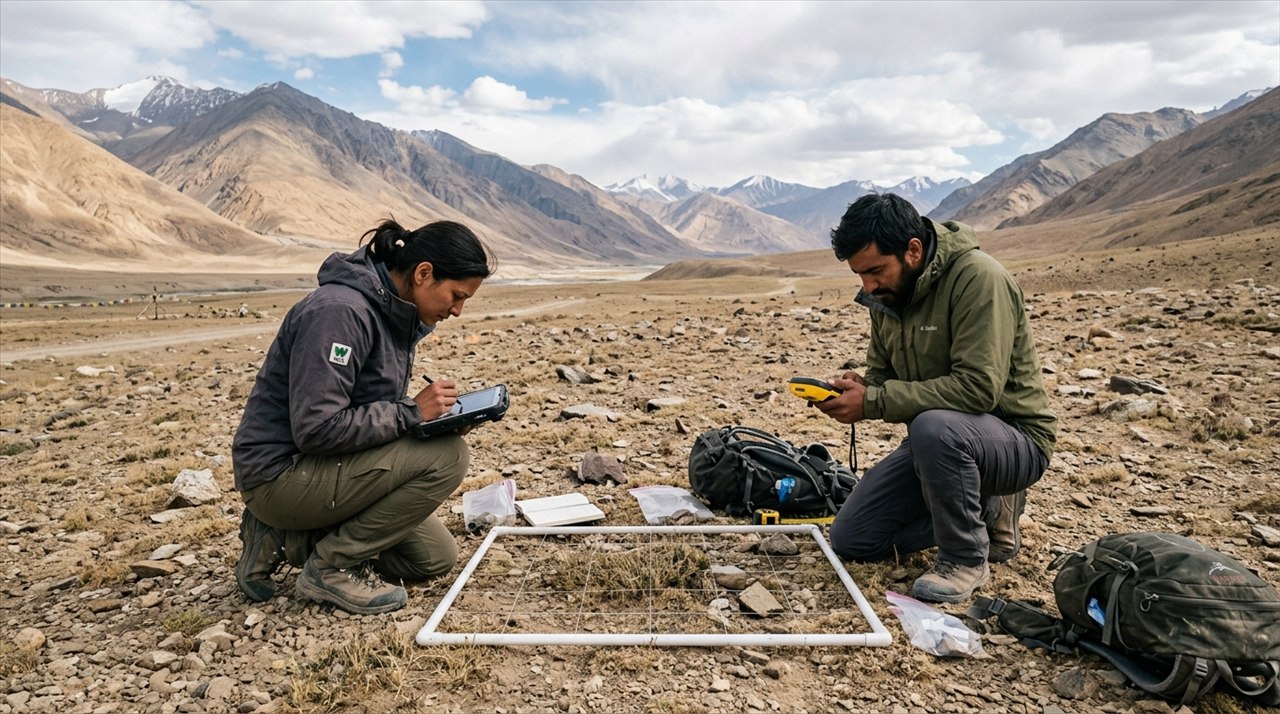
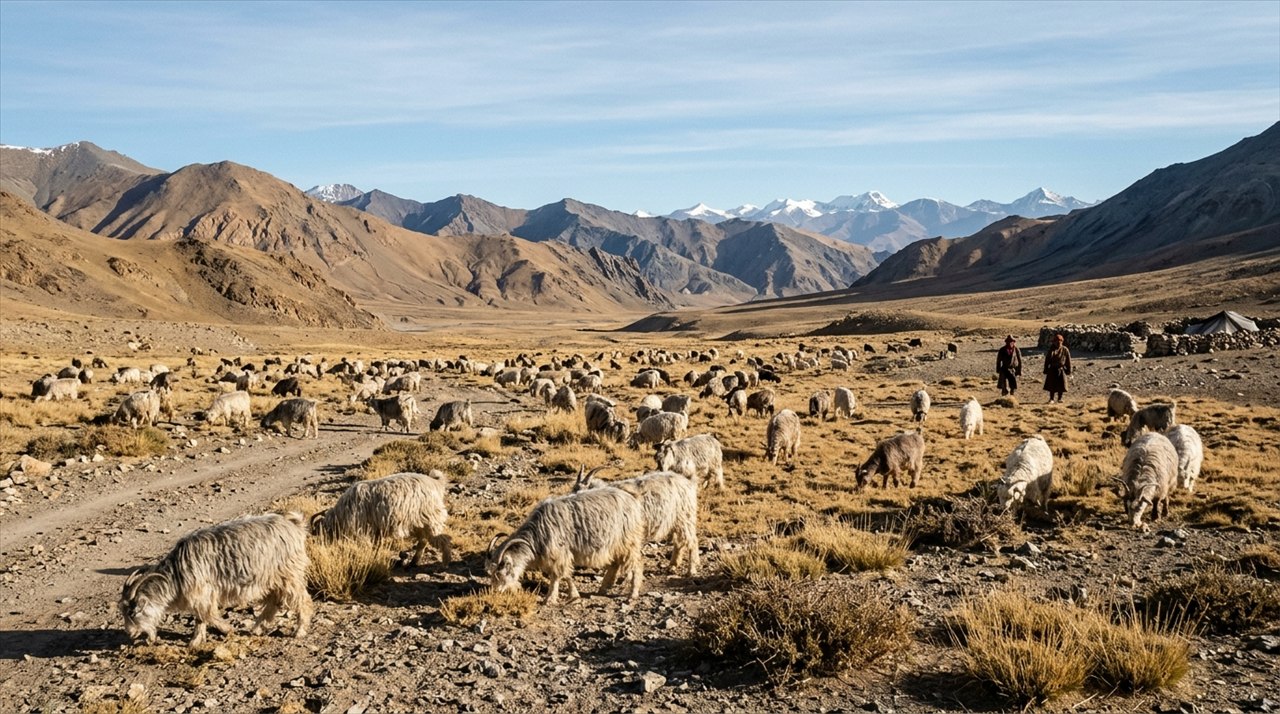
Kashmir Pashmina constitutes an exceptional coupled industrial-ecological system spanning two distinct elevational and bioclimatic regimes in the Western Himalaya: the cold-arid Changthang plateau of eastern Ladakh (4,200--5,220 m ASL), where nomadic Changpa pastoralists comb the winter underdown (pashm) of Capra hircus, and the historic cottage craft enclaves of Srinagar, Budgam, and Bandipora (1,584--1,620 m ASL), where women spinners and handloom weavers transform raw keratin fleece into Geographical Indication (GI) certified textiles [1, 3, 6].
Evaluating the environmental sustainability of this value chain under ISO 14040 and ISO 14044 standards reveals a sharp structural asymmetry: over 95% of direct mechanical fabrication energy in the Kashmir Valley derives from human kinetic labour on wooden spinning wheels (yinder) and horizontal handlooms, whereas environmental pressures concentrate at the upstream pastoral rangeland margin and in localized urban wet-processing drains [1, 4, 6]. When normalized across a 40--80 year functional heirloom lifespan maintained by traditional rafugari darning, handloom Pashmina outperforms petrochemical acrylic and polyester winter shawls by more than 80% in annualized carbon emissions while releasing zero persistent microplastics [5, 6].