
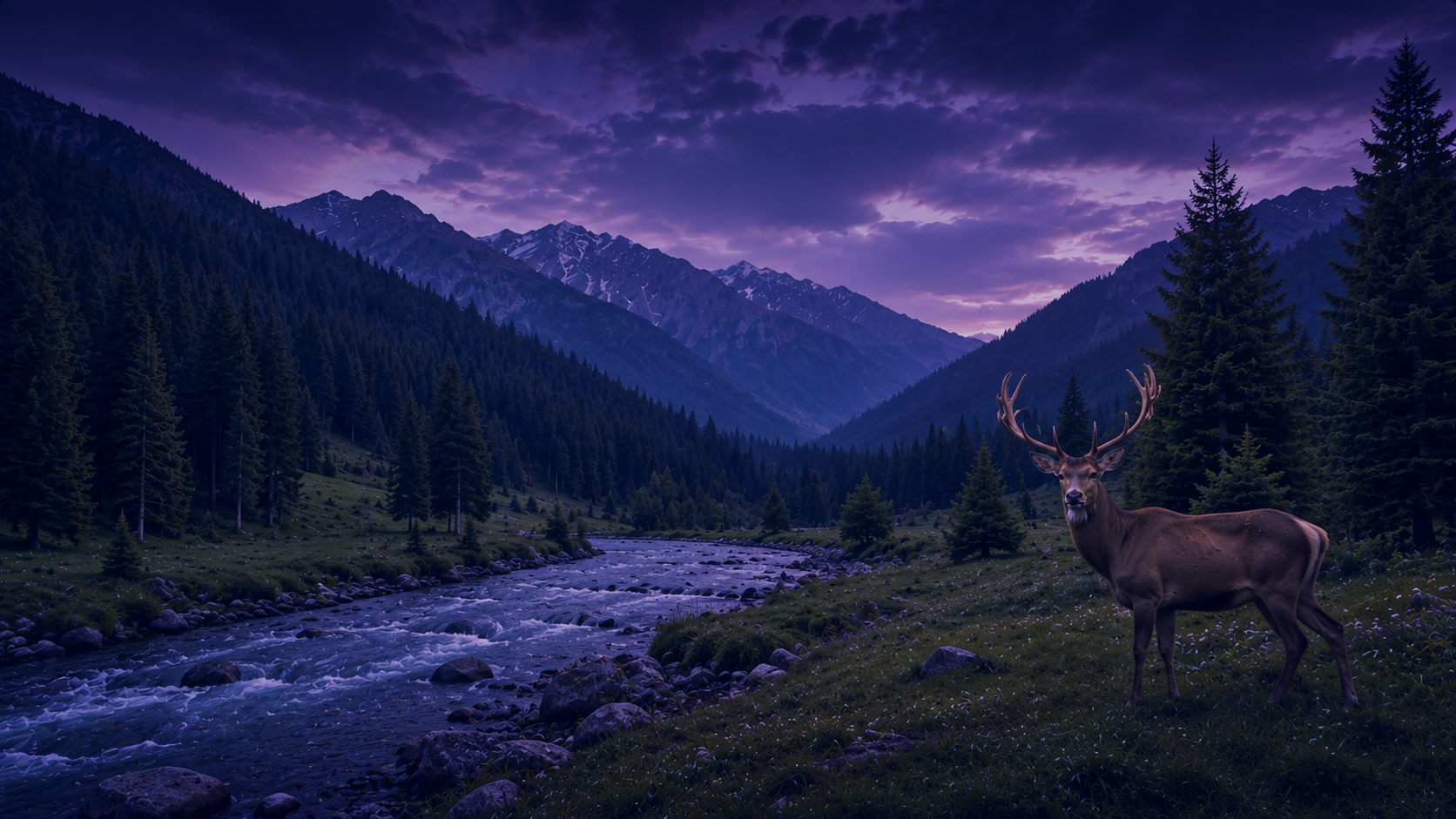
DachigamNational Park
Premier temperate montane conservation landscape in the Zabarwan Range near Srinagar. World-renowned as the last viable sanctuary for the critically endangered Hangul (Kashmir Stag). Spans a dramatic 2,600m altitudinal gradient from Lower Dachigam riverine scrub to Upper Dachigam alpine crags at Mahadev Peak.
Ecological Intelligence NetworkLive Graph
Auto-generated multi-dimensional insight from 8 linked biodiversity systems.
Protected Area Health
Health driven by active habitat signals monitoring.
Ecosystem Risk Score
Ecosystem shows moderate stress primarily from climate vulnerability and water extraction.
Conservation Priority
High conservation priority due to imminent threat presence and high connectivity value.
Graph Linkages
Synthesized Insights
Automatically linked 0 migration events.
2 habitat signals detected.
Active Habitat Stress Signals
Protected Area Profile
Premier temperate montane conservation landscape in the Zabarwan Range near Srinagar. World-renowned as the last viable sanctuary for the critically endangered Hangul (Kashmir Stag). Spans a dramatic 2,600m altitudinal gradient from Lower Dachigam riverine scrub to Upper Dachigam alpine crags at Mahadev Peak.
Ecological Connectivity
Ecological Trends
Data Sources
Key Species
Research Coverage
KEW-EIAI Scientific & Governance Investigations — Dachigam National Park
Independent multidisciplinary investigations examining population viability, grazing competition, departmental land occupation, statutory gazette notifications, corridor connectivity, and lost ecosystem services.
Dachigam: Hangul Population & Conservation
Why have Hangul fawn-to-female recruitment and range re-colonisation remained critically constrained despite four decades of National Park protection and recovery funding?
Dachigam: Livestock Grazing & Competition
To what extent has seasonal domestic livestock grazing and herding-dog presence displaced Hangul from Upper Dachigam summer pastures and introduced gastrointestinal/viral pathogen risks?
Dachigam: Institutional Infrastructure Audit
Which non-conservation government facilities, roads, and utility installations continue to operate inside Dachigam National Park, under what statutory authorizations, and what is their measurable disturbance footprint on prime winter Hangul valley-floor habitat?
Greater Dachigam Wildlife Corridors
Can Dachigam National Park (141 km²) sustain a genetically and demographically viable Hangul population in isolation, or is functional ecological reconnection across the Greater Dachigam Landscape indispensable against stochastic extinction?
Dachigam: Climate Change & Ecosystem Stability
How are winter snowpack deficits, earlier spring green-up, and late-summer/autumn dry spells altering forage phenology, Dagwan streamflows, wildfire frequency, and wildlife survival in Dachigam?