Ecological Significance of the Himalayan Birch Timberline Ecotone
Betula utilis D. Don as a Keystone Subalpine Stabilizer and Bioclimatic Sentinel
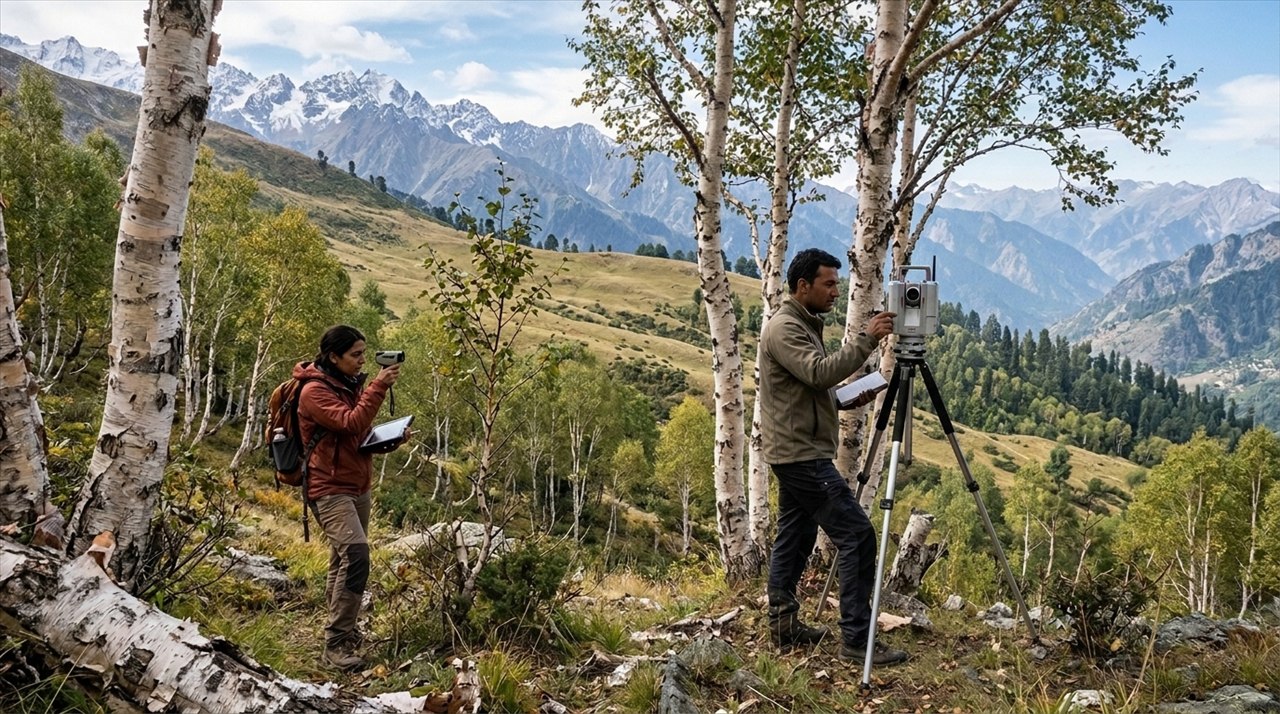
Across the Kashmir and North-Western Himalaya, the upper limit of upright forest growth (3,300–3,900 m ASL) is formed predominantly by Himalayan silver birch (Betula utilis D. Don, locally termed Burza), creating a distinctive white-barked deciduous ribbon between dark evergreen Abies pindrow–Pinus wallichiana conifer forests below and evergreen Rhododendron campanulatum krummholz and alpine meadows (margs) above [3, 4]. Because tree stature exposes apical meristems directly to free-air convective cooling rather than warm boundary-layer microclimates enjoyed by prostrate alpine cushion plants, natural treelines serve as premier global bio-indicators of mountain climate change [1, 2].
Beyond its role as a climatic sentinel, the Betula utilis belt performs irreplaceable biophysical and cultural functions: pliable multi-stemmed birch trunks absorb winter wet-snow creep and slab-avalanche shear above valley settlements (such as Sonamarg, Dawar-Gurez, and Tangmarg), harbor hyper-diverse host-specific ectomycorrhizal fungi and threatened understory medicinal herbs (Aconitum heterophyllum, Trillium govanianum, Picrorhiza kurroa), and hold millennia-old cultural heritage value through papery bhojpatra bark manuscripts [3, 5].