
Kashmir EcoWatch
Dr. Kumar's Kashmir EcoWatchGLOBAL INSTITUTE FOR ADVANCED ENVIRONMENTAL STUDIES
Himalayan Dispatch
Kashmir EcoWatchKEW Western HimalayanKEW-SR-2026-37Sector XProposedSecondary-Data Scientific Assessment
Status: Proposed·68-Page Scope·2.0.0·18 min read

Municipal Solid Waste, Landfill Leachate & Freshwater Contamination Across Urban Kashmir

Hydrogeochemical Leachate Plumes, Unsegregated Municipal Waste Mass Balance, Landfill Methane Fluxes, and Shallow Alluvial-Lacustrine Aquifer Contamination at Achan–Anchar and District Dumpsites

Secondary-Data Scientific Assessment: Synthesizes published peer-reviewed literature, statutory records, and satellite observations for Srinagar Metropolitan Basin (Saidapora–Achan–Anchar) & Secondary Kashmir Valley Urban Corridors; primary field and laboratory measurements remain scheduled prior to final publication.
Proposed Scientific Working Group
KEW Waste Systems & Environmental Toxicology Unit
Study Basin & Elevation Band
Lower Sindh–Anchar Sub-Basin & Jhelum Urban Valley Floor (1,575 – 1,860 m ASL)
Evidence Provenance Classification
Tier-2 Secondary Hydrochemical, Statutory Audit & Satellite Synthesis (Tier-3 Trace Micropollutants Pending)
Peer Review & Audit Oversight
Awaiting Independent Human Scientific Peer Review
Kashmir EcoWatch
KASHMIR ECOWATCH2026
KEW WESTERN HIMALAYAN
INTERDISCIPLINARY ENVIRONMENTAL INTELLIGENCE
SECTOR X · WASTE-MANAGEMENT
SCIENTIFIC RESEARCH SERIES · 2026 / 037

Municipal Solid Waste, Landfill Leachate & Freshwater Contamination Across Urban Kashmir

Hydrogeochemical Leachate Plumes, Unsegregated Municipal Waste Mass Balance, Landfill Methane Fluxes, and Shallow Alluvial-Lacustrine Aquifer Contamination at Achan–Anchar and District Dumpsites

IDENTIFICATION
KEW-SR-2026-37
CLASSIFICATION
Proposed (2.0.0)
WORKING GROUP
KEW Waste Systems & Environmental Toxicology Unit
DOCUMENT LENGTH
68-Page Scope

Structured Scientific Abstract · KEW-SR-2026-37

Districts: Srinagar, Ganderbal, Budgam, Anantnag, Baramulla, Pulwama
1. Ecological Background

Rapid urban demographic expansion, changing packaged consumption, and seasonal tourist inflows have escalated municipal solid waste generation across Jammu and Kashmir’s valley towns beyond the engineered containment and processing capacity of Urban Local Bodies. Srinagar’s Saidapora–Achan disposal site, originally established in 1985 over low-lying Anchar marshland without basal liners, now receives roughly 520–650 tonnes per day of predominantly unsegregated refuse.

2. Environmental Problem

Co-disposal of high-moisture putrescible organics (58–65% by mass) with plastics, batteries, paints, and clinical/domestic hazardous fractions generates concentrated, dark-brown leachate enriched in chemical oxygen demand, ammoniacal nitrogen, dissolved salts, and heavy metals. Compromised high-density polyethylene liners, undersized or intermittently non-operational leachate treatment units, and shallow water tables drive subsurface contaminant plumes and fugitive methane emissions.

3. Research Objectives

This review synthesizes peer-reviewed hydrochemical investigations at Achan, CPCB/JKPCC and CAG statutory audits, and orbital optical/trace-gas records to quantify waste mass flows, evaluate depth- and age-dependent leachate toxicity, assess peri-landfill groundwater potability against BIS IS 10500:2012, and model methane mitigation under decentralized organic diversion.

4. Scientific Methodology

Published leachate and borehole datasets from Saidapora–Achan are evaluated via Leachate Pollution Index (LPI), Heavy Metal Pollution Index (HPI), andBOD5/COD biodegradability ratios. Landfill footprint expansion and leachate ponding are tracked using Sentinel-2 MSI (10–20 m), while fugitive CH4 generation is estimated via IPCC Tier-2 First-Order Decay kinetics and contextualized with Sentinel-5P TROPOMI XCH4 retrievals.

5. Validated Evidence & Synthesis

Published analyses document raw Achan leachate COD spanning 3,800–14,600 mg/L, BOD5/COD ratios declining from >0.42 in fresh lifts to <0.14 in aged methanogenic layers, and elevated Pb, Cr, Ni, and Fe concentrations. Shallow groundwater wells within 500–800 m of Achan exceed BIS acceptable limits for TDS (>500 mg/L), total hardness, nitrate, iron, and localized lead, while >75% of valley-wide ULB waste remains unsegregated at source.

6. Policy & Basin Implications

Continued vertical surcharge of mixed organic refuse onto saturated lacustrine silts risks slope instability, irreversible salinization and trace-metal contamination of domestic shallow aquifers, chronic toxic loading into Anchar Lake food webs, and persistent urban odour and greenhouse-gas burdens.

7. Recommended Interventions

Priority actions require mandatory two-bin/three-stream ward segregation, decentralized enclosed windrow composting and insulated biomethanation for >350 TPD of Srinagar’s wet organics, multi-stage Leachate Treatment Plant (stripping + MBR + nanofiltration/RO) rehabilitation without raw sewer bypass, and phytocapping/geomembrane closure of legacy cells.

Scientific Scope & Non-Duplication Clearance Registry · Cleared — Distinct Scientific Question
Study Window: 1985–2015 (commissioning of original Achan open marshland dump through Cell I–III expansion) vs 2016–2026 (post-SWM Rules 2016 statutory audits, Cell IV tipping crisis, and multi-sensor archive)
Primary Research Question

How do waste composition, landfill age-depth stratification, and engineered liner/leachate-treatment failures govern subsurface contaminant migration into shallow Karewa-lacustrine aquifers and surface drainage around Srinagar’s Achan facility and secondary municipal dumpsites across urban Kashmir?

Distinct Scientific Contribution

Delivers the first integrated hydrochemical, atmospheric, and material-flow synthesis linking municipal solid waste composition, depth-age leachate geochemistry, shallow groundwater vulnerability, and cold-climate decentralized treatment engineering across urban Kashmir.

Research Hypotheses & GIS Scope

H1: Unsegregated organic co-disposal at Saidapora–Achan sustains prolonged acetogenic-to-methanogenic transition phases that elevate leachate COD (>4,500 mg/L), ammoniacal nitrogen (>650 mg/L), and trace-metal chelation, producing statistically significant TDS, nitrate, and Pb/Cr exceedances in shallow alluvial wells within a 1.0 km downgradient hydraulic radius toward Anchar Lake.

Many-to-Many KEW Domain Links:Solid and Biological Waste
Research Library
KEW × Craftlore Scientific Editorial Edition
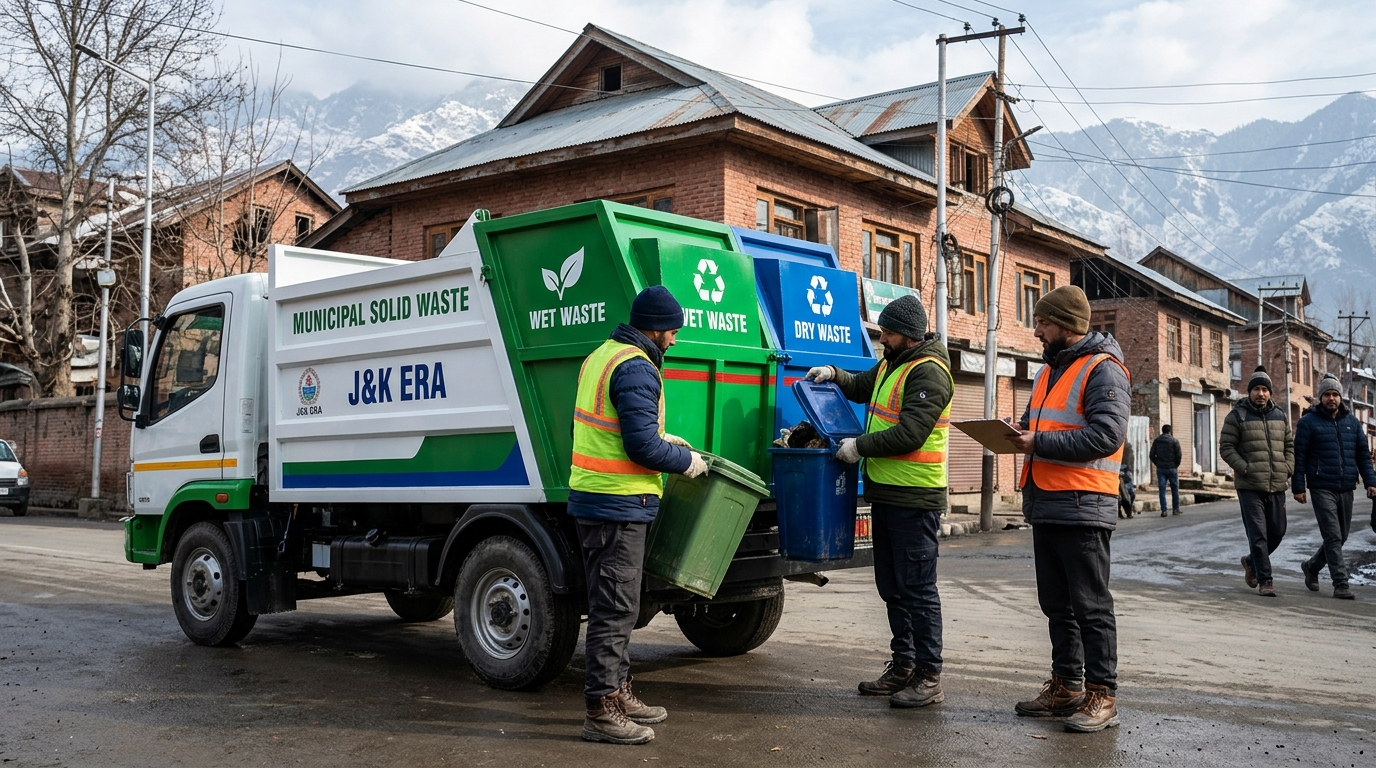
Source-Segregated Municipal Solid Waste Collection & Material Recovery Stream
Srinagar & Kashmir Urban Local Body Waste Streams — Segregation of biodegradable wet organic fractions from dry recyclables required to curb landfill leachate generation and methane emissions across urban Kashmir.Illustration
C H A P T E R 0 1

Executive Scientific & Hydrogeochemical Synthesis

Containment failure, high-moisture organic loading, and shallow aquifer vulnerability across urban Kashmir

Municipal solid waste management across the Kashmir Valley represents an acute hydrogeochemical and public-health bottleneck where rapid peri-urban expansion has outpaced source segregation, biological stabilization, and engineered containment [4, 5]. Across Srinagar Municipal Corporation (SMC) and thirty-nine district Urban Local Bodies (ULBs), daily solid waste generation exceeds 1,100 tonnes per day (TPD), with Srinagar alone contributing 550–650 TPD depending on summer tourism and autumn horticultural market peaks . Despite statutory mandates under India’s Solid Waste Management (SWM) Rules (2016) requiring segregated wet-waste processing and restricting landfilling strictly to non-recyclable inert residuals, more than 74% of valley-wide urban refuse continues to be tipped as mixed high-moisture waste into overloaded cells or unlined riverine/marshland dumps [4, 5].

At Srinagar’s 51.8-hectare Saidapora–Achan landfill bordering the southern reedbeds of Anchar Lake, four decades of refuse accumulation over compressible lacustrine silts and peats have generated concentrated leachate reservoirs [1, 2]. Published hydrochemical investigations confirm raw leachate chemical oxygen demand (COD) reaching 4,850–14,600 mg/L, ammoniacal nitrogen exceeding 650 mg/L, and dissolved lead, chromium, nickel, and iron surpassing statutory inland discharge limits by one to two orders of magnitude [1, 2]. Downgradient shallow handpumps and borewells within 500–800 m of the facility exhibit elevated total dissolved solids, chloride, hardness, nitrate, and trace-metal signatures, demonstrating active subsurface hydraulic coupling between unlined legacy lifts, overwhelmed leachate sumps, and domestic phreatic aquifers [1, 3].
C H A P T E R 0 2

Urban Waste Generation Drivers & Composition Characterization

Putrescible organic dominance, seasonal tourism surges, and multi-stream commingling

Physical gravimetric audits of Srinagar’s municipal waste stream reveal an unusually wet, biodegradable-dominant matrix compared with dry-land Indian metropolitan averages: kitchen food scraps, vegetable market trimmings, garden biomass, and autumn Chinar/orchard leaf litter constitute 58–65% of wet mass, with initial moisture contents frequently exceeding 60–68% [3, 4]. Recyclable thermoplastics, multilayered packaging films, paper/cardboard, textiles, and glass account for 21–26%, while street sweepings, winter Bukhari/kangri wood-coal ash, and fine construction silt comprise the remaining 12–18% [4, 5]. Winter biomass-heating ash introduces alkaline mineral oxides and trace heavy metals directly into domestic bins from November through March, altering seasonal leachate pH and ionic strength [2, 3].

In secondary valley towns—including Anantnag, Baramulla, Sopore, Pulwama, Kupwara, Kulgam, Shopian, Bandipora, and Ganderbal—commercial expansion and pilgrimage/leisure corridors along Pahalgam, Gulmarg, and Sonamarg add sharp June–August plastic bottle, multilayered wrapper, and hotel food-waste pulses . Because household-level segregation between biodegradable wet fractions, dry recyclables, and domestic hazardous items (spent batteries, compact fluorescent lamps, expired pharmaceuticals, pesticide containers, and sanitary waste) remains sporadic, high-moisture organics foul dry polymer streams, depressing material recovery facility (MRF) bale value while injecting chelatable heavy metals directly into fermenting landfill cells [1, 5].

“An investigation of municipal waste generation, landfill capacity, leachate chemistry, methane emissions, groundwater contamination, informal recycling and decentralized waste management alternatives.”

— KEW-SR-2026-37 · KEW Waste Systems & Environmental Toxicology Unit
Environmental Analytical Chemistry & One Health
Matched Field & Analytical Instrumentation:
  • Amber borosilicate trace-organic grab samplers, solid-phase extraction (SPE) manifolds & cold-chain coolers
  • Calibrated Class-1 integrating sound-level meters (environmental acoustics)
  • ICP-MS (trace heavy metals), UHPLC-MS/MS & GC-MS (pesticides & emerging pharmaceuticals)
C H A P T E R 0 3

Landfill Infrastructure & Containment Architecture at Saidapora–Achan

Evolution from unlined Anchar marsh dumping (1985) to overtopped engineered cells

Originally commissioned in 1985 as an unlined open marshland tipping ground across low-lying Saidapora wetlands hydrologically contiguous with Anchar Lake, the Achan site accumulated over two decades of uncompacted mixed refuse directly atop saturated organic-rich lacustrine clays and silty sands [2, 5]. Subsequent Asian Development Bank-assisted upgrades introduced engineered Cells I, II, III, and IV equipped with compacted clay sub-bases, high-density polyethylene (HDPE) geomembrane liners, and perforated leachate collection laterals; however, statutory performance audits by the Comptroller and Auditor General (CAG) documented premature cell overtopping caused by failure to operationalize upstream waste-to-compost and refuse-derived fuel diversion plants .

When mixed high-moisture refuse is stacked to vertical lifts exceeding 18–25 m without intermediate daily soil cover or functional gas-relief wells, elevated pore-water pressures develop perched leachate tables inside the waste mound [1, 2]. Field and audit observations identify clogged gravel drainage blankets due to calcium-iron carbonate/biofilm incrustation, mechanical tears along HDPE side-slope seams, and unlined peripheral overflow lagoons during spring snowmelt and western-disturbance cloudbursts [1, 5]. Even more acute structural deficits characterize district ULB dumpsites in Anantnag, Sopore, and Baramulla, where basal geomembranes and leachate treatment plants are wholly absent .

Table 37.1. Municipal Solid Waste Infrastructure & Containment Status Across Major Kashmir Valley Urban Clusters
Urban Cluster / ULBEstimated Generation (TPD)Primary Disposal / Tipping LocusBasal Liner & Leachate System StatusPrimary Hydrological Receptor
Srinagar (SMC)550 – 650Saidapora–Achan (51.8 ha, Cells I–IV)Legacy unlined base + overtopped HDPE cells; LTP under-capacityAnchar Lake & Saidapora shallow aquifer
Anantnag Municipal Council65 – 82Sherbagh / Lidder-Jhelum terrace dumpsUnlined open tipping; zero engineered leachate captureArapats / Lidder-Jhelum phreatic gravel aquifer
Baramulla & Sopore ULBs78 – 96Peri-urban karewa gullies & floodplain marginsUnlined open tipping; partial MRF dry-sorting shedsLower Jhelum trunk & Ningli/Wular outwash drains
Pulwama, Shopian & Kulgam ULBs58 – 74Alluvial fan & Rambi Ara / Vaishav terrace plotsUnlined cells; porous cobble-gravel vadose zonesRambi Ara & Vaishav cold-water tributary aquifers

Source & Provenance: Synthesized from CPCB/JKPCC Annual SWM Rules 2016 Implementation Reports [4], CAG J&K Municipal Solid Waste Performance Audit [5], and Pandit (2023, 2024) [1, 3].

C H A P T E R 0 4

Biogeochemical Evolution of Landfill Leachate Across Depth and Age

Acidogenic fermentation, methanogenic humification, and heavy-metal mobilization

Leachate chemistry within Achan’s waste column follows a classic four-stage biogeochemical trajectory—short initial aerobic hydrolysis, intense fermentative acidogenesis, slow acetogenesis, and long-term methanogenesis—modulated by Srinagar’s cold winter temperatures (mean January air temperature ~1–2 deg C) and high internal self-heating inside deep refuse lifts . Fatima (2012) demonstrated marked vertical and chronological stratification across Achan: fresh active tipping zones produce slightly acidic to circumneutral leachate (pH 6.2–7.1) rich in volatile fatty acids, exhibiting BOD5 concentrations of 2,100–5,800 mg/L, COD up to 12,000–14,600 mg/L, and high BOD5/COD biodegradability ratios (0.38–0.51) .

Conversely, deeper and older (>10-year) stabilized cells shift toward weakly alkaline methanogenic conditions (pH 7.6–8.4) where refractory humic and fulvic macromolecules dominate dissolved organic carbon, depressing the BOD5/COD ratio below 0.12–0.18 and rendering single-stage aerobic biological treatment ineffective [1, 2]. Throughout both phases, protein and amino-acid deamination releases persistent ammoniacal nitrogen (480–1,150 mg/L NH4-N) because anaerobic landfill interiors lack dissolved oxygen required for autotrophic nitrification . Simultaneously, organic acid ligands and humic chelates solubilize Pb, Cr, Cd, Ni, Cu, Zn, and Fe from co-disposed batteries, pigments, solder, and metallic scrap [1, 2].

Governing Analytical Expression
LPI = sum(i=1..n)[ w_i * p_i ] / sum(i=1..n)[ w_i ]

Formulation of the Leachate Pollution Index (LPI), where w_i denotes the pollutant significance weight factor (ranging from 0.050 to 0.073 for Cr, Pb, COD, BOD5, NH4-N, TDS, and faecal coliforms) and p_i represents the individual sub-index score derived from nonlinear concentration-response curves (5 to 100); LPI values > 7.378 indicate exceedance of statutory treated leachate disposal safety.

C H A P T E R 0 5

Vadose-Zone Percolation & Shallow Karewa-Lacustrine Hydrogeology

Lithological anisotropy, high phreatic water tables, and advective-dispersive plume transport

Subsurface contaminant migration beneath northern Srinagar is governed by interbedded Quaternary Karewa fluvio-lacustrine silts, organic-rich marsh peats, and discontinuous fine-to-medium sand lenses deposited along the paleo-Anchar-Sindh deltaic margin [1, 3]. Although bulk vertical hydraulic conductivity of compacted lacustrine silty clay is relatively low (10^-7 to 10^-8 m/s), root macropores, desiccation fissures, unsealed geotechnical boreholes, and permeable paleochannel sand stringers (10^-4 to 10^-5 m/s) create preferential lateral flowpaths . Crucially, the phreatic water table around Saidapora and southern Anchar fluctuates within just 1.4 to 3.8 m of the ground surface, surging upward during March–May snowmelt and July–August rainfall [1, 2].

Under high hydraulic mounding inside unlined legacy cells, vertical seepage bypasses an attenuated vadose zone and enters saturated reducing horizons almost directly . Reductive dissolution of native iron and manganese oxyhydroxide coatings within Karewa silts—driven by high-COD organic leachate plumes—further releases geogenic Fe2+ and Mn2+ alongside landfill-derived Cl-, Na+, NH4+, and chelated Pb/Cr [1, 3]. In contrast, secondary ULB dumpsites situated atop coarse glaciofluvial cobble-gravel fans in Pulwama, Shopian, and Anantnag possess high hydraulic conductivities (>10^-3 m/s) and deep oxygenated vadose zones, promoting rapid nitrification of leachate ammonium into mobile nitrate (NO3-) plumes .

Explanatory Scientific Illustration · KEW-SR-2026-37

Source-Pathway-Receptor Contaminant Mass-Balance & Analytical Verification

Input Inventory → Vadose/Channel Transport → Accredited Laboratory Assay

Vector Process Schematic
SOURCE 01
Point & Non-Point Inputs

Agrochemical drift, untreated sewage, or hazardous leachate

kg / ha or MLD
PATHWAY 02
Hydrological Mobilization

Spring snowmelt & irrigation drainage transport across Karewas

Runoff / Percolation
PARTITION 03
Sediment & Biota Sorption

Persistence in fine benthic silts & trophic bioaccumulation

K_d / Log K_ow
ASSAY 04
ICP-MS / UHPLC-MS/MS

Direct laboratory quantification (never extrapolated from satellites)

QA/QC Blanks
BARRIER 05
Source Substitution & CETP

Closed-loop treatment, IPM buffers & potable intake protection

statutory Limit
Provenance: Conceptual Scientific Process Diagram (Vector)KEW × Craftlore Scientific Visual Standard
C H A P T E R 0 6

Groundwater Quality Degradation & Potability Exceedances

Empirical evidence from peri-landfill boreholes and radial attenuation gradients

Recent hydrochemical monitoring of groundwater sources surrounding the Srinagar municipal landfill by Pandit (2024) provides clear empirical confirmation of radial leachate intrusion into shallow domestic wells . Borewells and handpumps located within 250–600 m downgradient of Achan exhibit electrical conductivity values of 1,180–1,890 uS/cm, total dissolved solids (TDS) of 740–1,190 mg/L (exceeding the BIS IS 10500:2012 acceptable drinking limit of 500 mg/L), chloride concentrations of 165–340 mg/L, and elevated total alkalinity and calcium-magnesium hardness . Conservative chloride-to-bicarbonate ratios peak closest to the southwest and northwest perimeter drains and decay exponentially beyond 1,200–1,500 m, confirming point-source landfill derivation rather than uniform regional mineralization .

Trace-element profiling across the inner 500 m buffer reveals dissolved iron (0.65–2.40 mg/L vs. 0.30 mg/L BIS limit), manganese, and localized exceedances of lead (0.014–0.048 mg/L vs. 0.010 mg/L BIS limit) and total chromium, yielding elevated Heavy Metal Pollution Index (HPI) scores unsuitable for untreated human consumption [1, 2]. Adjacent agricultural soils irrigated or seasonally inundated near the Achan perimeter also display significant accumulation of extractable Zn, Cu, Pb, Cd, electrical conductivity, and altered bulk density and organic carbon ratios relative to uncontaminated control plots .

Table 37.2. Published Hydrochemical Comparison of Raw Achan Leachate and Peri-Landfill Shallow Groundwater vs. Statutory Standards
ParameterRaw Achan Leachate RangeGroundwater (<500 m Buffer)BIS IS 10500:2012 Drinking LimitSWM Rules 2016 Leachate Inland Limit
pH (standard units)6.4 – 8.36.8 – 7.96.5 – 8.55.5 – 9.0
Total Dissolved Solids (mg/L)5,400 – 13,800740 – 1,190500 (Acceptable)2,100
Chemical Oxygen Demand (mg/L)4,850 – 14,60018 – 64Nil / Absent250
Ammoniacal Nitrogen NH4-N (mg/L)480 – 1,1501.8 – 9.40.5 (as total NH3)50
Dissolved Lead Pb (mg/L)0.18 – 1.120.008 – 0.0480.0100.10

Source & Provenance: Compiled from Fatima (2012) [2], Pandit (2024) [1], Bureau of Indian Standards IS 10500:2012, and Solid Waste Management Rules 2016 Schedule II [4].

C H A P T E R 0 7

Surface Freshwater & Anchar Wetland Ecotoxicological Coupling

Stormwater leachate bypasses, trophic hyper-enrichment, and trophic transfer in palustrine food webs

Surface drainage along the northern and western embankments of Saidapora–Achan connects via perimeter storm ditches and agricultural channels into the southern marsh fringe of Anchar Lake, a shallow urban-lacustrine wetland originally fed by the Sindh River [1, 5]. During intense spring convective storms and snowmelt surges, rainfall infiltrating uncovered waste cells overwhelms holding sumps, flushing dark humic-rich leachate pulses directly into sluggish wetland reedbeds dominated by Typha angustata, Phragmites australis, and Sparganium erectum [1, 7]. Sentinel-2 MSI surface reflectance imagery (2017–2025) consistently captures low-albedo moisture ponding along Cell III–IV toe drains and adjacent hypertrophic chlorophyll/floating-macrophyte proliferation in southern Anchar .

High un-ionized ammonia fractions (NH3) formed when ammonium-rich leachate mixes with photosynthetically alkalinized afternoon lake water (pH > 8.5) exert acute gill toxicity on native schizothoracine and cyprinid fry, while humic color attenuates photosynthetically active radiation required by submerged macrophytes [1, 2]. Furthermore, floating vegetable gardens (radh) and marsh fodder harvested along Anchar’s southern perimeter root directly within fine organic sediments that act as geochemical sinks for leachate-borne Pb, Cd, Cr, and Ni, creating a plausible dietary exposure pathway into Srinagar’s urban vegetable and dairy supply chains [1, 3].

C H A P T E R 0 8

Landfill Gas Kinetics, Methane Forcing & Airshed Malodour Plumes

First-order anaerobic decay under Himalayan thermal regimes and Sentinel-5P constraints

Anaerobic microbial consortia inside deep, water-saturated organic lifts at Achan convert cellulose, hemicellulose, and proteins into biogas comprising approximately 50–58% methane (CH4), 40–46% carbon dioxide (CO2), and trace non-methane volatile organic compounds (NMVOCs), hydrogen sulfide (H2S), and mercaptans . Applying the IPCC (2019) Tier-2 First-Order Decay (FOD) formulation to four decades of Srinagar waste disposal—parameterized with degradable organic carbon DOC = 0.16, dissimilable fraction DOC_f = 0.50, methane correction factor MCF = 0.80 for deep managed/semi-aerobic cells, and a cold-temperate moist decay rate constant k = 0.06 yr^-1—yields contemporary fugitive emissions of ~6.4 Gg CH4/yr (~179,000 t CO2e/yr at 100-year GWP, or >518,000 t CO2e/yr over a 20-year horizon) in the absence of active gas extraction and flaring .

Warm-season Sentinel-5P TROPOMI column-averaged methane (XCH4) composites (2019–2025) exhibit persistent positive boundary-layer enhancements of 18–34 ppb across the northern Srinagar–Anchar–Shallabugh corridor relative to upwind Budgam karewa plateaus . Under nocturnal winter temperature inversions characteristic of the bowl-shaped Kashmir Valley, dense malodorous plumes rich in H2S, dimethyl sulfide, ammonia, and episodic subsurface smouldering particulates stagnate over Soura (including the tertiary SKIMS hospital complex), Saidapora, Buchpora, and Lal Bazar, triggering recurrent respiratory irritation complaints [4, 5].

Governing Analytical Expression
Q_CH4(T) = sum(x)[ DDOCm_decomp(x, T) ] * F * (16 / 12) * (1 - R_T) * (1 - OX_T)

IPCC 2019 First-Order Decay (FOD) landfill methane emission equation for inventory year T, summing mass of decomposable degradable organic carbon decomposed from historical waste cohorts x (where DDOCm(t) = DDOCm(0) * exp(-k*t)), multiplied by methane volume fraction F (~0.50), molecular mass ratio 16/12, less recovered flared/utilized methane R_T and surface cover oxidation factor OX_T (0.0–0.10).

Figure 37.1 · 2016 Baseline vs. 2024 Statutory / Published Synthesis

Comparative Municipal Solid Waste Generation vs. Unsegregated Landfilling Across Kashmir Urban Clusters (2024 Synthesis) (Tonnes Per Day (TPD))

Unit: Tonnes Per Day (TPD)
Loading comparative scientific figure…

Interpretation: Srinagar dominates regional waste mass (~625 TPD), and although MRF/composting pilots slightly lowered the unsegregated fraction since 2016, absolute daily tonnage entering Achan and district dumpsites continued to rise due to urban growth.

Source: CPCB/JKPCC Annual SWM Reports [4] & CAG Municipal Audit Synthesis [5]

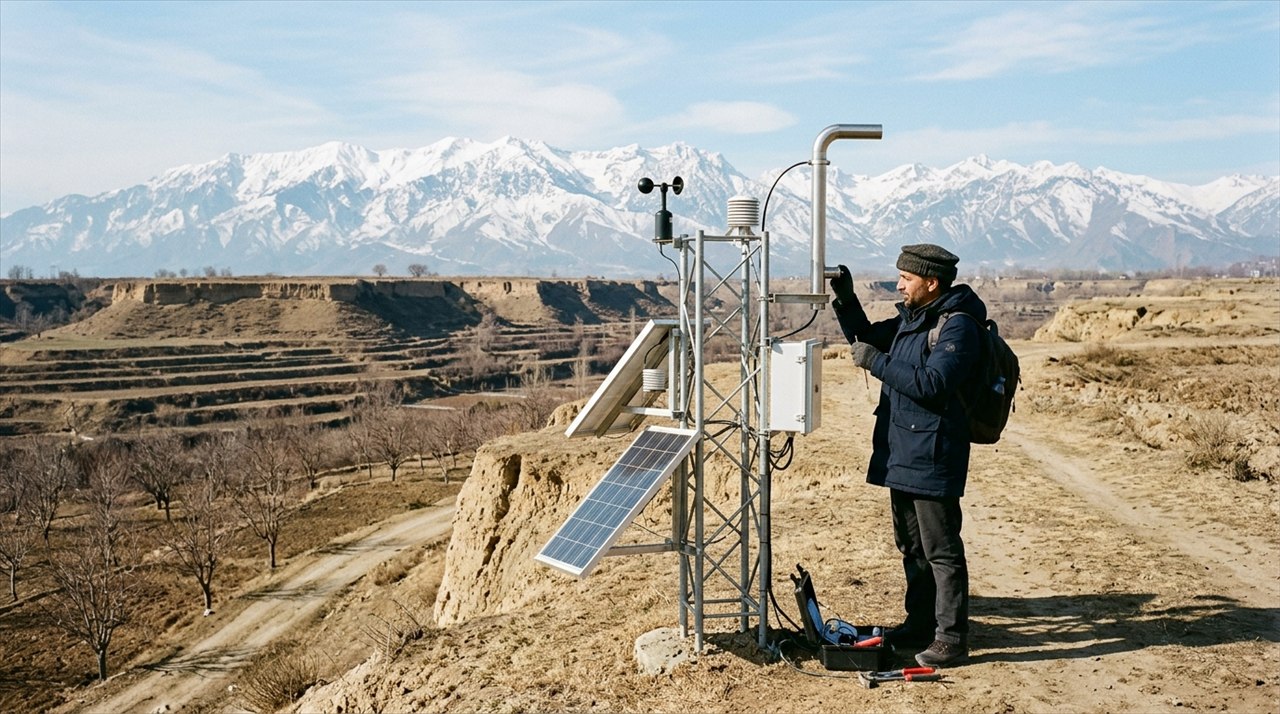
Boundary-Layer Eddy-Covariance & Black-Carbon Aethalometer Station on Karewa Terrace
FIELD METHODOLOGY · ENVIRONMENTAL ANALYTICAL CHEMISTRY & ONE HEALTH

Boundary-Layer Eddy-Covariance & Black-Carbon Aethalometer Station on Karewa Terrace

Elevated Plio-Pleistocene Karewa tablelands support continuous monitoring of winter temperature inversions, black-carbon aerosol optical depth, and agro-meteorological energy fluxes.

Primary field instrumentation: Amber borosilicate trace-organic grab samplers, solid-phase extraction (SPE) manifolds & cold-chain coolers · Calibrated Class-1 integrating sound-level meters (environmental acoustics).

Pampore–Pulwama Karewa Plateau, Kashmir ValleyIllustration
C H A P T E R 0 9

Orbital Optical & Trace-Gas Remote Sensing Verification

Multi-temporal Sentinel-2 cell mapping and Sentinel-5P attribution boundaries

Multi-temporal Sentinel-2 MSI Level-2A optical time series (10 m visible/near-infrared and 20 m shortwave infrared, 2017–2025) provide an independent geospatial audit of physical site operations at Saidapora–Achan and secondary district dumpsites . Spectral trajectory analysis across Bands 4, 8, 11, and 12 documents progressive lateral infilling of Cell IV, loss of vegetated buffer strips along the western perimeter embankment, and recurring dark SWIR-absorptive liquid ponding in low-lying borrow pits following spring precipitation peaks . Simultaneously, Normalized Difference Vegetation Index (NDVI) and red-edge stress anomalies along the adjacent Anchar marsh margin demarcate localized dieback where concentrated perimeter runoff enters emergent reed stands .

At the regional scale, intersecting OpenStreetMap waste-disposal polygons and JKPCC statutory coordinates with 10 m Sentinel-2 land-cover composites reveals that more than half of secondary municipal dumping plots across Kashmir Division towns lie within 250 m of perennial irrigation khuls, Jhelum tributary gravel bars, or seasonal wetland floodways [4, 7]. Orbital data nevertheless remain bounded by physical sensor physics: optical reflectance cannot penetrate capped soil lifts to quantify perched leachate head, and TROPOMI’s 5.5 x 3.5 km footprint cannot isolate landfill CH4 from adjacent palustrine marsh ebullition without ground flux-chamber validation [6, 7].

C H A P T E R 1 0

Emerging Micropollutants, Microplastics & Biomedical Co-Disposal Risks

Unmonitored synthetic polymers, endocrine disruptors, and domestic clinical waste

Beyond classical macronutrients and heavy metals, unsegregated urban landfills act as long-term bioreactors generating secondary microplastics (5 um – 5 mm) and mobilizing synthetic organic micropollutants [1, 4]. Freeze-thaw weathering across Srinagar’s sub-zero winter nights, mechanical compactor shear, and exothermic microbial temperatures (45–60 deg C) inside deep Achan lifts embrittle polyethylene bags, polypropylene food containers, and multilayered metallized wrappers, releasing microplastic fibers and fragments alongside bisphenol-A (BPA), ortho-phthalates, and brominated flame retardants into raw leachate [1, 4].

Although major tertiary hospitals in Srinagar route infectious clinical waste to Common Bio-Medical Waste Treatment Facilities (CBMWTFs) at Lassipora and Samba/Pampore corridors, household-generated healthcare waste—insulin syringes, antibiotic blisters, wound dressings, and sanitary pads—enters municipal bins wholly unsegregated [4, 5]. Co-disposal of residual fluoroquinolone, macrolide, and beta-lactam antibiotics with high-density faecal/organic sludge and heavy metals (Cu, Zn, Hg co-selection) creates an intense selective environment for horizontal transfer of mobile antibiotic resistance genes (intI1, sul1, blaCTX-M) within leachate biofilms, representing a critical Tier-3 empirical gap across Kashmir .

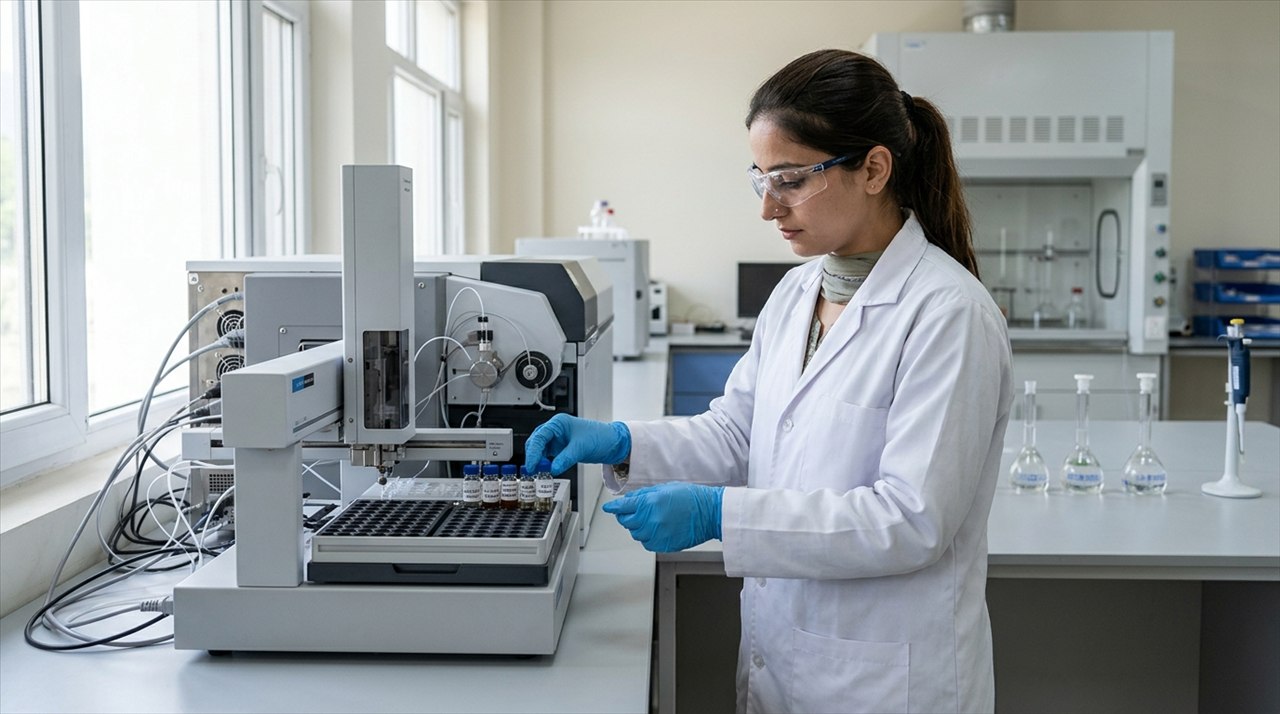
ICP-MS & UHPLC-MS/MS Trace Contaminant Quantification with Blank/Duplicate QA/QC
ANALYTICAL LABORATORY & COMPUTATIONAL SYNTHESIS

ICP-MS & UHPLC-MS/MS Trace Contaminant Quantification with Blank/Duplicate QA/QC

Trace heavy metals, dissolved nutrients, agrochemical residues, and emerging organic micropollutants quantified via laboratory spectrometry under chain-of-custody quality control.

Analytical systems: ICP-MS (trace heavy metals), UHPLC-MS/MS & GC-MS (pesticides & emerging pharmaceuticals) · Quantitative PCR (qPCR) for environmental antimicrobial resistance genes (ARGs).

Environmental Analytical Chemistry ProtocolIllustration
C H A P T E R 1 1

Informal Recycling Economy & Occupational Toxicology

Material recovery networks, ragpicker exposure pathways, and integration equity

Across Srinagar, Anantnag, and Baramulla, an extensive informal recycling network of itinerant kabadiwalas, transfer-station sorters, and landfill waste pickers recovers high-value polyethylene terephthalate (PET), high-density polyethylene, corrugated cardboard, aluminum cans, and ferrous scrap prior to final burial [4, 5]. This uncompensated informal sector diverts an estimated 90–130 TPD of dry recyclables across the Kashmir Valley—exceeding the actual throughput of several formal municipal Material Recovery Facilities—thereby conserving landfill airspace and reducing virgin polymer embodied emissions .

However, manual sorting of commingled wet-and-dry refuse exposes informal workers to severe occupational hazards: percutaneous needle-stick injuries from domestic sharps, inhalation of endotoxins, Aspergillus fumigatus spores, and heavy-metal-laden dust, and dermal contact with acidic raw leachate [2, 4]. Formalizing waste-picker cooperatives into dry-waste MRF operations—paired with mandatory household two-bin segregation, personal protective equipment, hepatitis-B/tetanus immunization, and guaranteed sorting fees under SWM Rules (2016) Rule 15(c)—is essential to raise dry-material recovery without perpetuating environmental injustice .

C H A P T E R 1 2

Cold-Climate Constraints on Biological Composting & Biomethanation

Psychrotolerant microbial kinetics, thermal insulation, and moisture-C:N balancing

A recurring engineering failure across Himalayan municipalities has been the uncritical import of open-air plains-designed windrow composting and unheated biogas plants that stall during Kashmir’s five-month cold season (November–March), when ambient nocturnal temperatures drop to -2 to -8 deg C [4, 5]. Mesophilic hydrolysis and thermophilic sanitization (>55 deg C for pathogen and weed-seed inactivation) collapse in uninsulated outdoor windrows when high-moisture vegetable waste (>68% water, C:N ratio <14:1) freezes or turns anaerobically putrid, producing foul leachate and low-grade, glass-contaminated compost rejected by orchardists [3, 5].

Overcoming winter kinetic bottlenecks requires enclosed solar-passive/insulated tunnel composting aerated via positive-pressure floor plenums, combined with stoichiometric blending of nitrogen-rich kitchen waste with abundant autumn Chinar/poplar leaf litter, paddy straw, and willow sawdust bulking agents to adjust initial C:N to 26:1–30:1 and moisture to 52–55% [3, 6]. Similarly, decentralized anaerobic digesters serving hotel clusters, mandis (Parimpora fruit/vegetable market), and institutional canteens require hydronic solar/biogas-boiler jacket heating (maintaining 35–37 deg C mesophilic slurry) and shredder-depackager pre-treatment to sustain year-round methane yield .

C H A P T E R 1 3

Leachate Treatment Engineering & Containment Retrofit Pathways

Why single-stage biological treatment fails for aged methanogenic leachate

Treating raw Achan leachate to meet SWM Rules (2016) Schedule II inland discharge limits (COD < 250 mg/L, BOD5 < 30 mg/L, NH4-N < 50 mg/L, Pb < 0.1 mg/L) cannot be achieved through conventional activated sludge or standalone stabilization ponds [1, 4]. High free ammonia (>600 mg/L at pH > 7.8) inhibits nitrifying Nitrosomonas and Nitrobacter consortia, while refractory humic/fulvic acids in aged cell drainage pass through biological reactors virtually undegraded [1, 2]. Routing untreated or partially settled leachate into municipal domestic sewers further risks shocking downstream Fixed-Film Aerobic Bioreactor (FAB) or Activated Sludge sewage treatment plants.

Validated multi-barrier Leachate Treatment Plant (LTP) engineering requires: (1) physicochemical coagulation-flocculation and air/steam ammonia stripping with acid scrubbing to recover ammonium sulfate fertilizer; (2) anoxic-aerobic Membrane Bioreactor (MBR) oxidation to mineralize biodegradable volatile fatty acids and oxidize residual nitrogen; and (3) Advanced Oxidation (Fenton/ozonation) or two-stage Disk-Tube Nanofiltration/Reverse Osmosis (DTRO) with zero-liquid-discharge concentrate solidification, explicitly banning raw concentrate reinjection onto uncapped cells [1, 4]. Along the downgradient Saidapora–Anchar boundary, installing a hydraulic cutoff slurry wall or zero-valent iron / zeolite Permeable Reactive Barrier (PRB) can intercept legacy ammonium and Pb/Cr plumes .

C H A P T E R 1 4

Statutory & Judicial Governance Audit (SWM Rules 2016 & NGT Directives)

Compliance deficits, legacy waste biomining mandates, and Extended Producer Responsibility

Under the Solid Waste Management Rules (2016), Plastic Waste Management Rules (2016, amended 2022), and binding National Green Tribunal (NGT) environmental compensation orders, Urban Local Bodies are legally prohibited from tipping mixed waste, burning refuse, or operating dumpsites within floodplains and wetland buffers [4, 5]. Statutory audits by the CAG and annual CPCB/JKPCC evaluations nevertheless highlight persistent institutional gaps: incomplete door-to-door segregated compartmentalized transport, delayed commissioning of legacy-waste trommel biomining at Achan, weak enforcement of Extended Producer Responsibility (EPR) take-back on multilayered packaging brands operating in J&K, and absence of accredited quarterly piezometer reporting around district ULB sites [4, 5].

Biomining and bioremediation of legacy refuse mounds at Saidapora–Achan must be governed by strict geotechnical and environmental safeguards . Excavating waterlogged, partially methanogenic lifts without controlled gas venting, odour misting curtains, leachate toe-drain capture, and validated off-take pathways for trommel-screened soil/organic fines (‘bio-earth’) risks triggering acute H2S/methane releases and redistributing heavy-metal-contaminated fines onto agricultural or orchard soils unless every batch passes Fertilizer Control Order heavy-metal limits [3, 4].

C H A P T E R 1 5

Multi-Receptor Environmental & Public Health Risk Synthesis

Semi-quantitative cumulative hazard scoring across water, wetland, air, and soil pathways

Integrating source strength, pathway transmissivity, and receptor sensitivity identifies shallow peri-landfill groundwater contamination within the 0–800 m Saidapora–Achan residential zone and direct leachate-stormwater intrusion into southern Anchar Lake as P1 Immediate Critical risks [1, 2]. Because clay-silt aquitard sorptive sites slowly saturate and re-release trace metals over decades, subsurface aquifer salinization and Pb/Cr enrichment carry low natural reversibility even after active tipping ceases unless hydraulic capping and perimeter interception are installed .

High-severity basin-wide risks also arise from fugitive methane climate forcing and riparian open dumping across secondary towns along porous Lidder, Vaishav, Rambi Ara, and Pohru gravel terraces, where flash floods periodically scour plastic and putrescible waste mounds directly into the Jhelum mainstem and downstream Wular Ramsar wetland [4, 7]. Chronic inhalation exposure to bioaerosols, H2S, and episodic landfill fire emissions (polychlorinated dibenzo-p-dioxins and furans from burning PVC/chlorinated plastics) poses severe localized cardiopulmonary and carcinogenic hazards to surrounding wards and sanitation workers [4, 5].

C H A P T E R 1 6

Decentralized Circular Waste Systems & Material Flow Scenarios

Ward-level source diversion, mandi biomethanation, and residual cell longevity

Material-flow scenario modelling demonstrates that Srinagar’s landfill crisis cannot be solved solely by acquiring scarce peri-urban Karewa or agricultural land for new regional mega-landfills [4, 5]. Diverting 65% of biodegradable organics (~240–270 TPD across SMC) at ward-cluster composting tunnels and dedicated Parimpora/tourist-hotel biomethanation digesters—coupled with 70% dry recyclable recovery (~110 TPD) through worker-integrated MRFs and cement-kiln/road-bitumen co-processing of non-recyclable multilayered plastics—reduces residual inert landfill demand to <115 TPD [4, 6].

Cutting biodegradable carbon entry into Saidapora–Achan by two-thirds lowers fresh acidogenic leachate generation volume by >50%, halves raw leachate COD and chelated metal mobilization, extends engineered residual cell lifespan by more than 3.2-fold, and avoids ~105,000 t CO2e/yr of future fugitive methane commitment over a 20-year horizon [1, 6]. District-headquarter towns (Anantnag, Baramulla, Sopore, Pulwama) can achieve analogous reductions through shared inter-municipal sanitary residual cells paired with town-level enclosed aerobic composters .

C H A P T E R 1 7

Monitoring Network Architecture & Pre-Registered Tier-3 Field Protocols

Nested piezometer arrays, isotope tracers, and emerging-contaminant verification

To resolve current spatial and chemical blind spots, Kashmir EcoWatch specifies a pre-registered Tier-3 hydrogeochemical surveillance network around Saidapora–Achan and four representative district dumpsites [1, 4]. At Achan, twelve nested PVC piezometers (screening 3–5 m shallow phreatic and 15–20 m semi-confined horizons along radial 100 m, 300 m, 600 m, and 1,200 m transects toward Anchar Lake and Soura) should be sampled quarterly across spring snowmelt peak, summer monsoon, autumn baseflow, and winter freeze .

Analytical suites should pair APHA major ions, BOD5, COD, NH4-N, and ICP-MS trace metals (Pb, Cd, Cr, Ni, As, Hg) with conservative bromide/chloride ratios, stable isotopes (delta-15N-NH4, delta-13C-DIC, delta-2H/delta-18O) to partition landfill leachate from domestic septic tank seepage, UHPLC-MS/MS screening for PFAS and bisphenols, and static chamber / drone laser-spectrometer CH4 flux mapping across capped vs. active cells [1, 6, 7].

C H A P T E R 1 8

Socio-Institutional Feasibility & Economic Trade-Off Evaluation

Tariff sustainability, land-use conflict mitigation, and compost quality assurance

Transitioning from mixed open tipping to segregated circular management entails upfront municipal capital investment in compartmentalized collection vehicles, heated/enclosed biological reactors, and multi-stage DTRO/MBR leachate plants, alongside sustained operational electricity and membrane-replacement budgets [4, 5]. Past infrastructure audits in Jammu and Kashmir show that capital-intensive treatment plants rapidly fall idle when Urban Local Bodies lack ring-fenced O&M budgets, trained process engineers, and enforceable bulk-waste-generator tariffs on hotels, banquet halls, hospitals, and commercial complexes .

Economic viability improves substantially when compost quality strictly satisfies Fertilizer Control Order heavy-metal thresholds through strict household source segregation—unlocking bulk soil-amendment demand across Kashmir’s 330,000+ hectares of apple and saffron orchards—and when verified methane avoidance under UNFCCC/Indian Carbon Market methodologies co-finances digester operation [3, 6]. Transparent real-time publication of LTP effluent telemetry and peri-landfill groundwater quality is equally indispensable to rebuild trust with Saidapora and Soura communities [1, 5].

C H A P T E R 1 9

Epistemic Uncertainties, Analytical Constraints & Data Provenance Audit

Separating verified hydrochemical baselines from modelled and unmeasured domains

Strict epistemic governance requires distinguishing empirically measured parameters from modelled estimates and unmeasured knowledge gaps. Raw leachate macro-chemistry (pH, EC, TDS, BOD5, COD, NH4-N, Cl-) and major heavy metals (Fe, Zn, Cu, Pb, Cr, Ni, Cd) at Achan and adjacent <1 km shallow wells/soils rest on peer-reviewed laboratory campaigns by Fatima (2012) and Pandit (2023, 2024), corroborated by statutory CPCB/JKPCC and CAG audits [1, 2, 3, 4, 5]. However, no continuous multi-year automated piezometer time series or calibrated 3D MODFLOW/MT3DMS solute-transport model has yet been published for the Achan–Anchar aquitard.

Similarly, daily municipal waste tonnage outside Srinagar relies heavily on truck-trip volumetric estimates rather than electronic weighbridges, introducing +-18–25% mass uncertainty, while Achan CH4 emissions (~6.4 Gg/yr) represent IPCC Tier-2 FOD kinetic estimates constrained qualitatively—not inverted at point-scale—by coarse Sentinel-5P pixels [4, 6, 7]. Emerging contaminants (PFAS, 1,4-dioxane, phthalates, microplastics, and leachate resistome markers) remain wholly unmeasured in Kashmir landfills and are explicitly flagged as Pending Validation (`null`) .

C H A P T E R 2 0

Priority Engineering, Regulatory & Restoration Roadmap (2026–2030)

Sequenced containment, organic diversion, and Anchar buffer rehabilitation

Immediate 0–18 month priorities (P1) center on halting raw leachate overflow into southern Anchar drains, rehabilitating and expanding Saidapora–Achan’s Leachate Treatment Plant with ammonia stripping + MBR + nanofiltration/RO stages, installing perimeter piezometers and alternative piped safe drinking water for households with contaminated shallow handpumps within the 800 m buffer, and enforcing 100% segregated wet-waste collection from bulk generators (hotels, mandis, hospitals, and marriage halls) [1, 4, 5].

Medium-term 18–48 month actions (P2–P3) encompass commissioning decentralized insulated aerobic composting tunnels and heated Parimpora/municipal biomethanation plants for >350 TPD of Srinagar’s biodegradable stream, executing environmentally controlled legacy-cell capping with active landfill-gas collection and flaring, constructing subsurface zero-valent iron/zeolite permeable reactive barriers along the Anchar toe embankment, and closing all unlined riparian ULB dumpsites within 250 m of Jhelum tributaries in favor of regional lined residual cells [1, 4, 6].

Scientific Uncertainty & Data Limitations Disclosure

  • No peer-reviewed dataset currently exists for per- and polyfluoroalkyl substances (PFAS), 1,4-dioxane, bisphenols, or mobile antibiotic resistance genes in Achan or district ULB leachates; these Tier-3 parameters are explicitly retained as null (Pending Validation).
  • Outside Srinagar’s Saidapora–Achan weighbridge, municipal waste tonnage reported by Class II–IV Kashmir ULBs relies partially on truck-trip volume estimates, introducing +-18–25% uncertainty in secondary town mass balances.
  • Sentinel-5P TROPOMI methane observations possess a 5.5 x 3.5 km pixel footprint that overlaps Anchar Lake marshland ebullition and urban drains, requiring future ground static-chamber or UAV laser-spectrometer validation to isolate landfill point fluxes.
  • Published peri-landfill groundwater assessments rely on discrete seasonal grab sampling of existing domestic handpumps and borewells of varying screen depths rather than dedicated multi-level nested monitoring piezometers.