Executive Scoping Synthesis: Plasticulture Intensification in a Closed Mountain Basin
Plasticulture Mulch Fragmentation Kinetics, Agrochemical Packaging Leakage, Plastisphere Pesticide Co-Transport, and Microplastic Sink Accumulation Across Kashmir’s Agricultural Soils and Lacustrine Waterways
Over the past decade, agriculture across the Kashmir Valley has undergone a quiet polymeric transformation. Commercial vegetable growers cultivating 79,870 ha of high-yielding varieties in Budgam, Srinagar, Pulwama, and Baramulla increasingly rely on low-density polyethylene (LDPE) soil mulching films and walk-in UV polytunnels to warm cold spring soils, suppress weeds, and advance early market harvests, while high-density apple estates across Shopian, Pulwama, and Baramulla deploy thousands of kilometres of LLDPE drip tubing, polypropylene (PP) anti-hail nets, and intensive fungicide packaging .
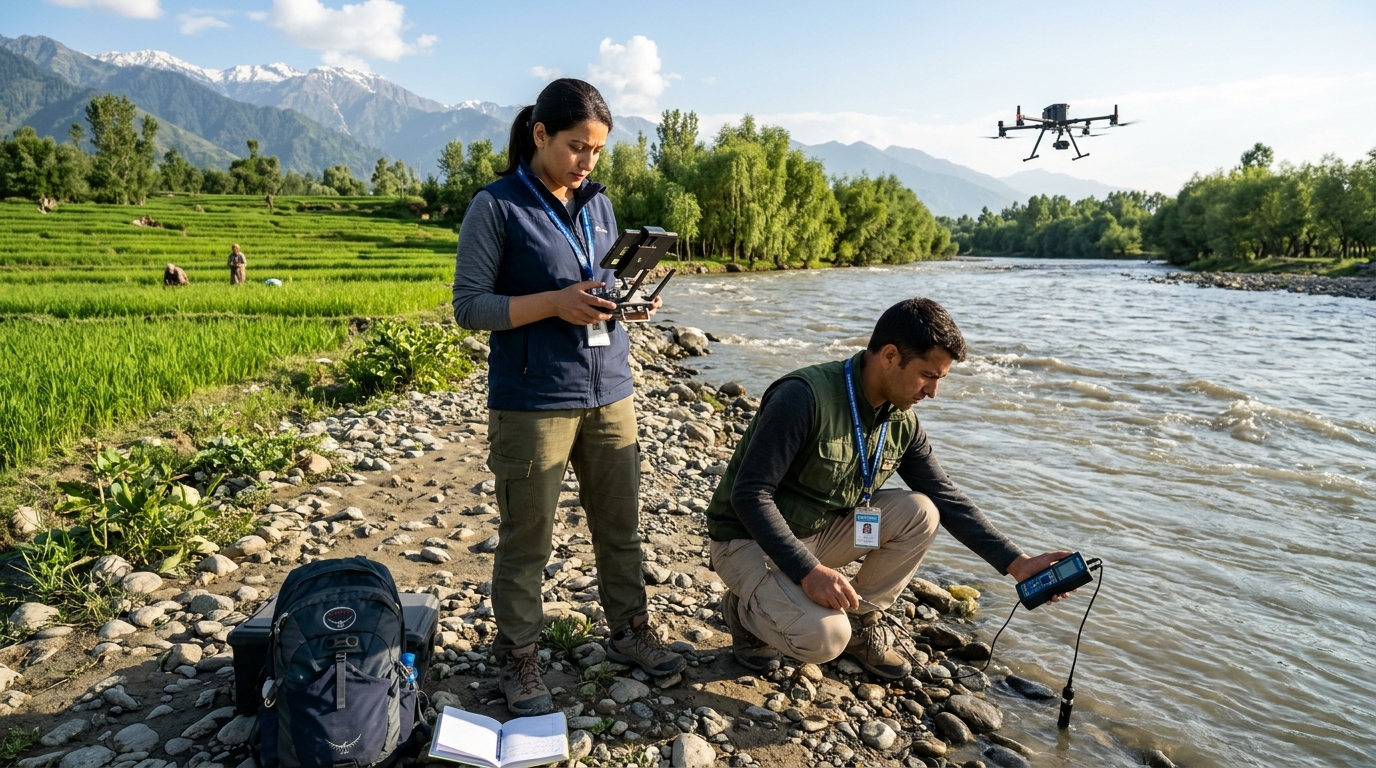
Because the Kashmir Valley functions hydrologically as a semi-closed inter-montane bowl draining almost entirely through the Jhelum River and its floodplain lakes, synthetic polymers shed from farms do not flush rapidly to an ocean; instead, they accumulate in arable topsoils and lacustrine sediment sinks. Recent spectroscopic investigations have already confirmed elevated microplastic burdens in Northwest Himalayan freshwater sediments and biota—including Anchar Lake and Manasbal Lake —making a systematic scoping assessment of agricultural plastic sources urgent.