Executive Synthesis & The Hangul Extinction Vortex Question
Demographic Viability Modelling, Microsatellite & Mitochondrial Bottleneck Synthesis, Skewed Sex-Ratio & Fawn-Recruitment Constraints, and Upper Dachigam–Sindh Corridor Recovery Pathways for Critically Endangered Cervus hanglu hanglu
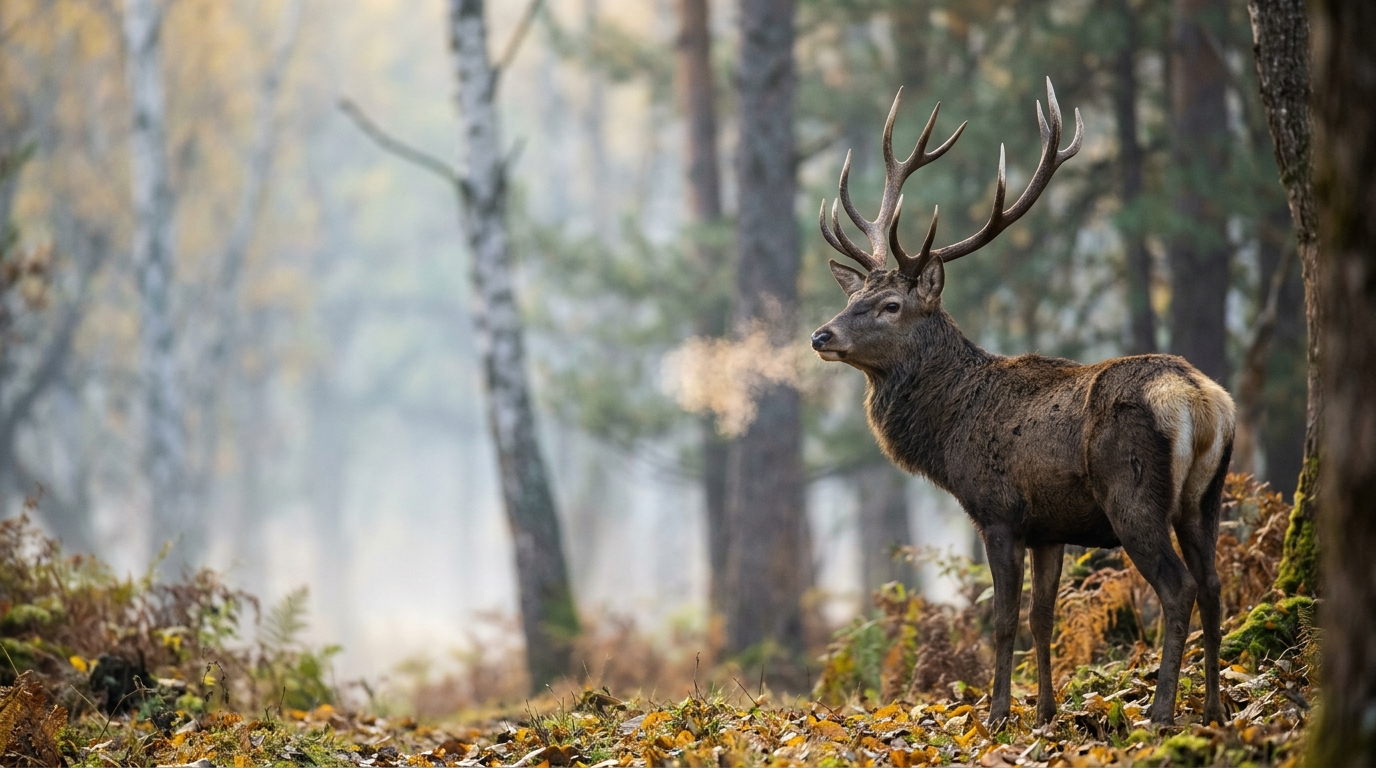
The Kashmir Hangul (Cervus hanglu hanglu) is the sole surviving subspecies of red deer native to the Indian subcontinent and a flagship evolutionary lineage of the Central Asian Tarim deer group (Cervus hanglu) . Once distributed across a ~65 km arc of moist temperate forests and alpine meadows from Kishtwar and Bringi through Dachigam to the Sindh and Lolab valleys, its viable breeding core has contracted into the 141 km^2 Dachigam National Park immediately east of Srinagar .
Integrating 19 years of systematic demographic monitoring , non-invasive nuclear and mitochondrial genetics , satellite relic surveys , and parasitological studies , this Modelled Environmental Assessment evaluates recent encouraging census gains—from ~186 deer in 2015 to 261 in 2021 and 289 in 2023 —against deep underlying structural vulnerabilities. Persistently low fawn recruitment (~14.8 fawns:100 hinds), skewed adult sex ratios (~19.5 stags:100 hinds), curtailed summer alpine migration, and an effective population size (N_e) below 65 individuals indicate that without multi-site expansion and Upper Dachigam restoration, the subspecies remains trapped near an extinction vortex .