
Kashmir EcoWatch
Dr. Kumar's Kashmir EcoWatchGLOBAL INSTITUTE FOR ADVANCED ENVIRONMENTAL STUDIES
Himalayan Dispatch
Conservation Intelligence

KEW Western Himalayan
Threat Intelligence & Monitoring Sentinel

Pressure signals, encroachment records, habitat condition assessments, and active conservation alerts across Kashmir's protected areas. Data feeds into threat mapping and management planning.

Threat Early Warning Sentinel
Active Monitoring 2026
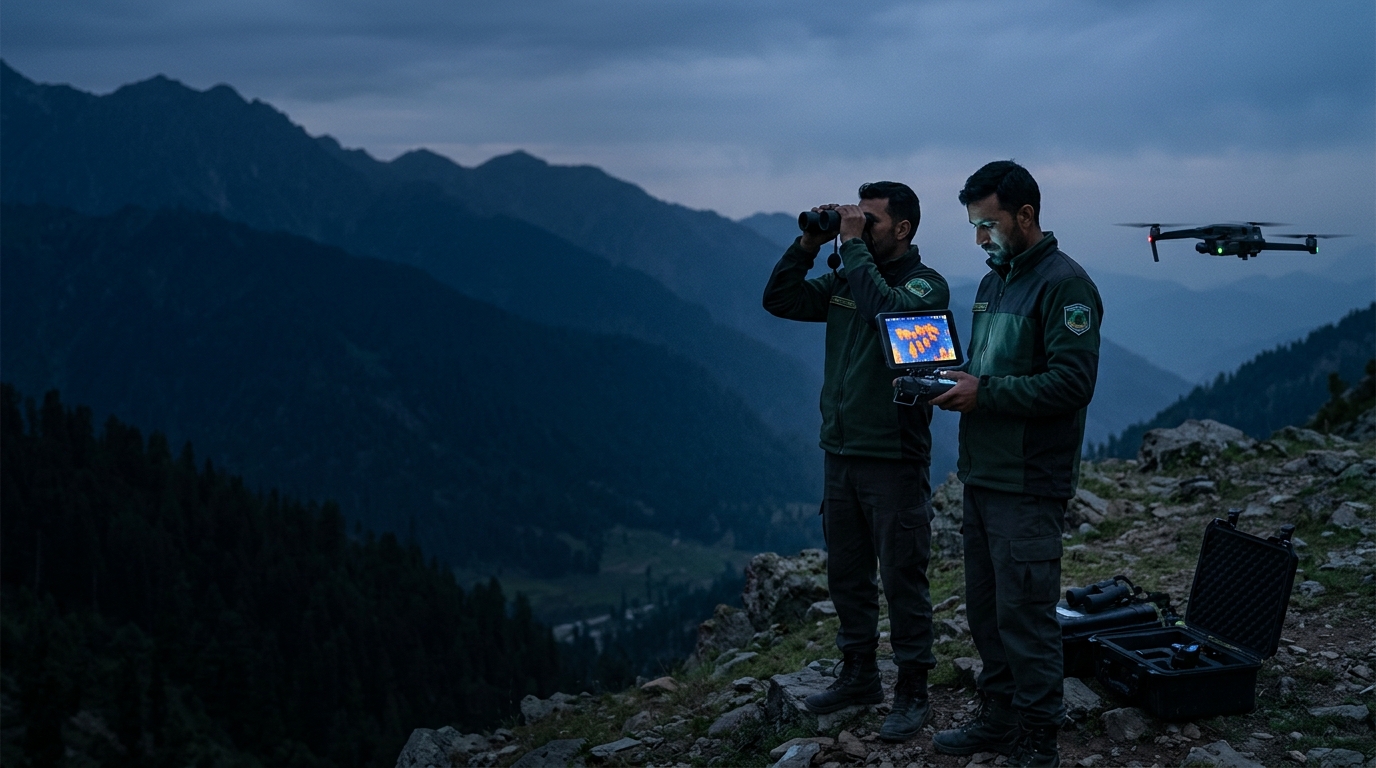
Grazing & Human Incursion

Grazing & Human Incursion

Active Alert
Overa-Aru Upper MeadowsAnantnag · High Altitude
Habitat Threat Sentinel & Real-time Pressure MonitoringActive Early Warning System 2026

Monitoring active anthropogenic pressures, grazing incursions, poaching vectors, and land-use shifts across 25 Verified Vulnerability Hotspotsin J&K and Ladakh.

9 Critical Alerts
Total Alerts
25
Active Threat Feeds
Critical Threats
9
High Red Alert
High Severity
10
Priority Monitoring
Kashmir Core
20
Valley Focal Zones
Trans-Divisional
10
High Altitude & Pir Panjal
Active Measures
25
Mitigation In Play
25 of 25 threat alerts

Habitat Fragmentation Pressure

Increasing fragmentation of protected area landscapes due to linear infrastructure (highways, rail corridors, transmission corridors) and settlement expansion, dividing core Hangul and Markhor habitats.

4 affected areas•HIGH

Wetland Ecosystem Stress & Eutrophication

Multiple compounding stressors affecting Ramsar wetlands including untreated sewage influx, agricultural fertilizer runoff, massive siltation, and encroachment into marsh peripheries.

5 affected areas•CRITICAL

Unregulated Ecotourism & Visitor Pressure

Unchecked seasonal tourist influx, off-road vehicular trampling in alpine meadows, litter dumping, and noise pollution causing severe wildlife behavioral displacement.

4 affected areas•MEDIUM

Subalpine Grazing Pressure & Habitat Degradation

High-density seasonal grazing by migratory domestic livestock (sheep, goats, horses) competing for forage with wild ungulates like Hangul, Markhor, and Musk Deer.

4 affected areas•HIGH

Forest Fire Sensitivity & Conifer Flammability

Prolonged dry autumn and pre-monsoon spells causing escalating wildfire outbreaks along Pir Panjal and Chenab Valley Chir Pine and Kail forest slopes.

4 affected areas•MEDIUM

Illicit Snaring & Musk Pod Poaching

Covert wire snaring along high-altitude birch-rhododendron corridors targeting male Musk Deer for the lucrative black-market musk pod trade.

4 affected areas•CRITICAL

Dachigam–Tral Hangul Corridor Severance

Rapid expansion of commercial apple orchards, private boundary stone walls, and brick kilns cutting off the seasonal migration corridor between Dachigam and Tral-Shikargah.

4 affected areas•CRITICAL

Invasive Aquatic Macrophyte Proliferation

Aggressive expansion of Alligator Weed (Alternanthera philoxeroides), Azolla, and Salvinia natans forming impenetrable mats over open water and starving benthic flora of light.

4 affected areas•HIGH

Cryosphere Shrinkage & Winter Snow Drought

Drastic decline in winter snowfall (Chilai Kalan snow deficits), early spring thaw, and retreating cirque glaciers altering hydrological cycles and drying up subnivean burrows.

4 affected areas•CRITICAL

Human-Carnivore Orchard Interface Conflict

Fruit tree ripening coinciding with hyperphagia in Asiatic Black Bears and Leopards leading to frequent orchard incursions, human injuries, and retaliatory poaching/electrocution.

4 affected areas•HIGH

Alpine Medicinal Flora Extraction & Biopiracy

Mass commercial uprooting and smuggling of threatened endemic roots including Trillium govanianum (Nagchhatri), Saussurea costus (Kuth), and Aconitum heterophyllum (Patrees).

4 affected areas•CRITICAL

Mechanical Riverbed Sand & Boulder Extraction

Unregulated heavy machinery dredging of gravel, sand, and stones in mountain rivers destroying the breeding beds and limnocrene springs of native Coldwater fish.

4 affected areas•HIGH
Showing 1 to 12 of 25 records